
Compare Wire Mesh Filter Types by Function
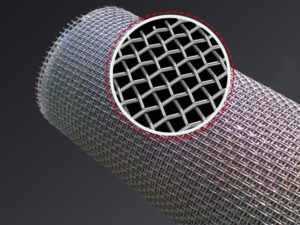
Wire mesh filters should be classified by both media structure and finished element form. A disc, cylinder, basket or cartridge describes geometry; square woven, Dutch weave, sintered or supported mesh describes the filtration medium. Choose the two together with flow, pressure, cleaning and equipment interfaces.
Two Decisions Define a Wire Mesh Filter
1. Media structure
Square woven, Dutch weave, sintered multilayer or another defined porous medium.
2. Finished element form
Disc, cylinder, tube, cap, cone, basket or cartridge with equipment-specific interfaces.
Do not select from a product name alone. The same cylindrical shape can carry very different filtration media, rating definitions and support structures.
Wire Mesh Filter Type Selection Matrix
Use the matrix to identify the element family, then complete the media and operating specification before quotation.
| Filter type | Primary structural feature | Selection focus | RFQ essentials |
|---|---|---|---|
| Disc or flat screen | Compact flat filtration area | Edge, seating and layer support | Diameter/shape, media, layers, edge and thickness |
| Cylinder or tube | Area around a central flow path | Seam, support, ends and flow direction | ID/OD, length, media, support, seam and ends |
| Basket | Removable solids-collection form | Flange/rim, handle, bottom and clearance | Body, interface, handle, bottom, media and support |
| Pleated cartridge | Increased media area in an envelope | Pleat geometry, core, ends, seals and pressure drop | Rating, area, dimensions, connections, seals and load |
| Sintered mesh element | Bonded multilayer porous structure | Layer build, rating, rigidity and joining | Construction, rating/test basis, geometry and acceptance |
| Perforated-supported element | Rigid coarse support around fine media | Hole geometry, layer order and pressure direction | Support, fine layer, attachment, flow and pressure |
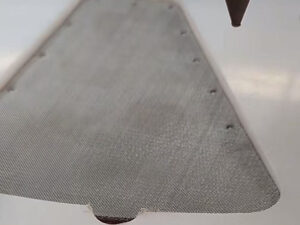
| Conical filter or cone screen | Tapered geometry for drawing-defined flow and installation space | Cone angle, axial length, seam, rim and flow direction | Drawing, interface, included angle, media, support and retained-solids side; review custom conical wire mesh filters |
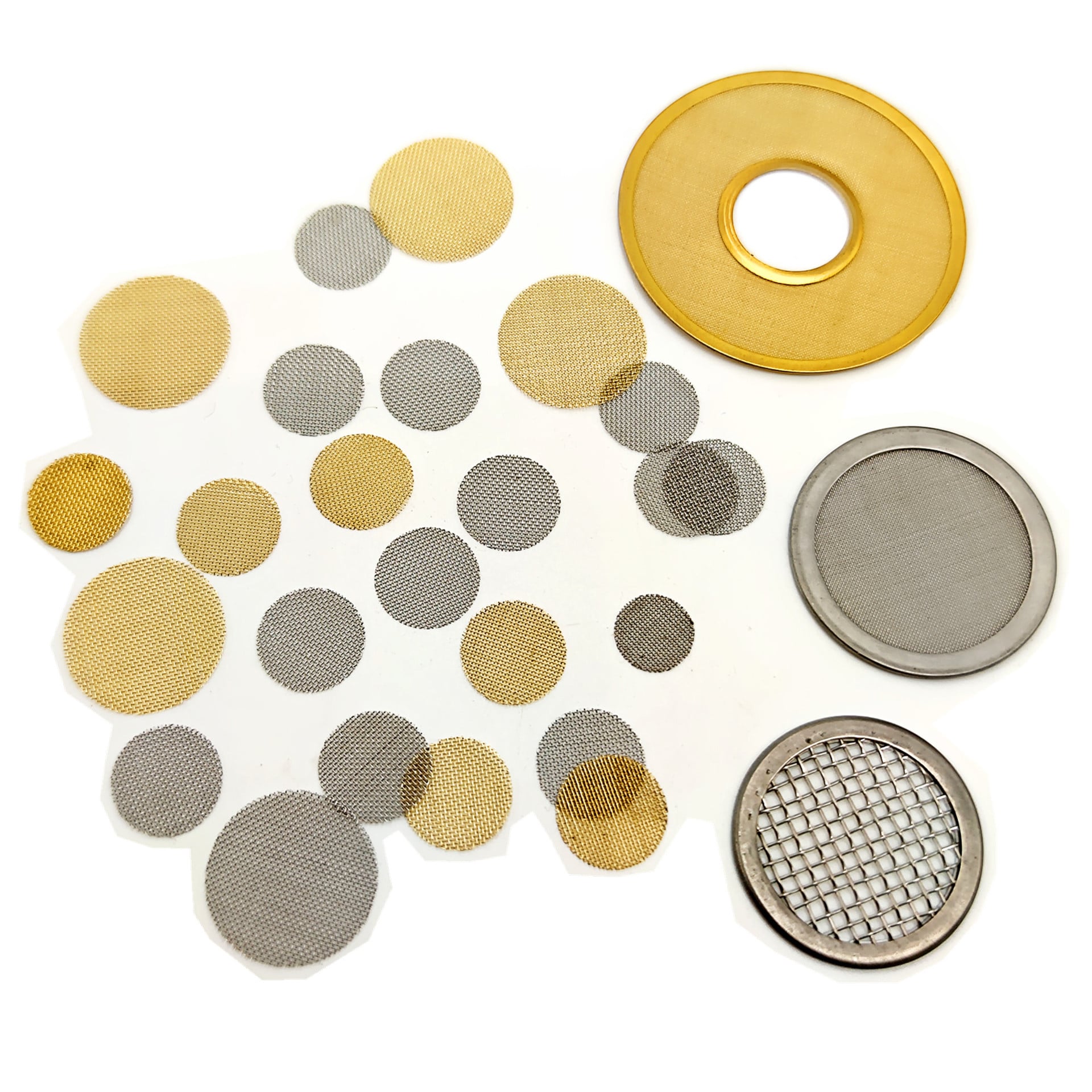
Filter Discs and Flat Screens
Discs provide a compact filtration surface for seats, line components and equipment inserts. They may be plain cut, framed, multilayer or supported. The edge and seating geometry can be as important as the media because an uncontrolled perimeter can create bypass.
Review stainless steel filter discs for product-specific RFQ details.
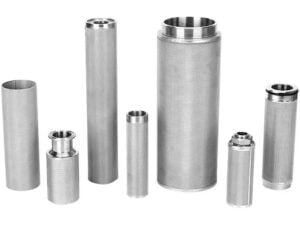
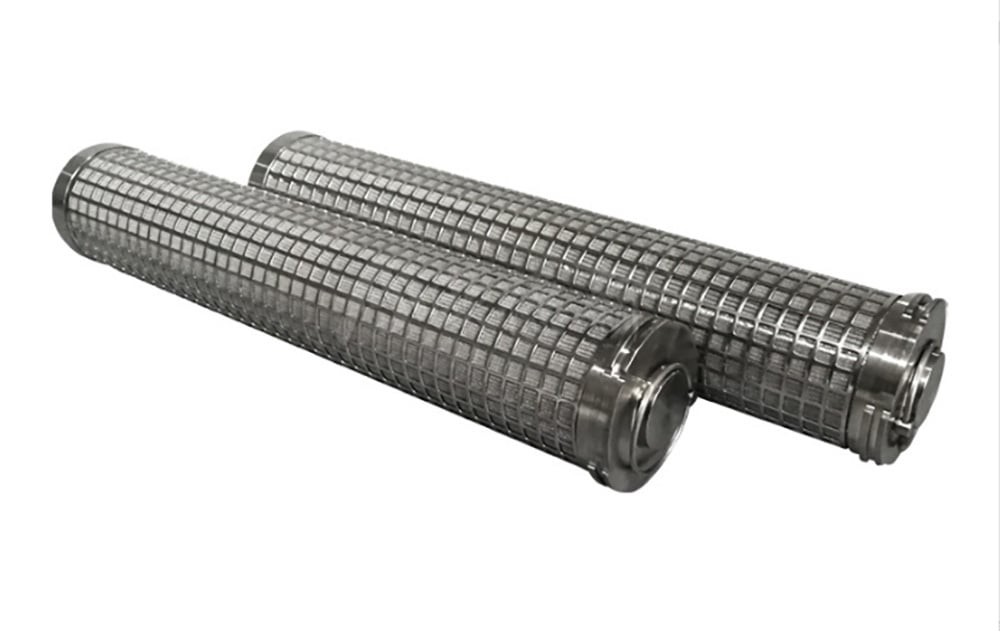
Filter Cylinders and Tubes
Cylindrical elements provide filtration area around an inside-to-outside or outside-to-inside path. Specify the media, support position, seam, diameter, length, ends and normal/reverse pressure loading.
Compare wire mesh filter cylinders and perforated support tubes.
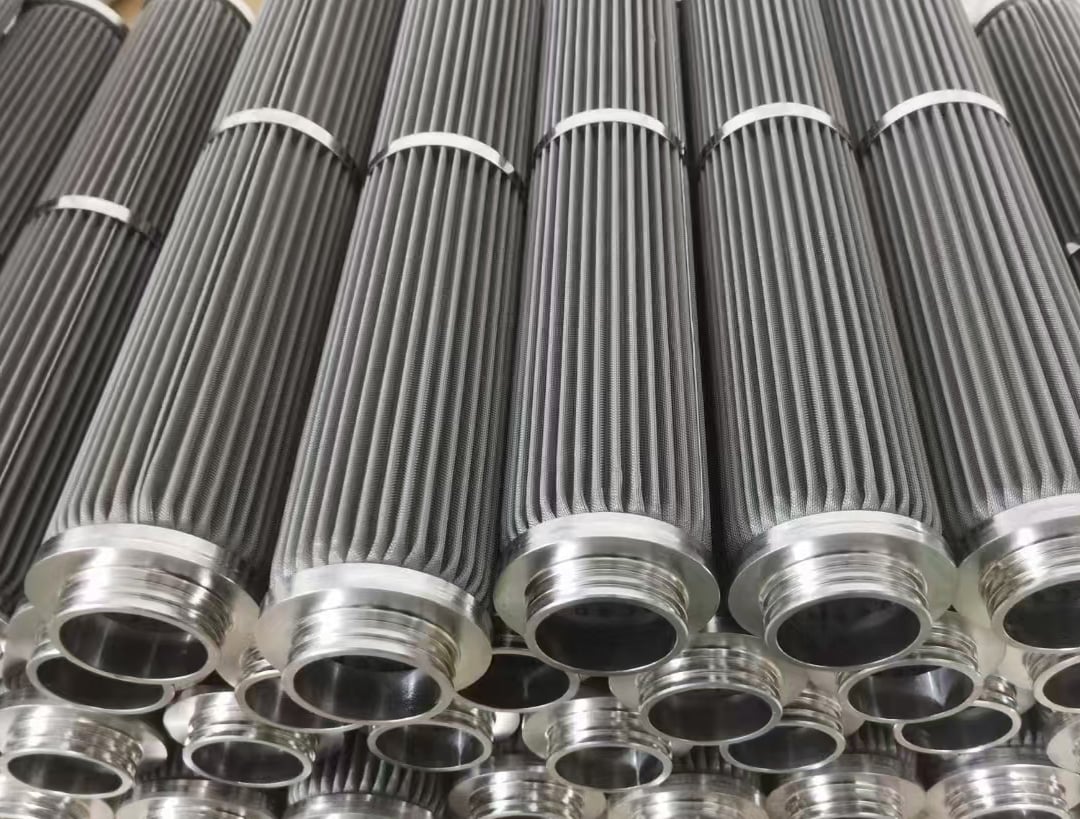
Pleated and Sintered Metal Cartridges
Pleating increases installed media area but adds folds, core/support and end-sealing details. Sintered wire mesh bonds multiple layers into a rigid structure. Neither the word pleated nor sintered establishes filtration performance without a stated rating basis.
Compare pleated stainless steel cartridges and sintered filter cartridges.
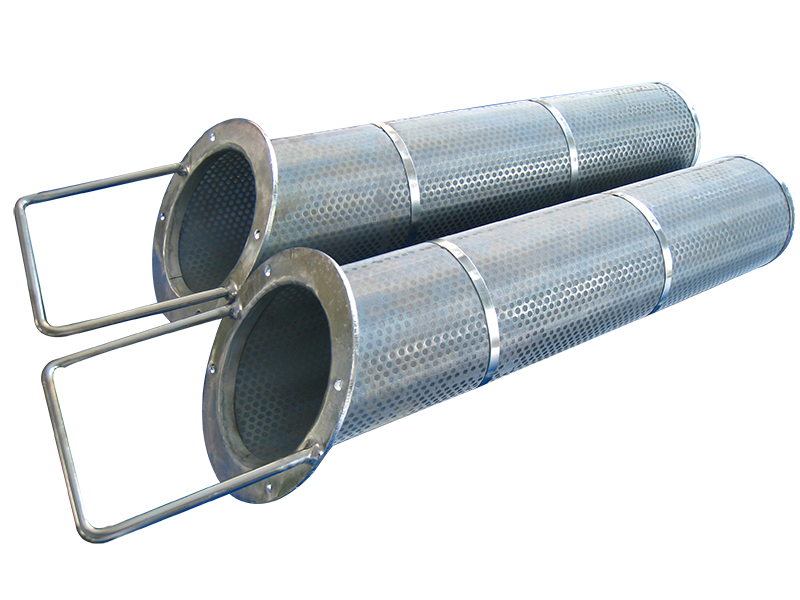
Filter Baskets and Strainers
Baskets combine a removable collection body with a flange, rim, handle and bottom. Perforated sheet may provide coarse retention or support for finer woven media. Show housing clearance and removal direction on the drawing.
See custom stainless steel filter baskets for the commercial product scope.
Filter Basket vs Filter Cylinder: Direct Comparison
Choose a basket when the housing and maintenance plan require a removable solids-collection form. Choose a cylinder when the assembly needs filtration area around a defined central flow path. Neither shape determines the filtration rating by itself.
| Decision field | Filter basket | Filter cylinder | What the buyer must confirm |
|---|---|---|---|
| Primary form | Removable collection body with bottom and rim/flange | Tubular area around a central flow path | Housing arrangement and retained-solids path |
| Maintenance | Often lifted out for emptying or cleaning | May be removed as an element or cleaned in its assembly | Removal direction, access and service procedure |
| Equipment interface | Rim/flange, seat, handle and insertion depth | Open/capped ends, thread, flange, collar or seal | Mating geometry, datums and tolerances |
| Flow definition | Flow into or through the basket body and bottom | Inside-to-outside or outside-to-inside | Normal and reverse flow plus support side |
| Support structure | Body, bottom, rings and optional perforated liner | Core, outer support, seam and end restraint | Differential pressure, handling and cleaning loads |
| Key RFQ risk | Poor seating or insufficient removal clearance | Wrong flow direction, end fit or unsupported fine media | Complete installed drawing, not geometry name alone |
Basket: collection and removal interface
Cylinder: flow path, ends and support
Before quotation, complete the filter-element drawing and tolerance checklist for the selected form.
Choose the Filtration Medium Within the Element
Square woven mesh
Direct openings defined by mesh count and wire diameter or clear aperture.
Dutch weave mesh
Dense indirect pore path requiring construction-specific rating information.
Sintered wire mesh
Bonded layers combining filtration, drainage, support and protection functions.
Perforated support
Larger defined holes normally used for coarse screening or structural backing.
Use stainless steel mesh for filtration for media comparison and the nominal vs absolute micron guide for rating terminology.
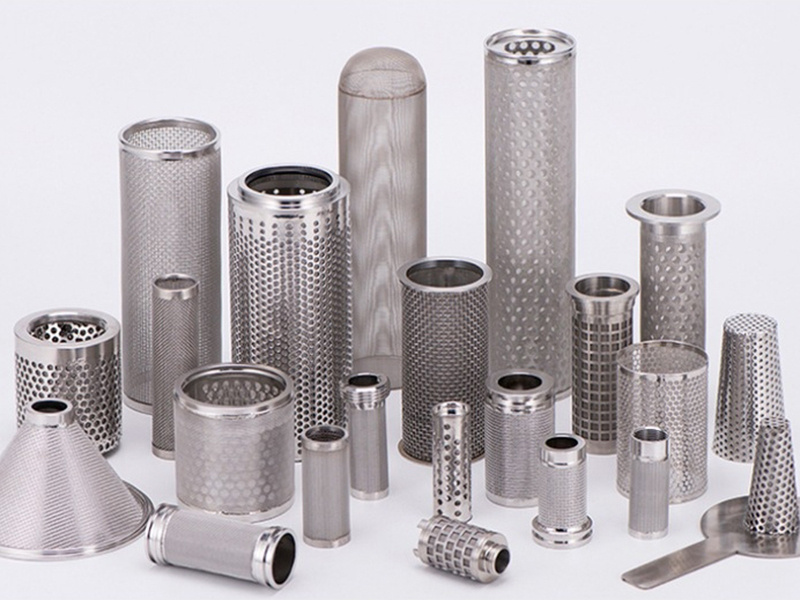
Real Maidong Filter Type Examples
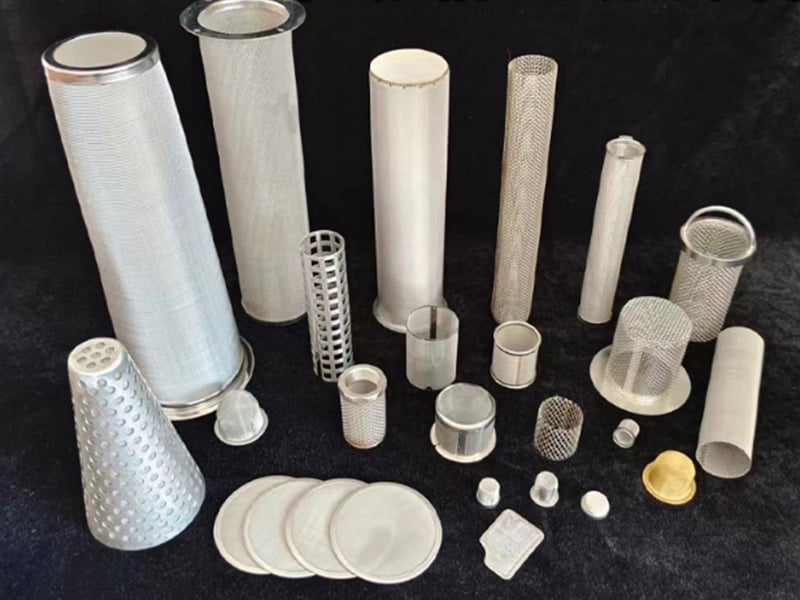
These real Maidong product images show different element forms and interfaces. They do not establish a universal rating or operating limit.
Mixed filter forms
Disc filters
Supported cylinders
Filter baskets
Five-Step Filter Type Selection Process
1. Define contamination
Solid or droplet, size distribution, shape and loading.
2. Define retention
Aperture or rating, efficiency/test basis and downstream requirement.
3. Define the process
Medium, flow, pressure, temperature, cleaning and cycle.
4. Choose form and media
Element geometry, porous structure, support, ends and seals.
5. Complete the RFQ
Drawing, tolerances, inspection, documents, quantity and revision.
Wire Mesh Filter Type FAQ
Common forms include flat discs or screens, cylinders and tubes, formed caps, conical screens, baskets, pleated cartridges and sintered multilayer elements. Each form can use different media, supports, edges and end interfaces.
There is no universal best type. Fine retention depends on the media construction and rating basis, while the finished form must provide enough area, support, sealing and fit for the operating duty.
Woven mesh uses interlaced wires and may be supplied as a single or supported layer. Sintered wire mesh bonds multiple layers into a rigid porous structure. The two should not be treated as equivalent without construction and test data.
Pleating can increase media area within an available envelope. Selection still requires the media rating, pleat geometry, core and outer support, end connections, seals, pressure loading and cleaning conditions.
Usually not. Perforated metal often provides coarse screening or structural support. The designated fine woven, Dutch weave, sintered or other porous layer defines the filtration basis.
Provide the contaminant and retention target, rating definition, process medium, flow, pressure, temperature, cleaning, alloy, element geometry, support, interfaces, seals, inspection and quantity.
A basket is normally removable and combines a collection body with a rim or flange, bottom and often a handle. A filter cylinder provides area around a central flow path and is specified by its seam, ends, support, flow direction and equipment connection. The correct form depends on the housing and maintenance method.
Need Help Matching a Filter Structure to Your Drawing?
Send the contamination, rating basis, process conditions, preferred geometry, media, support, interfaces, inspection scope and quantity.