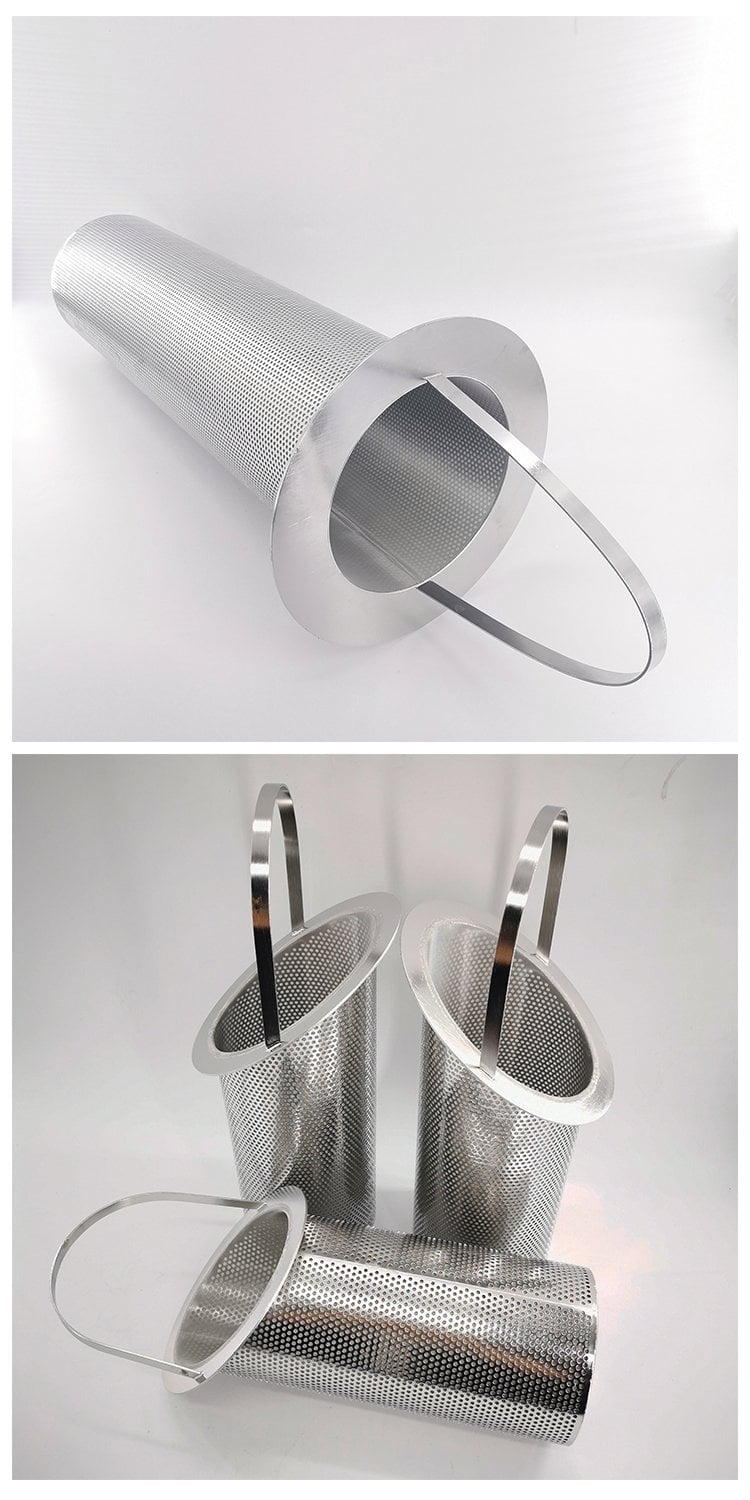
A custom stainless steel filter basket is designed around the housing fit, filtration media, support structure, flange, handle and operating conditions. Maidong reviews woven mesh, perforated and composite basket requirements from a complete drawing or specification.
Mesh count, wire diameter and weave define the filtration layer and open area.
Perforated basket
Hole size, pitch, sheet thickness and open area define the punched structure.
Composite basket
Fine mesh can be combined with perforated metal or coarse mesh support when the assembly requires both filtration and rigidity.
Filter Basket Specification Checklist
A basket should be quoted from the complete geometry and operating requirement, not from diameter or micron value alone.
RFQ field
What to specify
Why it matters
Envelope dimensions
Outside/inside diameter, depth, bottom and installation clearances
Controls fit inside the housing and removal path
Filter media
Mesh geometry, Dutch weave construction, or perforated hole pattern
Defines the pore or opening structure
Support
Perforated liner, coarse mesh, frame rings and support direction
Must be reviewed against differential pressure and handling
Flange and seal
Outside/inside dimensions, profile, thickness and sealing interface
Controls seating, retention and bypass risk
Handle
Shape, location, travel, attachment and lifting function
Affects installation, removal and available clearance
Operating data
Medium, temperature, flow direction, differential pressure and cleaning
Supports material, media and construction review
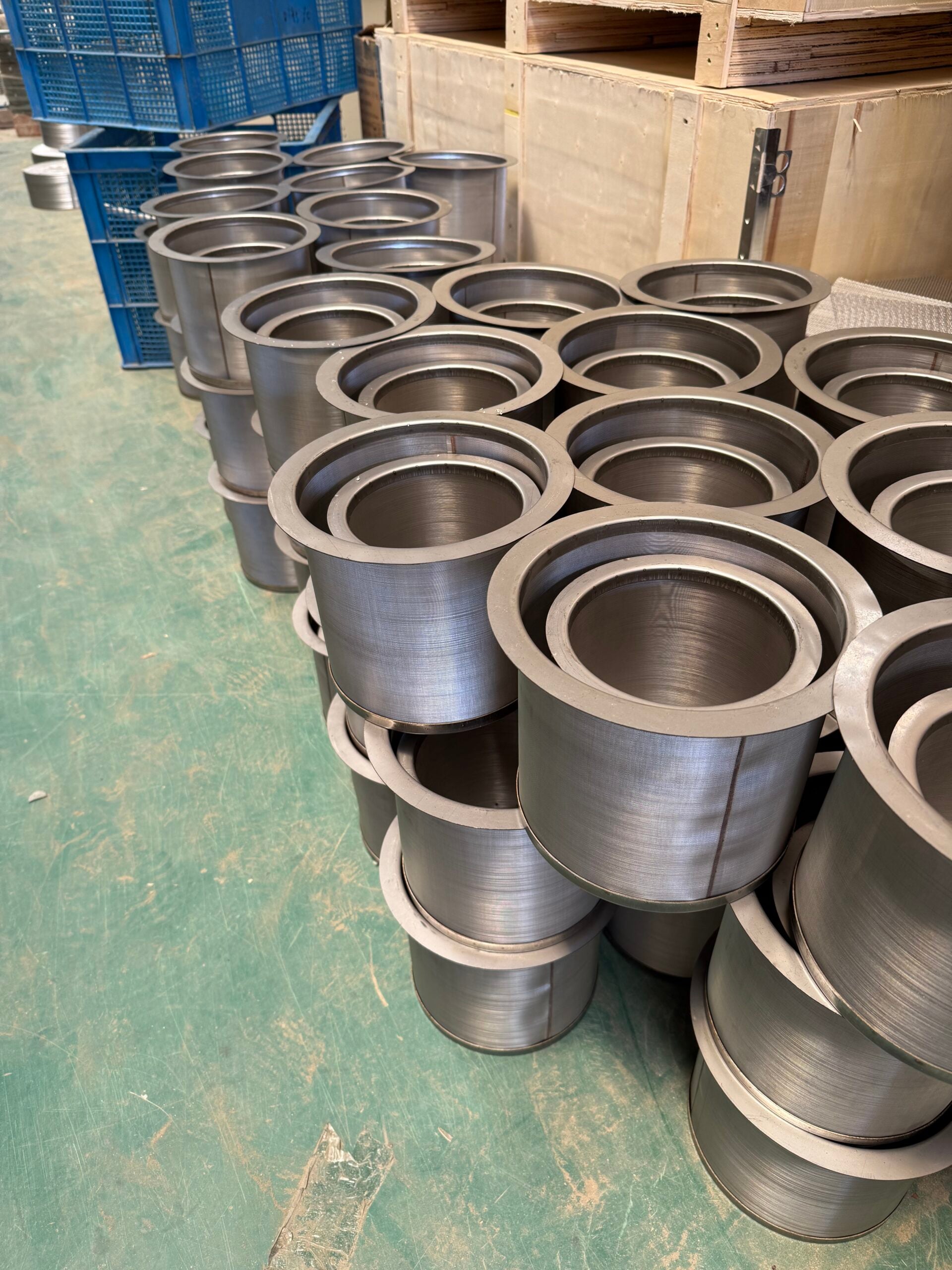
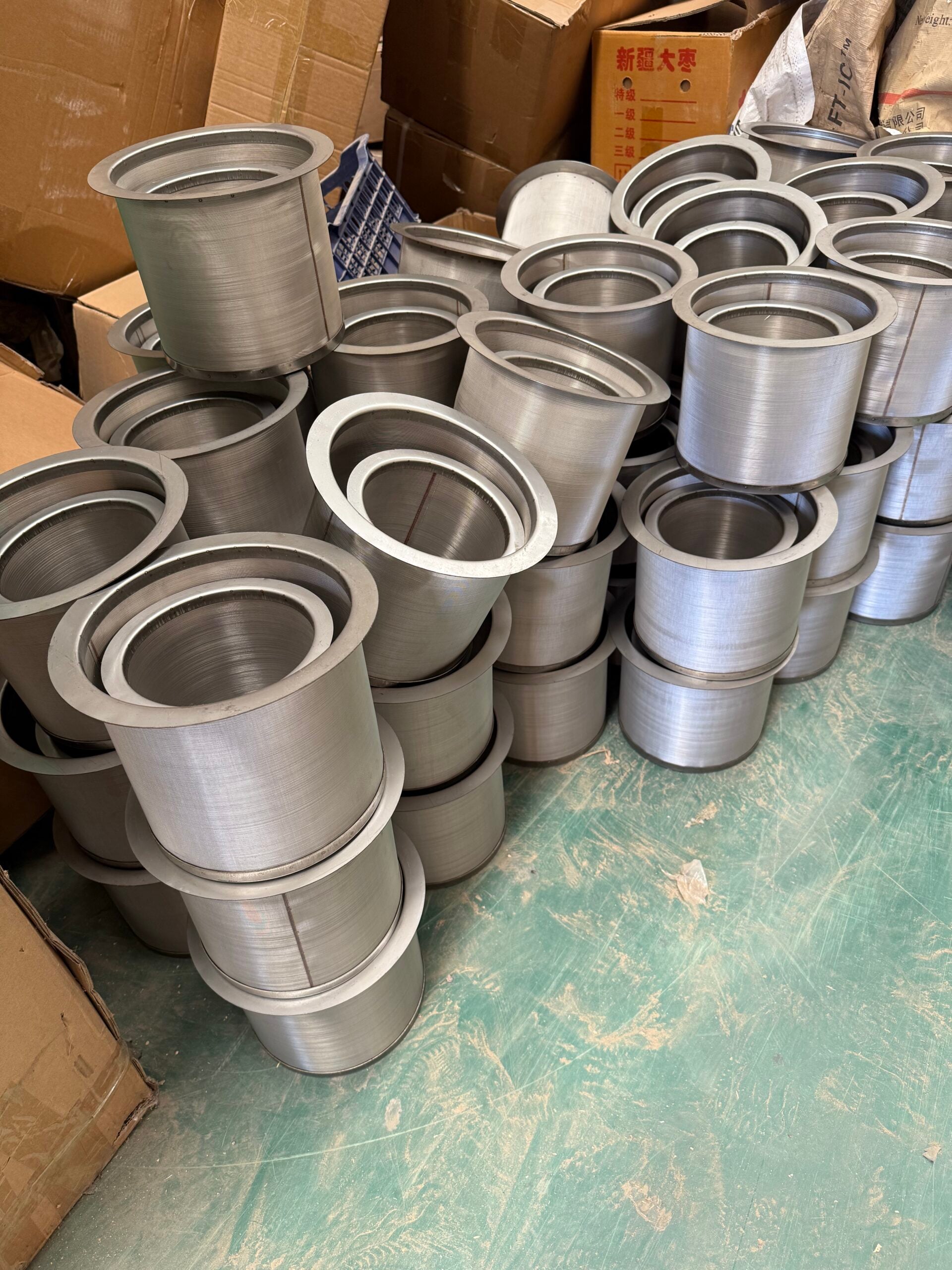
Wire mesh basket bodies with flange geometry visible before installation.
Woven Mesh Filtration Layer
Square woven mesh is specified by mesh count and wire diameter together, or by the required aperture. Dutch weave uses a different pore path and needs a construction-specific rating. If pressure or handling requires additional stiffness, the mesh can be reviewed with a perforated or coarse-mesh support.
Define profile, outside/inside dimensions, thickness and sealing surface.
Handle
State handle shape, location, movement and intended lifting function.
Bottom
Specify flat, dished, rounded, perforated or drawing-specific end construction.
Support and seams
Show layer sequence, support direction, longitudinal seam and joining details.
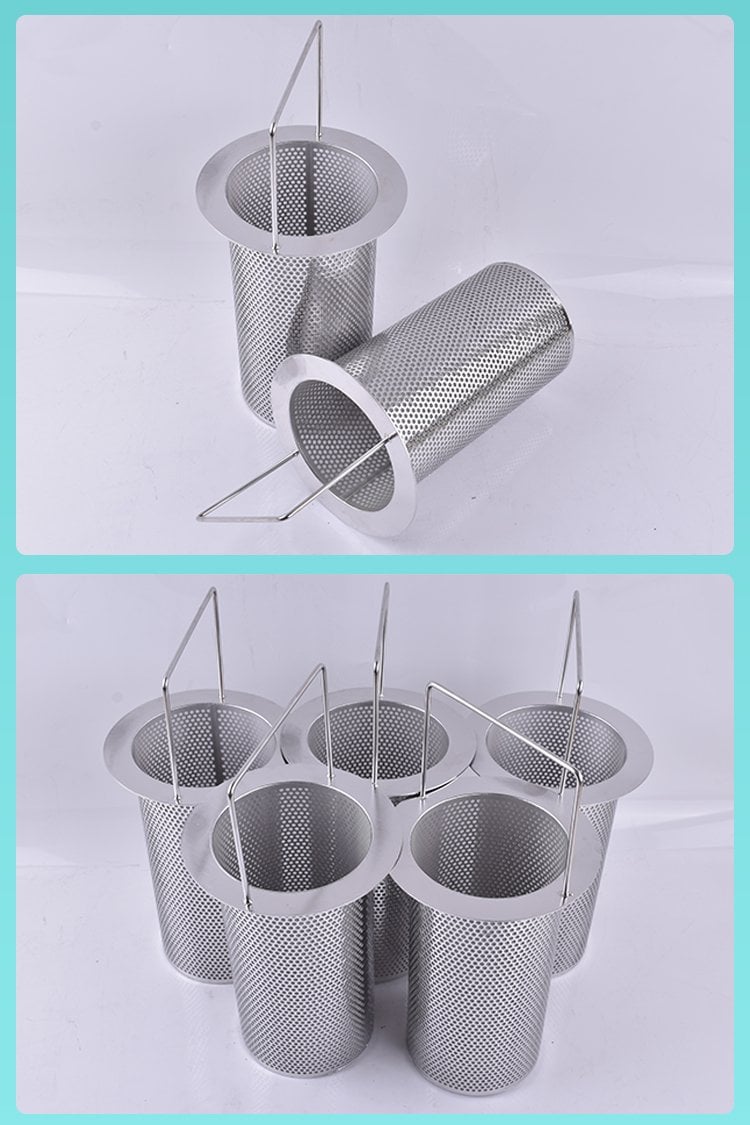
Basket configurations with wide flanges and lifting handles.
Removal and installation details
The flange and handle are functional interfaces, not decorative options. Confirm housing clearances, basket insertion depth, removal space and the seal or seating arrangement. State whether the handle must fold, remain fixed or clear surrounding equipment.
Perforated and Composite Basket Structures
A perforated shell can serve as the primary straining surface for larger openings or as support behind finer woven mesh. Specify hole shape, diameter, pitch, sheet thickness and open area. For cylindrical perforated structures, compare the perforated filter tube page.
When mesh is added, include the layer sequence, flow direction, edge containment and joining method on the drawing.
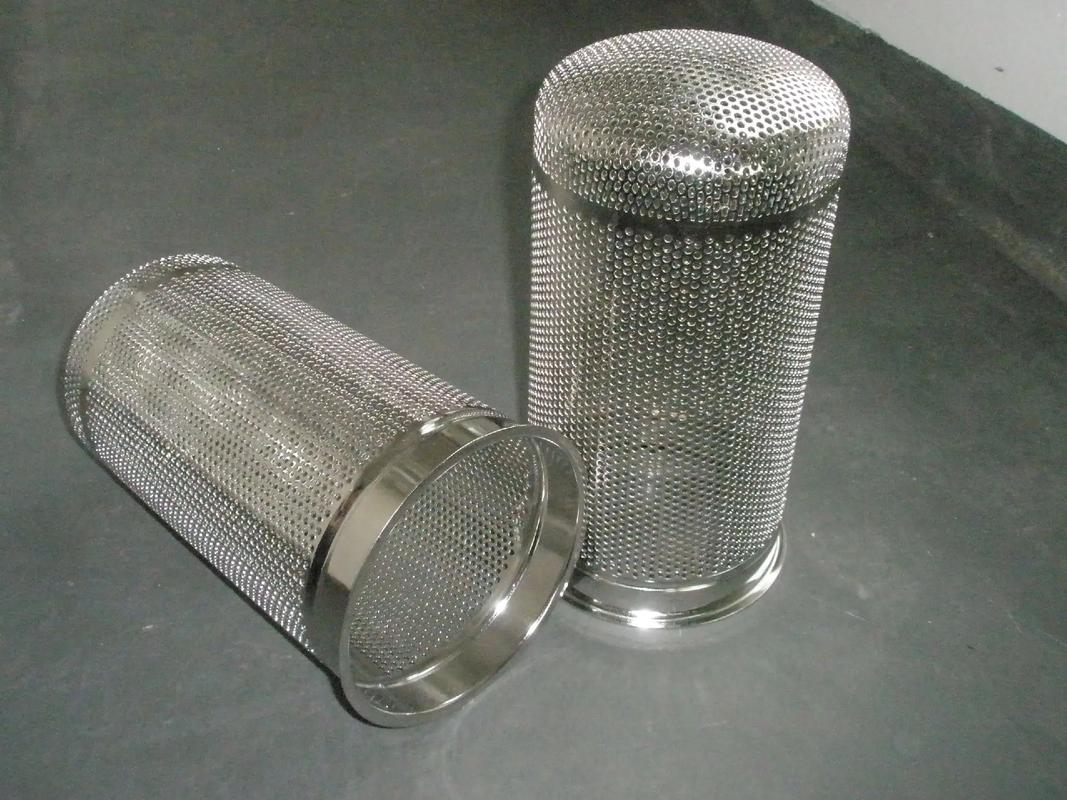
Perforated basket elements with closed ends and formed mounting rims.
Typical Basket Functions
Pipeline or vessel straining
Removable baskets installed to retain debris inside a process housing.
Equipment protection
Basket elements placed before pumps, valves, nozzles or sensitive passages.
Particle collection
Components designed for periodic removal and cleaning of retained solids.
Drawing-based assemblies
Custom baskets integrated into equipment with unique flange, handle or support details.
These describe general functions only. Final material, dimensions and filter media must be reviewed for the actual process.
Flange and loop-handle details on a drawing-based perforated basket.
Product Examples and Configuration Details
Wide mounting flanges for housing support
Loop or wire handles for removal
Cylindrical and drawing-specific basket bodies
Perforated walls, woven mesh or composite structures
Closed, rounded or drawing-defined bottoms
Support rings and reinforced edges where required
The images show genuine Maidong basket configurations. They are examples, not fixed standard sizes or stock claims.
Replacement Basket Strainer Screen Checklist
For an existing housing, measure the mating interfaces before defining the basket body. A photograph can identify the general construction, but it cannot control sealing, insertion or removal geometry.
Replacement check
Dimensions or evidence to provide
Common mismatch risk
Housing seat
Seat diameter, depth, contact face and gasket position
Basket fits the opening but does not seat or seal
Flange or rim
OD, ID, thickness, profile and flatness
Incorrect retention height or bypass path
Installed envelope
Body OD, insertion depth, bottom clearance and nearby obstructions
Interference inside the housing
Removal envelope
Handle height, folding direction and available lifting space
Basket cannot be removed after installation
Filter construction
Mesh/weave or hole pattern, support, layer sequence and flow direction
Different retention or deformation behavior
Acceptance dimensions
Critical tolerances, datums and inspection method
Supplier and buyer measure from different references
Use the Old Basket as Evidence—not as the Only Specification
An old basket may be bent, worn, repaired or contaminated. Record the dimensions that belong to the housing interface separately from dimensions taken from the used component. Identify which surfaces are datums and which values are reference only.
It is a removable filtration or straining component made to fit a housing or process opening. The basket may use woven wire mesh, perforated sheet, or a combination in which one layer filters and another provides support.
A woven mesh basket provides smaller, weave-defined openings. A perforated basket uses punched holes in sheet metal and usually offers greater structural stiffness. A composite basket can place fine mesh against a perforated support.
Provide outside and inside diameters where relevant, overall length or depth, flange outside and inside dimensions, bottom shape, wall thickness or media construction, handle geometry, fit clearances and dimensional tolerances.
For square mesh, state mesh count and wire diameter or aperture. For perforated metal, state hole size, shape, pitch and open area. For Dutch weave or rated media, provide the construction and agreed rating or test method.
Yes, these details can be reviewed from a drawing. Define the flange profile and sealing surface, handle position and load function, support direction, joining method and any removable or fixed parts.
Include the process medium, temperature, normal and maximum differential pressure, flow direction, particle characteristics, cleaning method, quantity and any material, weld or dimensional inspection requirement.
A replacement basket can be reviewed from a controlled drawing or a dimensioned sample reference. Record the housing seat, flange profile, insertion depth, bottom clearance, handle envelope, media construction and critical tolerances rather than copying only the visible outside diameter.
Request a Filter Basket Specification Review
Send the basket and housing drawing, filter media, material, support, flange, handle and operating conditions. Maidong can review a custom stainless steel filter basket enquiry.