Dutch weave stainless steel mesh can be reviewed for hydraulic oil filtration when the retention target, oil viscosity, temperature, flow, pressure drop, differential pressure and complete filter construction are specified together. A weave name or micron number alone is not enough.
Dense Dutch weave media requires a construction-specific retention and flow specification.
What Dutch Weave Contributes to a Hydraulic Filter
Dutch weave uses different warp and weft wire geometry to create a dense, indirect pore path. It is the filtration medium—not the complete hydraulic filter. The support, seals, housing, usable area and bypass control must be designed with the media. For the general media family, see Dutch weave wire mesh.
Retention target
Particle size plus nominal, absolute, pore or named test basis.
Hydraulic duty
Oil viscosity, temperature, flow and allowable clean pressure drop.
Mechanical duty
Normal and maximum differential pressure, support and cleaning loads.
Finished element
Layers, flow direction, dimensions, ends, seals and equipment interface.
Hydraulic Oil Dutch Weave Mesh Specification
Use the full operating window rather than a single normal-condition value. Cold-start viscosity and maximum differential pressure can be as important as steady-state flow.
Hydraulic RFQ field
Information to provide
Selection impact
Oil duty
Oil type, additives, water content and contamination
Material and media compatibility review
Viscosity / temperature
Viscosity range at actual operating temperatures
Flow resistance and pressure-drop review
Retention basis
Particle target, nominal/absolute/pore value and method
Prevents unsupported micron equivalence
Hydraulics
Flow, clean pressure drop and maximum differential pressure
Media area, permeability and support selection
Dutch construction
Subtype, warp × weft count, both wire diameters and material
Identifies the actual woven pore structure
Element structure
Layers, support, flow direction, dimensions, seals and ends
Controls load path, fit and bypass risk
Service / acceptance
Cleaning, quantity, inspection and required documentation
Creates a verifiable purchase requirement
Different Dutch weave constructions can have different pore paths, permeability and mechanical behaviour.
Choose the Dutch Weave Construction
Plain Dutch, twill Dutch and reverse Dutch constructions use different wire paths and may suit different combinations of retention, permeability and mechanical duty. The weave label does not assign a universal micron value.
Compare full warp and weft geometry, permeability or flow evidence, rating definition, material and finished form.
Micron Rating and Retention Basis
Pore-related value
Construction-specific indication of pore geometry or a related test result.
Nominal rating
Retention efficiency that requires an explicit percentage and procedure.
Absolute rating
Higher-threshold claim that still needs efficiency or beta and a method.
System cleanliness
A downstream objective that cannot be proven by media label alone.
Use the Dutch weave micron-rating guide when comparing supplier data. Do not apply a square-mesh conversion formula to dense Dutch weave media.
Viscosity, Temperature and Pressure Drop
Oil viscosity changes with temperature, so the same filter can see different resistance at cold start and normal operation. Provide viscosity at the relevant temperature points, required flow and allowable clean pressure drop.
As contamination loads, pressure drop can rise. State the normal and maximum differential pressure used to review media area and support; do not infer pressure capability from weave name alone.
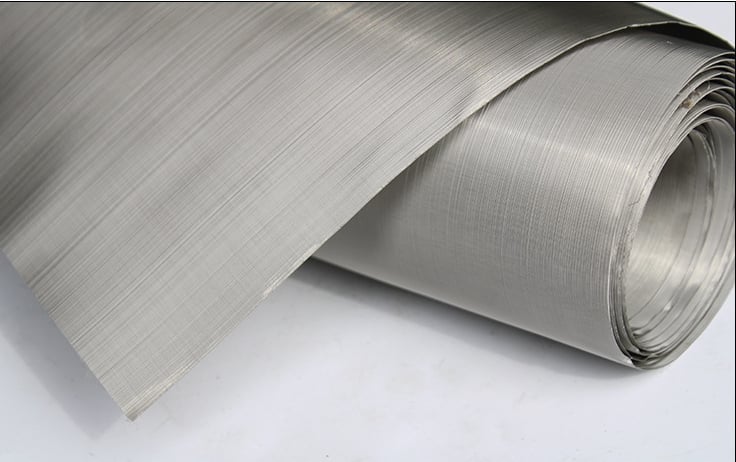
Roll media should be specified by warp and weft geometry, material, rating basis and dimensions.
Support, Layer Order and Flow Direction
Upstream support
May be reviewed when the load direction presses media toward the support.
Downstream support
May be reviewed for the opposite pressure direction or backflow duty.
Layer sequence
List every fine, drainage and support layer in flow order.
Joining and seals
Define seams, end bonds, caps and sealing interfaces to control bypass.
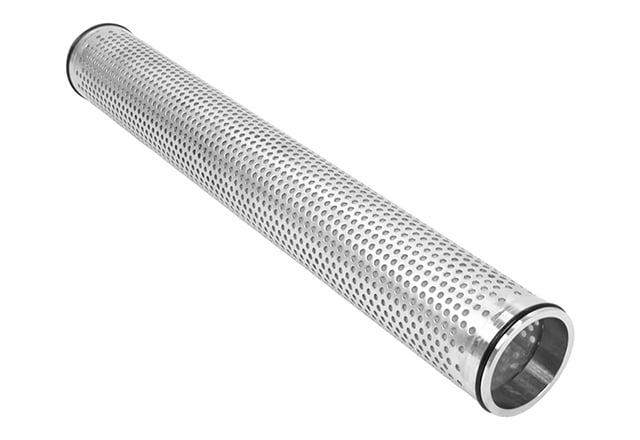
Perforated support can protect the filtration layer against mechanical loading where the design requires it.
Support does not define filtration rating
Perforated or coarse woven support helps carry mechanical load but normally does not replace the controlling fine filtration layer. Specify opening pattern, thickness, open area, support side and joining method where applicable.
Supply Forms for Hydraulic Oil Filtration
Roll media
Dutch weave supplied for downstream conversion under a complete roll specification.
Filter discs
Flat or rimmed elements with defined layers, diameter and flow direction.
Cylindrical elements
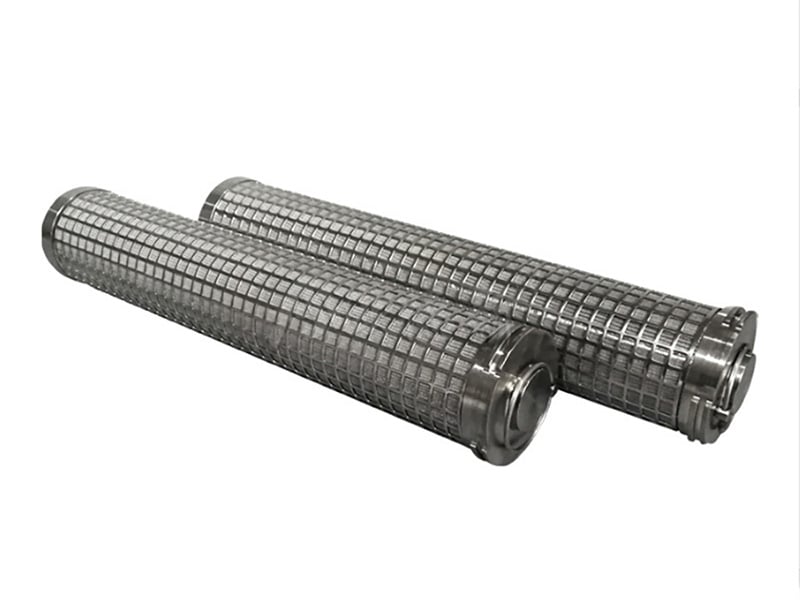
Mesh and support assembled with drawing-defined seam, ends and seals.
Pleated cartridges
Increased media area where the full pleat and support design is validated.
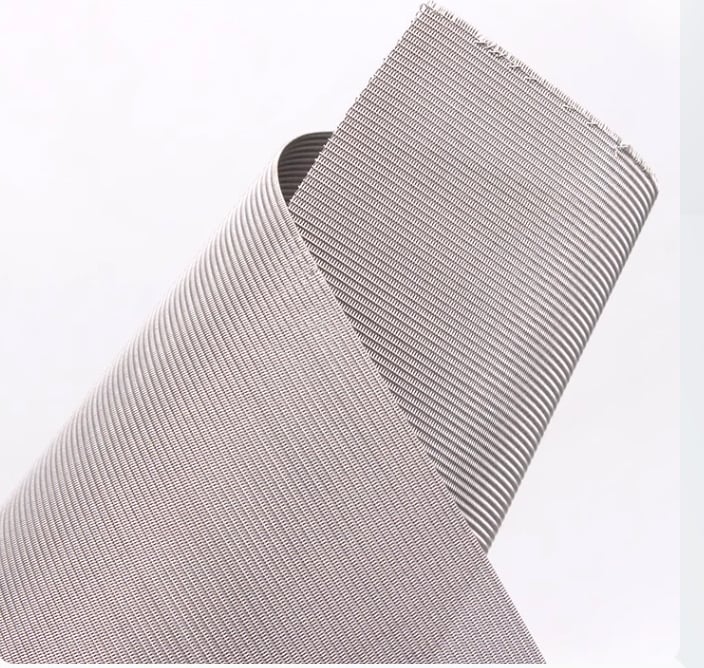
Dense Dutch weave media requires a construction-specific retention and flow specification.
Dense Dutch weave media
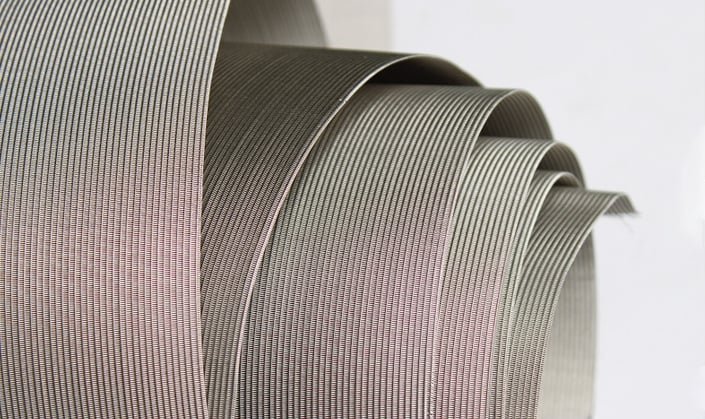
A finished hydraulic element also requires support, ends, seals, flow direction and pressure-duty data.
Supported mesh elements
Perforated support can protect the filtration layer against mechanical loading where the design requires it.
Perforated support body
These Maidong product examples illustrate possible media and structural roles. They are not hydraulic performance guarantees or a substitute for application-specific validation.
Hydraulic Selection Risks to Avoid
Micron value only
No rating definition, test method or full media construction.
Room-temperature viscosity
Ignoring cold-start or high-temperature operating conditions.
Pressure without direction
No flow direction or support-side information.
Media without assembly
No seals, seams, ends, usable area or bypass-control details.
How to Prepare a Hydraulic Oil Filter RFQ
1. Define oil and contamination
State fluid, additives, particle target and cleanliness objective.
2. Define operating window
Provide viscosity, temperature, flow and clean pressure drop.
3. Define retention
Give micron value, efficiency and test or pore basis.
4. Define media and support
Specify Dutch geometry, alloy, layers and maximum differential pressure.
5. Define the element
Attach dimensions, ends, seals, flow direction, quantity and acceptance.
A finished hydraulic element also requires support, ends, seals, flow direction and pressure-duty data.
Send the Complete Hydraulic Duty
Provide the oil, viscosity and temperature range, particle target, rating definition, flow, allowable pressure drop, maximum differential pressure, media construction, element drawing and quantity.
Dutch weave creates a dense indirect pore path that can be considered where fine metal filtration media is needed. Final suitability depends on the required retention, permeability, viscosity, flow, differential pressure, support and complete filter design.
No. State whether the value is nominal, absolute, pore-related or based on a named test, then add the weave subtype, warp and weft counts, both wire diameters, material and operating conditions.
Higher viscosity generally increases flow resistance through a given medium. Provide the viscosity range at operating temperature together with the required flow and allowable clean pressure drop.
Support should be reviewed when fine media may deform under differential pressure, cleaning, handling or element assembly. State flow direction, normal and maximum differential pressure, support position and joining details.
The mesh can be reviewed as roll media or as part of discs, cylinders, pleated cartridges and supported assemblies. A finished element needs a drawing, dimensions, seals, layer sequence, support and acceptance requirements.
Provide the oil type, viscosity and temperature range, contamination target, rating definition and test method, flow, clean pressure drop, maximum differential pressure, media construction, material, support, finished form, cleaning and quantity.
Request a Hydraulic Oil Filter Mesh Review
Send the complete hydraulic duty, filtration basis, Dutch weave construction and element drawing for review.