Industrial Oil Filtration · Mesh Media & Fabricated Forms
Stainless Steel Oil Filtration Mesh for Industrial Systems
Oil filtration mesh must be selected from the complete duty: fluid and viscosity, temperature, particle target, retention basis, flow, differential pressure, support and final component geometry.
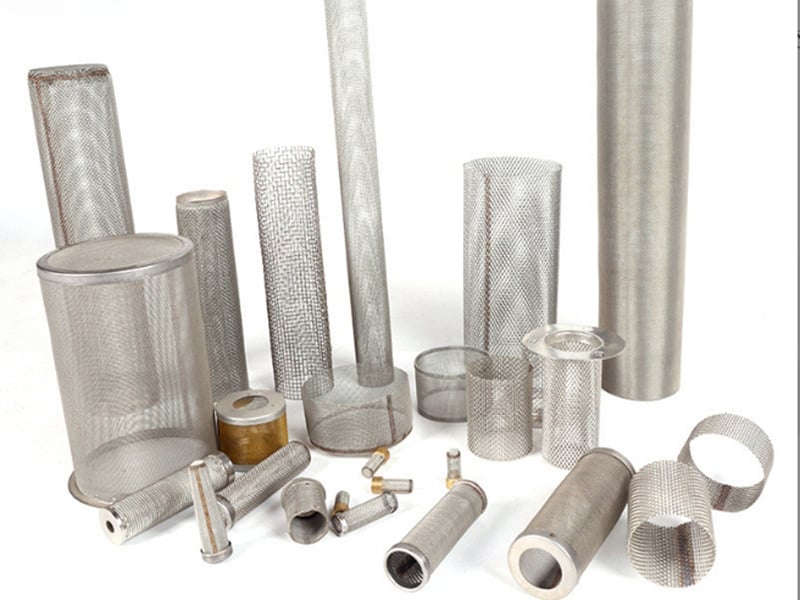
Real Maidong mesh filter products showing roll media converted into cylindrical and shaped components.
Oil Filtration Mesh Is the Media—Not the Whole System
Stainless steel mesh can be supplied as roll media or converted into discs, cylinders, cones and supported assemblies. Its aperture or pore structure controls particle passage, while the support, seal, housing and flow path control how the complete filter works.
Oil type, additives, viscosity range and temperature.
Retention target
Particle size plus nominal, absolute or test basis.
Hydraulic load
Flow, clean pressure drop and maximum differential pressure.
Final format
Roll, cut piece, disc, cylinder or supported assembly.
Oil Filter Mesh Specification Checklist
Use the complete data set below when requesting a quotation. A request containing only a micron number is incomplete.
RFQ field
Information to provide
Why it matters
Oil / fluid
Fluid name, additives, water content, viscosity and temperature
Material, seal and pressure-drop review
Particle target
Contaminant type, size and required cleanliness or protection objective
Media pore structure and rating basis
Rating basis
Aperture, nominal/absolute micron or stated test method
Prevents false mesh-to-micron equivalence
Hydraulics
Flow, clean pressure drop and maximum differential pressure
Area, weave and support selection
Supply form
Roll width, cut size or finished-component drawing
Controls fabrication and fit
Cleaning / acceptance
Cleaning method, inspection, quantity and drawing revision
Defines a verifiable purchase requirement
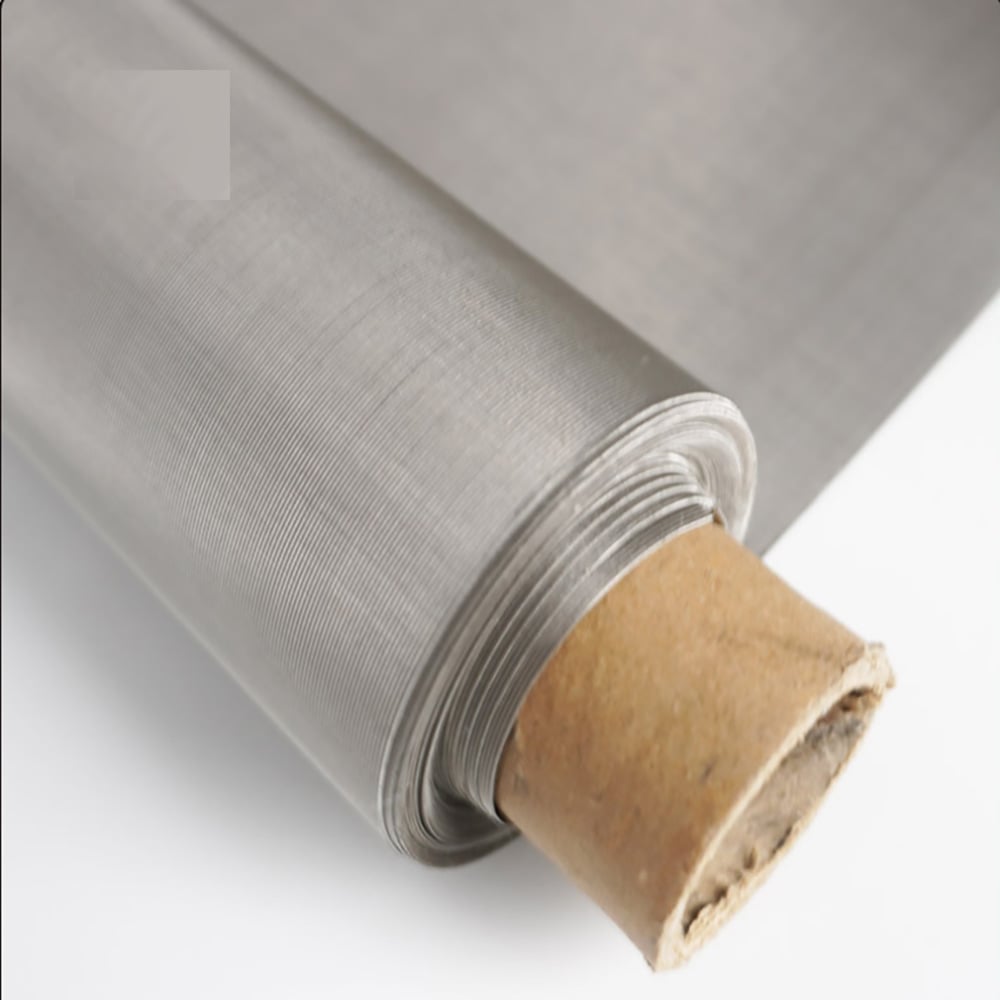
Fine Dutch weave stainless steel mesh supplied as roll media for suitable oil filtration duties.
Choose the Pore Structure Before the Mesh Number
Square woven mesh provides a directly calculable opening when mesh count and wire diameter are known. Dutch weave mesh uses unequal warp and weft wires to create a more tortuous pore path and requires construction-specific rating data.
Useful where a defined square opening and open area are required.
Dutch weave mesh
Fine filtration structure selected from weave-specific data.
Supported mesh
Fine media backed by coarse mesh, expanded metal or perforated support.
Multilayer assembly
Layer sequence and joining method defined from the drawing and duty.
Support, Flow Direction and Differential Pressure
Fine mesh can deform if pressure acts from the unsupported side. The RFQ should show flow direction, support location, layer sequence and maximum differential pressure. Support geometry must also permit drainage without masking excessive effective area.
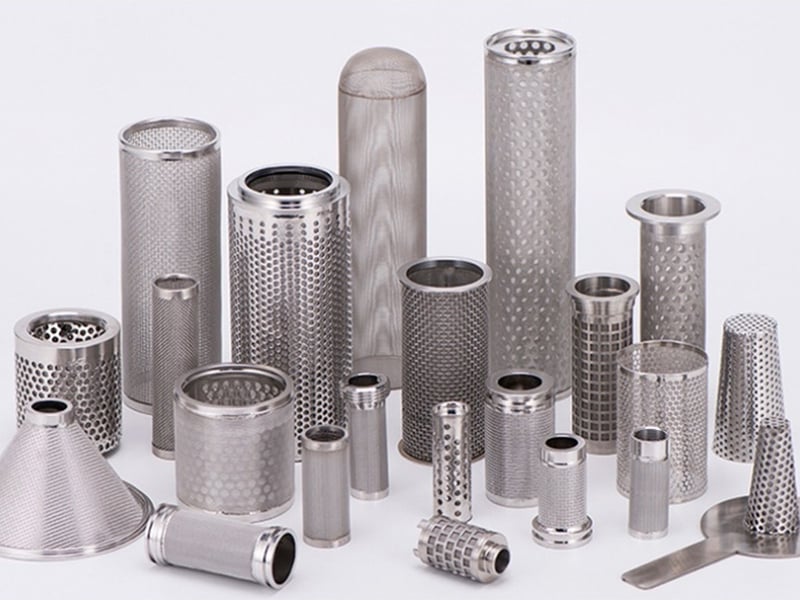
Supported mesh elements combining fine filtration media with perforated or coarse structural layers.
Materials for Oil and Lubricant Service
304, 316 and 316L stainless steels are common filtration-mesh enquiries. The final grade must be checked against the real oil, additives, contamination, water exposure, temperature and cleaning chemistry. Review the 304 vs 316 stainless steel mesh guide for the main selection factors.
304 / 304L
General stainless option subject to process compatibility.
316 / 316L
Consider where the actual chemistry requires improved corrosion resistance.
Wire geometry
Specify mesh count with wire diameter, or direct aperture.
Surface and cleanliness
State cleaning, handling and acceptance requirements in the RFQ.
Supply Forms for Oil Filtration Projects
Roll mesh
Define weave, grade, width, length and edge condition.
Cut pieces and discs
Provide outline, diameter, tolerances, layers and edge treatment.
Cylinders and cones
Show seam, ends, flow direction and support arrangement.
Supported elements
Define each layer, joining method, dimensions and interfaces.
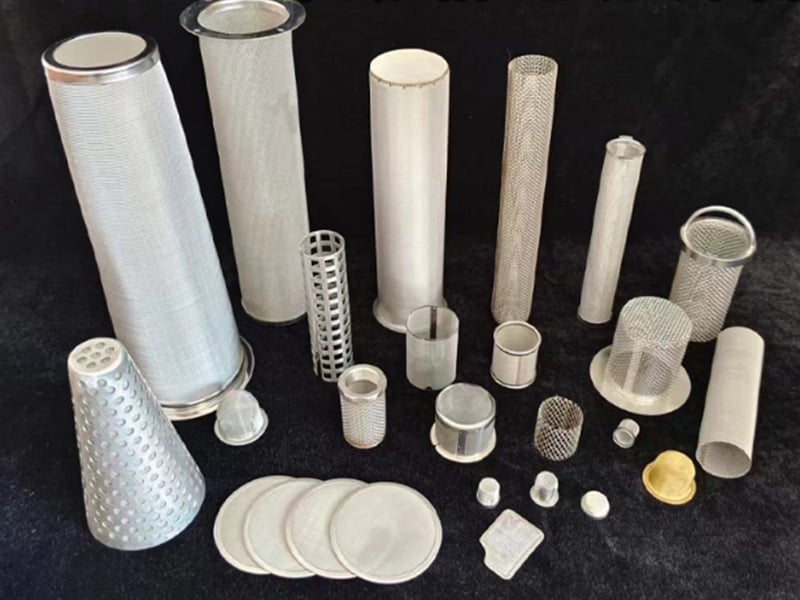
Real examples of filter mesh supplied as discs, tubes, cones and drawing-based components.
From media to a drawing-based filter part
Mesh selection should be fixed before cutting, forming or joining. The same filtration medium can behave differently when effective area, support and bypass sealing change. For an integrated pleated element, see the pleated stainless steel oil filter cartridge.
Real Mesh Media and Fabricated Filter Examples
Real Maidong mesh filter products showing roll media converted into cylindrical and shaped components.
Cylinders and shaped filters
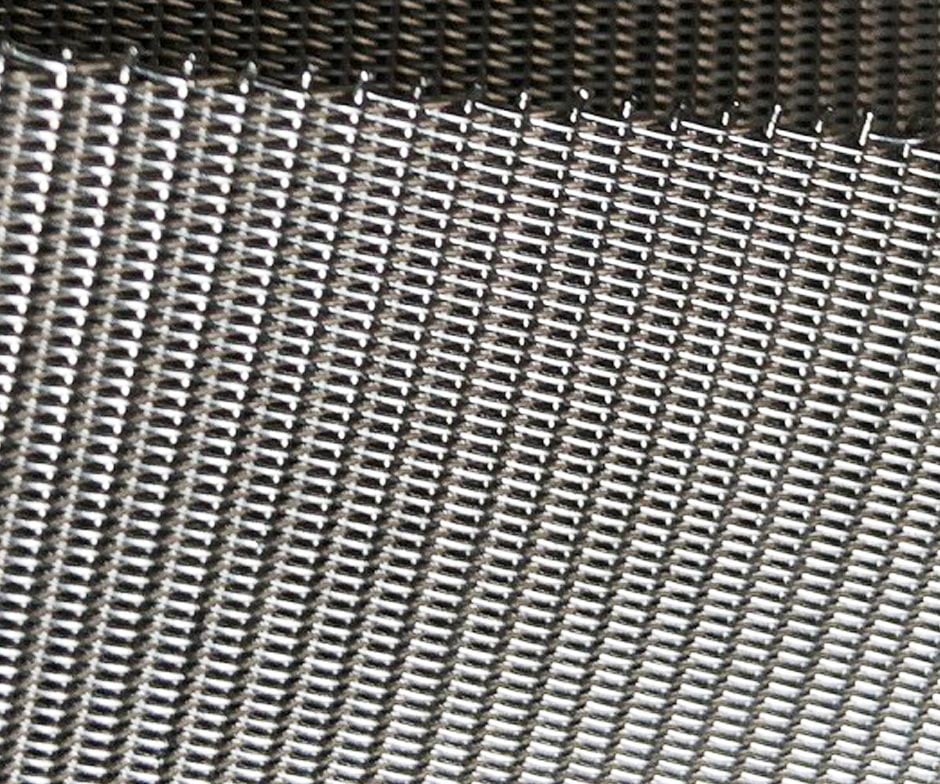
Close surface view used to review weave uniformity and fine filtration geometry.
Fine Dutch weave surface
Real examples of filter mesh supplied as discs, tubes, cones and drawing-based components.
Discs, tubes and cones
These are real Maidong material and fabricated-part examples. They illustrate supply forms only; the final mesh, rating, size, support and interfaces must follow the approved specification or drawing.
How to Select Stainless Steel Mesh for Oil Filtration
1. Define the fluid
State oil type, additives, viscosity and temperature.
2. Define particle control
State the particle target and rating/test basis.
3. Add hydraulic data
Provide flow and differential-pressure limits.
4. Choose media and support
Define weave, alloy, layers and flow direction.
5. Specify the final form
Send dimensions, drawing, cleaning and quantity.
Real Maidong mesh filter products showing roll media converted into cylindrical and shaped components.
Prepare a Complete Oil Filtration RFQ
Send the oil duty, particle target, retention basis, viscosity, temperature, flow, differential pressure, mesh construction, support, dimensions, cleaning method and quantity. If the rating is uncertain, describe the protection objective instead of guessing a micron value.
Square woven mesh, Dutch weave mesh or a supported multilayer construction may be used depending on particle target, viscosity, flow and differential pressure. The correct choice cannot be made from mesh count alone.
No. Square mesh aperture depends on mesh count and wire diameter. Dutch weave and multilayer media require construction-specific retention data and a clearly stated nominal, absolute or test basis.
Provide the oil or fluid, viscosity and temperature range, particle target, rating basis, flow, clean and maximum differential pressure, support need, cleaning method, dimensions and required supply form.
Support should be reviewed when fine media may deform during operation, cleaning, fabrication or handling. State the flow direction and which side sees the higher pressure.
304, 316 and 316L are common enquiries. Final selection depends on the actual oil, additives, water content, temperature, cleaning chemistry and corrosion conditions.
Request Oil Filtration Mesh or a Fabricated Filter Part
Send the complete duty and drawing so the media, support and finished geometry can be reviewed together.