REVERSED WARP/WEFT FILTER CLOTH · MADE TO SPECIFICATION
Reverse Dutch Weave Wire Mesh for Industrial Filtration
Reverse Dutch weave wire mesh uses many fine warp wires with fewer, heavier weft wires. Specify reverse plain or twill construction, both wire counts and diameters, alloy, retention basis, process duty and supply form together—mesh count alone cannot identify the filter medium.
Dense reverse Dutch weave media should be purchased from its complete warp and weft construction.
Direct Answer: The Reversed Wire Relationship Defines the Product
Fine warp system
Many relatively fine longitudinal wires create the dense surface direction.
Heavy weft system
Fewer, heavier cross wires contribute support and the characteristic pore path.
Plain or twill
Interlacing pattern changes density and must be named in the specification.
Indirect pore path
Retention requires construction-specific data rather than square-aperture conversion.
The reversed warp and weft relationship distinguishes this construction from standard Dutch weave.
Reverse Dutch vs Standard Dutch Weave
Standard Dutch weave generally uses coarser warp wires and finer closely packed weft wires. Reverse Dutch weave changes that relationship: the warp is finer and more numerous, while the weft is heavier and less numerous.
Compare the broader Dutch weave mesh family. Use this page only when the specification truly requires the reverse construction.
Reverse Dutch Weave Specification Table
A valid purchase description identifies the complete wire construction and the basis behind every filtration claim.
RFQ field
Information to provide
Why it matters
Weave construction
Reverse plain or reverse twill; warp × weft count
Identifies interlacing and wire direction
Wire system
Warp diameter and weft diameter separately
Distinguishes actual constructions sharing similar counts
Retention basis
Pore, nominal, absolute or named test plus particle target
Prevents unsupported micron equivalence
Operating duty
Medium, viscosity, temperature, flow, clean drop and differential pressure
Supports permeability and load review
Supply form
Roll or slit width/length, cut piece or finished-part drawing
Controls edges, orientation, forming and tolerances
Purchase data
Alloy, cleaning, inspection, quantity and required documents
Creates a comparable quotation
Reverse Plain and Reverse Twill Construction
Reverse plain Dutch
Plain over-one/under-one interlacing with the reverse wire-size relationship.
Reverse twill Dutch
Twill interlacing that can accommodate denser wire arrangements for selected duties.
Selection boundary
Choose from retention, permeability, pressure, cleaning and finished-form requirements—not from the name alone.
For conventional twill construction, see twill Dutch weave wire mesh. It owns a different wire relationship and search intent.
Dense indirect pore paths require construction-specific retention or test data.
Retention and Micron Data Need a Definition
Reverse Dutch weave has an indirect pore path. A reported micron value may refer to pore geometry, nominal retention, absolute retention or a supplier-specific method.
Use the Dutch weave micron-rating guide and state the accepted test or efficiency basis. Do not use a square-mesh aperture formula for this media.
Flow Direction, Wire Orientation and Support
Mark warp direction
Show the fine high-count direction on a belt, strip or formed component.
Mark weft direction
Show the heavier cross-wire direction and its relationship to forming or load.
State pressure direction
Provide upstream/downstream, clean and maximum differential pressure.
Define support
Add perforated, expanded or coarse support only where the real duty requires it.
Alloy selection must follow the actual process fluid or gas, concentration, temperature, contamination, cleaning chemistry and any forming or joining conditions. No stainless grade is universally compatible.
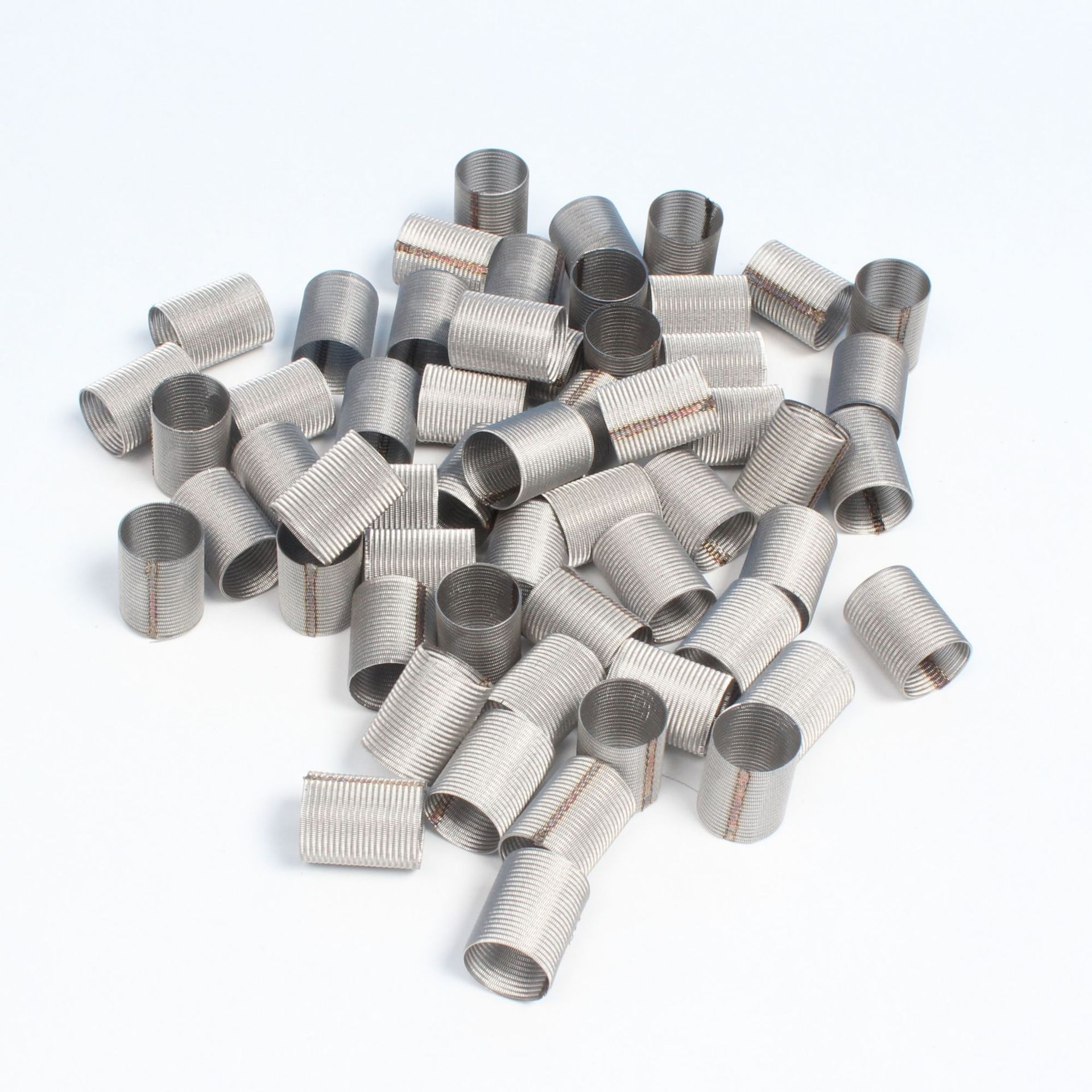
Real Maidong Reverse Dutch Weave and Formed-Media Examples
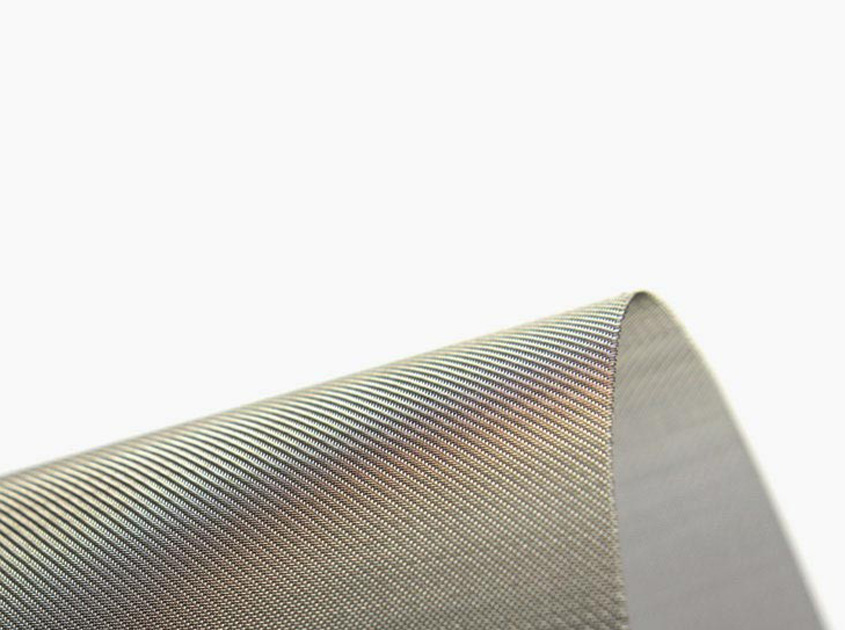
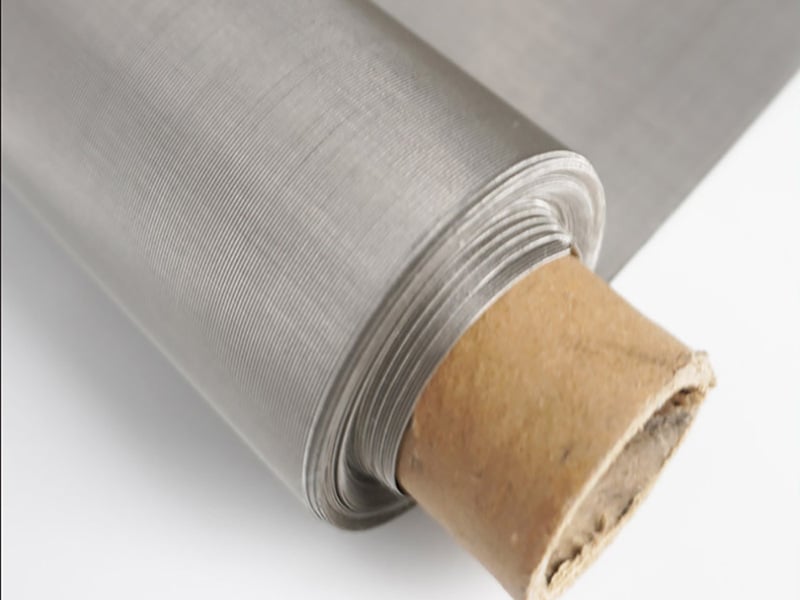
These real Maidong materials show dense roll media, weave structure and formed samples. They are visual examples, not universal retention, flow, pressure or stock claims.
Dense reverse Dutch weave media should be purchased from its complete warp and weft construction.
Dense roll media
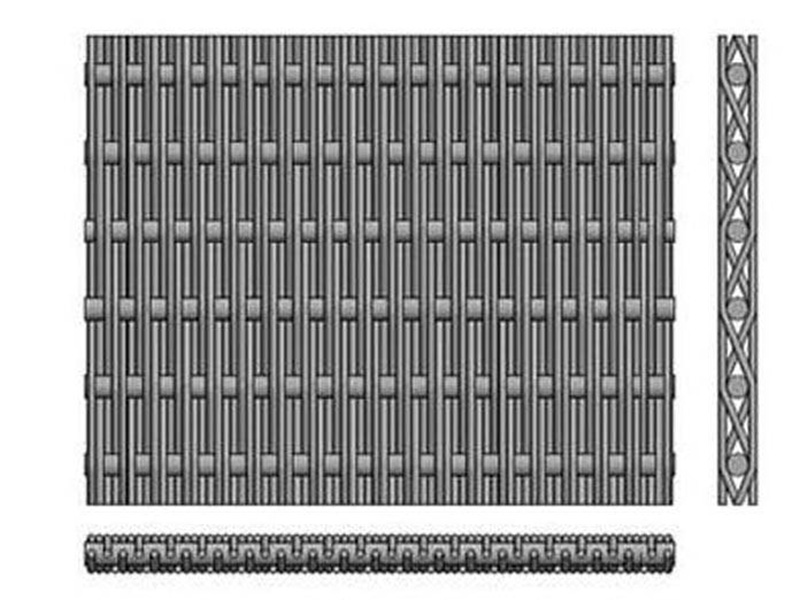
The reversed warp and weft relationship distinguishes this construction from standard Dutch weave.
Reverse twill diagram
Dense indirect pore paths require construction-specific retention or test data.
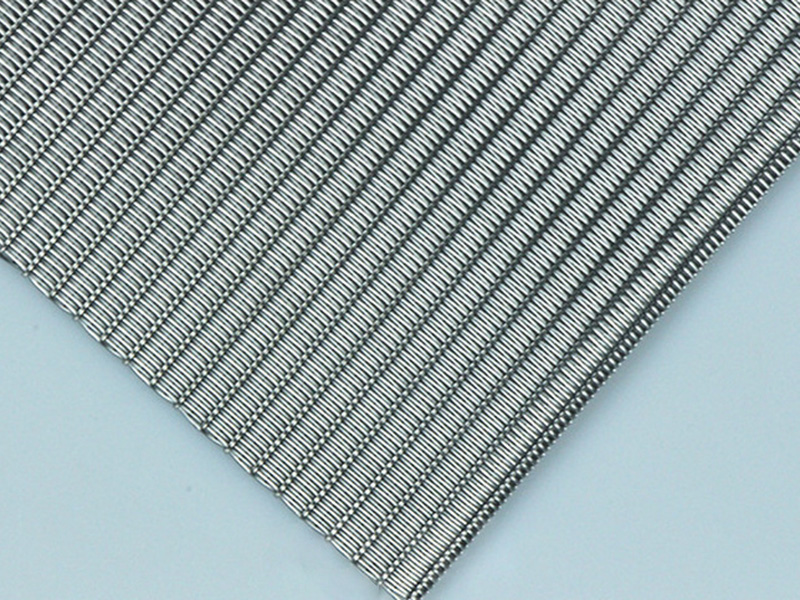
Indirect pore structure
Roll media can be reviewed for drawing-defined cut, formed and supported filter components.
Formed mesh samples
Five-Step Reverse Dutch Weave RFQ
1. Define retention
State particle target and the rating or test basis.
2. Define process duty
Add medium, viscosity, temperature, flow and differential pressure.
3. Define construction
State reverse plain/twill, both counts and both wire diameters.
4. Define alloy and form
Add material, roll/slit dimensions, orientation or finished drawing.
5. Complete the RFQ
Include support, cleaning, quantity and acceptance requirements.
It is a dense woven filter medium using many relatively fine warp wires with fewer, heavier weft wires. The reversed relationship creates an indirect pore path and a mechanically stable cloth for selected continuous-filtration duties.
Standard Dutch weave normally uses coarser warp wires and finer closely packed weft wires. Reverse Dutch weave changes that relationship. Compare complete counts, both wire diameters and weave pattern rather than the words alone.
Reverse plain uses plain interlacing, while reverse twill uses a twill interlacing sequence that supports denser constructions. The correct choice depends on retention, permeability, load, cleaning and fabrication requirements.
No. It does not have a simple square aperture. Use construction-specific pore or retention data and state whether the value is geometric, nominal, absolute or based on a named test.
Enquiries may cover full rolls, slit rolls or belts, cut pieces and drawing-based discs, tubes or supported elements. Finished forms require edges, seams, support, flow direction, dimensions and tolerances.