Twill Dutch weave wire mesh uses coarse warp wires and densely packed fine weft wires in a twill sequence. The resulting indirect pore path supports fine industrial filtration, but it must be purchased from the complete construction—not from mesh count or a standalone micron number.
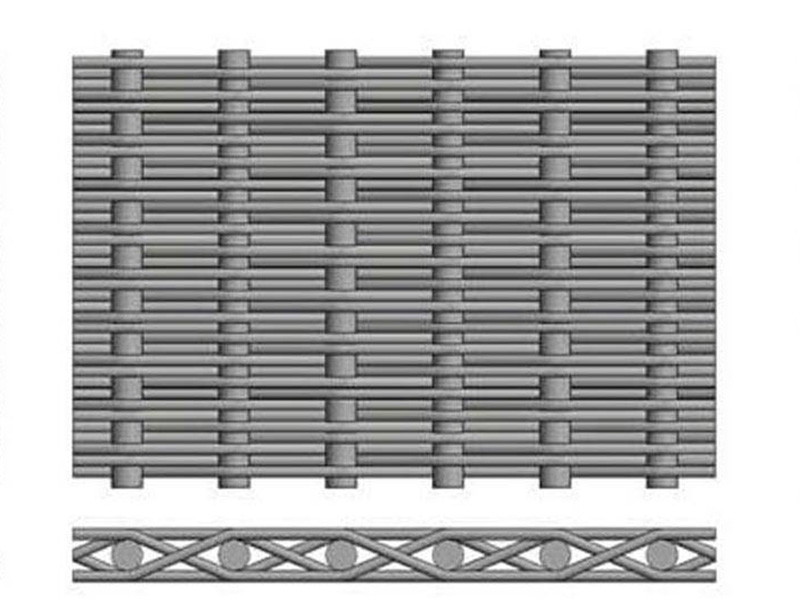
Unlike square woven mesh, twill Dutch weave does not present a directly measurable square aperture. Unequal warp and weft wire diameters are packed closely, and each weft wire passes over and under pairs of warp wires. Fluid follows a tortuous path through the structure.
This page covers the twill Dutch subtype. For the full family, compare the main Dutch weave wire mesh page.
Twill Dutch weave uses paired interlacing and a dense indirect pore path.
How to Specify Twill Dutch Weave Mesh
Warp × weft count
State both directional counts in the agreed convention.
Warp / weft wire
Provide both wire diameters and their units.
Rating basis
Identify pore, retention or filtration value and test method.
Service conditions
State medium, temperature, pressure and cleaning method.
Twill Dutch Weave Technical Data Checklist
Reference tables can shortlist a construction, but purchasing data should identify the complete weave and the basis of any filtration value.
RFQ field
Required information
Why it matters
Construction
Twill Dutch; warp × weft count; both wire diameters
Identifies the actual woven geometry
Filtration basis
Target particle size plus nominal/absolute/pore/test definition
Prevents unsupported micron equivalence
Material
304, 316, 316L or drawing-specified alloy
Must suit process and cleaning chemistry
Operating duty
Medium, viscosity, temperature, flow and differential pressure
Influences flow, support and mechanical review
Supply form
Roll dimensions, cut pieces or finished-part drawing
Defines edges, seams, layers and tolerances
Fine woven filter media should be specified by its complete construction.
Why a Micron Number Is Not Enough
The common square-mesh formula cannot calculate a Dutch weave opening. Reported values may describe pore size, particle retention or a result from a particular test. Always request the definition and method behind the number.
Plain over-one/under-one interlacing; compare when a simpler dense construction fits the duty.
Twill Dutch
Paired interlacing supports densely packed fine weft wires and an indirect filtration path.
Reverse Dutch
Reverses the usual wire-count relationship and serves a distinct filtration and mechanical intent.
Review the dedicated plain Dutch weave and reverse Dutch weave pages before choosing. These constructions should not be treated as interchangeable keyword variants.
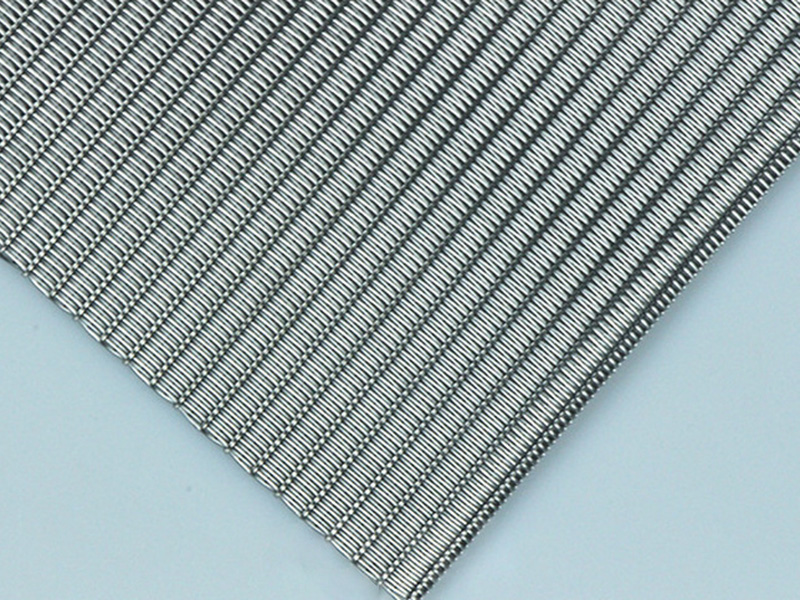
Close view of the unequal warp and weft wire arrangement.
Materials and Supply Formats
Common enquiries specify 304, 316 or 316L stainless steel. The choice depends on the process medium, concentration, temperature, cleaning chemistry and fabrication. Compare the 304 vs 316 wire mesh guide.
Supply requirements may include rolls, slit widths, cut pieces or drawing-based fabricated components. Define edge condition, dimensional tolerances and any support layer.
Typical Filtration Applications
Polymer processing
Dense woven media considered for melt and process filtration.
Hydraulic and lubricating oil
Fine filtration where retention, flow and pressure duty are jointly defined.
Chemical processing
Metal media selected after alloy compatibility and cleaning review.
Process gas and liquid
Reusable woven media for suitable industrial separation duties.
Real Product and Fabrication Examples
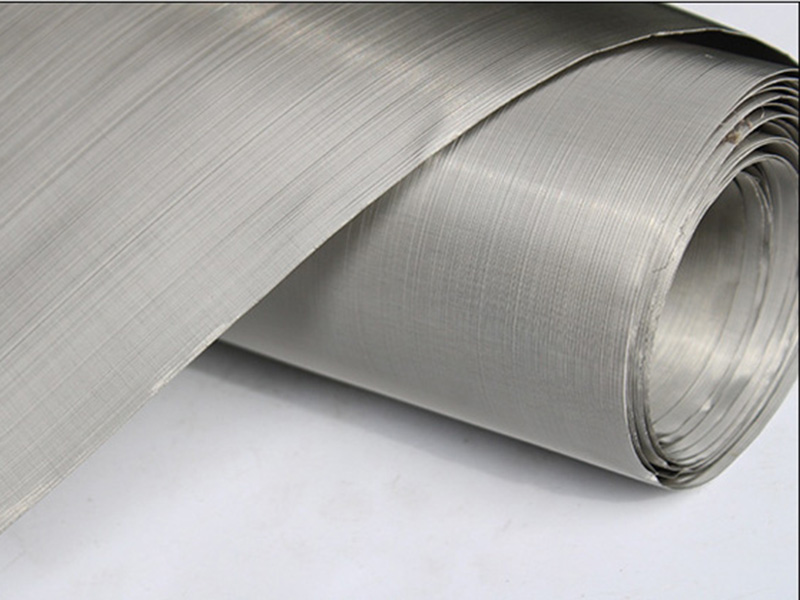
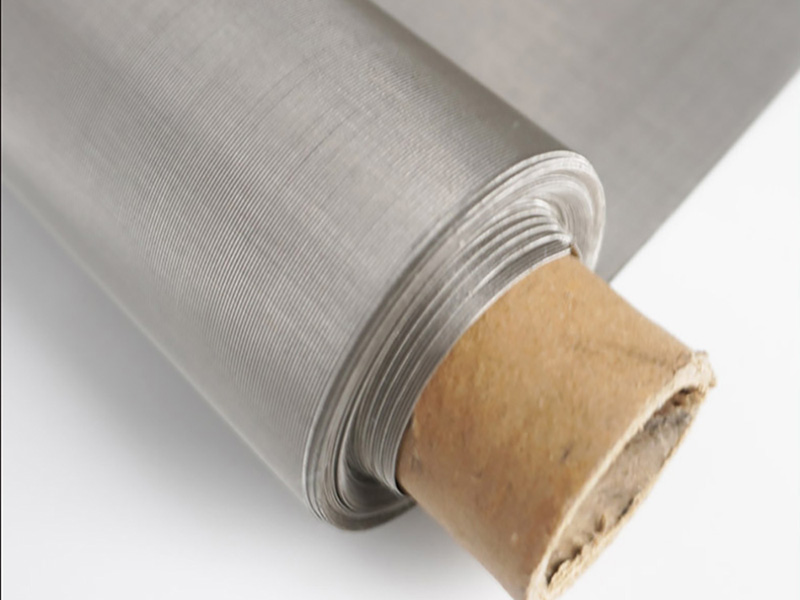
Dense Dutch weave filter media in roll form.
Dense roll media
Close view of the unequal warp and weft wire arrangement.
Warp and weft detail
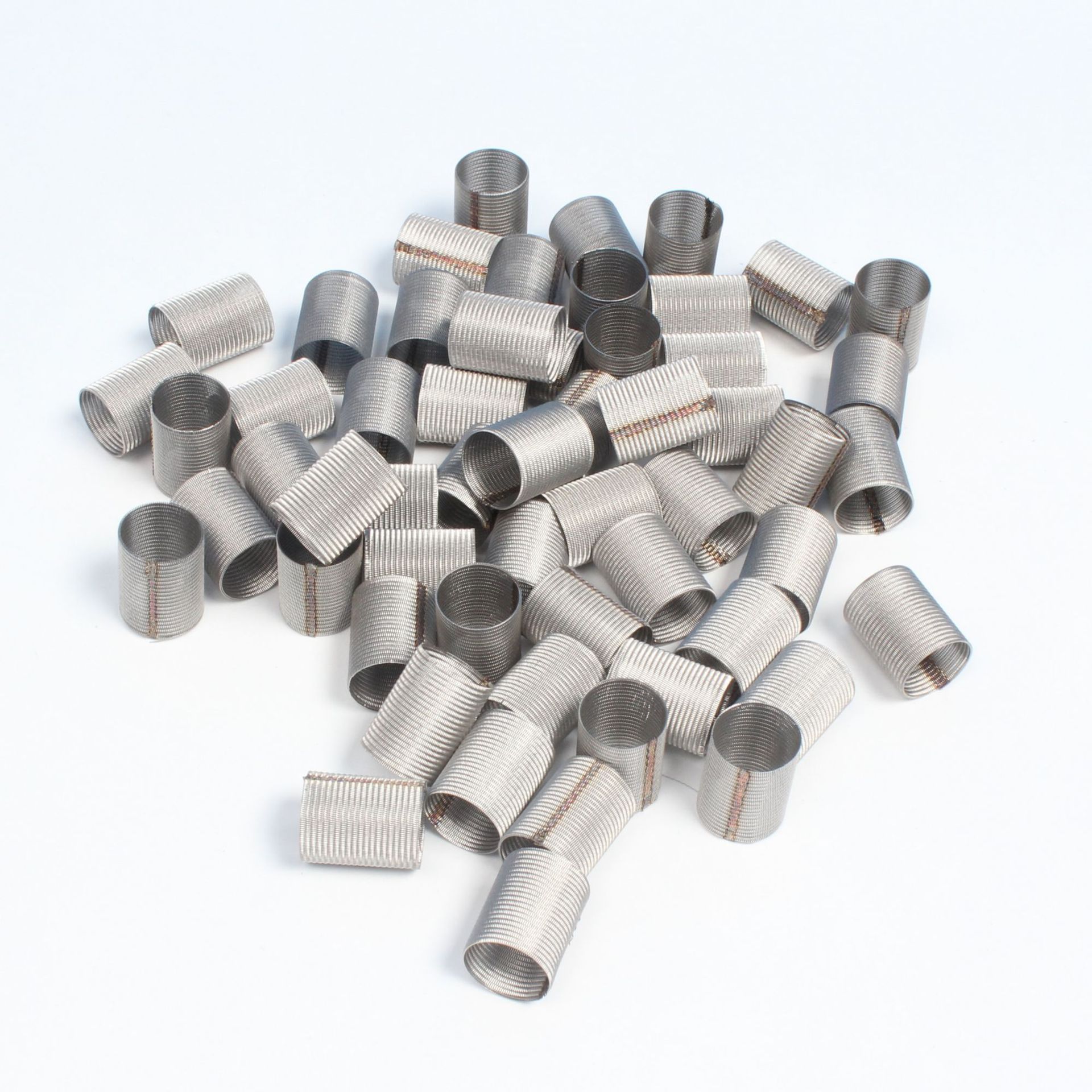
Real formed mesh samples illustrate a possible downstream component format; final construction follows the drawing.
Formed mesh samples
These Maidong material images illustrate roll media, surface structure and a possible formed component format. A finished stainless steel filter tube or filter disc must still follow its own drawing, layer sequence, joining and support requirements.
How to Select Twill Dutch Weave Mesh
1. Define retention
State the particle target and how it is measured.
2. Define flow duty
Provide medium, viscosity, flow and pressure conditions.
3. Fix construction
State count, both wire diameters, weave and alloy.
4. Review support
Define backing, layer order, flow direction and cleaning load.
5. Send final format
Provide roll dimensions or a finished-part drawing and quantity.
It is a dense woven filter medium made with unequal warp and weft wire systems. The twill interlacing lets closely packed wires form an indirect pore path rather than an open square aperture.
No. State the warp-by-weft count, both wire diameters, weave designation, alloy and the filtration or pore-rating basis. Mesh count alone does not define the effective pore structure.
No. The square-mesh aperture formula does not apply because Dutch weave has no simple square opening. Use construction-specific pore or retention data and identify how the value was measured.
Plain Dutch uses an over-one, under-one sequence. Twill Dutch generally uses an over-two, under-two sequence and can accommodate denser wire packing. Selection should compare retention, flow, pressure, cleaning and fabrication requirements.
304 is a common starting point when compatible with the process. 316 or 316L may be reviewed for more demanding chemistry or fabrication conditions. Confirm the alloy against the actual medium, temperature and cleaning method.
Send warp and weft counts, both wire diameters, alloy, filtration basis, roll or part dimensions, operating medium, temperature, differential pressure, cleaning method, tolerances and quantity.
Request a Construction Review
Send the warp/weft count, both wire diameters, alloy, filtration basis, operating conditions, finished dimensions and quantity for review.