
304 vs 316 Stainless Steel Wire Mesh: How to Choose
Short answer: choose 304 for general industrial service when its corrosion resistance is sufficient; consider 316 when chlorides or more aggressive process chemicals increase pitting risk. Choose 316L when a welded assembly specifically benefits from lower carbon content.
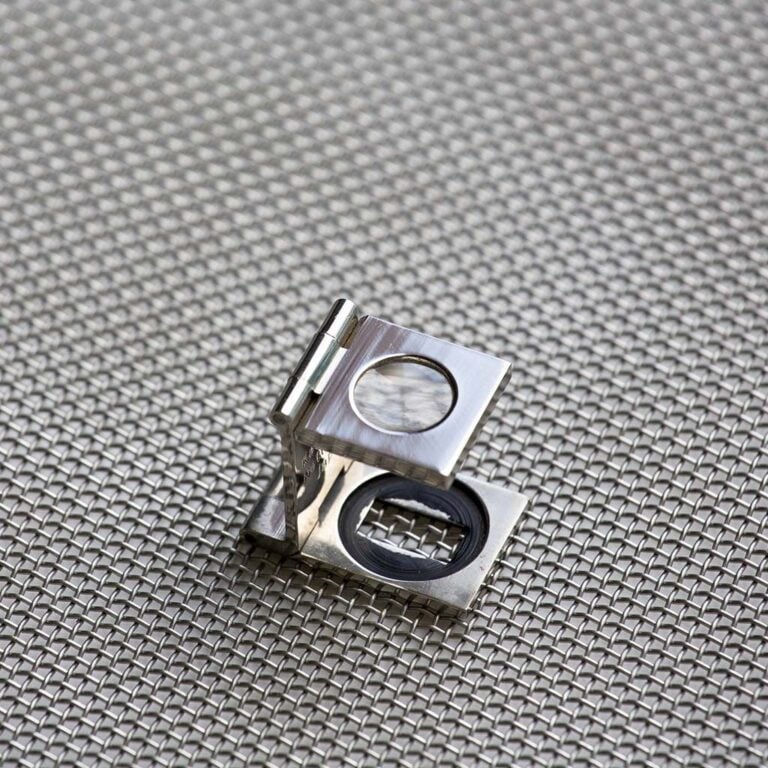
304 vs 316 Wire Mesh at a Glance
Both grades can be woven into plain, twill and Dutch weave filter cloth. The principal purchasing difference is corrosion resistance—not filtration fineness. Mesh count, wire diameter and weave remain separate specification fields.
304 Stainless Steel
Best starting point: general screening and filtration in dry, indoor or mildly corrosive environments.
Key advantage: broad industrial use with a usually lower material cost than 316.
316 Stainless Steel
Consider when: chlorides, salt spray or more aggressive process media raise the risk of localized corrosion.
Key difference: molybdenum improves resistance to chloride pitting.
316L Stainless Steel
Consider when: welded or fabricated filter assemblies call for a lower-carbon 316 grade.
Important: 316L is not automatically required for every mesh application.
Technical Comparison for Industrial Buyers
| Selection factor | 304 | 316 | Procurement meaning |
|---|---|---|---|
| Molybdenum | Not intentionally added | Typically 2–3% | Helps 316 resist chloride pitting better than 304 |
| General corrosion resistance | Good for many general environments | Greater margin in many aggressive environments | Review the actual chemistry, concentration and temperature |
| Chloride exposure | Higher pitting risk | Better resistance, but not immune | Include chloride level, temperature and cleaning cycle in the enquiry |
| Filtration opening | Defined by mesh geometry | Defined by mesh geometry | Grade alone does not change aperture or micron rating |
| Relative material cost | Usually lower | Usually higher | Compare total service-life risk, not purchase price alone |
Important: the ranges and behavior above are general material-selection guidance. Final suitability depends on the applicable material standard, actual composition, fabrication, surface condition and operating environment.
Typical Alloy Difference
304 and 316 are chromium-nickel stainless steels. The defining practical difference for many mesh buyers is the molybdenum content normally present in 316.
- 304: typically 18–20% chromium and 8–10.5% nickel.
- 316: typically 16–18% chromium, 10–14% nickel and 2–3% molybdenum.
- 316L: lower maximum carbon content than 316.
Confirm the required standard and documentation rather than ordering from an alloy nickname alone.
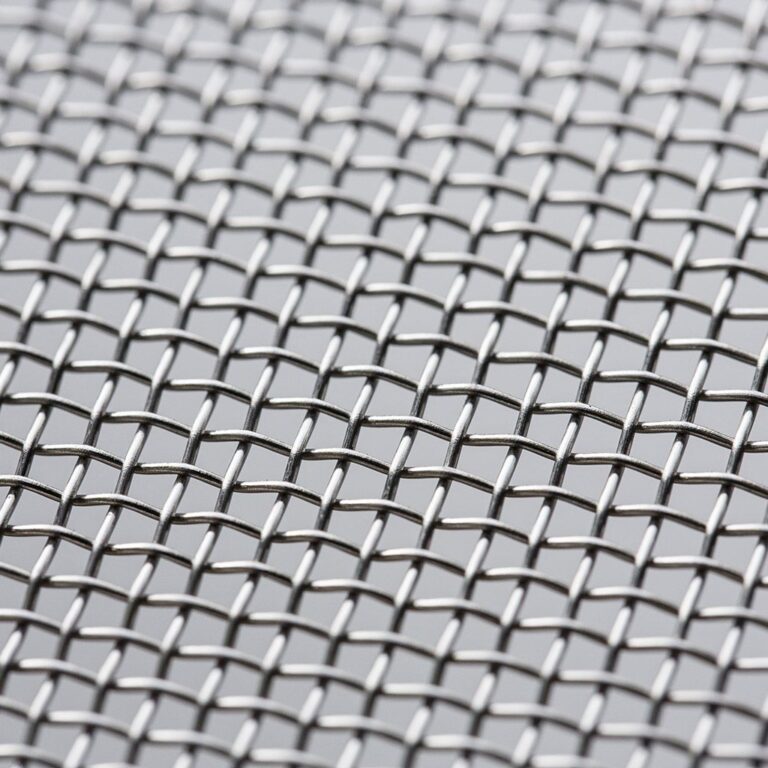
How to Choose Between 304 and 316
1. Identify the medium
List water, chemicals, salts, oils, powders and cleaning agents that contact the mesh.
2. Check chlorides
Record chloride concentration, temperature, wet/dry cycling and possible crevice conditions.
3. Review fabrication
State whether the mesh is supplied as a roll, cut part, welded tube, disc, basket or supported assembly.
4. Compare lifecycle risk
Balance initial material cost against cleaning, downtime, corrosion risk and expected service life.
Application-Based Selection Examples
General dry screening: 304 is often a practical starting point when corrosion exposure is limited.
Washdown or process filtration: review cleaning chemicals and retained residues before choosing the grade.
Salt or chloride exposure: 316 is commonly evaluated for its improved pitting resistance, but concentration and temperature still matter.
Welded filter elements: consider whether the drawing or corrosion assessment calls for 316L.
Explore Maidong’s stainless steel wire mesh range for weave and dimensional options.
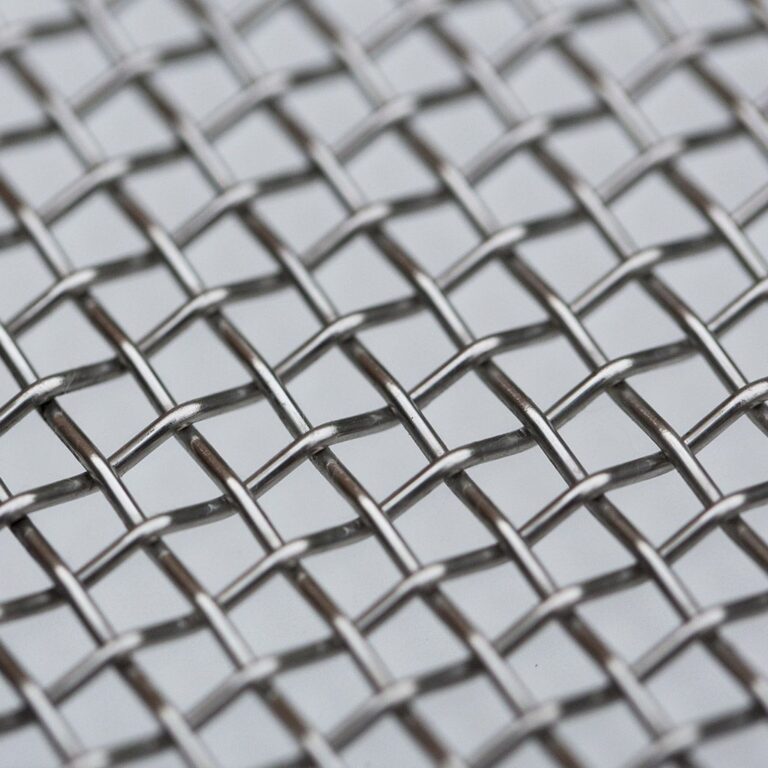
Material Grade Does Not Define Mesh Performance
Two meshes can use different stainless steel grades and still have the same nominal opening. Conversely, two 304 meshes can have very different filtration behavior if their mesh count, wire diameter or weave differs.
Specify the geometry
- Mesh count in warp and weft directions
- Wire diameter
- Clear aperture or validated retention target
- Plain, twill or Dutch weave
- Open area and dimensional tolerance
Specify the finished form
- Roll width and length
- Cut sheet, disc, tube, cylinder or basket
- Edge treatment and seam
- Support mesh or perforated core
- Drawing and inspection requirements
Use the mesh-to-micron calculator for square-weave geometry, or review Dutch weave mesh when a dense filtration structure is required.
RFQ Checklist: Information to Send
Process conditions
- Fluid, gas or powder
- Chemical composition and chloride exposure
- Operating and cleaning temperature
- Pressure differential and flow requirement
- Cleaning method and expected service cycle
Product specification
- 304, 316, 316L or required standard
- Mesh count, wire diameter and weave
- Dimensions, tolerances and quantity
- Finished form and support structure
- Drawing or sample reference
For grade-specific product information, see 304 stainless steel wire mesh and 316 stainless steel wire mesh. These product pages cover purchasing intent; this guide is intended to support the grade-selection decision.
304 vs 316 Wire Mesh FAQ
No. 316 generally provides better resistance to chloride-induced pitting because it contains molybdenum, but 304 can be the more economical choice in dry, indoor or mildly corrosive service. The correct grade depends on the process medium, cleaning chemicals, temperature, fabrication and service life target.
Not by material grade alone. Filtration opening is controlled by mesh count, wire diameter, weave, tolerances and the complete filter structure. A 304 and a 316 mesh made to the same dimensional specification can have the same nominal aperture.
316 is commonly considered where salt spray, saline solutions, seawater-adjacent service or chloride-containing cleaning media create a pitting risk. Actual suitability still depends on chloride concentration, temperature, oxygen, crevices and cleaning conditions.
316L has a lower maximum carbon content than 316. It is often specified for welded or fabricated assemblies where reducing sensitization risk in heat-affected zones is important. It does not automatically solve every corrosion problem.
304 is widely used in food-processing equipment, but suitability cannot be determined by grade name alone. The process, cleaning chemicals, hygienic design, applicable regulations and contamination controls must all be reviewed.
State the mesh count, wire diameter, weave, opening or filtration target, roll or finished dimensions, edge and support details, operating medium, temperature, pressure conditions, cleaning method, quantity and any applicable material documentation requirement.
Need Help Choosing a Stainless Steel Grade?
Send the process medium, cleaning method, operating conditions, mesh geometry and finished dimensions. Maidong can review the information for a woven mesh or fabricated filter enquiry without assuming that the higher alloy grade is automatically the correct choice.