Pleated vs Sintered Metal Filter Cartridge: How to Choose
Choose between pleated and sintered metal filter cartridges by comparing the actual media structure, usable filtration area, rigidity, pressure duty, cleaning method, cartridge envelope and equipment interface. Neither construction is universally better.
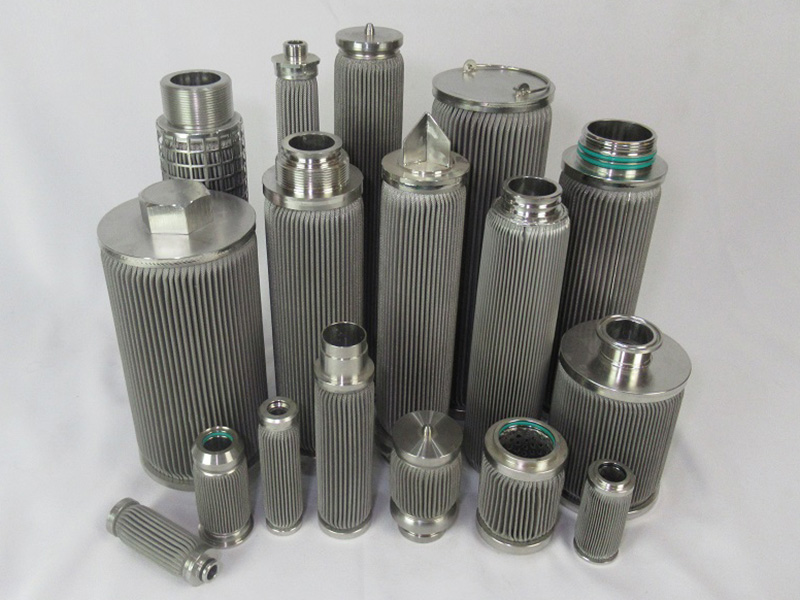
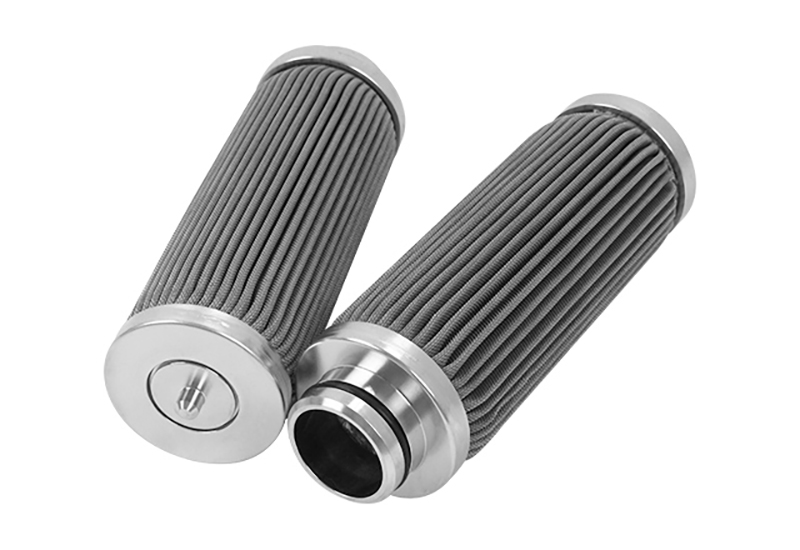
Pleated metal filter cartridges with drawing-specific lengths, diameters and interfaces.
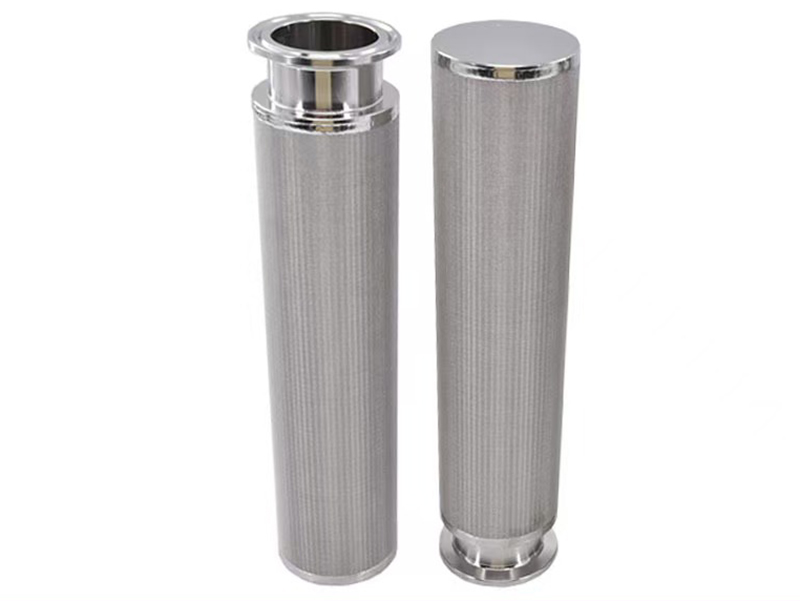
Straight cylindrical sintered filter elements with rigid porous walls and sanitary interfaces.
Direct Answer: Select the Construction Around the Duty
Choose pleated media when
More filtration area inside the available diameter is a central design objective.
Choose sintered media when
A rigid, fixed porous structure and geometry are central to the duty.
Do not decide from micron alone
Rating definition, test method and complete element construction must match.
Validate in the assembly
Flow direction, supports, seals, ends and bypass paths affect the finished result.
Pleated vs Sintered Metal Filter Cartridge Comparison
This is a selection framework, not a universal performance ranking. Cartridge data should be compared using the same test basis and operating conditions.
Selection point
Pleated metal cartridge
Sintered metal cartridge
Buyer check
Media geometry
Folded metal mesh or porous sheet pack
Bonded mesh laminate or porous sintered metal
Name the exact media construction
Area in the envelope
Pleats increase surface area within the diameter
Usually straight cylindrical porous wall
Compare effective area, not external size only
Structural behavior
Depends on pleat pack, cores, cages and end fixing
Rigid porous body; strength still depends on geometry and media
State normal and maximum differential pressure
Pressure drop
Influenced by area, media, pleat spacing and loading
Influenced by permeability, wall thickness and pore path
Compare at the same fluid, flow and clean condition
Cleaning
Pleat valleys and supports affect access
Rigid wall may suit defined reverse cleaning
Validate with actual contaminant and method
Interfaces
Caps, core, cage, seals and adapters
Ends or fittings joined to rigid porous body
Provide a controlled drawing and tolerances
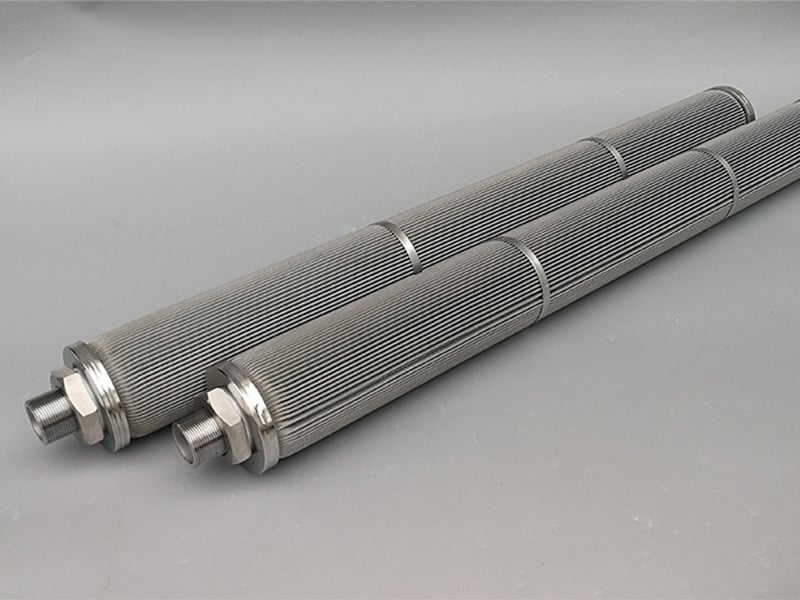
Long pleated elements showing the pleat pack, support rings and threaded ends.
Pleated Metal Cartridge: Area Inside a Fixed Envelope
Pleating folds the filtration medium around a support core, increasing surface area without increasing the cartridge diameter by the same proportion. The design still depends on pleat height, spacing, support mesh, core, outer cage and end attachment.
Sintered Metal Cartridge: Identify the Porous Structure
“Sintered cartridge” can refer to a bonded wire-mesh laminate or a porous sintered metal structure. These are not automatically equivalent. State the media type, layer construction or wall structure, pore/rating basis and joining method.
A rigid cylindrical wall can simplify geometry and support, but pressure capability and permeability remain construction-specific. See the custom sintered filter cartridge page for product enquiries.
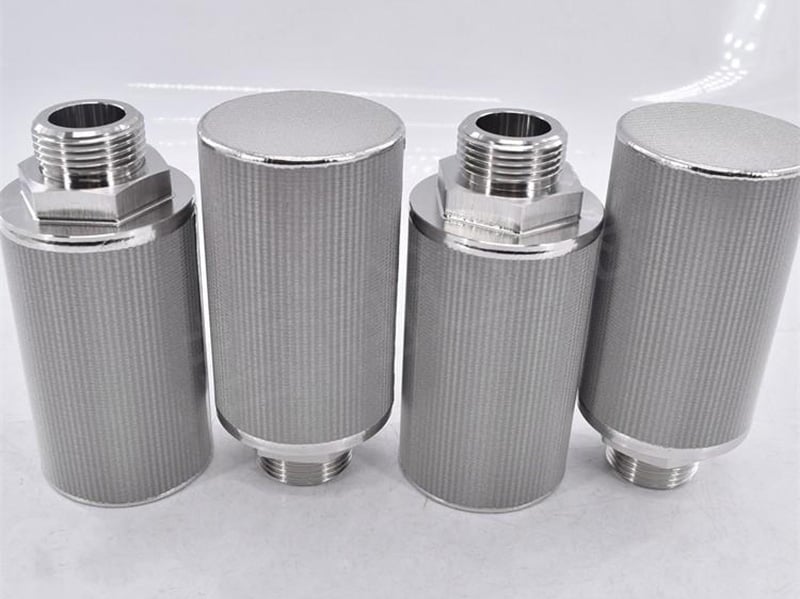
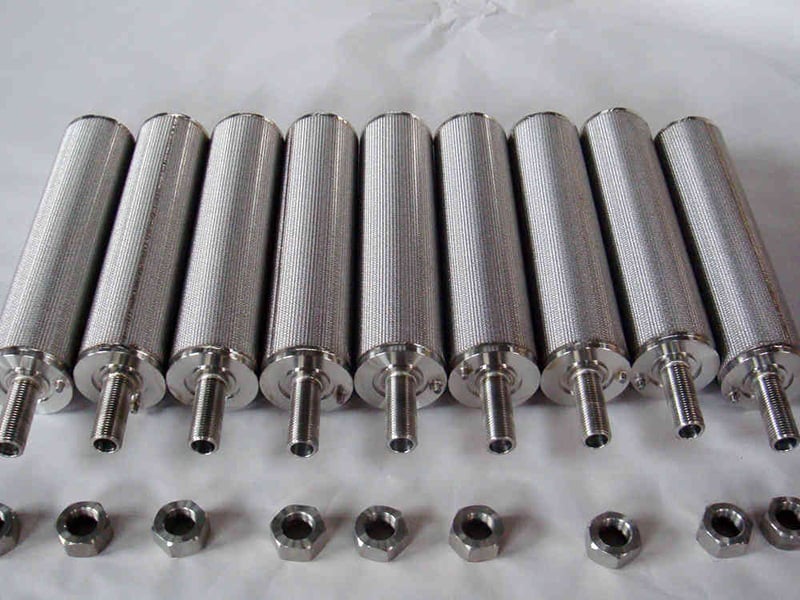
Rigid cylindrical sintered elements with different threaded end arrangements.
Pressure Drop, Differential Pressure and Flow Direction
Clean pressure drop
Compare at the same medium, viscosity, temperature, flow and clean condition.
Maximum differential pressure
State normal, upset and reverse-cleaning loads with the direction of flow.
Support and bypass
Check cores, cages, seams, end seals and potential unfiltered paths.
Do not infer a safe pressure limit from media category alone. Cartridge diameter, length, wall or pleat construction, supports and joining all affect the complete element.
Filtration Rating Must Use the Same Definition
Compact pleated cartridges with high media area inside a cylindrical envelope.
Compare evidence behind the micron number
Nominal, absolute and geometric values are not interchangeable. Ask for the efficiency or beta ratio, particle basis, test method and operating conditions behind the stated rating.
Will particles rinse away, dissolve, detach under reverse flow or remain embedded?
Cleaning access
Can the method reach pleat valleys or the complete porous wall?
Chemical and thermal duty
Are media, welds, ends and seals compatible with the cleaning conditions?
Acceptance after cleaning
Define the inspection or performance check needed before return to service.
Real Pleated and Sintered Cartridge Examples
These Maidong product images illustrate different cartridge proportions and interfaces. They do not imply that visually similar elements have identical ratings or pressure capability.
Compact pleated cartridges with high media area inside a cylindrical envelope.
Compact pleated cartridges
Long pleated elements showing the pleat pack, support rings and threaded ends.
Long pleated elements
Repeated cylindrical sintered elements with threaded equipment connections.
Threaded sintered cartridge batch
Straight cylindrical sintered filter elements with rigid porous walls and sanitary interfaces.
Sanitary-end sintered cartridges
Common Selection Mistakes
Comparing micron labels only
The rating definition and test basis may differ.
Ignoring effective area
External dimensions do not reveal pleated or active porous area.
Assuming universal strength
Pressure capability depends on the complete construction.
Leaving ends until last
Connections, seals and bypass control belong in the first RFQ.
Pleated vs Sintered Cartridge RFQ Workflow
1. Define the contaminant
Particle target, loading behavior and downstream protection.
2. Define the rating
Nominal, absolute or named efficiency/test basis.
3. Add hydraulic duty
Medium, viscosity, flow, temperature and differential pressure.
4. Compare constructions
Area, media structure, supports, cleaning and available envelope.
5. Complete the element
Dimensions, ends, seals, tolerances, quantity and acceptance.
A pleated cartridge folds metal filtration media to increase area inside a given envelope. A sintered cartridge uses a bonded porous structure, such as sintered wire-mesh laminate or porous sintered metal. The exact media construction must be identified before performance is compared.
Not automatically. Pleating can increase filtration area, but clean pressure drop also depends on media permeability, pleat geometry, support layers, flow, viscosity, dimensions and the test condition. Compare measured or calculated data on the same basis.
A rigid sintered structure can provide strong geometric stability, but allowable differential pressure depends on the media type, wall or laminate construction, diameter, length, supports, joining and flow direction. Do not assign a universal pressure limit by category alone.
Cleanability depends on contaminant adhesion, pore path, surface condition, cleaning method, reverse flow, temperature and element construction. Both types can be reusable in suitable duties, but cleaning effectiveness should be verified for the actual process.
They may be offered with similar stated micron values, but the numbers are comparable only when the rating definition, efficiency, test method and operating conditions are aligned. Nominal, absolute and geometric values are not interchangeable.
State the medium, contaminant, rating basis, flow, viscosity, temperature, normal and maximum differential pressure, flow direction, cleaning method, cartridge dimensions, ends, seals, quantity and acceptance requirements.
Need a Drawing-Based Cartridge Comparison?
Send the filtration target, rating basis, process data, differential pressure, cleaning method, available envelope and end-interface drawing.