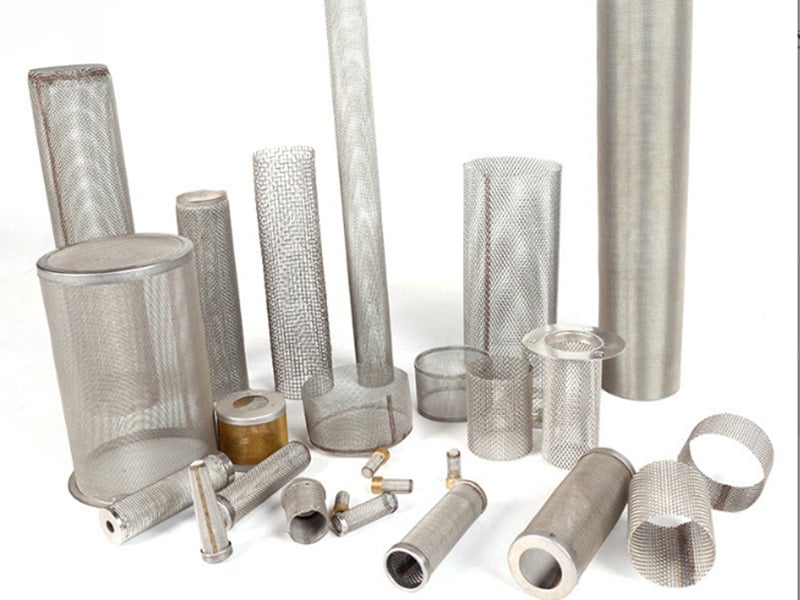
A pump suction strainer basket is a removable stainless steel screen installed upstream of a pump inlet. It must retain the specified debris without creating an unacceptable suction-side restriction. Define the equipment interface, fluid, debris, opening, effective area, flow, suction conditions, support and cleaning access together.
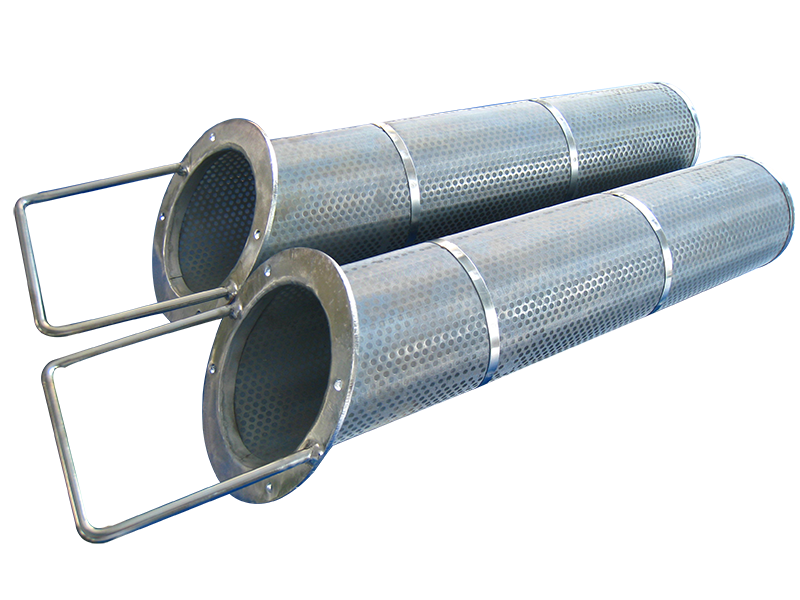
Real Maidong basket forms illustrating handles, rims, supports and filtration bodies.
Direct Answer: Protect the Pump Without Ignoring Suction Conditions
Debris target
Describe the particle, fibre, scale or process debris that must be intercepted.
Inlet interface
Control the seat, rim or flange, envelope, clearances, orientation and removal path.
Effective area
Calculate usable filtration area after subtracting solid and masked regions.
Service access
Provide a handle, drainage and cleaning method suited to the installed location.
Pump Suction Strainer Basket RFQ Table
A basket diameter and mesh number do not define a reliable pump-inlet replacement. Combine the equipment interface with hydraulic and maintenance conditions.
RFQ group
Information to provide
Design question
Equipment interface
Inlet/housing drawing, seat, rim or flange, envelope, orientation and removal clearance
Will it fit, seal and remain serviceable?
Fluid and debris
Fluid identity, temperature, viscosity where relevant, debris material, shape, size and loading
Which material and opening are appropriate?
Filter structure
Perforation or mesh, wire, layers, support, seams and liner termination
How are retention and mechanical stability combined?
Hydraulic duty
Flow rate/direction, suction conditions, clean and loaded pressure-loss limits
Is the effective area adequate for the system?
Maintenance
Handle, loaded removal, drainage, cleaning, inspection and replacement criteria
Can the basket be serviced safely and consistently?
Commercial data
Drawing revision, units, quantity, documentation and delivery country
Are quotations based on equivalent scope?
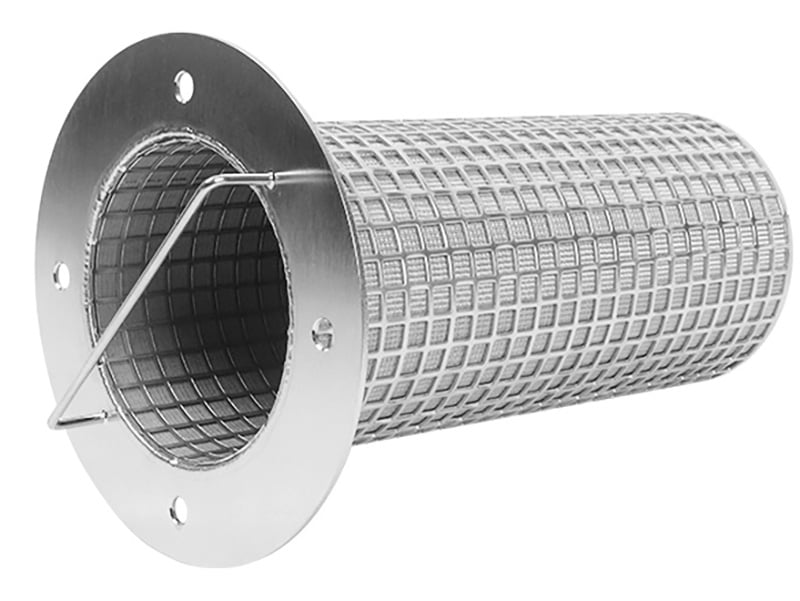
A flanged basket interface must match the seat, orientation, clearance and removal path.
Inlet, Housing and Seating Interface
Show the suction opening or housing, installed depth, seating face, rim or flange, orientation, adjacent pipework and the space needed for removal. Identify whether a gasket or other sealing feature is part of the basket scope.
Opening Selection Starts with the Debris and Protected Equipment
State what must be stopped and why. Fibres, flakes, scale and irregular fragments can behave differently from round particles of the same nominal dimension. Also define the minimum passage or component downstream that requires protection.
If woven mesh is used, specify mesh count together with wire diameter or clear aperture. The mesh-to-micron calculator is a reference for square weave, not a universal retention guarantee.
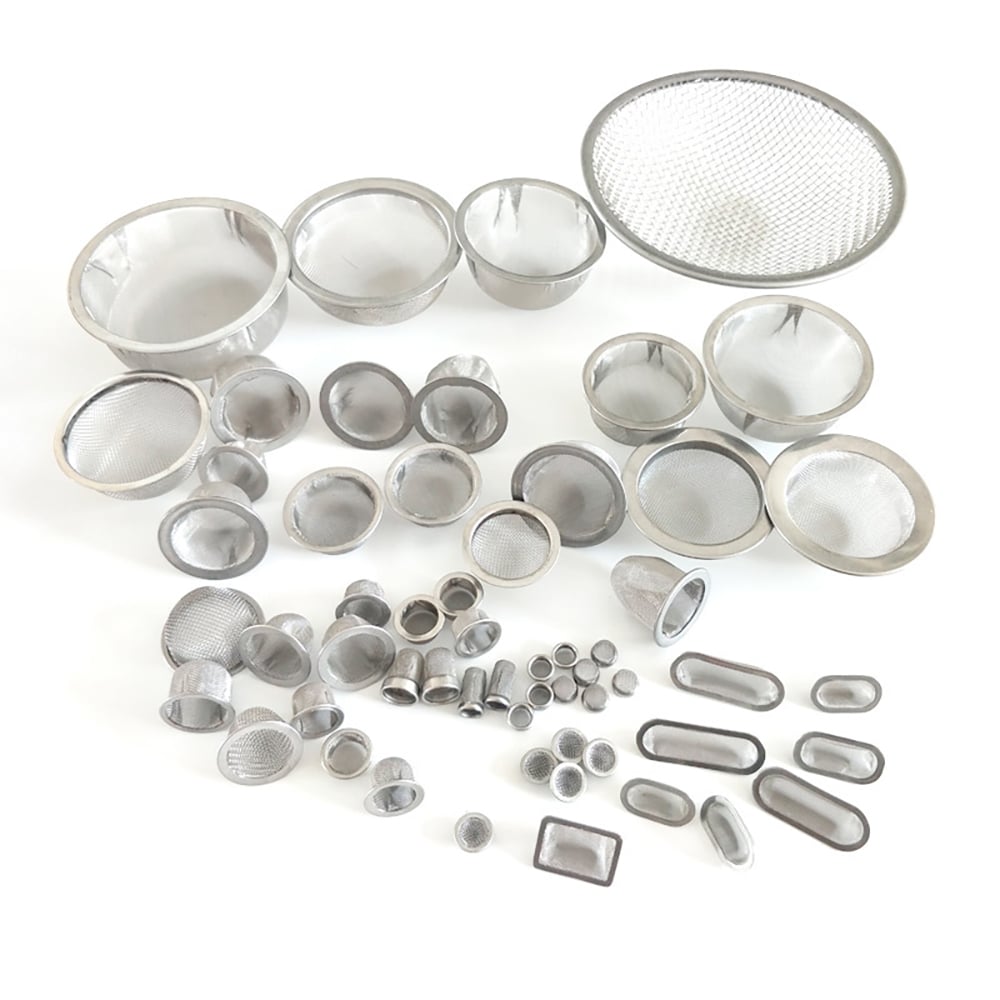
Formed screens require controlled depth, rim, layer and mating dimensions.
Effective Open Area and Suction-Side Pressure Loss
Use effective area
Subtract solid rims, seams, overlaps, handles, support blockage and masked zones.
Include fluid properties
Flow behaviour may change with viscosity, temperature and process condition.
Review clean and loaded states
Debris accumulation reduces available area during the service interval.
Keep system responsibility clear
The pump or system designer must confirm acceptable suction conditions and pressure loss.
Fine mesh may require a rigid support selected for the actual flow and loading direction.
Support Direction, Seams and Bypass Control
Show the normal flow direction and which layer receives the differential-pressure load. Locate seams, liner edges, end joints and the support contact. Fine mesh should not be assumed to carry structural loading without review.
Bypass can occur around the rim, seat, seam or liner termination even when the nominal opening is correct. Every flow path belongs in the interface drawing.
Common Pump-Protection Installation Contexts
Reservoir suction
Drop-in or seated basket upstream of a pump drawing from a tank.
Process vessel outlet
Removable element protecting an outlet and downstream pump from debris.
Transfer system
Basket matched to a transfer-pump inlet or strainer housing interface.
Equipment replacement
Drawing-based replacement where fit, seal and removal geometry are critical.
Real Maidong Basket and Pump-Protection Component Examples
These real Maidong products demonstrate basket bodies, mesh liners, support structures and formed filter components. They are not claims of universal pump fit, capacity, pressure drop or service life.
Real Maidong basket forms illustrating handles, rims, supports and filtration bodies.
Handled basket forms
A flanged basket interface must match the seat, orientation, clearance and removal path.
Flanged basket interface
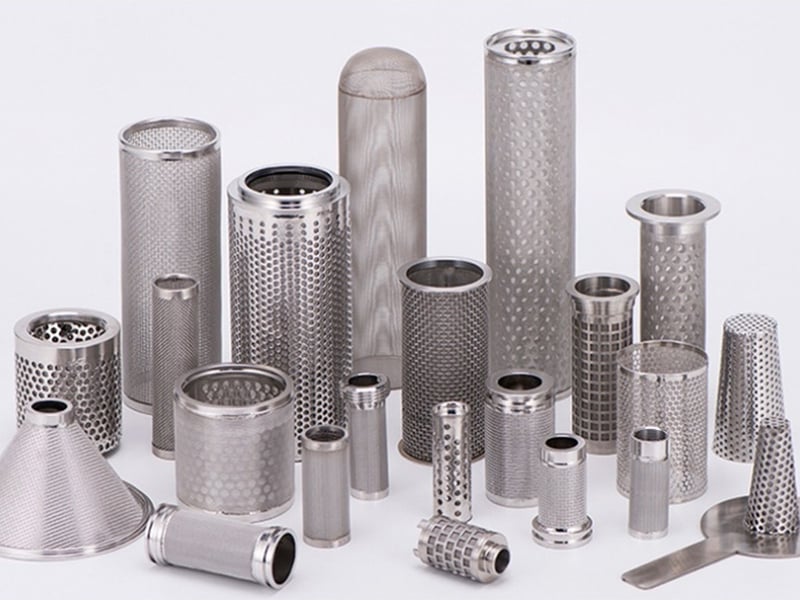
Different filter forms show how geometry and connection details change by equipment interface.
Custom filter geometries
Formed screens require controlled depth, rim, layer and mating dimensions.
Formed mesh screens
Five-Step Pump Suction Basket RFQ
1. Send the interface
Provide inlet/housing drawing, seat, envelope and removal path.
2. Describe the duty
State fluid, debris, flow, suction condition and temperature.
3. Define retention
Specify perforation or mesh opening, layers and bypass boundaries.
4. Define structure
Add support, seams, rim/flange, handle and flow direction.
5. Complete acceptance
Include pressure-loss limits, inspection, quantity and drawing revision.
It is a removable metal basket or screen installed upstream of a pump inlet to intercept debris that could obstruct or damage downstream equipment. The design must balance retention, open area, suction-side pressure loss and maintenance access.
Provide the inlet or housing drawing, basket envelope and seat, fluid, debris description, required opening, flow rate, suction conditions, allowable clean and loaded pressure loss, support direction, handle, cleaning method and quantity.
Perforated metal can provide coarse retention or structural support. Woven mesh provides a smaller defined opening. A composite basket may combine both, with layer order and attachment matched to the flow direction.
Open area should be evaluated from the effective filtration area after subtracting rims, overlaps, solid supports and masked regions. The system designer must relate this area to flow, fluid properties, clean pressure loss and debris loading.
Bypass can occur at gaps around the rim, flange, seat, seam, liner termination or damaged media. The equipment interface and every possible flow path should be shown on the drawing.
Many stainless steel baskets are intended for cleaning, but the allowable method and reuse decision depend on the fluid, media, joints, deformation, corrosion, damage limits and the buyer’s maintenance procedure.
Request a Pump Suction Strainer Basket Review
Send the pump inlet or housing drawing, fluid and debris details, opening, effective-area requirement, flow and suction conditions, support, maintenance method and quantity.