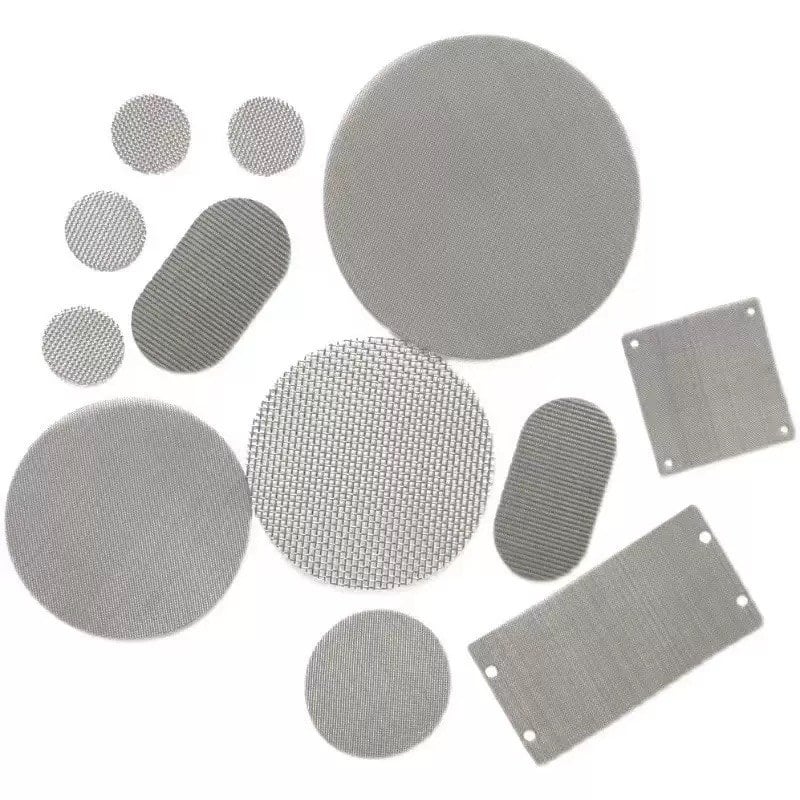
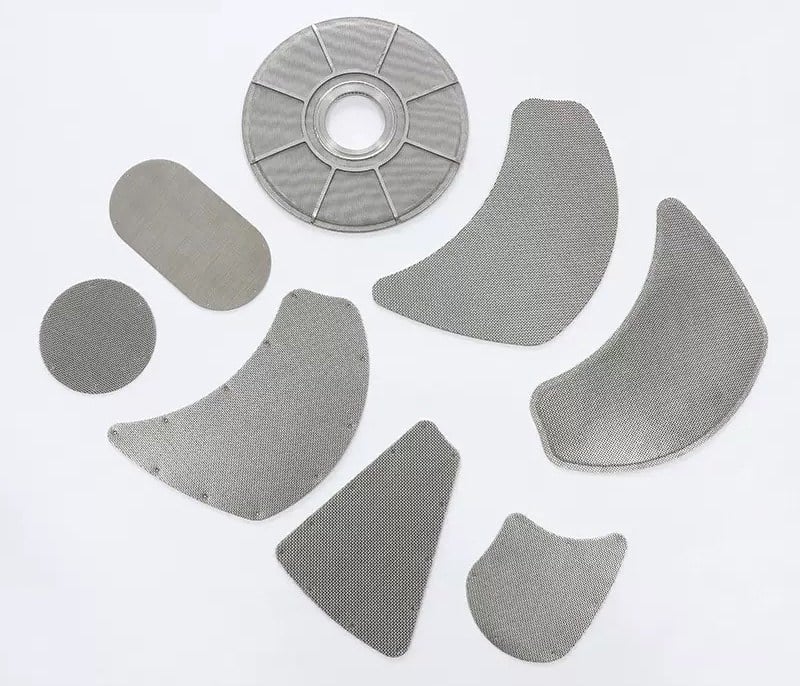
Custom wire mesh filter screens for plastic extrusion, recycling, pelletizing and polymer processing.
Custom Extruder Screens & Screen Packs
Custom wire mesh screens and screen packs for plastic extrusion, recycling, pelletizing and polymer compounding.
Choose the screen profile, mesh layers, material and edge construction around your screen changer and filtration requirements. Send Maidong your drawing, current screen specification or sample details for a quotation.
Single & multi-layer constructions Round, oval & drawing-based profiles Mesh, weld and rim options
An extruder screen retains suitable solid contamination as molten polymer passes through the mesh. An extruder screen pack brings multiple mesh layers together in a defined sequence, combining filtration and support functions.
The construction is specified as a complete component: mesh count, wire diameter, weave, layer order and equipment fit all matter. The options below are custom enquiry references; final manufacturing details are confirmed in the quotation.
Product Types
Single-Layer Screens
Individual mesh screens cut to a specified profile, for single-screen installations or an approved customer-assembled stack.
Loose Multi-Layer Sets
Separate screens supplied to a defined layer schedule. Identify every layer and its installation order.
Spot-Welded Screen Packs
Layers joined at specified points for handling and installation. Define weld positions and keep-clear areas; spot welding is not full-surface sintering.
Framed / Rim-Bound Packs
Layers retained within a formed rim. Specify rim material, outside size, effective opening and total thickness. Stainless steel or aluminum rims are subject to review.
Product Details
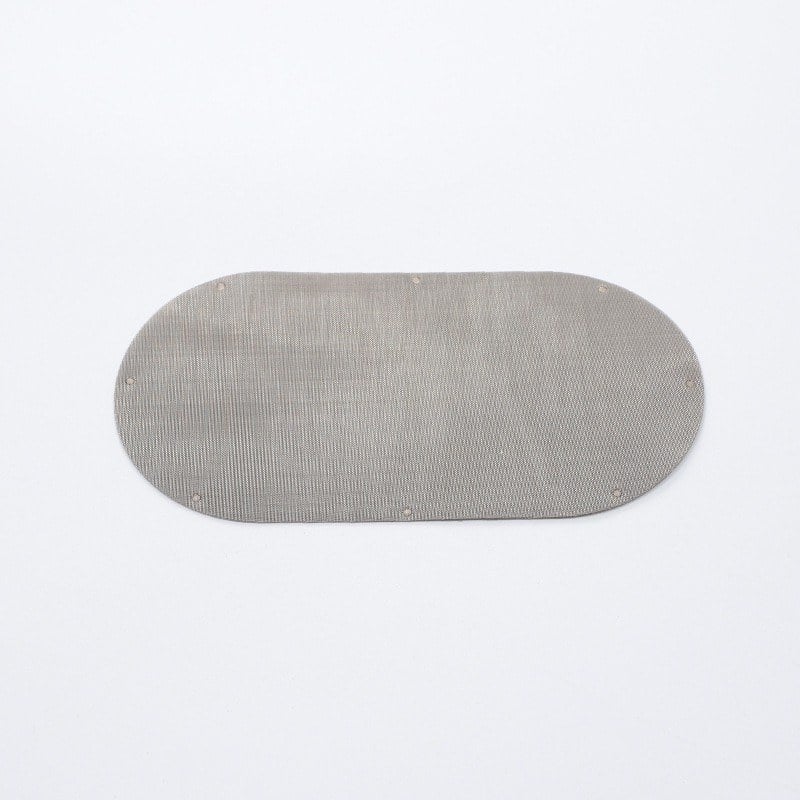
Oval screen with visible edge weld points.
Spot-Welded Oval Profile
Visible edge weld points on an oval mesh screen. Layer count and mesh grade are specified separately.
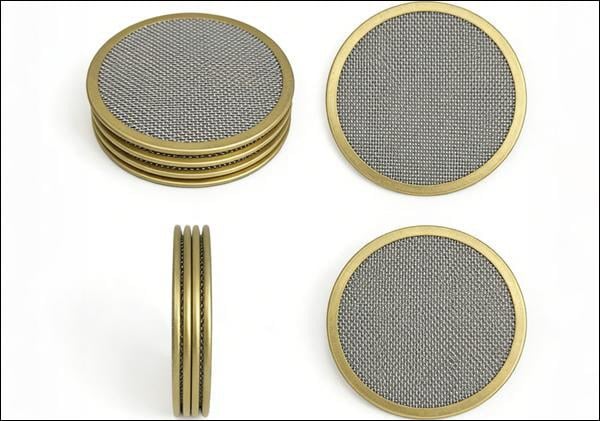
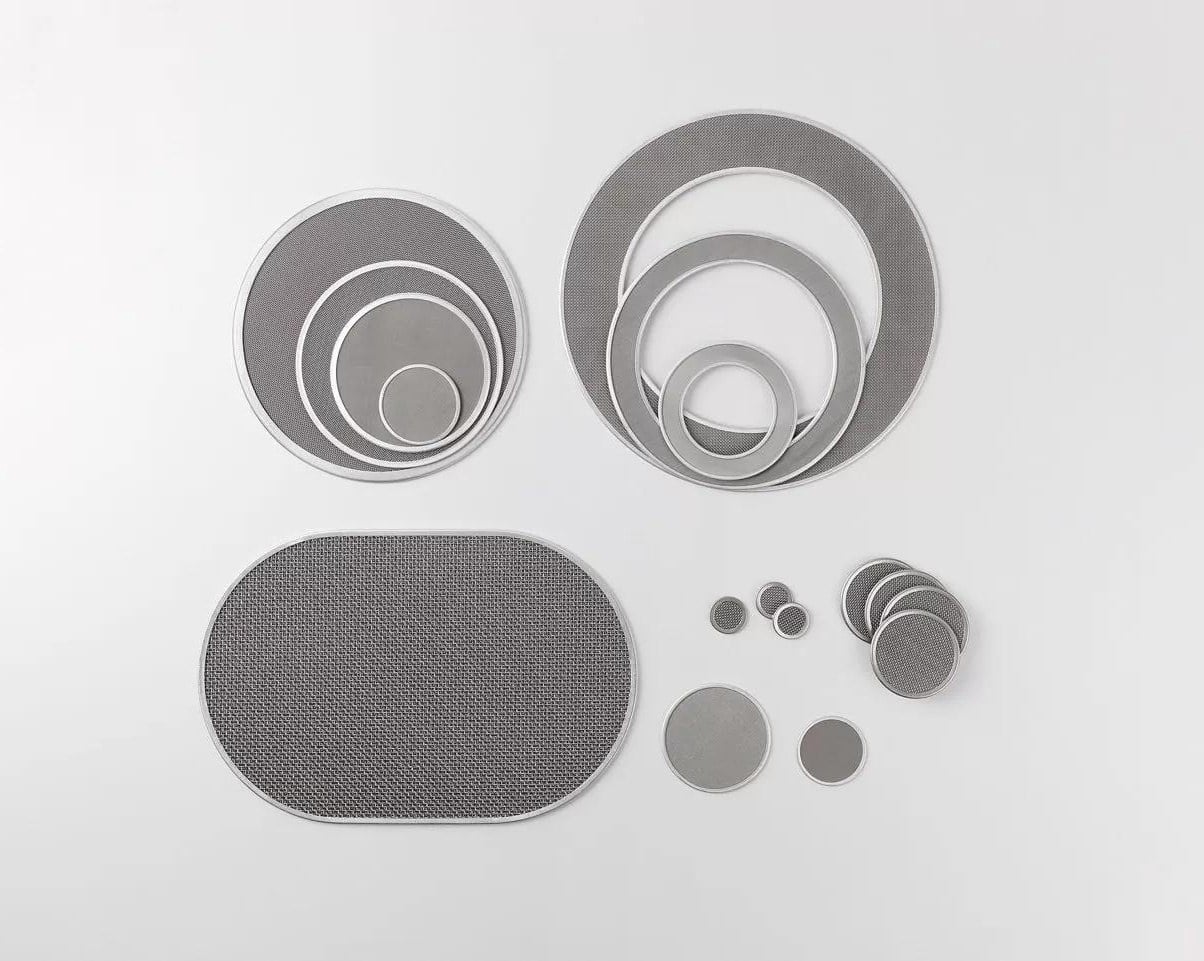
Rimmed screen constructions; rim alloy specified separately.
Rimmed Circular Screens
Round screens with formed rims. The photograph does not establish the rim alloy or exact mesh specification.
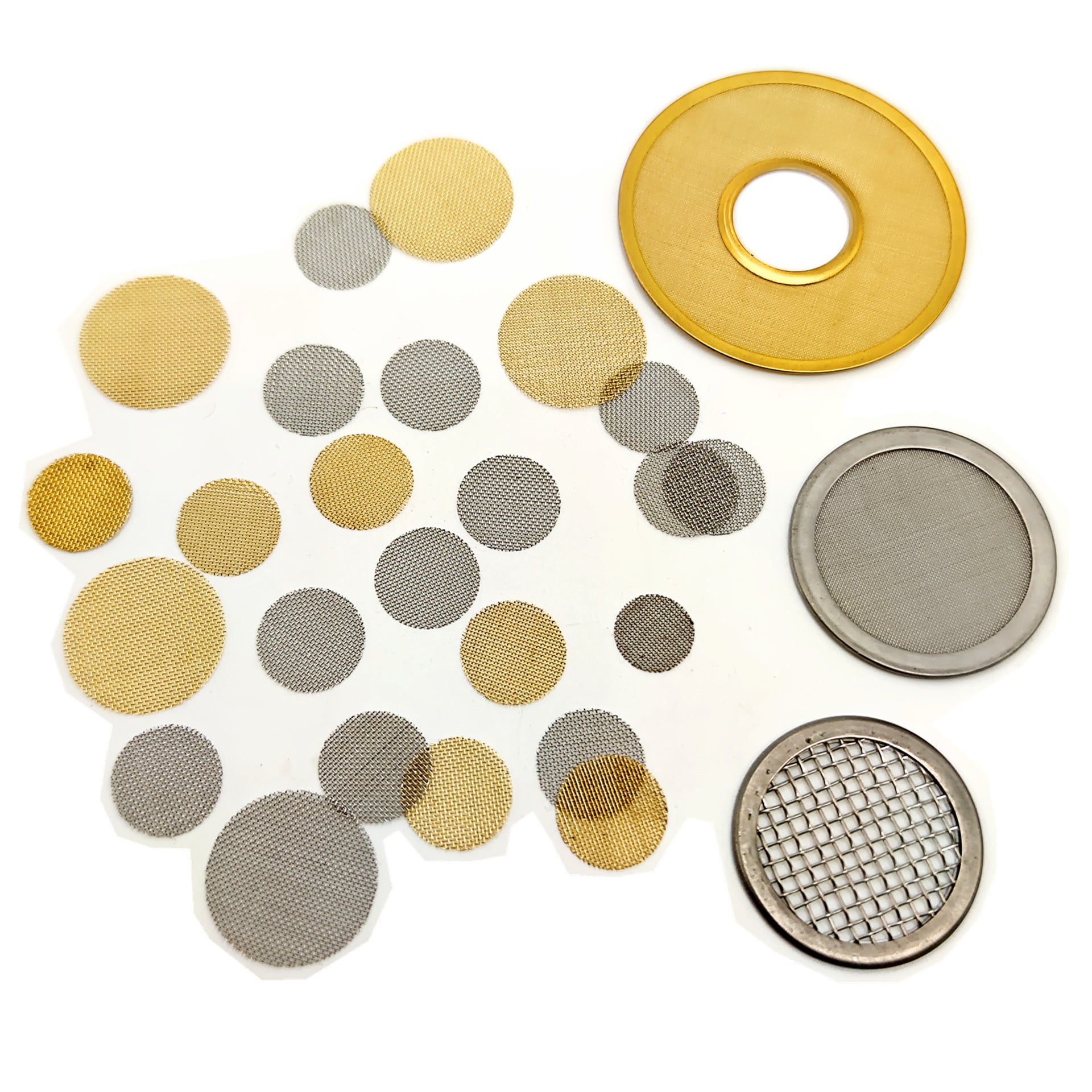
Woven mesh detail; exact construction confirmed in the specification.
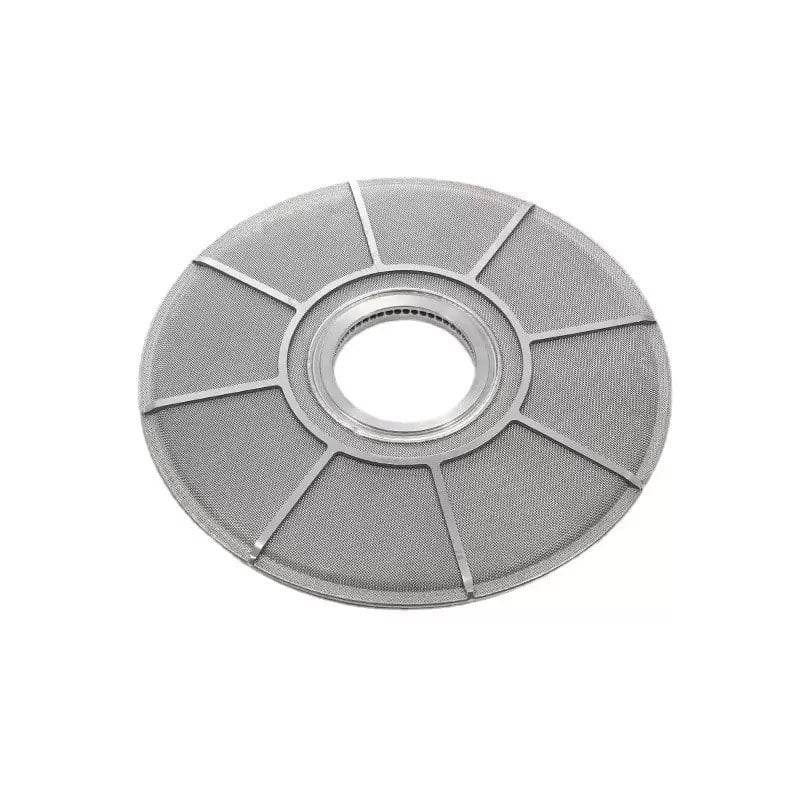
Multi-Layer Screen Packs
Multiple wire mesh layers combined in a specified filtration sequence for extrusion, recycling and pelletizing applications.
These combinations are reference examples, not universal standards or fixed stock specifications. Final construction is customized to your extrusion process, material and filtration requirement.
20 / 40 / 80 / 40 / 20 mesh
5 layers — reference A symmetrical sequence with an 80-mesh center and coarser surrounding layers.
20 / 60 / 100 mesh
3 layers — reference An asymmetrical sequence. Confirm the flow direction and downstream support arrangement.
40 / 80 / 200 / 80 / 40 mesh
5 layers — reference A 200-mesh center with surrounding layers. Confirm wire size, opening and support.
Each number identifies one layer. Sequences are shown for identification, not as installation directions. State whether your schedule runs from melt inlet to outlet or from the breaker plate toward the extruder. Mesh count alone does not establish a verified micron rating.
Supplier literature includes diameter examples of 60, 65, 90, 230, 255 and 300 mm, and 2.5 in (63.5 mm), 3 in (76.2 mm), 4.46 in (approximately 113.28 mm). These are references only, not a universal size standard or Maidong stock list. Quote the actual equipment dimensions and original units.
Parameter
Reference / custom enquiry options
Confirm for quotation
Construction
Single screen, loose set, spot-welded or rim-bound pack
Single layer; 3- and 5-layer reference combinations
Every layer and sequence; other counts by drawing
Mesh
20–200 reference selections; 250/325 and others for review
Mesh, wire diameter and weave per layer
Filtration opening
Defined by mesh construction
Opening/rating and definition or test basis
Edge / thickness
Plain cut, spot-welded, framed; thickness by drawing
Rim width, maximum thickness, weld positions
Equipment
Screen changer / breaker plate arrangement
Flow direction, cavity, support, backflushing
Supply
Quoted to specification
Quantity, packing, destination and documentation
Reference / custom available: manufacturing feasibility, final dimensions, tolerances and supply details are confirmed in the quotation. No universal pressure, temperature or service-life rating is stated.
How an Extruder Screen Works
1. Melt enters
The screen sits in the polymer melt path as defined by the machine design.
2. Particles are retained
Retention depends on the mesh and contamination. Deformable gels can behave differently from solid particles.
3. Mesh is supported
Support layers and the breaker plate support the fine mesh according to the approved arrangement.
A common arrangement places the pack upstream of a perforated breaker plate. Follow the equipment drawing for the actual location and assembly. Confirm cavity shape, recess depth, active opening, flow direction and downstream support.
A disc pack is not interchangeable with a continuous belt simply because the mesh count matches. Tell us if backflushing is used; suitability requires a construction review.
Application Industries
Recycling & Pelletizing
Define recycled feed, contamination, throughput and pellet requirements.
Compounding & Masterbatch
Include additives and fillers. Define unwanted agglomerates without removing intended ingredients.
Blown Film & Cast Film
Specify contamination limits, film requirements and acceptable pressure variation.
Pipe, Sheet & Profile
Provide resin, product requirements, current filtration specification and changer dimensions.
Application suitability depends on the actual process; these categories are not claims of completed customer projects.
Build your custom extruder screen enquiry around profile, mesh construction, layer assembly and equipment fit. To compare a screen pack manufacturer for repeat purchasing, keep the full approved specification consistent across quotations.
Screen changer model, cavity and breaker plate details.
OD / ID / profile, thickness, tolerances and active opening.
Wire diameter, weave and material for each layer.
Layer schedule with stated melt-flow direction.
Weld position, rim dimensions and frame material.
Polymer, virgin/recycled feed, additives and contamination.
Temperature, throughput and permitted pressure differential, if known.
Backflush/cleaning needs, packing and required documentation.
If details are unknown, send measured photographs and identify the missing information. A photo can show shape and construction but cannot establish the exact alloy or mesh grade.
An extruder screen is an individual mesh element. A screen pack combines multiple layers in a specified order. Layers may be supplied separately, spot welded or retained by a rim.
Start with the current working specification or process filtration requirement. Mesh count, wire diameter, weave, active screen area, polymer and contamination must be considered together. There is no universal mesh count for all extrusion lines.
No. They are reference combinations for custom enquiries. Final material, mesh construction, layer order, dimensions and assembly are confirmed for your extrusion process and equipment.
No. Different wire diameters produce different openings at the same mesh count. Dutch weave and complete screen packs need construction-specific filtration information. State the required opening or rating and its definition.
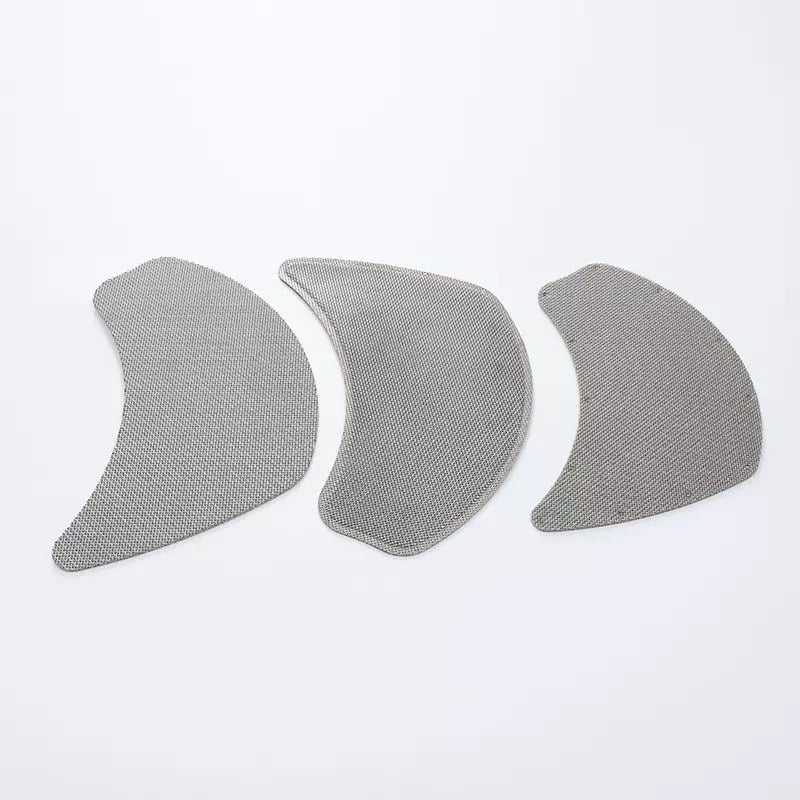
Yes, these profiles can be submitted for custom review. Include critical dimensions and tolerances. Annular screens require inside and outside diameters; kidney and other non-circular profiles need a dimensioned outline.
Choose around equipment fit, handling and the approved layer assembly. Spot welds secure layers at defined locations; a rim retains the edges. Neither method alone establishes a pressure rating or guarantees sealing.
Fit must be checked against the cavity, recess depth and support drawing. Include flow direction and rim requirements. A machine model is useful but should be supported by dimensions or a current screen specification.
Follow the equipment limits and monitor pressure difference, output and product condition. The interval depends on polymer, contamination, screen area and operating conditions. No universal replacement interval is specified.
Do not assume a used pack remains suitable after cleaning. Mesh distortion, damaged welds and retained residue can affect performance. Reuse or backflushing requires an approved construction and inspection procedure.
Send dimensions or a drawing, material, mesh and wire details, layer order, edge construction and quantity. Add polymer and operating information when you need a new configuration reviewed.
Request a Custom Screen Pack Quote
Send your drawing, current screen specification or sample photographs to Maidong Metal Wire Mesh Products Co., Ltd. Include quantity and delivery destination so we can review the construction and prepare a quotation.