Plastic-recycling extruder screen packs combine defined woven wire mesh layers to retain label fragments, paper fibres, char, dirt and other unmelted solids from recycled polymer melt. Specify the recycled resin or blend, contamination, every mesh layer, flow direction, screen-changer fit, pressure conditions and planned change interval.
A request such as “80 mesh for recycled plastic” is incomplete. State resin or blend, contamination, pressure context and changer fit, then pair every mesh count with wire diameter or aperture and list the full upstream-to-downstream stack.
RFQ field
Information to provide
Why it matters
Pack geometry
OD, ID if any, shape, thickness and tolerances
Controls fit and sealing in the changer
Each mesh layer
Mesh count plus wire diameter or aperture, weave and material
Defines opening, open area and strength
Layer sequence
Upstream-to-downstream order and flow direction
Prevents ambiguity in multilayer assembly
Edge construction
Plain cut, spot welded, bonded or rimmed
Affects handling, pack integrity and usable area
Recycling process
Recycled polymer/blend, contamination, temperature, pressure trend, changer and objective
Supports an appropriate construction review
Recycling Screen Changer Interface and Layer Schedule
Write the screen pack as an ordered schedule rather than an unordered list of mesh counts. The same three layers assembled in reverse order can behave differently under the installed melt-flow direction. The screen changer drawing must control the pack profile, seat, usable area and allowable thickness.
Schedule field
Example notation
Required clarification
Flow direction
Melt entry → exit
Mark the physical upstream side on the drawing
Layer 1
Coarse protective mesh
Mesh count, wire diameter, weave and material
Layer 2
Fine filtration mesh
Opening or rating basis plus full mesh construction
Layer 3
Downstream support
Support type, orientation and attachment
Pack edge
Plain, spot welded, bonded or rimmed
Finished thickness, usable area and permitted projections
Changer fit
OD/profile, seat and clearance
Datums, tolerance, orientation feature and sealing/contact face
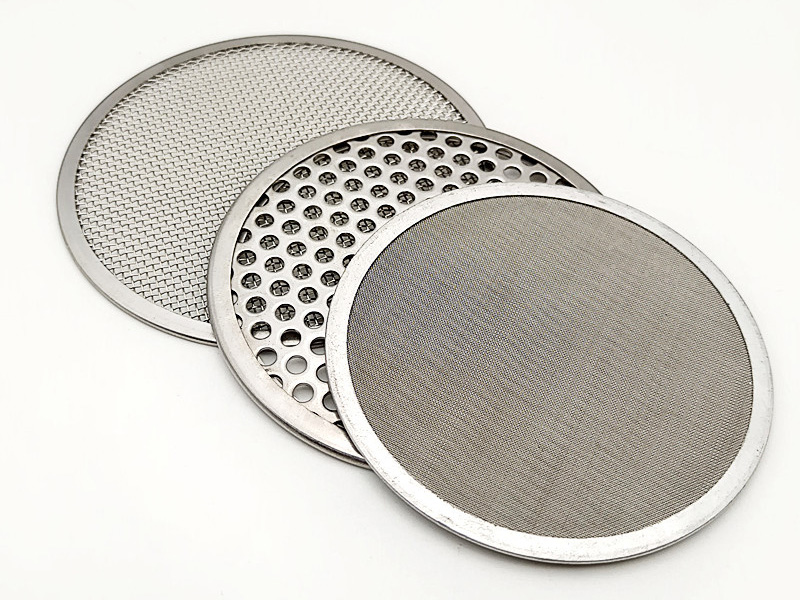
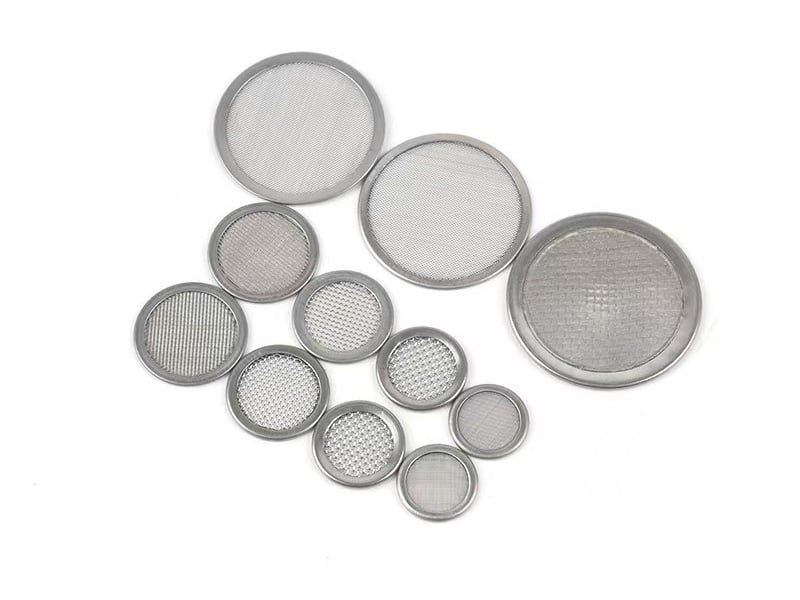
Fine filtration mesh, coarse support mesh and perforated support configurations.
Defined media and support layers
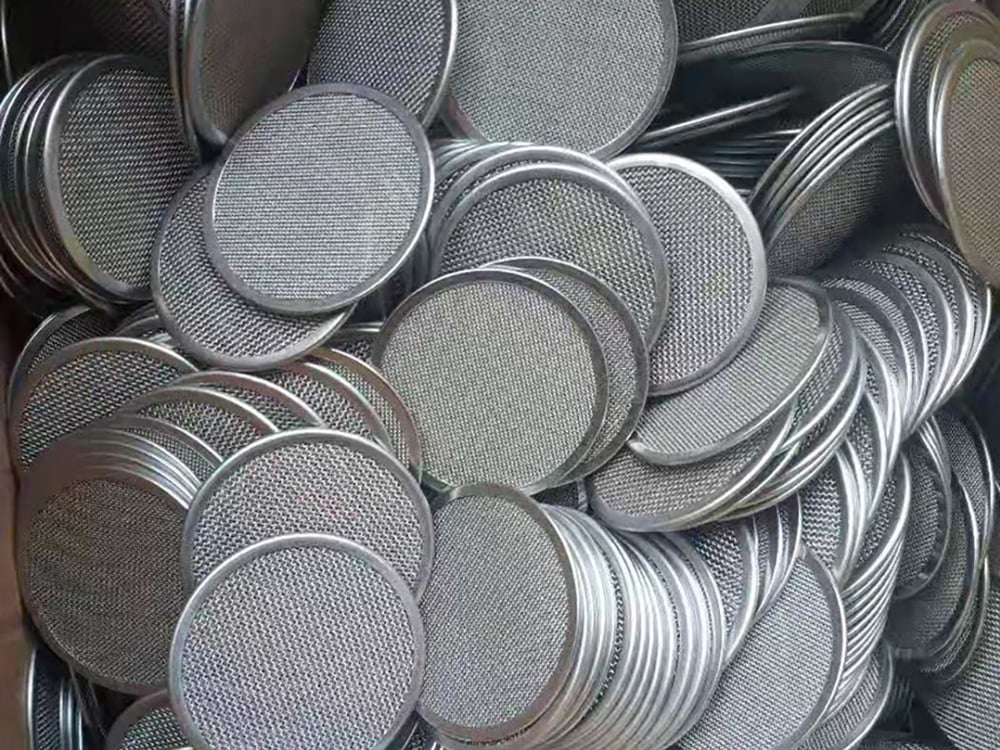
Production examples of round rimmed wire mesh screen packs.
Finished rimmed screen packs
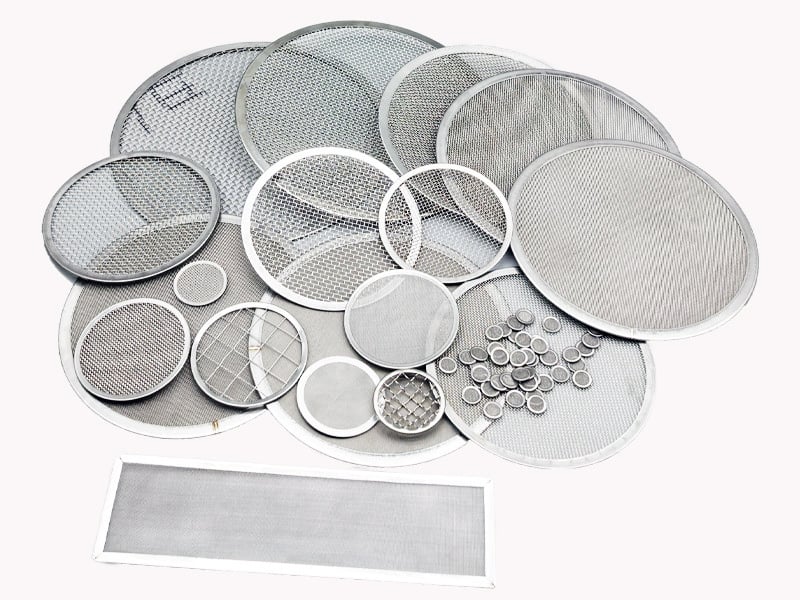
Fine filtration mesh, coarse support mesh and perforated support configurations.
Single-Layer and Multilayer Recycling Packs
A single woven disc may suit relatively clean regrind and a compatible changer. A multilayer recycling pack can combine coarse protection, one or more filtration layers and downstream support where variable contamination and pressure loading require a defined stack.
The exact sequence is application-specific. Show flow direction and identify every layer on the drawing or purchase specification.
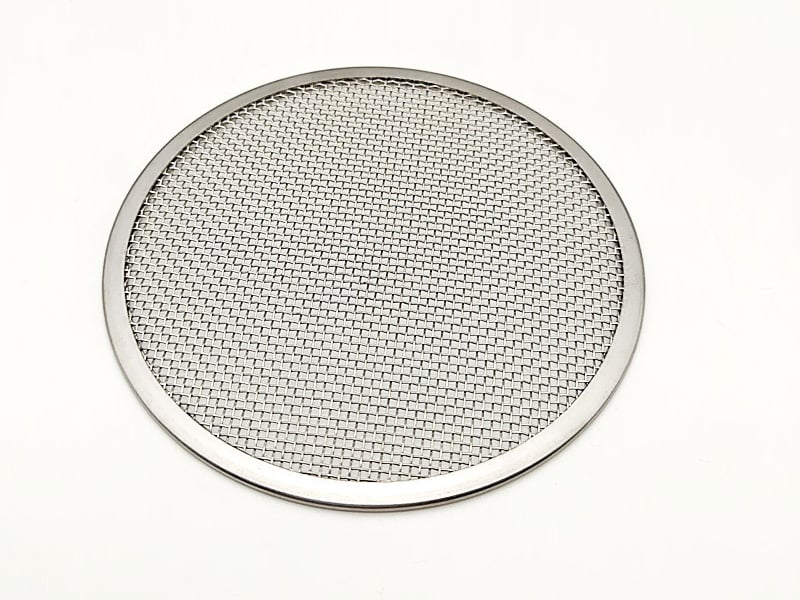
Rimmed woven mesh disc for controlled handling and installation.
Do not select by mesh count alone
For square woven mesh, clear aperture depends on both mesh count and wire diameter. The mesh-to-micron chart and calculator is a useful starting reference when these values are known.
Stainless steel wire mesh offers square-opening constructions, while Dutch weave wire mesh uses a different pore structure and should not be assigned a rating by a simple square-mesh formula.
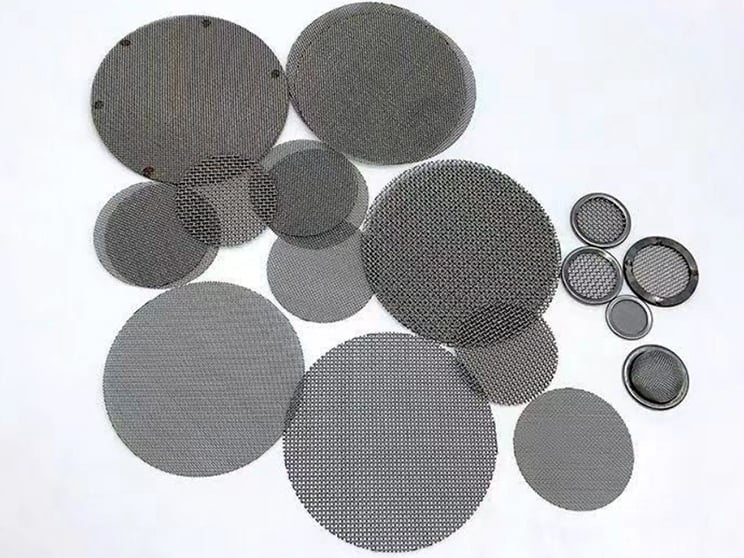
These real Maidong screen-pack products show mesh discs, rimmed packs and support combinations. They are construction examples, not claims that one layer schedule fits every recycled polymer, contamination level or screen changer.
Production examples of round rimmed wire mesh screen packs.
Round rimmed screen pack production
Custom diameters and mesh grades prepared as rimmed screen elements.
Custom diameters and mesh grades
Round, rectangular and reinforced screen configurations for drawing-based supply.
Drawing-Based Configuration Options
Round, oval, rectangular or profile-cut shapes
Single-layer or defined multilayer stacks
Plain-cut, spot-welded, bonded or rimmed edges
Coarse woven or perforated support layers
Central holes, locating features or orientation marks
It can mechanically retain defined label fragments, paper fibres, char, dirt, metal fragments and other unmelted solids larger than the effective pore path. It cannot correct polymer degradation, incompatible blends or dissolved contamination.
Start with the contamination and product-quality objective, then review polymer type, viscosity, throughput, screen-changer area, pressure trend and change interval. Mesh count alone is incomplete without wire diameter, weave and layer sequence.
A finer layer may provide the main retention function while coarser layers protect and support it. The required order depends on melt-flow direction, contamination, pressure loading and screen changer.
No. Finer media may raise pressure and shorten the change interval when contamination is high. Screen selection must balance retention, flow resistance, usable area and operating stability.
Yes. Round, oval, rectangular, kidney-shaped and drawing-specific profiles can be reviewed. Provide the changer cavity, seat, orientation features, thickness and tolerances.
Provide recycled polymer or blend, known contamination, target retention, process temperature, throughput or flow context, pressure trend or limits, changer drawing, each mesh layer, sequence, edge, dimensions, quantity and packaging.
Request a Plastic Recycling Screen Pack Quotation
Send the recycled polymer or blend, contamination, pack dimensions, complete mesh-layer sequence, flow direction, screen-changer details, pressure context, edge construction and quantity.