A useful extruder screen pack RFQ identifies the complete part: its geometry, every mesh layer, assembly method and order quantity. This checklist helps purchasing and engineering teams send the same specification to Maidong for review.
Start with an approved drawing if available. If you have only a sample, record what is measured and what remains unknown. Do not treat a photograph or a mesh number as a complete replacement specification.
Part number, drawing revision, component name and screen changer reference.
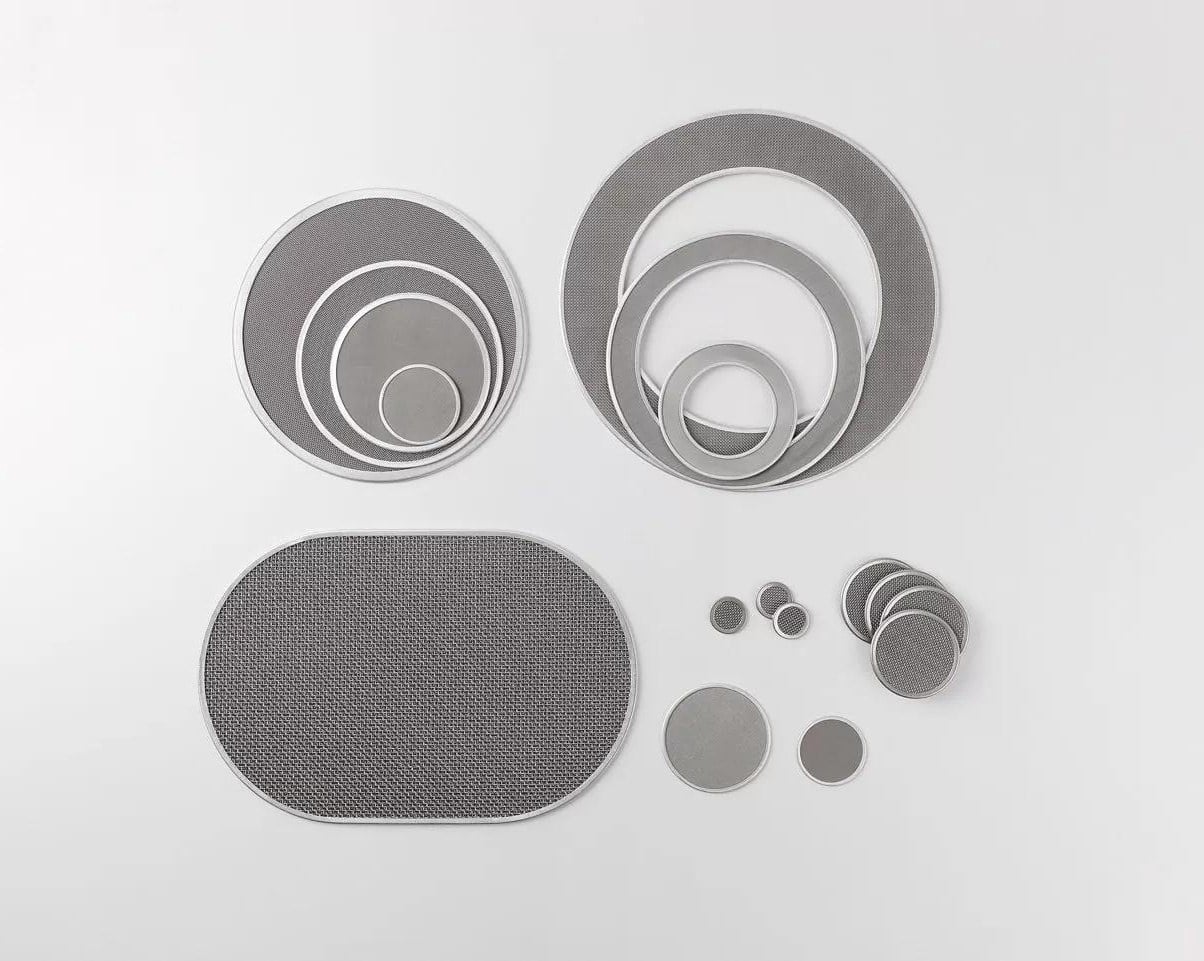
Shape, dimensions, tolerances, total thickness and loose, welded or rimmed construction.
Material, mesh count, wire diameter and weave for every layer, with the direction stated.
Quantity per configuration, unit definition, required documents, packing and destination.
For construction options, see the extruder screen and screen pack product page. This guide explains how to document your selected part rather than prescribing a process setting.
Round / disc: outside diameter and tolerance. Annular: outside and inside diameters, plus relevant positioning requirements. Oval, kidney or custom profile: a dimensioned outline with reference points; length and width alone may not fully define the shape.
State units explicitly. Keep screen dimensions separate from cavity measurements and active filtration opening. Include finished pack thickness, rim thickness and any critical orientation feature.
Record the measurement method and whether a used sample is distorted. Sample measurements are evidence for review, not automatically an approved manufacturing drawing.
| Drawing / RFQ field | Buyer entry | Clarification |
|---|---|---|
| Part number and revision | [enter] | Identify the governing drawing |
| Units and shape | [mm or inch; shape] | Do not mix units without labels |
| Part dimensions and tolerances | [enter or attach drawing] | Distinguish from the filter cavity |
| Finished thickness | [overall and rim thickness] | Specify the complete assembly |
| Layer 1: melt-entry face | [alloy / mesh / wire diameter / weave] | Repeat a separate row for each additional layer |
| Layer 2 through final layer | [attach complete schedule] | Include support layers and numbering direction |
| Attachment and edge | [loose / weld detail / rim drawing] | Specify rim alloy independently |
| Equipment interface | [changer / support / cavity drawing] | Identify fit and any reverse-flow duty |
| Order unit and quantity | [pieces / loose sets / assembled packs] | Separate quantities for different part numbers |
| Acceptance and delivery | [inspection / documents / packing / country] | Agree requirements before ordering |
A mesh count without wire diameter does not fully specify square woven cloth. For Dutch weave, provide the full warp/weft construction and relevant filtration data. Mark missing details “to confirm” rather than guessing from a nominal micron value.
Example notation only: “Layer 1 is the melt-entry face; list subsequent layers toward the equipment support.” Confirm that description against the actual installation.
Reference / custom available: 20/40/80/40/20 mesh is an example of a layer sequence, not a complete drawing or recommended process setting. The sequence still needs the alloy, wire diameter, weave, dimensions and assembly details.
Use the mesh combinations and layer-order guide for the distinction between reference combinations and an approved pack schedule.
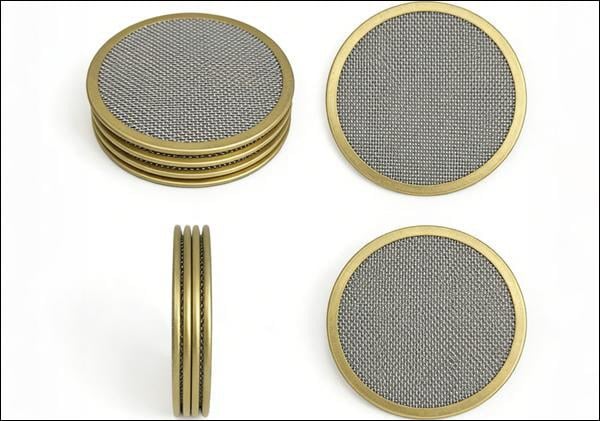
Specify rim material, width, cross-section and finished thickness. Show the contact area and any dimensional limits relevant to the housing.
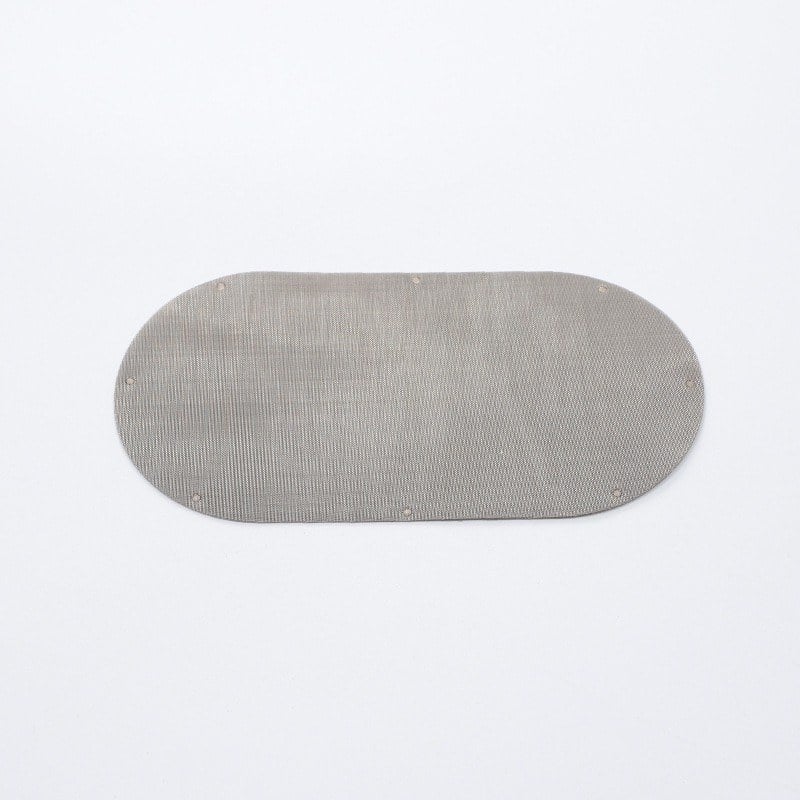
Mark weld quantity and positions, areas to remain clear and any agreed attachment requirements. Welding does not by itself establish sealing or backflush suitability.
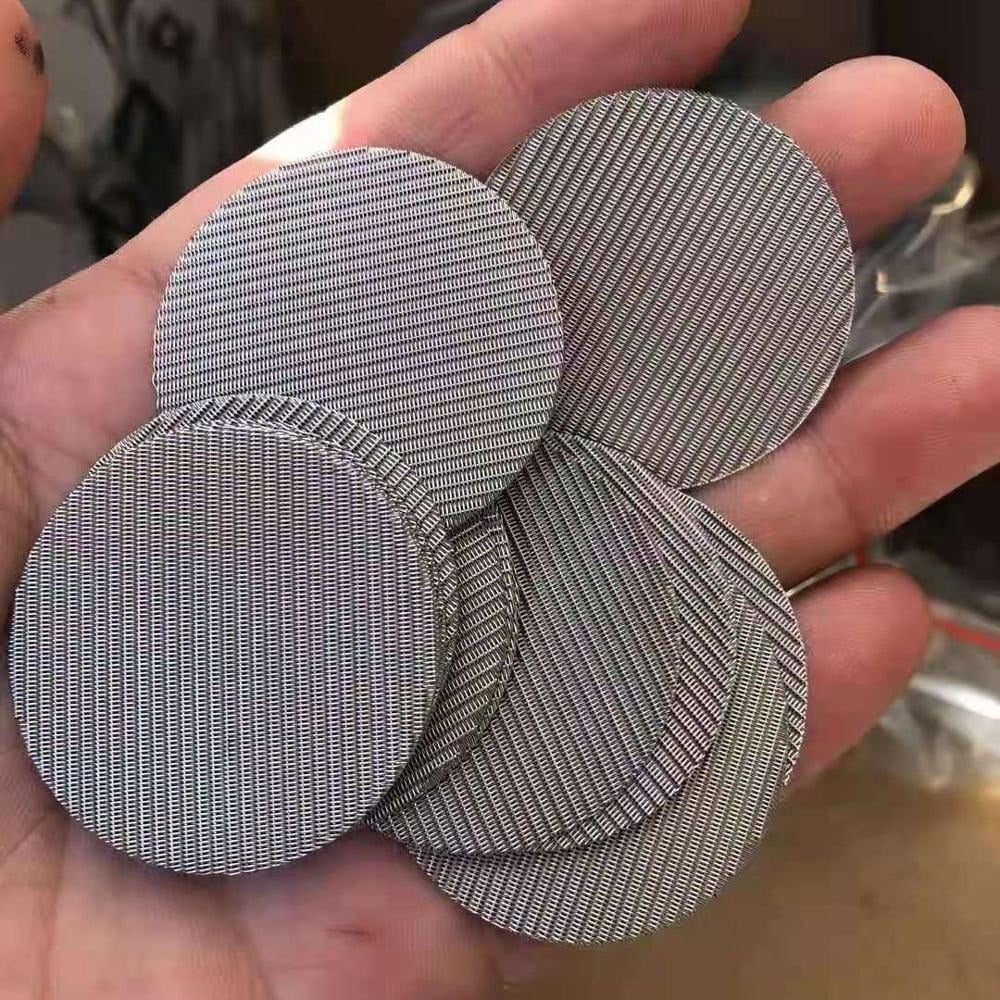
These existing product photos illustrate visible construction only; they do not verify alloy or hidden layers.
Subject: Extruder screen pack quotation — [part number / quantity]
Please quote the following screen / screen pack:
Please identify any missing information or proposed specification changes before finalizing the quotation.
If a sample, old order and new drawing disagree, list the differences and confirm the governing revision. Keep quantities and packaging labels tied to that same identifier.
For an existing replacement, supply the approved specification. For a new filtration requirement, also describe the resin, intended ingredients, contamination objective and operating context. A quotation for manufacturing a defined part is different from validating a new process configuration.
Any proposed change to mesh, wire diameter, alloy or assembly should be identified for review. Do not assume a visually similar replacement has the same filtration behavior.
Yes. Send measured dimensions, photos and the existing mesh specification, and mark unknowns as to confirm. A preliminary enquiry is possible, but critical details must be agreed before an order is finalized.
Usually not for a complete specification. Include wire diameter, weave, material, layer schedule, finished thickness and edge construction. Identify the relevant tolerances and equipment interface.
State a direction explicitly, such as Layer 1 at the melt-entry face, followed toward the support plate. Use the actual equipment drawing to confirm orientation and support; do not infer direction from a slash-separated sequence.
Identify which dimensions describe the part and which describe the cavity. Provide both when available. Do not use a measured cavity diameter as the required screen diameter without confirming the intended fit.
No. A photo helps identify visible shape and assembly. Exact alloy, wire diameter and hidden layers require a specification, inspection or other agreed verification.
Provide outside diameter, inside diameter, their tolerances and any concentricity or positioning requirement relevant to the drawing. Specify the complete edge construction and finished thickness.
Only if that is deliberately specified and appropriate. Mark critical dimensions and their individual limits. Maidong does not apply a universal tolerance from this guide.
Identify the discrepancy and confirm which revision or requirement governs. Do not silently combine dimensions from one source with mesh or rim details from another.
Give each configuration a separate part identifier, revision, complete specification and quantity. Clarify whether quantity means individual screens, loose layer sets or assembled packs.
Send your completed checklist and attachments to Maidong Metal Wire Mesh Products Co., Ltd. We will review the part requirements and prepare a quotation against the confirmed specification.