Wire mesh opening is a geometric dimension; particle retention is an operating result. For rigid near-spherical particles in surface screening, aperture is a practical starting point. Shape, orientation, deformability, loading, weave, layers, pressure, damage and bypass can make the real result different.
Square woven mesh has a measurable geometric opening, but operating retention also depends on the particle and system.
Direct Answer: Opening and Retention Are Related, but Not Identical
Opening
The clear geometric space between adjacent wires in square woven mesh.
Particle size
A measured dimension that may represent diameter, length, width or another method-dependent value.
Retention
Whether particles are stopped under the defined fluid, loading, pressure and test conditions.
Complete filter
Includes media, layers, seams, edges, seals, support and all possible bypass paths.
Particle Geometry and Retention Matrix
The matrix explains common mechanisms; it does not assign a guaranteed retention value. Critical duties require an agreed test or sample validation.
Mobile: swipe sideways to view every column.
Particle / condition
Why aperture alone is incomplete
Buyer action
Rigid near-spherical particle
Closest to simple geometric surface screening
State critical particle dimension and allowable passage
Long or needle-shaped particle
May approach an opening end-first or bridge across it
Provide length, width and aspect-ratio information
Flat or flake particle
Orientation changes the dimension presented to the screen
Describe thickness and lateral dimensions
Soft or deformable particle
Can deform under pressure or shear
Define material behaviour and differential pressure
Agglomerated solids
Clusters may break, grow or create a temporary cake
State process condition, loading and cleaning cycle
Fibres
Length, flexibility and orientation control bridging and passage
Use representative material in validation where critical
Mesh count alone does not define the opening because wire diameter also changes aperture.
For Square Woven Mesh, Calculate Aperture from Mesh Count and Wire Diameter
Nominal aperture for square woven mesh is based on pitch minus wire diameter. Two meshes with the same count can have different openings when their wire diameters differ.
Multiple particles can span an opening and trap later solids.
Agglomeration
Particles may enter as clusters larger than their primary size.
Cake formation
A deposited layer can create a finer secondary filtration path.
Multilayer path
Offset openings or dense layers can produce a more complex route.
These effects may improve apparent retention while increasing pressure drop and cleaning demand. Do not use them as an undocumented guarantee for a clean element.
Why Larger Particles May Still Appear Downstream
Unexpected passage can result from particle deformation or orientation, broken wires, distorted apertures, edge leakage, incomplete seams, damaged seals, installation clearance or sampling and measurement differences.
Aperture, wire diameter and finished tolerances belong in a measurable mesh specification.
Dutch weave uses an indirect pore path and cannot be treated as a simple square aperture.
Dutch Weave Does Not Have a Simple Square Opening
Plain, twill and reverse Dutch weaves use unequal warp and weft wires to create dense indirect pore paths. A mesh-count pair is a construction designation, not a direct square-aperture conversion.
Can deform particles, media or unsupported spans and drive passage through weak paths.
Viscosity and flow
Change transport, face velocity, pressure drop and deposit behaviour.
Solids loading
Creates bridging or cake, raises resistance and changes the active surface.
Cleaning cycles
Can remove cake, reverse the load, move layers or expose existing damage.
The Finished Component Must Control Bypass
A correct mesh aperture cannot compensate for gaps at rims, caps, seams, joints or seals. Specify the finished disc, tube, cylinder, basket or cartridge as an assembly with support and flow direction.
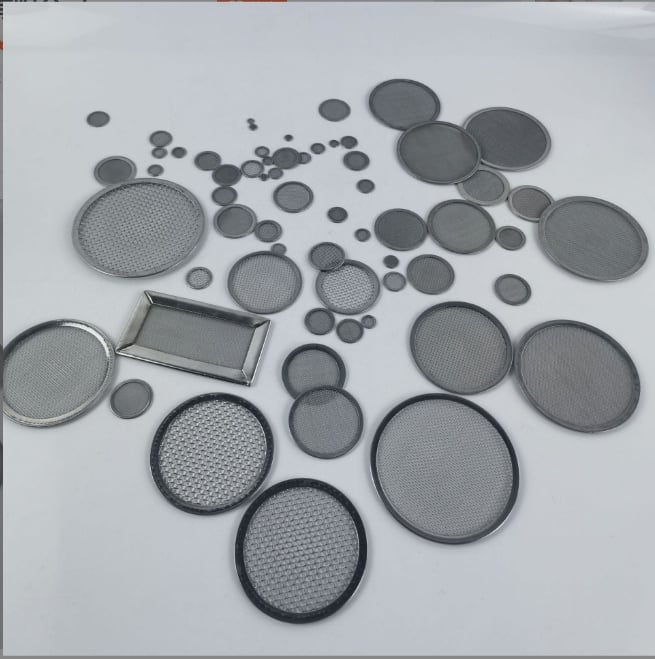
Finished edges, layers, support and sealing affect the complete component beyond media aperture.
Real Maidong Media and Finished-Filter Examples
These real Maidong materials show square openings, dense Dutch weave and finished filter discs. Images illustrate structure only; they do not establish particle-retention efficiency.
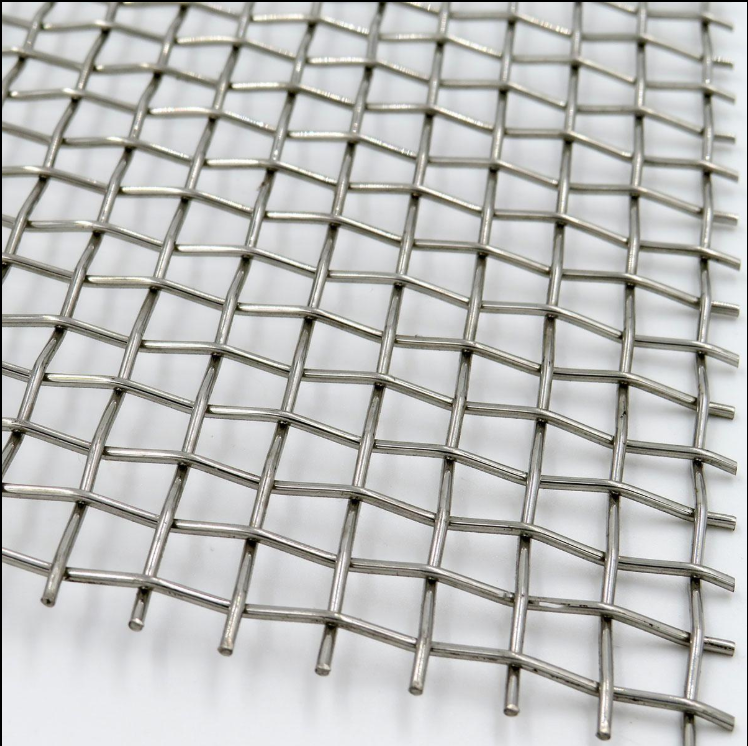
Square woven mesh has a measurable geometric opening, but operating retention also depends on the particle and system.
Square woven opening
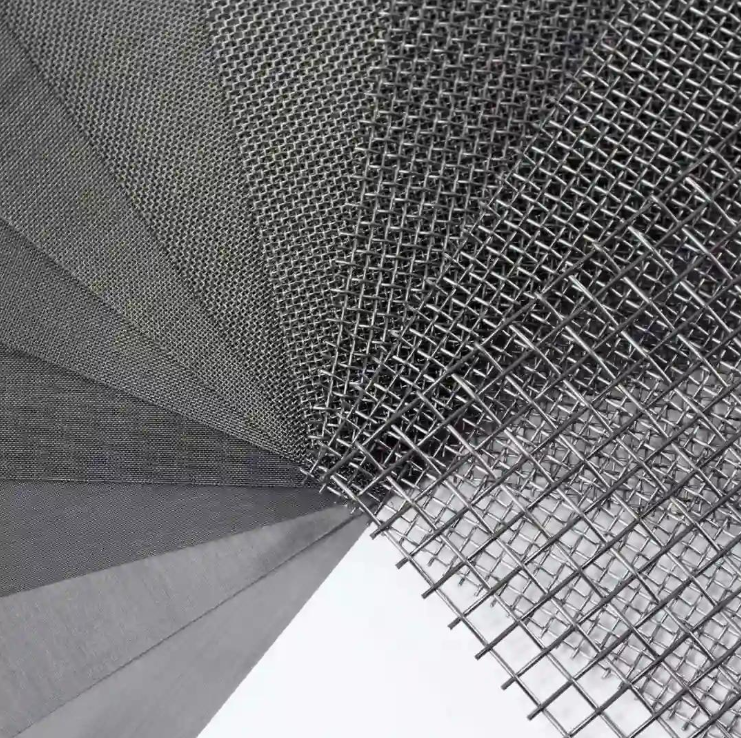
Mesh count alone does not define the opening because wire diameter also changes aperture.
Opening-size range
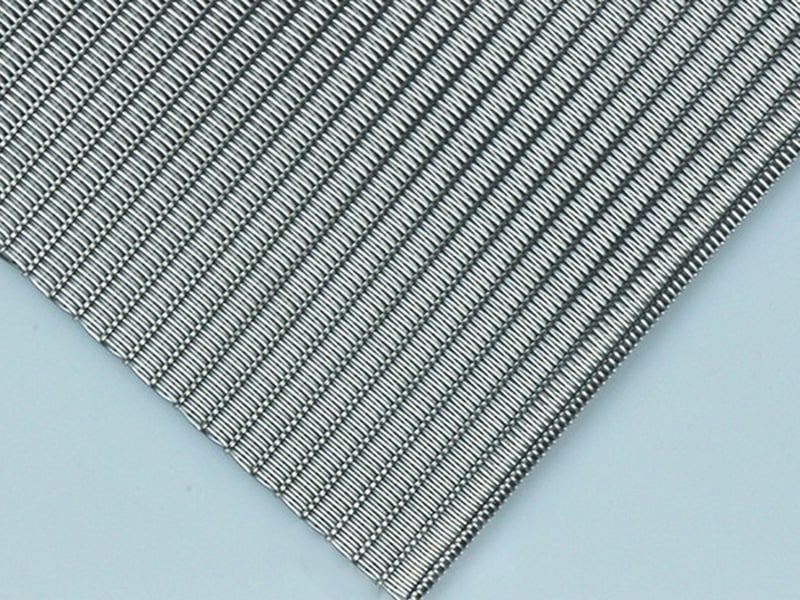
Dutch weave uses an indirect pore path and cannot be treated as a simple square aperture.
Indirect Dutch-weave path
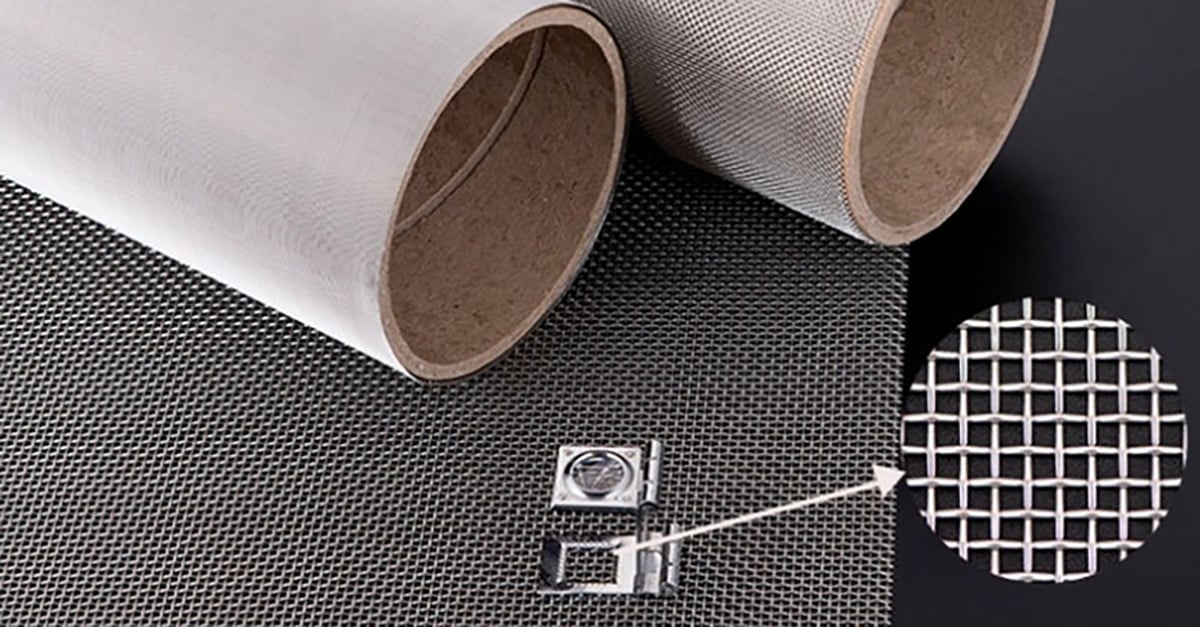
Finished edges, layers, support and sealing affect the complete component beyond media aperture.
Finished filter components
Particle Retention RFQ Checklist
1. Define the protected size
State the critical particle dimension and downstream objective.
2. Describe the particles
Add shape, distribution, rigidity, loading and representative samples if available.
3. Define the requirement
State aperture or a named retention efficiency and test basis.
4. Add operating duty
Fluid, flow, viscosity, temperature, pressure and cleaning conditions.
5. Define the assembly
Media, layers, support, dimensions, seams, seals, quantity and acceptance.
For rigid near-spherical particles and surface screening, an opening below the protected particle dimension is a useful starting point. Real retention can differ because particles may be elongated, flat, deformable, agglomerated or presented at different orientations.
Yes, temporarily or under some conditions. Bridging, agglomeration, a developing particle cake, multilayer paths or non-spherical geometry can retain smaller particles, but this should not be treated as a guaranteed clean-screen rating without validation.
A deformable particle, a long thin particle presented end-first, damaged or distorted mesh, dimensional variation, or bypass around the media can produce unexpected passage. The complete assembly and particle geometry must be reviewed.
No. Mesh count must be paired with wire diameter to calculate nominal square aperture. Weave type, tolerance, particle properties and operating conditions are also required.
Square mesh has a direct measurable aperture. Dutch weave has a dense indirect pore path formed by unequal warp and weft wires, so use construction-specific pore or retention data rather than a simple mesh-count conversion.
State particle material, size distribution, critical protected size, shape, rigidity, loading, acceptable passage or efficiency definition, fluid, flow, pressure, temperature, media structure, finished form and bypass-control details.
Need a Verifiable Retention Specification?
Send the particle distribution and shape, protected size, fluid and operating duty, media preference, finished-filter drawing and acceptance requirement.