Use this chart to compare how mesh count and wire diameter determine nominal aperture and open area in square woven stainless steel mesh. The combinations are geometric examples—not a statement of stock, tolerance or guaranteed filtration performance.
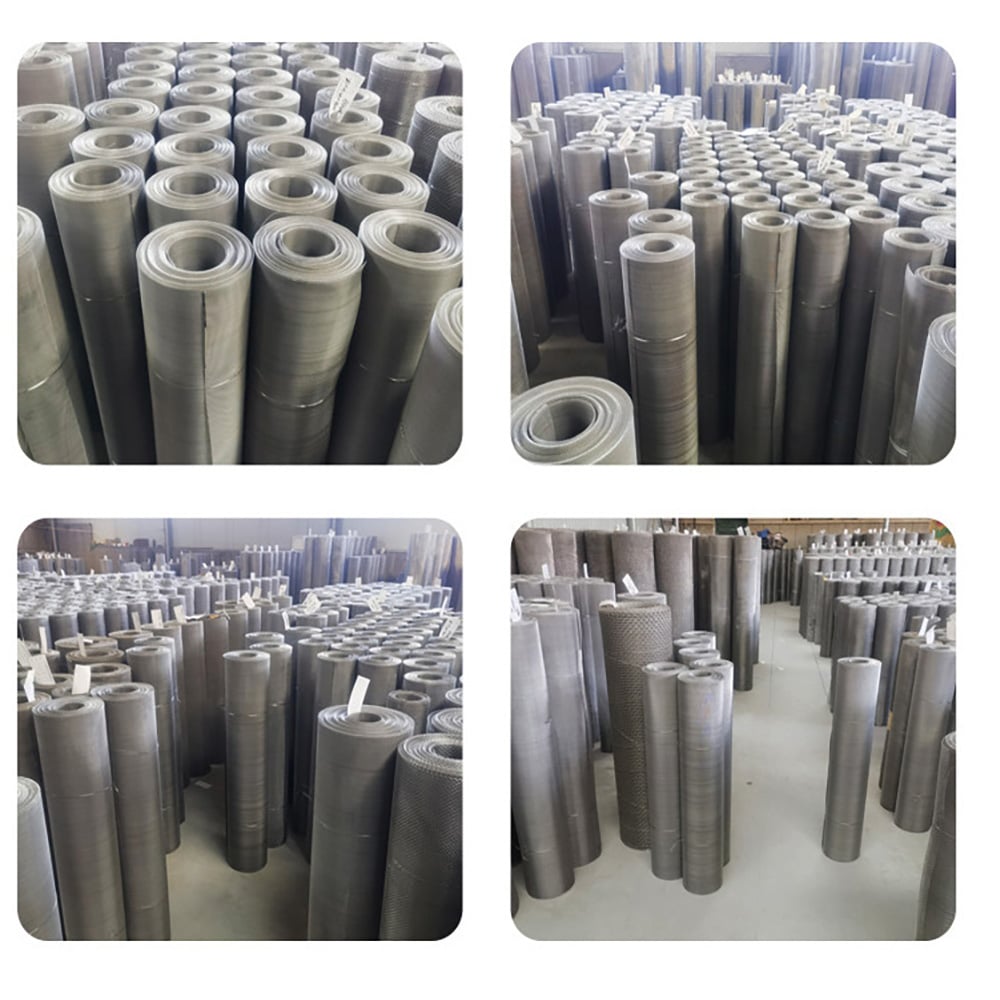
Real Maidong woven wire mesh rolls prepared in different constructions.
How to Read a Wire Mesh Size
Mesh count
Number of openings per linear inch under the stated square-mesh convention.
Wire diameter
Thickness of the warp and weft wire; changing it changes aperture and strength.
Nominal aperture
Calculated clear distance between adjacent wires before applying tolerances.
Open area
Calculated percentage of unobstructed surface for equal square openings.
Direct answer: a mesh number alone is incomplete. For a meaningful square-mesh specification, pair mesh count with wire diameter or a required aperture. See the commercial stainless steel wire mesh page for material and supply enquiries.
Common Square Wire Mesh Size Chart
The table uses selected example wire diameters to demonstrate the geometry. The same mesh count can produce a different aperture when a different wire diameter is selected. Confirm an actual supply specification before ordering.
Mobile: swipe sideways to view every column.
Mesh count
Example wire Ø (mm)
Nominal aperture (mm)
Aperture (µm)
Calculated open area
10
0.500
2.040
2040
64.5%
20
0.400
0.870
870
46.9%
40
0.250
0.385
385
36.8%
60
0.180
0.243
243
33.0%
80
0.140
0.177
178
31.3%
100
0.100
0.154
154
36.8%
120
0.090
0.122
122
33.0%
150
0.065
0.104
104
38.0%
200
0.050
0.077
77
36.8%
300
0.040
0.045
45
27.8%
400
0.030
0.034
34
27.8%
500
0.025
0.026
26
25.8%
Important: calculated aperture is not automatically an absolute filtration rating, and these rows are not a promise of stock availability.
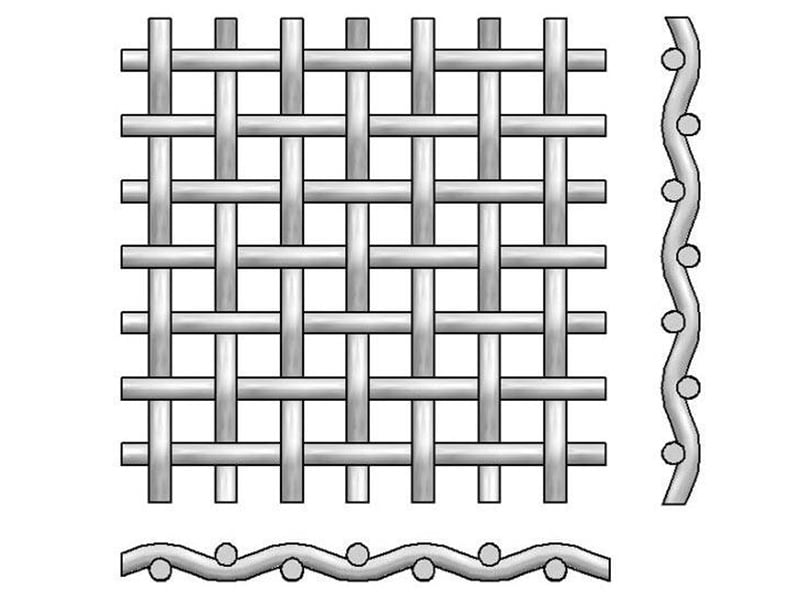
Plain square weave shown from the face and edge directions.
Square Mesh Formulas
When dimensions are expressed in millimetres:
Pitch = 25.4 ÷ mesh count
Nominal aperture = pitch − wire diameter
Open area (%) = (aperture ÷ pitch)² × 100
The formulas assume equal square openings and equal warp/weft wire geometry. Actual mesh must be evaluated against the relevant dimensional tolerance and inspection method.
Real Maidong woven wire mesh rolls prepared in different constructions.
Mesh roll range
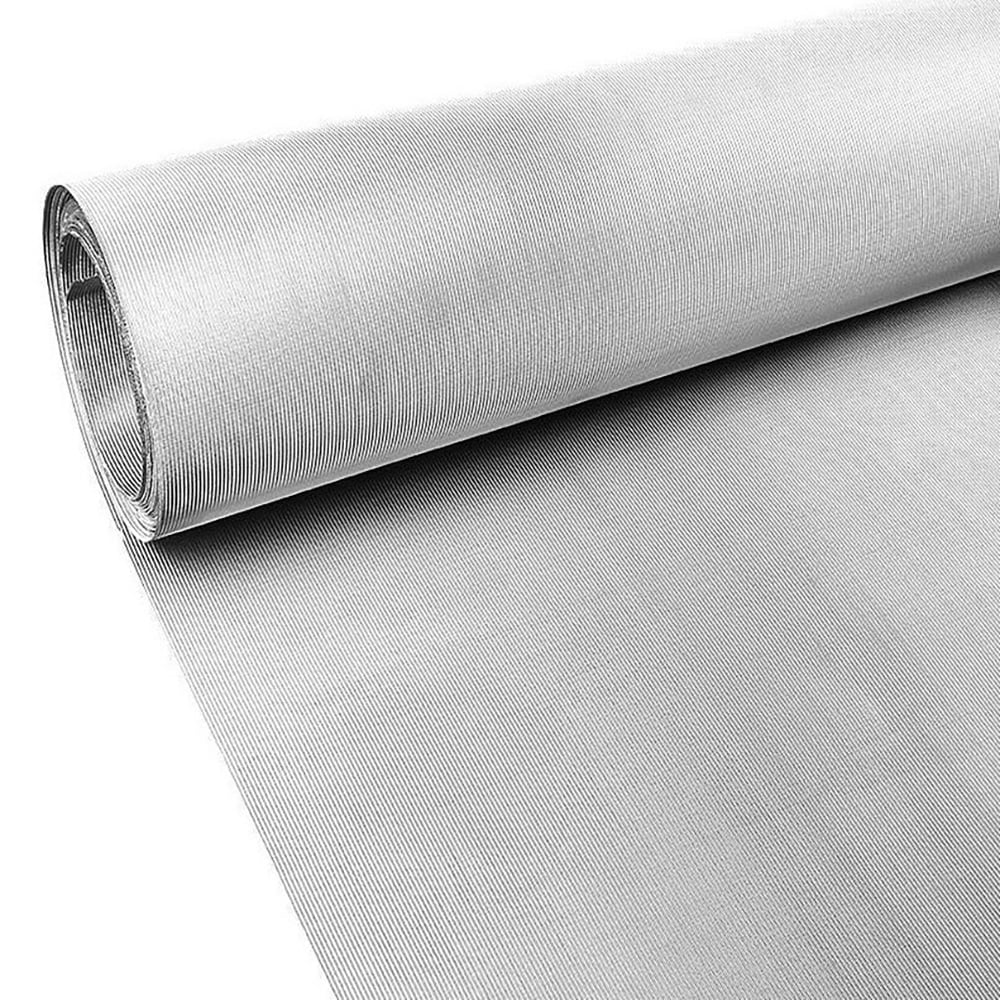
Fine woven mesh geometry must be defined by both mesh count and wire diameter.
Fine woven surface
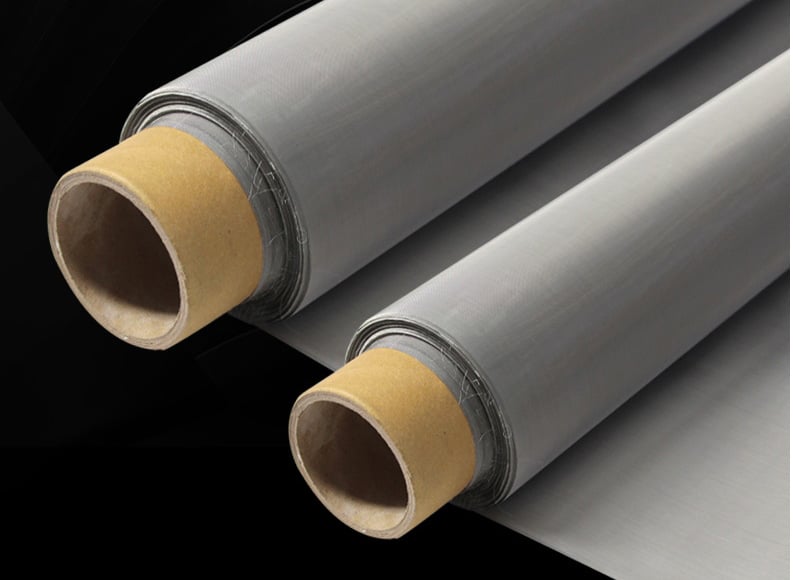
Stainless steel filter mesh rolls for industrial screening and filtration enquiries.
Industrial roll supply
These Maidong material images illustrate differences in roll form and visible mesh density. The photograph alone cannot identify mesh count, wire diameter, alloy or tolerance; use the written specification for purchasing.
For square woven mesh, mesh count normally describes the number of openings per linear inch. It does not identify aperture unless wire diameter is also known.
When dimensions are in millimetres, nominal aperture equals 25.4 divided by mesh count, minus wire diameter. The result is a geometric reference and remains subject to manufacturing tolerance and measurement method.
For equal warp and weft geometry, open area percentage is approximately the square of aperture divided by pitch, multiplied by 100. Pitch equals 25.4 divided by mesh count when millimetres are used.
Yes. Different wire diameters at the same mesh count produce different apertures and open areas. A purchase enquiry should never rely on mesh count alone.
No. Dutch weave has different warp and weft counts and wire diameters with an indirect pore path. Use the complete construction and a stated filtration-rating method.
No. Nominal geometric opening, nominal retention and absolute filtration rating are different concepts. State the rating basis and test method when filtration efficiency matters.
Need a Wire Mesh Specification Review?
Send the target opening or filtration requirement, wire geometry, grade, dimensions, operating conditions and quantity for review.