
Stainless Steel Woven Mesh Cut-to-Size Sheets
Order enquiries for stainless steel woven mesh sheets start with the complete wire-cloth specification and a clear cut list. Maidong can review rectangular blanks and drawing-defined pieces for your fabrication or equipment assembly.
Define what must be supplied as a finished cut piece and what processing you will perform afterwards.
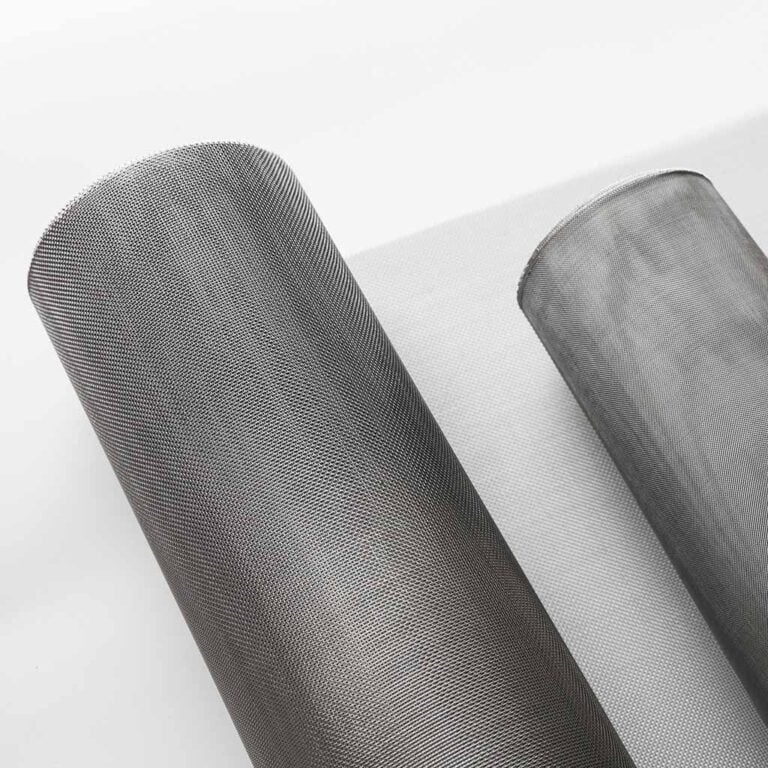
Choose a Blank, a Roll or a Finished Screen
Cut mesh blank
Defined outline and mesh, ready for the buyer’s next agreed operation. No frame or tensioning is implied.
Roll material
For your own cutting layout or repeated use. Roll and sheet delivery requirements should be stated separately.
Finished assembly
A framed, rimmed or formed screen needs its own interface and assembly specification.
For framed equipment screens, use custom rectangular filter screens. For continuous source material, see stainless steel wire mesh rolls. This page focuses on unframed cut-sheet procurement.
Match the Mesh Before Specifying the Cut
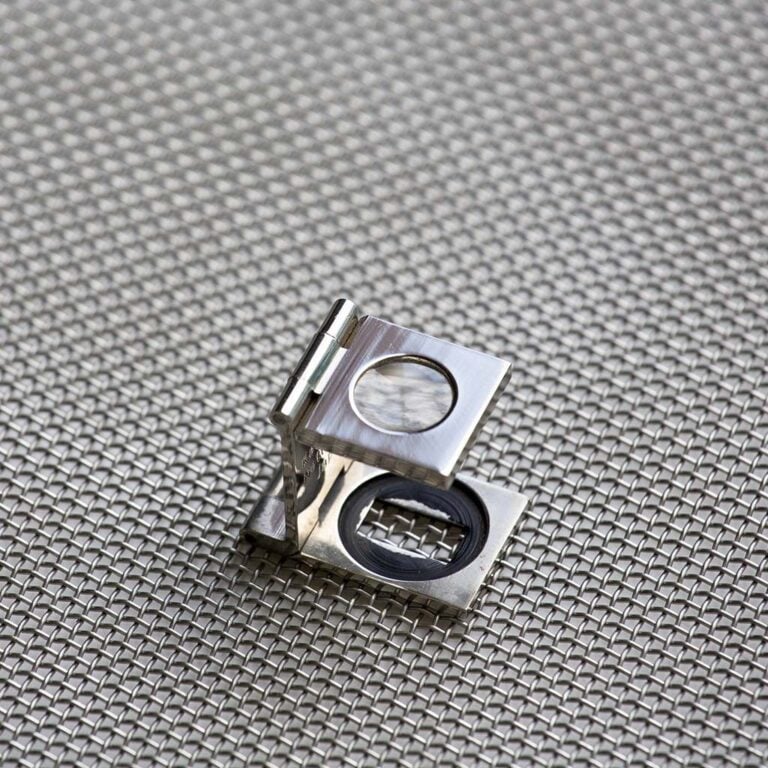
State the alloy and weave along with mesh count and units, wire diameter or the approved opening specification. A mesh count without wire data can leave different constructions under the same description.
Material selection should follow the service and cleaning conditions. Use 304 versus 316 guidance when preparing the enquiry, and confirm the actual grade rather than identifying it from appearance.
If Dutch weave is required, provide both directional counts and wire diameters. For narrow dense filter cloth, the Dutch weave specification guide explains the directional notation to include.
Prepare a Numbered Cut List
| Material and weave | Stainless designation, weave and any required material record. |
|---|---|
| Wire-cloth construction | Mesh count with unit and wire diameter, or complete opening specification. |
| Cut outline | Length × width, shape, radii, cutouts and drawing revision where relevant. |
| Dimension definition | Whether wire projections count in the finished size; measurement condition and tolerances. |
| Wire direction | Required warp/weft relationship to a reference edge, if controlled. |
| Edges | Allowed projections and loose-wire condition; any agreed treatment and inspection. |
| Quantity and identification | Item number and piece quantity for each size and specification. |
| Delivery | Flat or rolled request, separation, handling and packing expectations. |
Use one line per size and specification, even if the dimensions are similar. State units consistently. A drawing is preferable when corners, orientation or cutouts control fit; an unscaled photograph cannot replace those requirements.
Control Edge Wires and the Finished Envelope
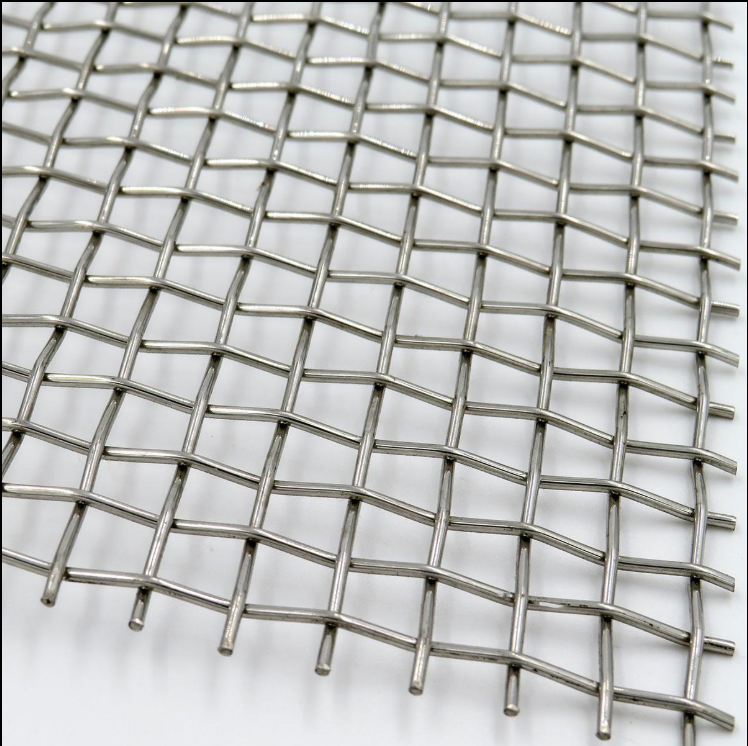
A cut woven sheet can have wires extending beyond the last crossing. Decide whether the drawing dimension refers to the overall wire envelope or another defined edge reference. Specify the condition required at each edge instead of assuming all cut mesh has a smooth solid-sheet boundary.
Where assembly requires restricted projections or retained edges, show the affected zones and agree the processing scope. Do not assume a particular cutting method, edge sealing or welded border is included.
For acceptance wording, see cut-edge and loose-wire inspection. A visual comparison is useful only when its scope and reference are agreed.
Agree Handling and Packing for the Next Operation
Large or fine unframed cloth can require support during handling. Identify whether blanks must be packed flat, may be gently rolled, or need separation by size. Confirm the condition in which flatness or dimensions will be assessed; shipping format alone is not a flatness guarantee.
If the sheet will be clamped, formed or tensioned by the buyer, state the blank allowance and orientation required by that process. Do not add an assumed allowance to a finished dimension. Quantity, material availability, cutting requirements and packing form the quotation basis; lead time and minimum quantity are confirmed per enquiry.
English Enquiry Template
Please quote unframed stainless steel woven mesh blanks to the attached cut list.
Material/weave: [details]. Mesh count and wire diameter or opening: [specification and units]. Item dimensions and quantities: [list].
Dimensions are measured to [defined reference], in [condition]. Required orientation and edge condition: [details]. Packing and identification: [requirements]. Our next operation is [assembly/forming/other].
Please confirm the included cutting and inspection scope and identify any exceptions or missing information.
Cut-to-Size Mesh FAQ
The enquiry covers a defined woven wire cloth blank. Frames, welded borders, seals, tensioning or formed assemblies are included only when separately specified and confirmed.
No. Woven mesh uses interlaced wires; welded mesh has joined intersections. Specify the construction rather than using the two names interchangeably.
Length and width are only part of the requirement. Include material grade, weave, opening or mesh count with wire diameter, quantity, tolerance and edge condition.
State whether dimensions include wire projections, identify critical edges and describe permitted loose or projecting wires. Any finishing method and acceptance condition need agreement.
Send a numbered cut list with specification, dimensions and quantity for each item. Identification, packing and feasibility are confirmed during quotation.
Do not assume this. Handling and support depend on the mesh construction and size. Define the delivery and measurement conditions, and identify any frame or support required in service.
Request a Cut-Sheet Quotation
Send the mesh specification, numbered cut list and delivery requirements. Attach a drawing for critical edges or shaped blanks.
Purchasing Specification Review
Request stainless steel woven mesh sheets and unframed blanks against a controlled cut list. Identify the cloth specification and the dimensions that govern your next cutting, forming or installation operation. State whether quoted sizes describe the finished blank or the usable mesh area.
From a cut list to a comparable quotation
Identify every line item
Give each blank a part number and drawing revision. State width, length, quantity and units for every size, rather than one total area for a mixed order. If two blanks have the same outside dimensions but different wire directions, identify them as different items. This helps avoid a quotation that assumes interchangeable orientations.
Separate finished dimensions from working area
If an edge will be clamped, folded or consumed by a later joint, show that allowance separately from the active opening. A rectangular blank size should not be interpreted as a guarantee of the exposed filtering area after assembly. For framed or rimmed parts, use the appropriate finished-component specification.
Cut-edge and inspection agreement
Define the edge reference
For flexible cloth, identify how the blank is supported during measurement and whether projecting wire ends are included. State any required control of loose strands and the edge condition needed for handling or assembly. Do not treat a sharp printed outline as proof that every wire intersection can be cut to the same profile.
Import and repeat-order records
Keep the accepted cloth specification, cut list and packing identification together. For repeat orders, refer to the approved revision rather than a previous photograph alone. Request material records or dimensional reports in the enquiry so the quotation can define the documentation scope.
Additional Buyer Questions
Is cut-to-size mesh already a finished screen?
Not necessarily. An unframed blank has no implied mounting hardware, rim, tensioning or sealing system. Specify those features if they are required.
Can a cut list include different grain or wire directions?
Yes, the enquiry can identify each orientation separately. Feasibility and acceptance depend on the actual cloth and drawing.
Should I order by square metres only?
For finished blanks, also give the individual dimensions and quantities. Equal total area can correspond to very different cutting and packing requirements.
For the wider product range, see Stainless Steel Wire Mesh.
Related specification resources: Stainless Steel Wire Mesh Rolls for Industrial Supply; Custom Contour Wire Mesh Blanks with Tabs and Slots; Wire Mesh Cut-Edge Inspection: Burrs and Loose Wires.
Specification Handoff and Enquiry Example
| Quotation review | Information to provide |
|---|---|
| Cut list | Item ID, drawing revision, size and quantity |
| Orientation | Viewing face, reference edge and directional cloth identity |
| Envelope | Dimension reference, edge-wire treatment and inspection condition |
Example RFQ Line to Complete
Replace the bracketed fields with your order requirements:
Cut blank; item [reference]; cloth [schedule]; finished size [values/unit]; orientation [face/datum]; projecting wires [included/excluded requirement]; edge acceptance [detail]; quantity [value]; packing ID [reference].
Related selection resources: Stainless Steel Wire Mesh; Wire Mesh Cutting Orientation and Datum Guide; Wire Mesh Cut-Edge Inspection: Burrs and Loose Wires.
Send the current drawing or complete specification, quantity, application and delivery destination through our contact page. Identify any required inspection or material records before quotation; availability and acceptance requirements are confirmed for the actual order.