Sintered wire mesh is a bonded laminate of selected woven-wire layers. Specify each layer by function and construction, list the sequence from upstream to downstream, mark normal and reverse flow, and define the rating, permeability, thickness and finished-element duty separately.
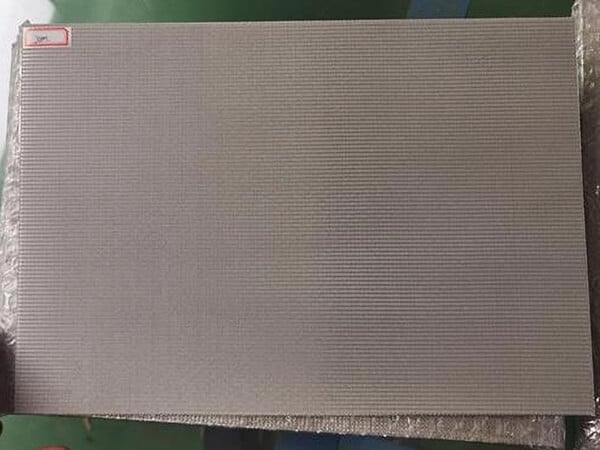
Bonded multilayer sheet before cutting and forming into a finished filter component.
Direct Answer: A Layer Count Is Not a Complete Specification
Filtration layer
The designated woven layer provides the primary retention function under a stated rating basis.
Protection layer
A selected screen can protect finer media from handling or reverse-flow damage.
Distribution / drainage
An intermediate layer can separate meshes, spread flow and provide a drainage path.
Structural support
Coarser mesh provides stiffness relative to the pressure direction and finished geometry.
Not every laminate needs every function, and one layer may contribute more than one function. Do not purchase from the phrase “five-layer sintered mesh” alone.
Sintered Wire Mesh Layer Function Matrix
Use functional names to explain the design, then attach measurable construction data. A functional label cannot replace mesh count, wire diameter, weave, thickness or test basis.
Layer function
What to record
Question it answers
Protection
Weave, mesh/wire data, side and relation to fine media
What shields the filtration layer during handling or reverse flow?
Filtration control
Complete weave construction plus rating and named test basis
Which layer owns the stated retention requirement?
Distribution / drainage
Opening, wire, position and separation function
How is flow spread or a fine layer separated from support?
Support
Mesh/opening, wire, quantity, side and pressure direction
What resists deformation under the specified load?
Complete laminate
Order, material, total thickness, tolerances and orientation
What exact bonded medium is being purchased?
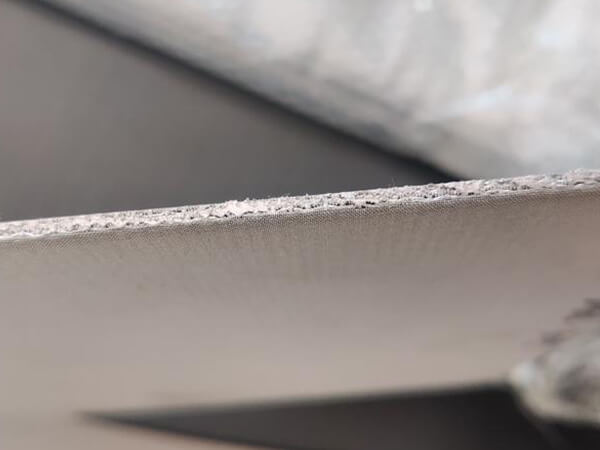
Edge view illustrating that selected woven layers are bonded into one porous laminate.
How a Typical Layer Sequence Is Read
A drawing should list the laminate from the named upstream face to the downstream face. One possible sequence is protection mesh → filtration-control layer → distribution/drainage layer → structural support. This is only an example; the required layer count and sequence depend on the duty.
Normal flow, reverse cleaning and the side exposed to higher differential pressure must be marked. Use the differential-pressure RFQ guide to separate clean resistance from structural loading.
Why ‘Five-Layer Sintered Mesh’ Is Still Incomplete
Weave is unknown
Square, Dutch or another construction changes opening and pore path.
Wire data is unknown
The same mesh count can use different wire diameters and open area.
Order is unknown
Reversing a directional layer stack can change support and protection behavior.
Test basis is unknown
A micron number without a definition cannot be compared reliably.
Rating, Permeability and Strength Are Separate Requirements
Retention needs a stated opening, pore/rating definition or named test. Permeability or clean pressure drop needs a fluid or gas, temperature, flow, area and test condition. Mechanical duty needs normal, maximum and reverse differential pressure plus the finished geometry, seams and interfaces.
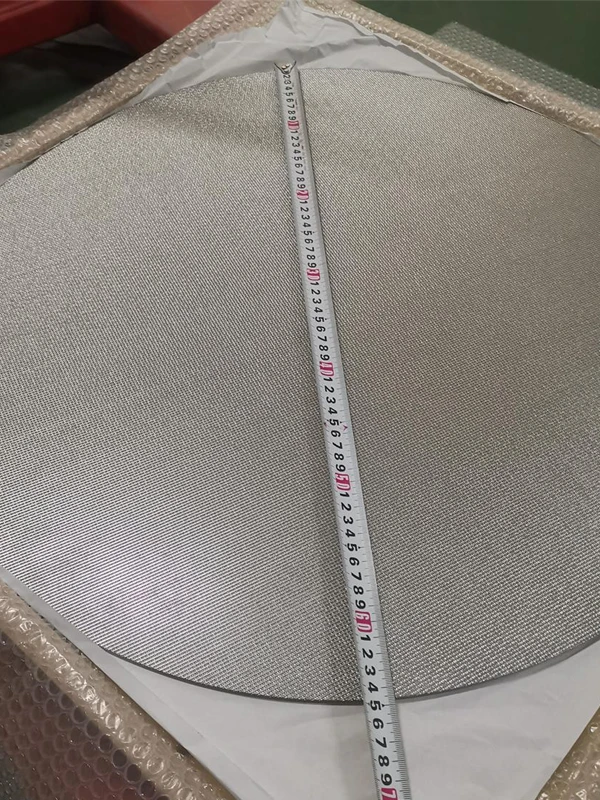
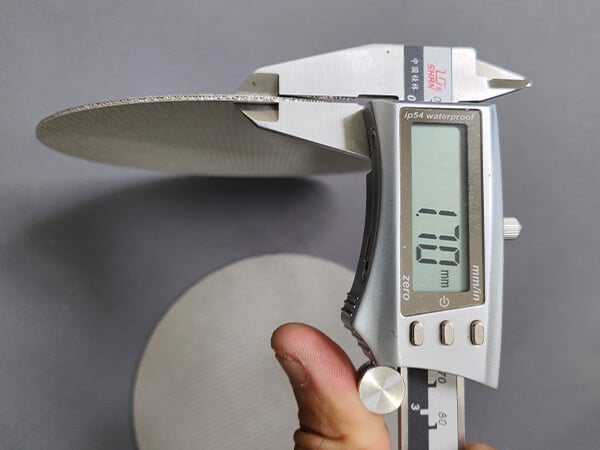
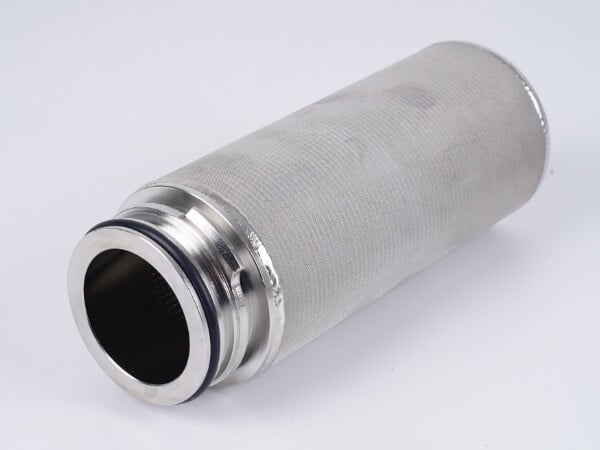
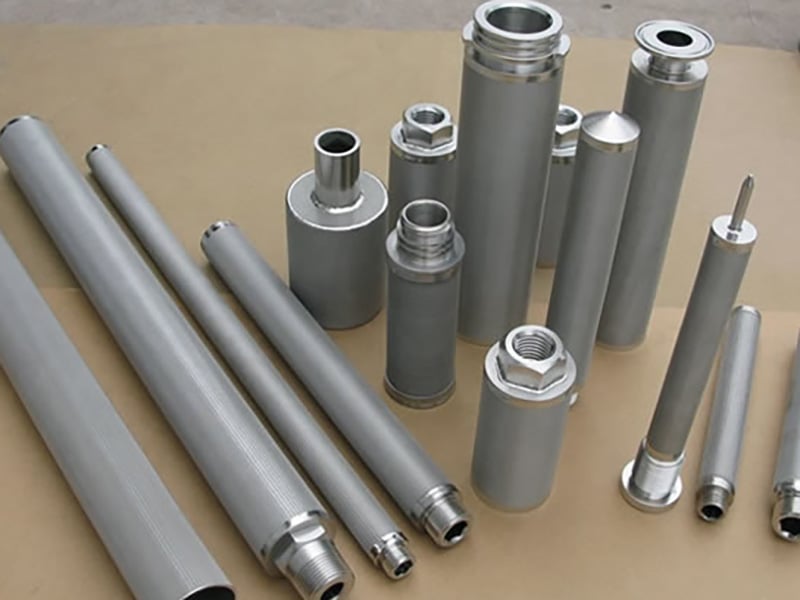
These real materials and components illustrate bonded sheet, edge structure, discs and cylindrical elements. Images cannot identify an exact rating, permeability, alloy, pressure capability or layer sequence without the approved specification.
Bonded multilayer sheet before cutting and forming into a finished filter component.
Bonded multilayer sheet
Edge view illustrating that selected woven layers are bonded into one porous laminate.
Bonded layer edge detail
Finished flat component whose layer sequence, thickness and flow direction must follow the drawing.
Finished round disc
Finished cylindrical elements showing why media structure and hardware must be specified together.
Finished cylindrical elements
Sintered Wire Mesh Drawing and RFQ Checklist
1. Define duty
Fluid/gas, particles, temperature, flow, pressure and cleaning.
2. Define retention
Rating value plus geometric, nominal, absolute or named test basis.
3. List every layer
Material, weave, mesh/wire construction, function and sequence.
4. Mark orientation
Upstream/downstream faces, normal flow and reverse conditions.
5. Define the part
Thickness, geometry, tolerances, seams, edges, ends and acceptance.
A design may include a filtration-control layer plus protection, distribution or drainage layers and one or more structural supports. The functions, count and sequence are design-specific; five layers is common terminology, not a universal formula.
The designated filtration-control layer normally provides the main retention function, but the stated rating still needs a geometric, nominal, absolute or named test definition. Finished-element bypass and damage can also affect performance.
Layer functions are directional. The protection layer, fine filtration layer and support may need a defined upstream-to-downstream order relative to normal and reverse differential pressure.
No. A layer count does not define the weave, mesh and wire data, layer order, filtration rating, permeability, thickness or support duty. Record every layer and its function.
Mark upstream and downstream sides; list each layer in order with material, weave or complete mesh construction; identify the rating/test basis, total thickness, dimensions, tolerances, joining and finished-element interface.
No. Flow resistance and structural behavior depend on the complete medium, fluid or gas, flow, temperature, area, geometry, differential pressure, support, seams and ends. Request comparable data under stated conditions.
Request a Sintered Mesh Layer Review
Send the process duty, rating definition, complete layer construction, upstream/downstream orientation, permeability or pressure-drop requirement, differential-pressure duty and finished-part drawing.