Sintered Metal Powder vs Sintered Wire Mesh Filter
Sintered metal powder and sintered wire mesh are different porous media. Powder forms a bonded particle network; sintered mesh bonds selected woven-wire layers. Choose between them from the retention definition, permeability, geometry, mechanical duty, cleaning and interface—not from the word “sintered” alone.
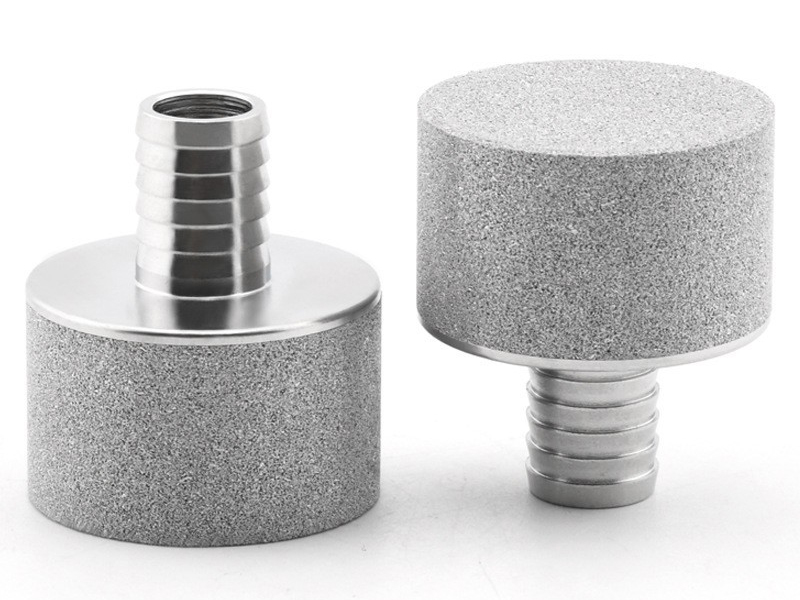
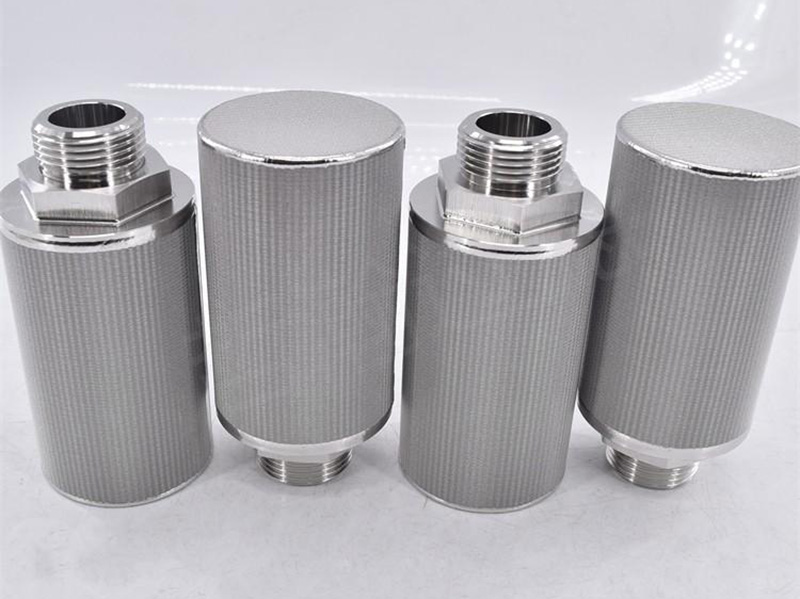
Powder-sintered porous metal bodies with machined connection features.
Direct Answer: They Are Not Interchangeable Media
Sintered metal powder
Metal particles are compacted or formed and bonded into a rigid interconnected pore network.
Sintered wire mesh
Two or more woven wire cloth layers are bonded into a stable laminate with defined layer functions.
For product enquiries, use the existing powder sintered filter page or the sintered filter cartridge page. This guide compares selection logic rather than offering a third overlapping product page.
Sintered Powder vs Sintered Mesh Comparison Table
Comparison field
Sintered metal powder
Sintered wire mesh
Starting structure
Metal powder or particles
Selected woven wire mesh layers
Pore path
Interconnected voids between bonded particles
Openings and paths created by woven layers and their sequence
Construction data
Powder grade, pore/rating basis, wall thickness and forming route
Layer count, weave, mesh/wire data, sequence and flow direction
Common forms
Porous tube, cup, disc and drawing-defined body
Sheet, disc, cylinder and fabricated multilayer element
Interface
Machined/bonded end, thread, flange or fitting
Welded or joined caps, rings, flanges and supports
Key RFQ risk
Ordering from a micron number without permeability and test basis
Omitting the layer sequence, support or complete weave construction
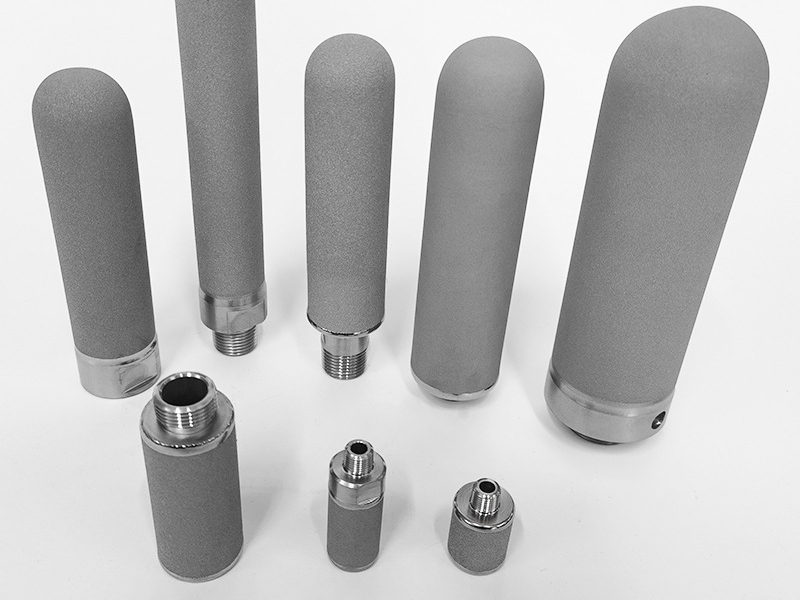
Rigid powder-sintered filter bodies in several drawing-based geometries.
How Sintered Metal Powder Media Is Specified
Powder-sintered media forms a porous wall without a visible woven pattern. A useful specification identifies the alloy, pore or filtration grade and its test basis, wall thickness, permeability or flow requirement, dimensions, end connection and operating duty.
Do not infer exact filtration efficiency, differential-pressure capacity or service life from the surface appearance. Request the data required by the actual application.
How Sintered Wire Mesh Is Specified
Sintered wire mesh retains identifiable woven layers. The filtration layer, protective layers, distribution layers and structural support must be described by complete mesh construction and order. Flow direction matters because the layers can perform different functions.
Powder media is commonly supplied as a porous body whose wall and fitting geometry are controlled together. Sintered wire mesh begins as a bonded sheet or laminate that can be cut and formed within construction limits. Neither route should be selected solely from a catalogue photograph.
Supply the final OD, ID, length, thickness, tolerances, seal interface, joining requirements and drawing revision.
Cleaning and Backwash Comparison
Contaminant release
Particle shape and pore path influence how retained material can be removed.
Reverse flow
State direction and pressure limits; support and layer orientation must suit the cycle.
Chemical compatibility
Review porous medium, end fittings, joining and seals with the cleaning chemistry.
Acceptance after cleaning
Define pressure drop, flow, integrity or inspection criterion instead of assuming unlimited reuse.
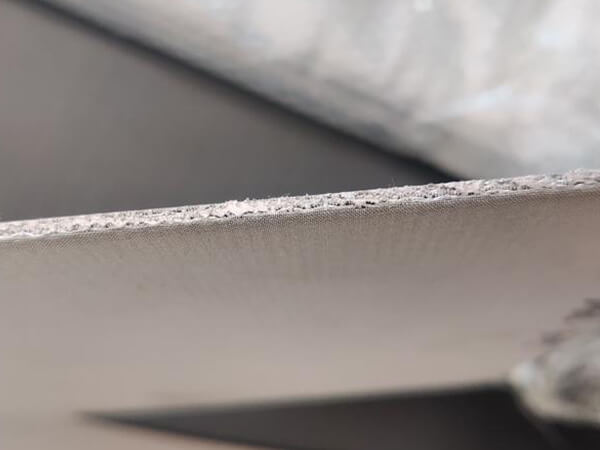
These are real Maidong material and filter-element examples. They show the visible structural difference but do not establish interchangeable ratings or guaranteed performance.
How to Choose Between the Two
Choose from the rating
Compare like-for-like retention and test definitions.
Choose from flow
Set medium, viscosity, temperature, area and pressure-drop requirement.
Choose from geometry
Confirm whether the required body, sheet, layer or connection can be fabricated.
Choose from maintenance
Define cleaning, reverse flow, inspection and replacement criteria.
Porous Metal Filter RFQ Checklist
RFQ category
Information to send
Medium family
Powder-sintered porous metal or exact sintered wire-mesh laminate
Filtration and flow
Rating/test basis, fluid or gas, viscosity, temperature, flow and pressure drop
Mechanical duty
Normal/reverse pressure, flow direction, support and cleaning
Finished component
Alloy, dimensions, wall/layers, ends, seals, tolerances and drawing
Acceptance
Inspection, documentation, quantity and revision control
Rigid powder-sintered filter bodies in several drawing-based geometries.
Powder-sintered porous bodies
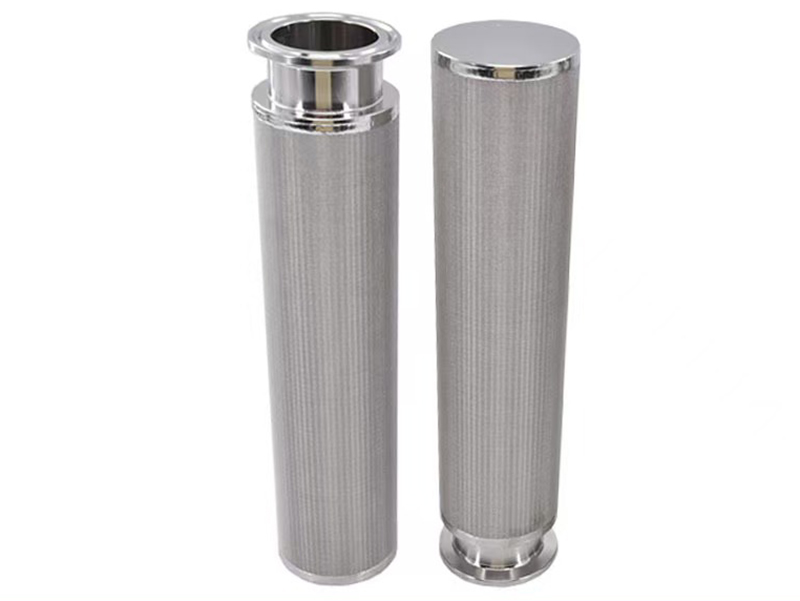
Wire-mesh laminate elements with drawing-defined threaded and closed ends.
Bonded wire-mesh elements
The finished connection may look similar while the porous wall is fundamentally different. Identify the medium family on the drawing and purchase order so the quotation, inspection and replacement part refer to the same construction.
Powder media is formed from metal particles bonded into an interconnected porous body. Sintered wire mesh is made from woven wire cloth layers bonded together while retaining identifiable mesh structures.
No. The rating must be tied to the specific medium, construction and test method. A nominal pore or micron value from one medium should not automatically be treated as equivalent to a value from the other.
Powder-sintered media is commonly produced as a rigid porous wall. Sintered mesh can also be mechanically stable through bonded support layers, but its construction and forming limits are different.
The answer depends on geometry and fabrication. Bonded wire mesh sheets can be cut, rolled or formed into certain shapes, while powder media is commonly produced as porous tubes, cups, discs or drawing-defined bodies. Confirm feasibility from the actual drawing.
Compare contaminant type, pore path, access, reverse-flow direction, chemical compatibility, temperature and acceptance criteria. Neither medium has one universal cleaning method or service-life advantage.
State the medium family, rating basis and test method, alloy, dimensions, wall or layer structure, interfaces, flow direction, operating temperature and pressure, cleaning method, tolerances and quantity.
Need Help Comparing Porous Metal Media?
Send the filtration and flow requirements, operating duty, cleaning method, geometry, interfaces, drawing and quantity for review.