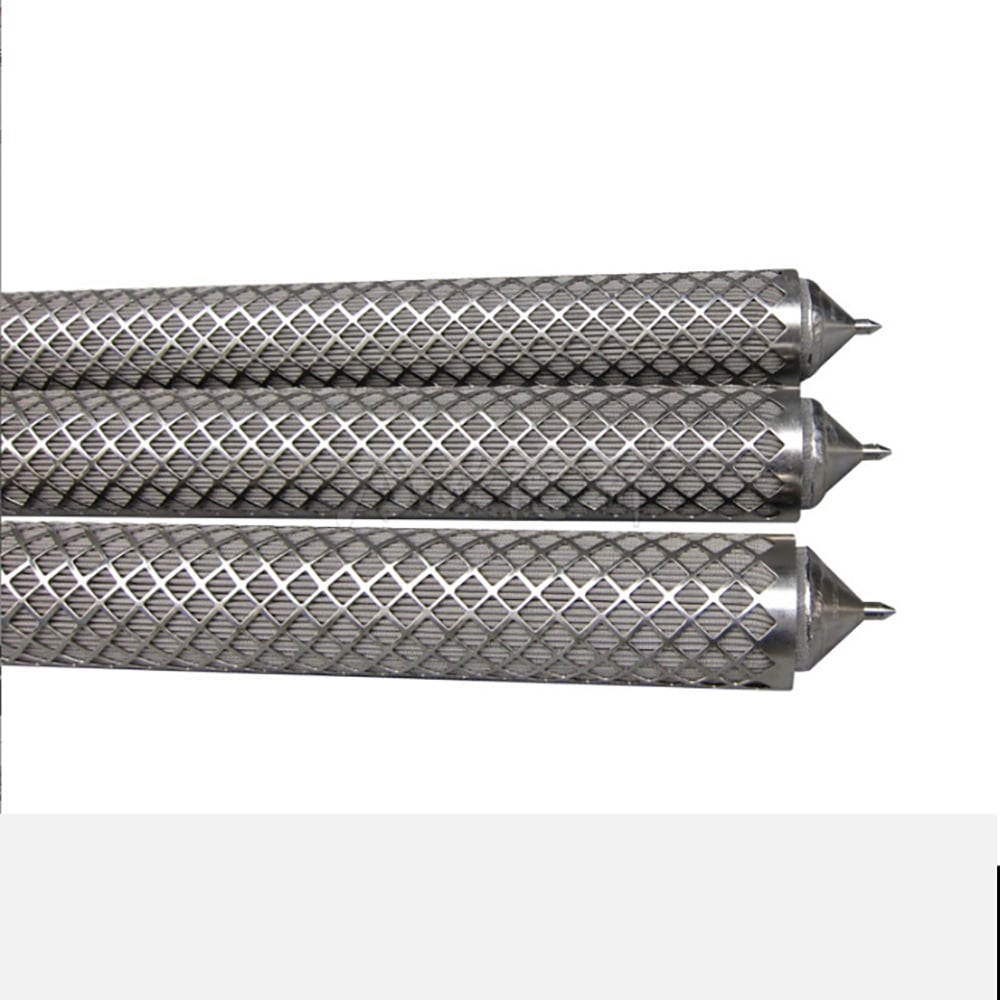
A multi-layer filter tube combines a defined fine filtration medium with drainage, support or protective layers. A quotation-ready design identifies every layer, its function, the inside-to-outside sequence, flow direction, tube dimensions, seam and end interfaces.
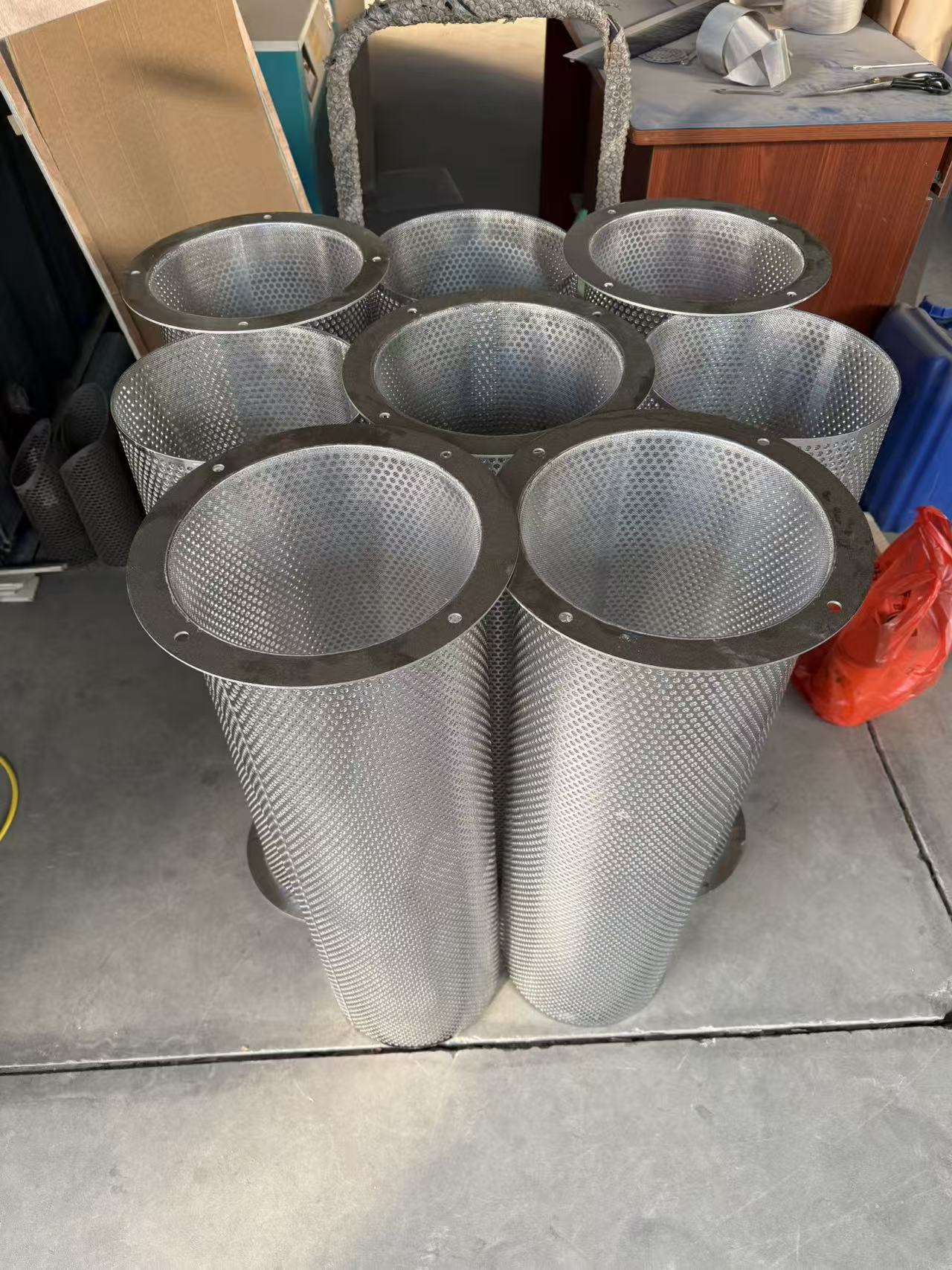
Finished cylindrical components showing perforated support bodies and internal mesh layers.
What Each Layer Does
Retention layer
Square mesh, Dutch weave or another defined medium controls particle retention.
Drainage layer
Coarser woven mesh can maintain flow paths beside the fine medium.
Structural support
Perforated or expanded metal carries load in the specified pressure direction.
Protective layer
An outer layer can protect finer media during handling and operation.
Multi-Layer Filter Tube Specification Table
Do not specify only a micron value and diameter. The layer construction, support side and finished interfaces are part of the filtration assembly.
RFQ field
What to define
Why it matters
Layer sequence
Inside-to-outside order and function of every layer
Prevents the support and retention roles being confused
Fine medium
Weave, mesh and wire/aperture, or rating and test basis
Defines the actual filtration requirement
Support geometry
Perforation or expanded opening, pitch, thickness and open area
Affects stiffness, flow and media contact
Tube geometry
OD/ID, length, wall build, roundness and tolerances
Controls equipment fit and usable area
Flow and load
Flow direction, differential pressure and reverse-flow duty
Determines which side needs support
Interfaces
Seam, ends, caps, flange, thread, seals and weld details
Controls integrity, mounting and bypass paths
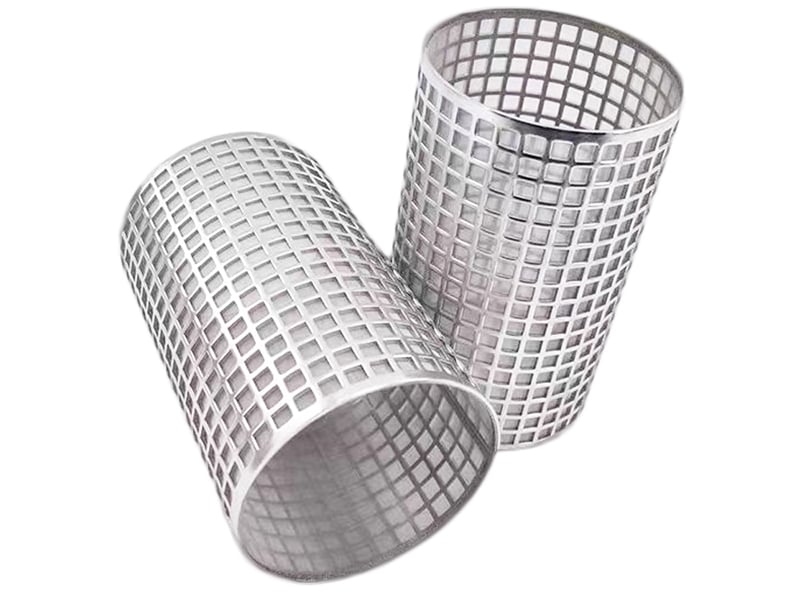
Open grid cylinders that can support a finer filtration layer in a composite tube.
Choose the Support Structure
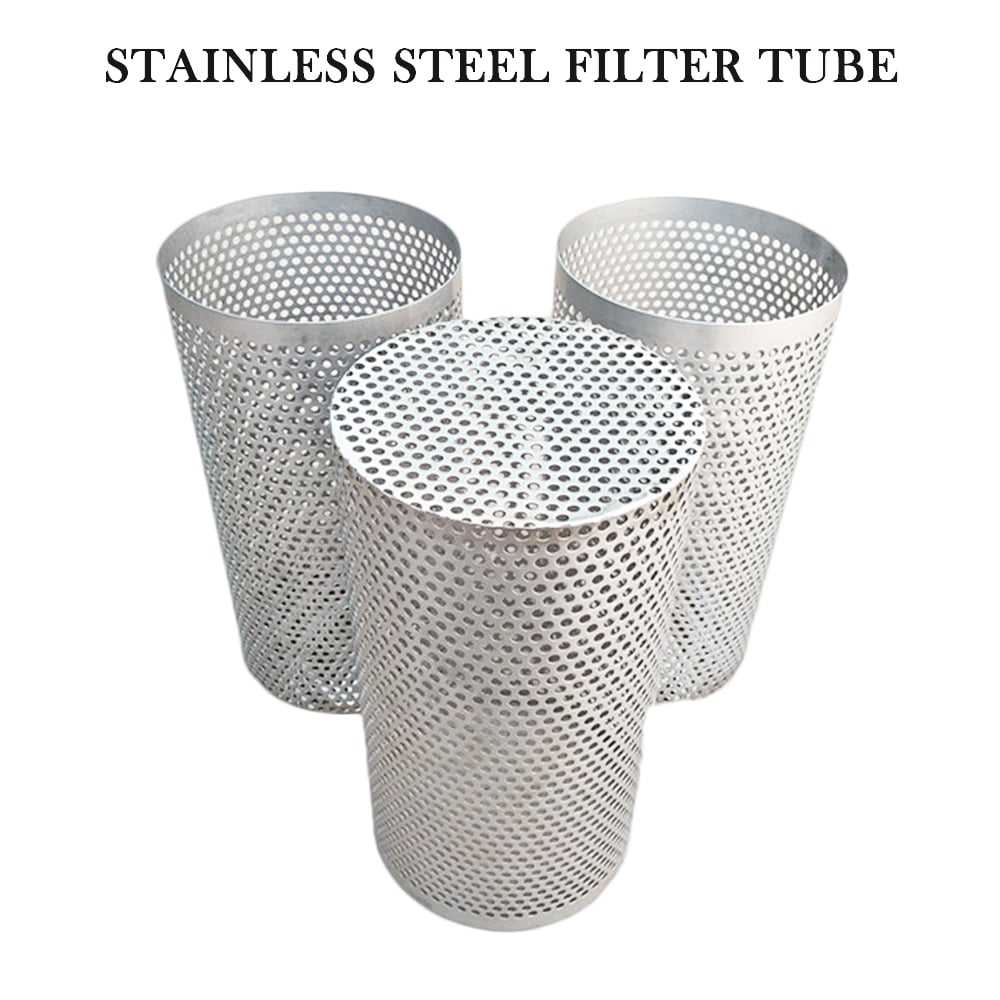
Coarse woven or grid support provides open drainage paths. Perforated metal provides a rigid sheet-based core or shell. Expanded metal can combine continuous strands with an open protective structure.
Square woven mesh should include mesh count with wire diameter or clear aperture. Dutch weave requires its construction and an agreed rating basis. If a bonded porous laminate is required, specify sintered mesh rather than calling every layered tube sintered.
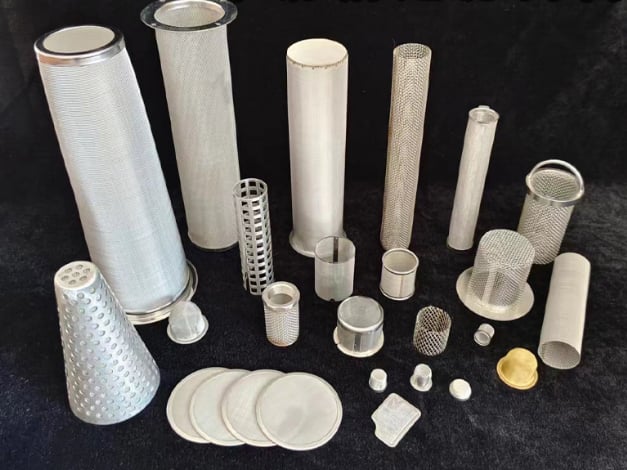
These Maidong product images illustrate how media, support bodies and finished cylindrical geometry can be combined. Final construction is controlled by the customer drawing and confirmed specification.
Examples of fine-media, support-body and finished cylindrical configurations.
Mesh and perforated combinations
Composite cylindrical elements showing fine media protected by an expanded-metal support layer.
Expanded outer support
Finished cylindrical components showing perforated support bodies and internal mesh layers.
Mesh-lined perforated tubes
How to Select a Multi-Layer Tube
1. Define retention
State contaminant, required filtration result and rating basis.
2. Map the flow
Show normal and reverse flow plus differential-pressure direction.
3. Build the layers
Assign retention, drainage, support and protection functions.
4. Detail the tube
Add dimensions, seams, ends, seals and critical tolerances.
5. Complete the RFQ
Send drawing, operating duty, quantity and required checks.
Common Specification Risks
Support called the filter
Coarse support openings do not define fine-media retention.
Layer order omitted
The manufacturer cannot confirm which layer faces the load.
Micron value without basis
Nominal and absolute values are not interchangeable.
Interfaces left undefined
Missing seam, cap and seal details create fit and bypass risk.
A multi-layer filter tube combines a defined retention medium with one or more drainage, support or protective layers in a cylindrical assembly. The layers are selected as a system and arranged around the actual flow and differential-pressure direction.
The designated fine filtration medium determines retention, not the coarse perforated or expanded support. State the mesh construction, wire and aperture data or the relevant micron-rating and test basis for that layer.
Yes. Perforated metal can provide a rigid core or outer shell while woven mesh performs finer filtration. Hole pattern, open area, layer contact and support direction should be reviewed together.
No. A mechanically assembled or welded multi-layer tube can combine separate media and supports. Sintered wire mesh is diffusion-bonded into a porous laminate. The required construction must be stated explicitly.
Provide OD or ID, length, layer sequence, material for each layer, media construction or rating basis, support geometry, flow direction, seam, end caps or fittings, tolerances, service conditions and quantity.
Drawing-based tubes can be reviewed with open or closed ends, caps, collars, flanges, threaded fittings and other mounting details. Dimension critical interfaces and sealing faces on the drawing.
Request a Multi-Layer Tube Review
Send the layer sequence, fine-medium specification, support geometry, flow direction, tube dimensions, seam, ends, operating duty and quantity.