An expanded metal filter tube is formed from slit-and-expanded sheet into a cylindrical support, guard or coarse-screening body. A quotation-ready design specifies the diamond geometry, strand, thickness, orientation, tube dimensions, seam, ends and whether a finer filtration layer is added.
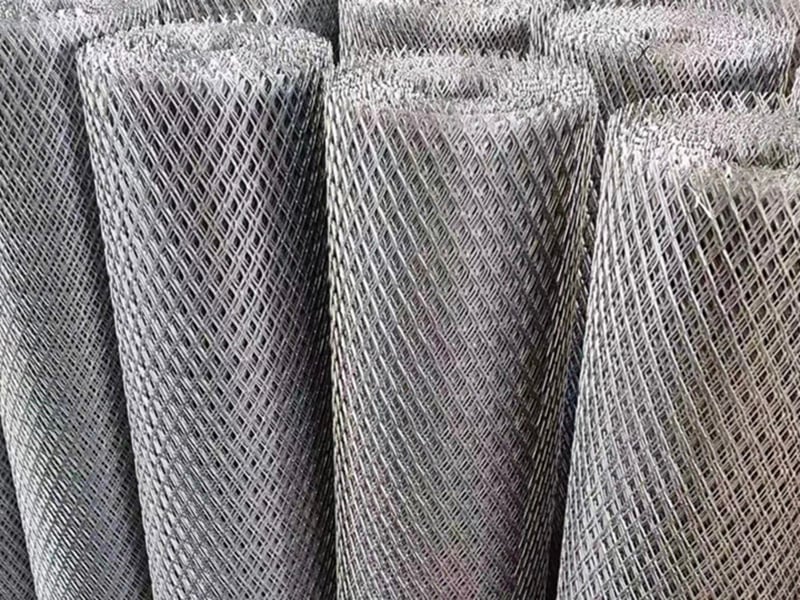
Expanded metal cylinders showing diamond openings and continuous strands.
Expanded Metal Tube Functions
Structural support
Rigid cylindrical backing behind woven mesh, pleated media or another fine filtration layer.
Protective sleeve
Open metal guard helping protect finer media from handling or mechanical contact.
Coarse screening
Diamond openings retain larger debris where precision filtration is not required.
Drainage layer
Open structure provides flow paths between media and a supporting body.
Expanded Metal Filter Tube Specification Checklist
Do not specify expanded metal only as a diamond size. Pitch and clear opening are different dimensions, and strand width plus thickness determines the remaining metal structure.
Specification field
What to provide
Design effect
Opening geometry
SWD/LWD pitch or SWO/LWO clear opening; identify the convention
Defines diamond size, direction and geometric open area
Strand and thickness
Strand width, base-metal thickness, raised or flattened condition
Affects stiffness, profile, forming and available flow path
Tube geometry
OD or ID, length, roundness and tolerances
Controls equipment fit and media-support clearance
Seam and orientation
Longitudinal joint, overlap/weld and diamond direction
Influences continuity, forming and directional stiffness
Ends and filter layers
Open/closed ends, caps, collars, flanges, fine media and flow direction
Defines mounting and the complete filtration assembly
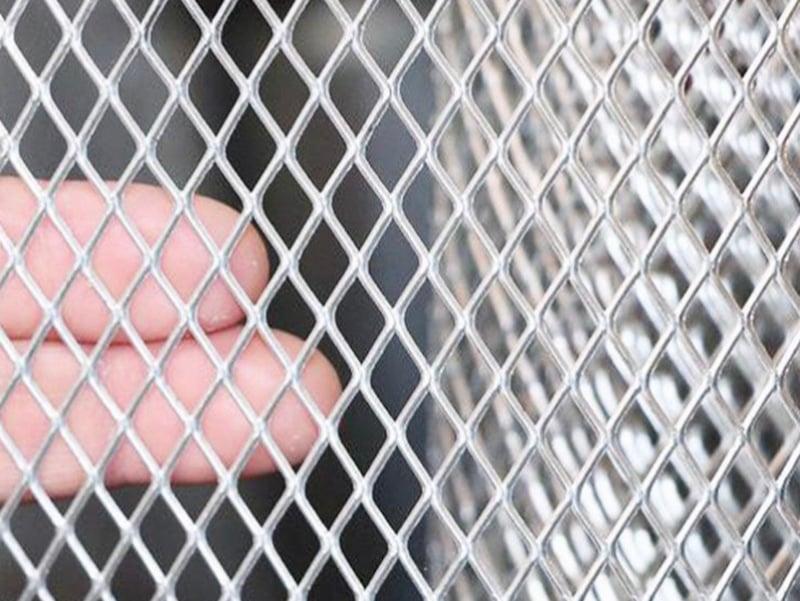
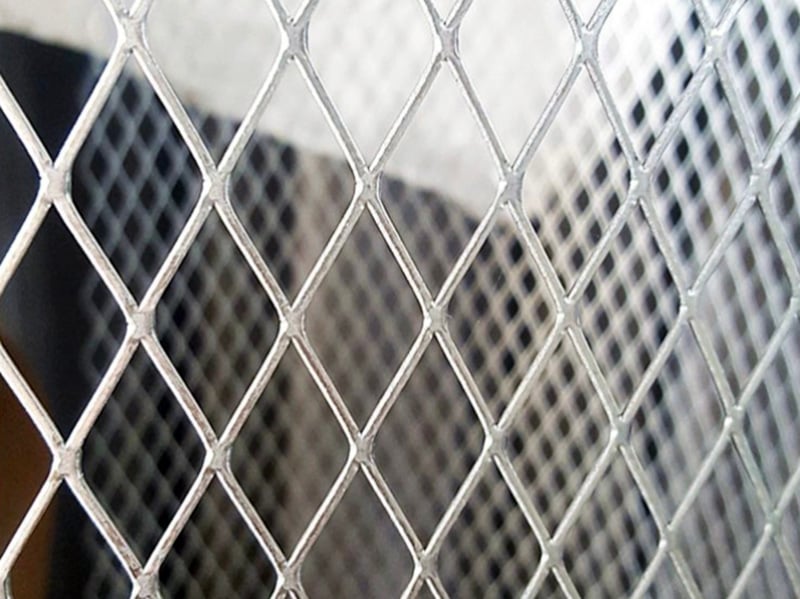
Close view showing diamond opening, strand and node geometry.
SWD, LWD, SWO and LWO
SWD and LWD describe short-way and long-way pitch, normally center-to-center. SWO and LWO describe corresponding clear openings. The drawing should identify which convention is used.
Strand width is measured across the solid metal ligament. Base-metal thickness is not automatically the same as the final raised profile. Flattening changes surface profile and can alter opening geometry.
Diamond orientation should be shown relative to the tube axis because expanded metal is directionally structured. Forming direction, seam position and support load should be considered together.
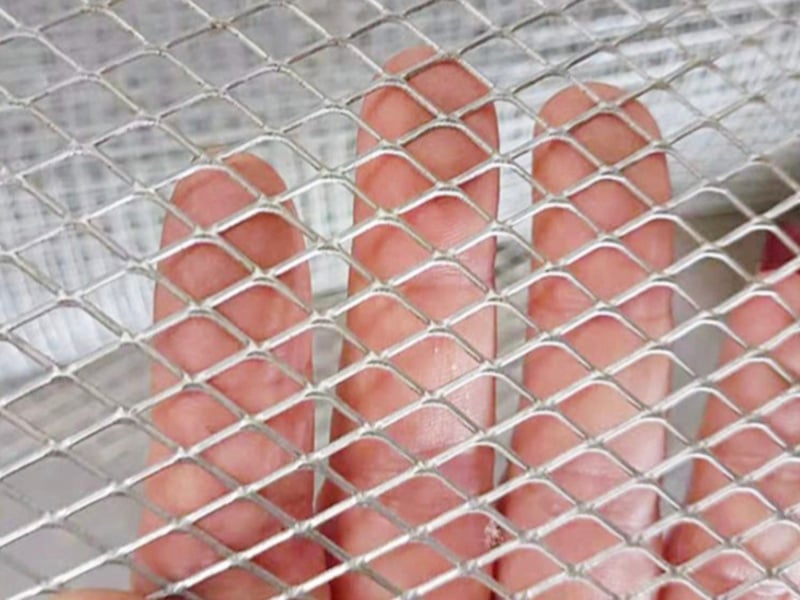
Expanded sheet detail used to define pitch, clear opening and strand dimensions.
Product Examples: Opening and Forming Options
These Maidong material images show representative expanded-metal structures used before or during cylindrical fabrication. Final tube dimensions and edge details are controlled by the approved drawing.
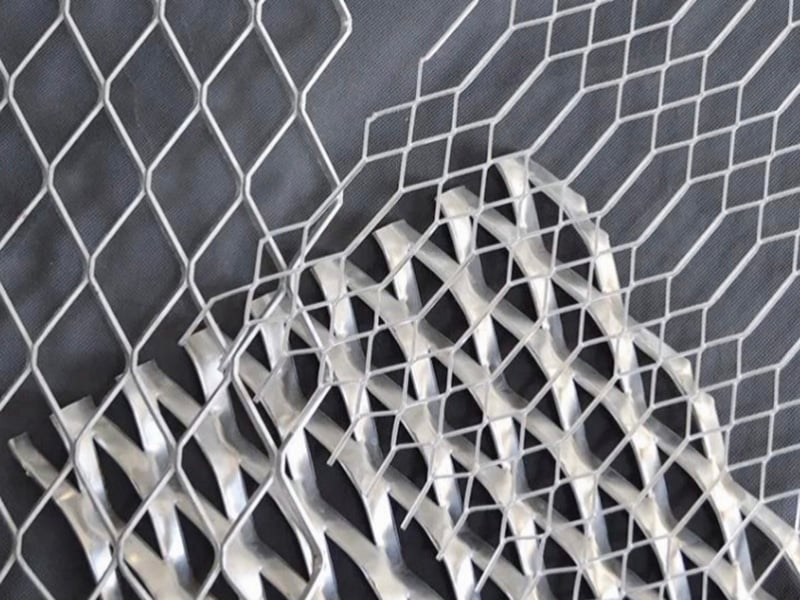
Examples of different expanded-metal opening and strand proportions.
Different opening proportions
Raised expanded metal detail; final orientation should be defined on the drawing.
Raised diamond structure
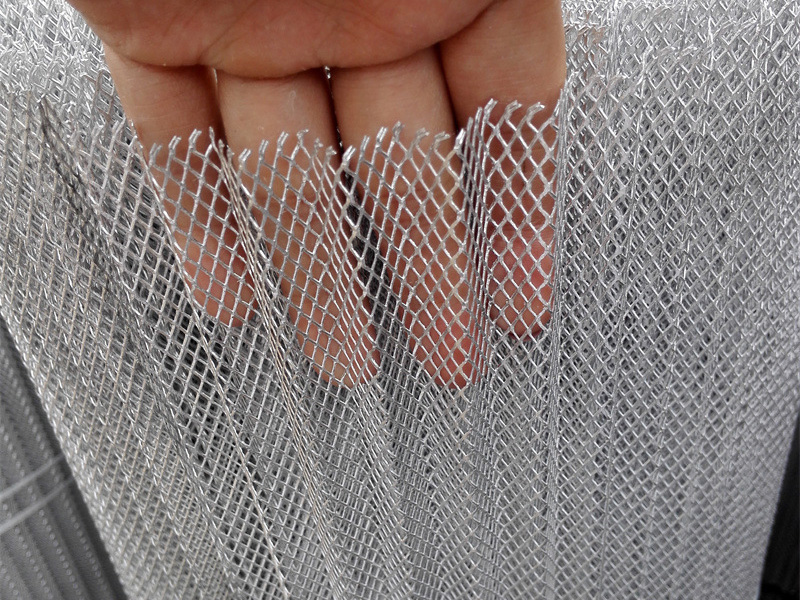
Fine expanded metal sheet before forming into a support or screening component.
Fine expanded sheet for forming
Tube and Composite Configurations
Expanded-only tube
Used where coarse screening or an open structural body is sufficient.
Inner support core
Expanded metal placed inside fine mesh for outside-to-inside differential pressure.
Outer protective sleeve
Expanded layer outside fine media for mechanical protection and handling.
Multilayer assembly
Expanded support combined with woven mesh, Dutch weave or another defined filter medium.
It is a cylindrical component formed from slit-and-expanded sheet. It is commonly used as a coarse screen, protective sleeve, drainage layer or structural support for finer filter media rather than as a precision filtration medium by itself.
Usually not by itself. Its diamond openings are generally used for coarse screening or support. Fine retention normally requires woven wire mesh, Dutch weave, sintered media or another filter layer added to the tube.
State material, raised or flattened condition, opening and pitch dimensions, strand width, base-metal thickness, OD or ID, length, seam, edge condition, ends, tolerances, support direction, quantity and intended function.
Drawing-based tubes can be reviewed with open or closed ends, caps, collars, flanges, frames and other mounting details. Critical interfaces and weld requirements should be shown on the drawing.
Geometric open area can be estimated from clear-opening and pitch dimensions measured under the same convention. Forming, seam overlap, margins, supports and additional filter layers can reduce effective component open area.
Request an Expanded Tube Drawing Review
Send the material, opening convention, strand, thickness, tube dimensions, orientation, seam, ends, filter layers and operating conditions. Maidong can review a custom expanded metal tube enquiry.