
Filter Mesh Substitution: Specification Comparison Guide
Prepare a replacement enquiry by putting the original requirement beside the proposed mesh. Keep geometry, filtration requirements and installation details separate so differences remain visible during quotation review.
This guide organizes the comparison. It does not establish equivalence from appearance, mesh count or a nominal micron value.
Start with the Best Available Baseline
Approved specification
Use the drawing, item number and revision that define the current part.
Measured sample
Record how dimensions were obtained and distinguish measurements from estimates.
Proposed alternative
Request the exact construction and a list of deviations from the baseline.
If the original information is incomplete, mark it as unknown. A supplier should not have to guess whether a dimension is a finished requirement, a sample measurement or an allowance. For sample-based enquiries, see sample measurement and drawing guidance.
Compare the Original and Proposed Specifications
| Item | Record these details | Original | Proposed | Decision / open item |
|---|---|---|---|---|
| Material | Designation, condition and required records | [value/reference] | [value/reference] | [review required] |
| Weave | Plain, twill, Dutch or another defined construction | [value/reference] | [value/reference] | [review required] |
| Wire geometry | Directional counts with units, wire diameters and opening requirements | [value/reference] | [value/reference] | [review required] |
| Filtration basis | Rating definition, test method and acceptance criteria | [value/reference] | [value/reference] | [review required] |
| Thickness and layers | Measurement condition, total envelope, layer count and order | [value/reference] | [value/reference] | [review required] |
| Part dimensions | Outline, holes, lengths or diameters and tolerances | [value/reference] | [value/reference] | [review required] |
| Edges and joints | Rim, projections, seams and restricted zones | [value/reference] | [value/reference] | [review required] |
| Support and installation | Support position, clamping area, flow direction and mating interfaces | [value/reference] | [value/reference] | [review required] |
| Evaluation | Required fit or performance checks and unresolved questions | [value/reference] | [value/reference] | [review required] |
Use one comparison per part or construction. A blank field should remain an open question, not be interpreted as matching the original. Identify the evidence or drawing reference used for each value.
Compare Geometry Before Interpreting a Rating
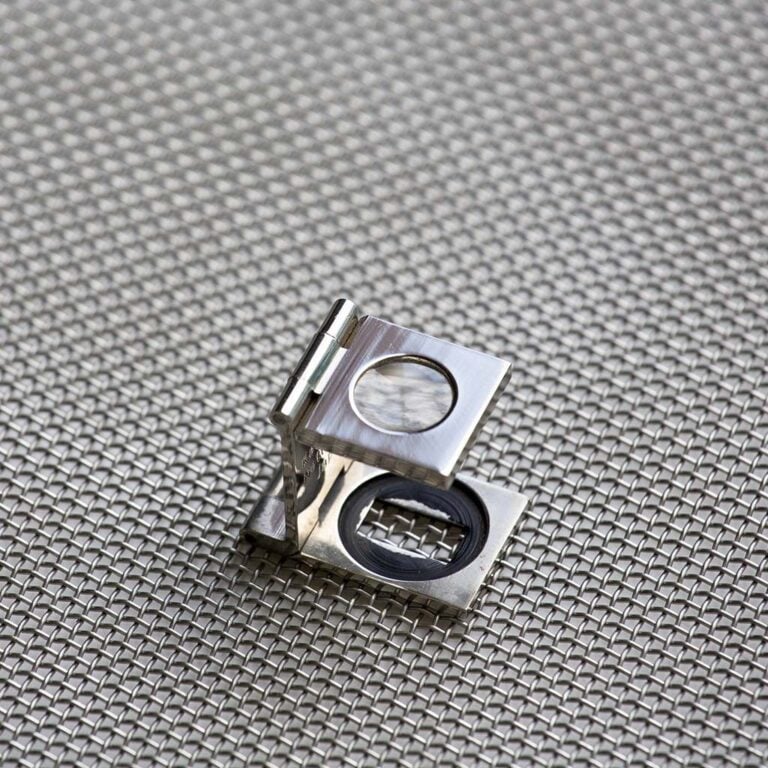
Two meshes with the same count can use different wire diameters. Compare the actual weave and both directions where applicable. For dense Dutch cloth, do not use a square-opening conversion to assign a retention rating.
A reported micron value also needs a definition and test basis. Keep nominal geometry, measured pore information and particle-retention performance distinct in the comparison. Ask for clarification where the original and proposed descriptions use different conventions.
If the alternative changes more than one variable, list each change. Avoid attributing the result of a later trial to a single difference unless the comparison supports it.
Check the Fitting Envelope and Active Area
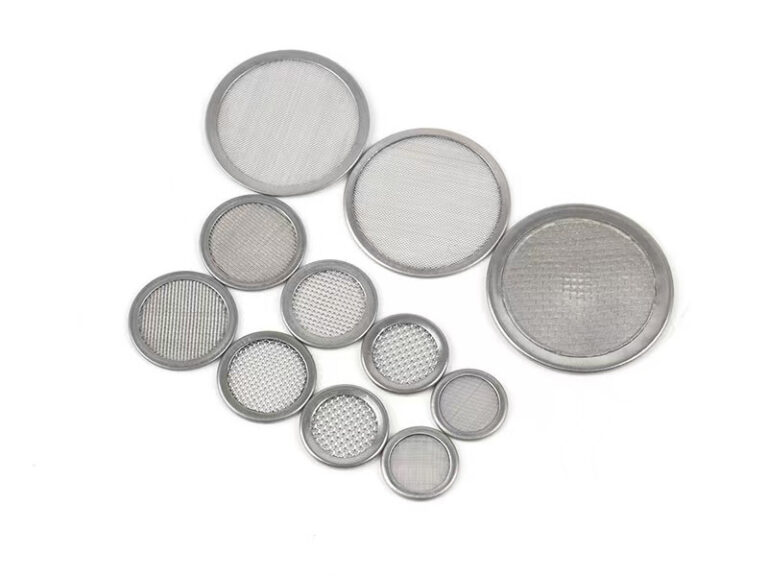
Compare the finished outline, thickness, edge construction and any locating feature. A replacement can match the outside diameter while presenting a different rim thickness or clear filtering opening.
For layered parts, record each layer and its order. Include the support, seam or attachment arrangement and the area covered by clamps. The full assembly must fit the intended interface, not just the loose cloth.
For dimensional stack requirements, see mesh thickness and stack height guidance. Identify the measurement condition when a flexible or compressible construction is involved.
Separate Fit Approval from Performance Evaluation
Define what each check is intended to establish. A dimensional check or installation trial can address a fitting requirement without demonstrating retention, pressure loss, service life or cleaning performance.
Provide the medium, temperature, flow direction, support and relevant loads for any proposed evaluation. Use agreed acceptance criteria and record the test conditions. Do not transfer a result from a loose coupon directly to a complete filter assembly without a justified basis.
Where material grade is also changing, keep that review explicit. The material documents and grade substitution guide provides a separate record format for copper-family material proposals.
English Replacement Enquiry Template
Please review a replacement for filter mesh item [number/drawing revision].
Attached are the original specification, available sample measurements and a comparison table. Values marked unknown have not been verified.
Please identify the proposed material, weave, wire sizes, rating/test basis, thickness, layers, finished dimensions and edge arrangement. List each deviation separately.
Our installation and operating conditions are [details]. Required evaluation and documentation are [requirements]. Please identify unresolved items and any cost or delivery implications before order confirmation.
Record the accepted construction and the scope of approval against the order or revised drawing. Retain any conditions or outstanding evaluation requirements. Acceptance for one item or order should not silently become an unrestricted future substitution.
Replacement Specification FAQ
No. Wire diameter, weave, material and the rating definition can differ. Compare the full construction and assembly requirements.
Provide photographs, dimensions and any existing records. Mark measured values separately from estimates and leave unverified material or performance requirements open for review.
No. State how the rating is defined and tested, together with the cloth construction. The same nominal rating does not establish equivalent performance.
Review material, weave, wire geometry, thickness, layer order, dimensions, edges, support and interfaces. Record the scope of each proposed change.
No. A fit trial addresses the defined fitting conditions. Filtration, pressure loss or other performance requirements need their own agreed evaluation.
Record the original requirement, proposed construction, evidence, unresolved items and the decision for the specific order or drawing revision. Do not treat an unanswered question as acceptance.
Send a Replacement Specification for Review
Send the original drawing, comparison table and required quantity. Maidong can review the proposed supply scope and identify missing information.
Assembly Handoff and Enquiry Example
| Quotation review | Information to provide |
|---|---|
| Baseline | Approved drawing/specification or identified measured sample |
| Change list | Material, cloth, outline, edge and assembly differences |
| Approval | Separate fit review and performance-verification requirements |
Example RFQ Line to Complete
Replace the bracketed fields with your order requirements:
Substitution review; original [specification/revision]; proposed [schedule]; changed fields [list]; fit evidence [requirements]; filtration rating and method [basis]; material records [scope]; disposition [responsible approval].
Related selection resources: Stainless Steel Wire Mesh; Disc Filter Elements; Nominal vs Absolute Micron Rating in Industrial Filtration.
Send the current drawing or complete specification, quantity, application and delivery destination through our contact page. Identify any required inspection or material records before quotation; availability and acceptance requirements are confirmed for the actual order.