
Copper Mesh Material Documents and Grade Substitution Guide
A clear copper mesh order identifies the required material, the evidence needed at delivery and the process for approving an alternative. Keep these requirements visible in the enquiry and quotation, especially when a supplier proposes another designation.
This checklist helps you prepare a reviewable request. It does not certify equivalence between grades or promise a particular document is available.
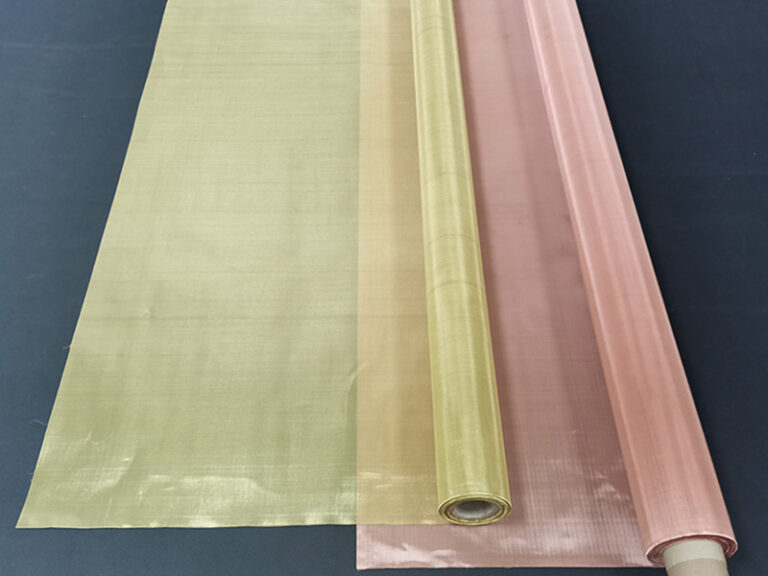
Start with Three Separate Records
Required material
The buyer’s designation, specification reference, revision and controlled condition.
Proposed supply
The supplier’s exact proposed material, cloth construction and available documentation.
Accepted change
A written record of any approved deviation, its scope and the affected order items.
Avoid using a broad description such as copper-coloured mesh as the material requirement. When the grade is open, ask for a clearly identified proposal and review it before the order is finalized.
Put the Material Requirement on the RFQ
| Alloy designation | Exact required designation; do not shorten it to a colour or generic family name. |
|---|---|
| Specification reference | Applicable specification and revision where controlled by the buyer’s drawing or purchase requirement. |
| Wire condition | Any specified condition or temper; confirm how it relates to the supplied wire cloth. |
| Cloth construction | Weave, counts with units, wire diameters and opening or rating requirements. |
| Part identity | Drawing revision, item number, dimensions and order quantity. |
| Requested evidence | Document type, issuer, required information and linkage to the delivered material. |
| Acceptance scope | Which properties or results must be reviewed and who approves exceptions. |
For the product enquiry, use copper woven mesh discs or copper mesh sheets. Attach the material requirement to the same item list so it is not separated from the dimensions and quantities.
Ask What Each Document Actually Demonstrates
A product description identifies what is offered. A supplier declaration states a claim about conformity. A report with test results records the reported measurements and their stated basis. Do not treat these as interchangeable without checking what your purchase requirement calls for.
Request the issuer, material designation, relevant results where required and a clear connection to the supplied item or material lot. Check whether the document concerns input wire, finished cloth or the fabricated part. Evidence about one stage does not automatically cover all later processing.
A material record does not by itself establish mesh dimensions, particle retention or suitability for the complete assembly. Specify those acceptance requirements separately. For broader document terminology, see filter material documents and inspection reports.
Review a Proposed Substitute Line by Line
Keep the original requirement visible alongside the proposed alternative. Compare the relevant material requirements, the document basis and any changes to the wire condition. Similar names or a supplier’s statement of equivalence are a starting point for review, not a complete approval record.
Check the cloth and part specification separately: weave, counts, wire sizes, thickness, diameter or sheet size, edge treatment and joining requirements. A material-only approval must not silently authorize geometry changes.
For a phosphor bronze requirement, see phosphor bronze woven mesh. For brass, use brass woven mesh. Keep the proposed designation explicit rather than combining these families under copper.
Record the Decision Before Changing the Order
Use a deviation record with the order item, original requirement, proposed change, supporting information and approval decision. Identify any conditions such as sample evaluation or additional inspection. Record the responsible approver and date according to the buyer’s process.
An approval should state whether it applies to one order, specified lots or a revised standing specification. Do not assume an accepted sample or a previous purchase permanently changes every future order. Keep rejected proposals and unresolved items distinguishable from accepted changes.
Copy This Substitution Review Request
Please identify any proposed material substitution before order confirmation.
Original requirement: [designation, specification and revision]. Proposed material: [exact designation and reference]. Reason for proposal: [details].
Supporting documents and their item/lot linkage: [details]. Changes to wire condition, weave, wire sizes, dimensions or processing: [list, or explicitly none].
Please keep the original requirement unless the stated change is approved in writing for the identified order items. Identify any additional testing, cost or delivery implications.
Check the Delivery Against the Accepted Version
Match the delivered item labels and documents to the agreed order revision. Review the required material evidence and separately check the specified cloth and part acceptance criteria. If information conflicts or linkage is missing, request clarification before treating the requirement as satisfied.
Agree documentation availability, inspection scope and any associated cost during quotation. Do not add an unspecified certification expectation after manufacture and assume it can be supplied retrospectively.
Material Specification FAQ
State the alloy designation, specification reference and revision where applicable, wire condition if controlled, and the requested material documentation. Keep the woven construction and dimensions as separate requirements.
Not automatically. Specify what evidence is required and what it must cover. A declaration and a report containing test results serve different purposes; acceptance should be agreed in the purchase requirement.
No. Colour and photographs can help describe appearance but cannot establish composition or demonstrate that the ordered grade has been supplied.
Do not assume equivalence. Identify both designations and applicable specifications, compare the relevant requirements and obtain documented approval for a proposed substitution.
No. Review changes to weave, counts, wire diameters, thickness, dimensions and edges separately. Record which changes are accepted and which requirements remain unchanged.
At enquiry and quotation stage, before the order is finalized. State the required issuer, scope and item or lot linkage, and confirm availability rather than assuming every document is included.
Send Your Copper Mesh Requirement
Include the material designation, requested documents, cloth specification and drawing. Maidong can review the enquiry and identify missing information or proposed exceptions.