
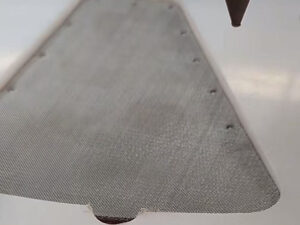
Perforated Ventilation Panels Built From the System Drawing
A perforated metal ventilation panel should be specified by material, thickness, hole geometry, pitch, open area, perforated zone, blank margins and finished equipment interface. Open area is important, but it does not by itself guarantee fan airflow or system pressure drop.
Six Decisions Define a Ventilation Panel
Hole geometry
Round, slotted, square, hexagonal or custom pattern.
Pitch and layout
Straight, staggered or drawing-defined orientation.
Material and thickness
Specified from environment, stiffness and forming needs.
Open area
Calculated from hole size, pitch and pattern.
Panel geometry
Perforated zone, blank margins, cut-outs, bends and holes.
Equipment interface
Frame, flange, fasteners, clearances and tolerances.
Perforated Ventilation Panel Specification Table
| Drawing field | What to state | Why it matters |
|---|---|---|
| Opening | Hole/slot shape and dimensions | Defines passage geometry |
| Pitch and pattern | Centre spacing, stagger and orientation | Controls ligaments and open area |
| Material/thickness | Required grade and sheet thickness | Affects stiffness, forming and environment review |
| Perforated zone | Pattern boundaries and blank margins | Protects mounting and bend areas |
| Finished panel | Length, width, cut-outs, bends, frame and tolerances | Determines equipment fit |
| Performance input | Open-area target or system airflow/pressure-drop requirement | Separates geometry from system validation |
Round-Hole Panels
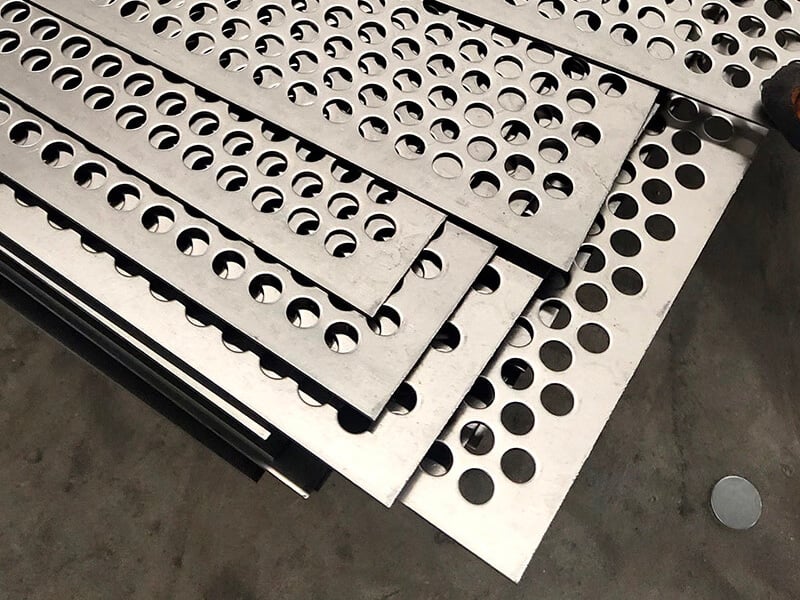
Round holes can be arranged in straight or staggered layouts. Specify hole diameter, transverse and longitudinal pitch, layout angle, sheet thickness and unperforated margins. Do not assume that two panels with the same hole diameter have the same open area.
See round-hole perforated metal for product details.
Slotted Panels and Directional Layouts
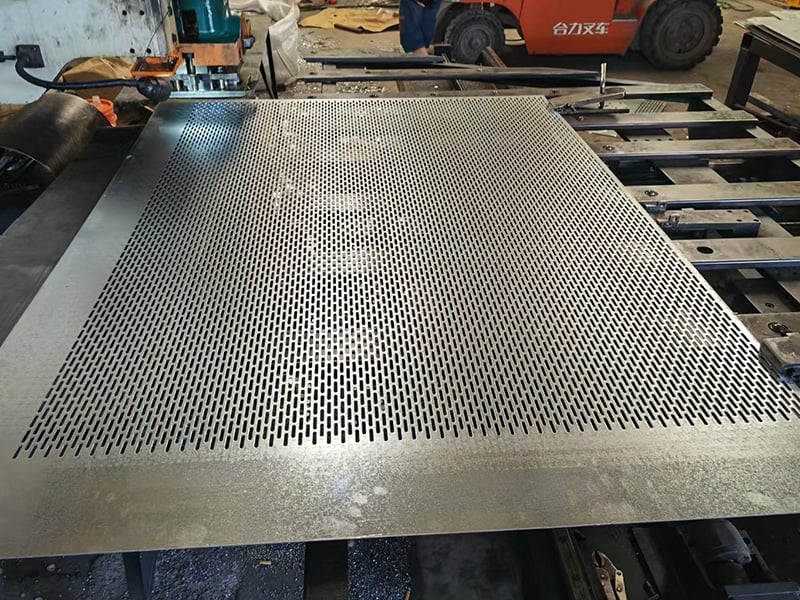
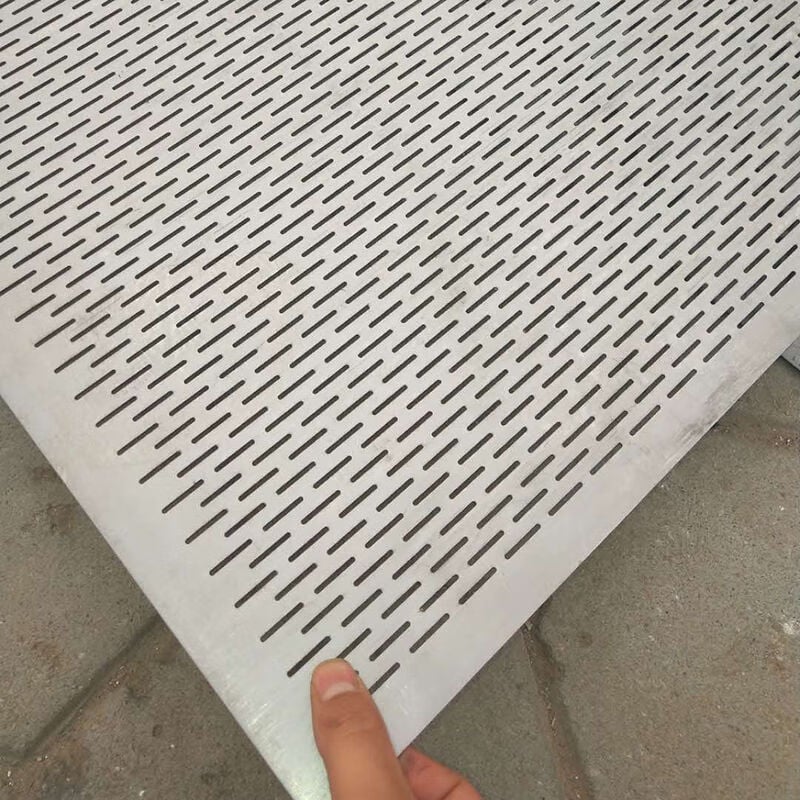
Slots require length, width, end shape, centre spacing and orientation. Their directional layout can suit elongated airflow paths, drainage or equipment geometry, but the final system response must be evaluated in context.
Compare slotted-hole perforated metal.
Square and Hexagonal Opening Options
Square and hexagonal openings create different ligament networks and area relationships from round holes. Specify corner geometry, orientation, pitch, material thickness and permitted edge condition instead of selecting from appearance alone.
Review square-hole and hexagonal-hole perforated metal.
Open Area Is Not the Same as System Airflow
Panel open area
A geometric percentage calculated from the perforation pattern.
Free-flow path
The effective passage after frames, guards, louvers or filters.
Pressure loss
Depends on geometry, thickness, velocity and surrounding system.
Fan operating point
Must be checked using the complete equipment airflow system.
Use the perforated metal open-area calculator for geometric checks. It does not replace system pressure-drop testing or fan selection.
Blank Margins, Bends and Mounting Details
Keep critical bends, frames and fastener locations inside controlled blank zones where required. Show bend lines, radii, hole-to-edge distance, mounting holes, cut-outs and datum references on the finished panel drawing. A pattern that works on a flat sheet may need adjustment near a formed edge.
The main perforated metal mesh page covers the broader material family.
Industrial Ventilation Panel Uses
Equipment enclosures
Air passage and component guarding around cabinets or machinery.
Fan and intake guards
Perforated screens with drawing-defined clearance and mounting.
Heat-management panels
Airflow openings incorporated into housings and protective covers.
Application labels do not establish airflow, strength, safety or acoustic performance. Those requirements must be stated and validated for the actual equipment.
Real Perforated Panel Examples
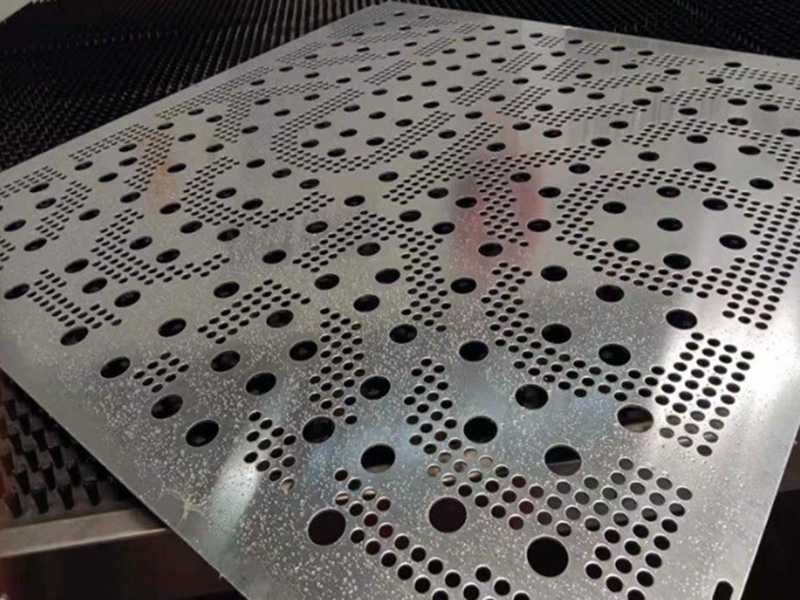
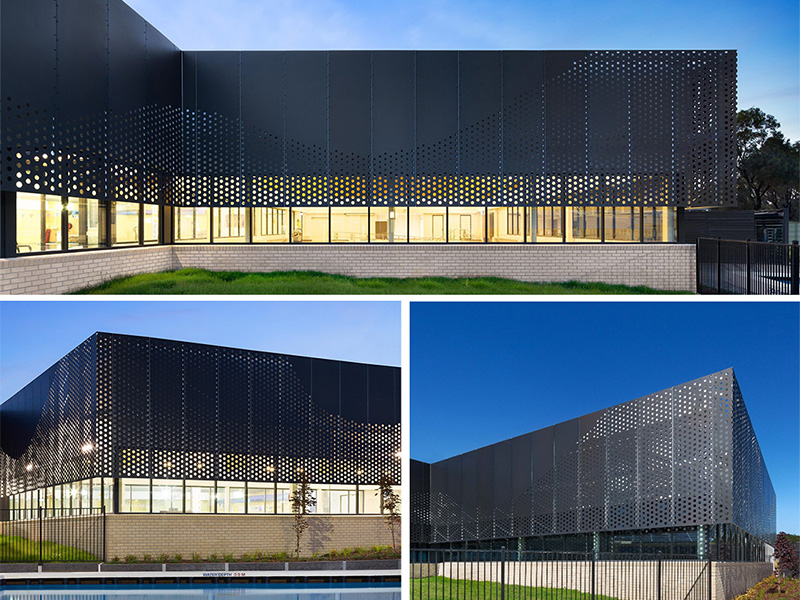
These Maidong material-library images show different hole patterns and manufacturing formats. They illustrate available design directions only; final specifications are confirmed from the approved drawing.
Custom mixed pattern
Round-hole panels
Slotted sheet
Ventilation Panel RFQ Checklist
1. Define the opening
State hole/slot dimensions, pitch, layout and orientation.
2. Define the sheet
Add material, thickness and surface requirements.
3. Mark the pattern zone
Show blank margins, cut-outs and edge conditions.
4. Complete the panel
Add bends, frame, mounting, tolerances and drawing revision.
5. Add performance data
State open area or system airflow requirements and quantity.
Perforated Metal Ventilation Panel FAQ
State material, thickness, hole or slot size, pitch, pattern, open-area target, perforated zone, blank margins, finished dimensions, tolerances, forming, surface requirement and quantity.
Not automatically. Panel open area is one resistance input, but system airflow also depends on hole geometry, panel thickness, inlet conditions, guards, filters, fans and downstream restrictions.
Round holes are common, while slots, squares and hexagons can suit different area, drainage, direction or design requirements. The choice should follow the equipment drawing and performance target.
Pitch is the centre-to-centre spacing of adjacent openings. Open area is the percentage of panel surface removed by the pattern. The same hole size can produce different open area when pitch or layout changes.
A panel can be reviewed for bends, flanges, frames, mounting holes and cut-outs when these are shown on the drawing. Material, thickness, perforation zone and bend location affect manufacturability.
Provide the panel drawing, material, thickness, hole pattern, pitch, open area or airflow requirement, margins, dimensions, bends, mounting details, surface requirement, quantity and acceptance criteria.
Send the Panel Drawing and Airflow Requirement
Include hole pattern, pitch, material, thickness, perforated zone, margins, finished dimensions, bends, mounting details, tolerances, quantity and any system performance requirement.