
Stainless Steel Perforated Sheets for Filter Fabrication
Stainless steel perforated sheets provide the starting material for filter cylinders, baskets, screens and supporting structures. Specify the sheet and hole pattern around the component you intend to fabricate.
Send Maidong the material grade, thickness, perforation layout and required blank dimensions for quotation. Identify whether your order ends at flat material or includes further fabrication.
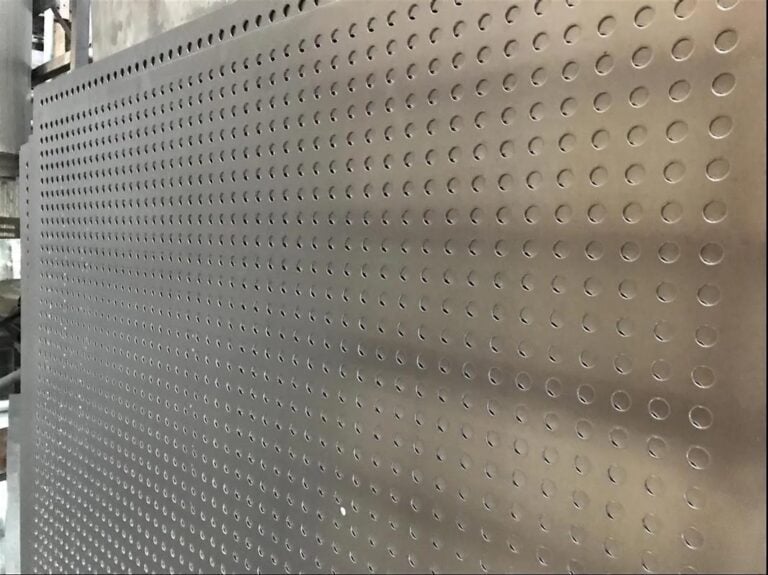
From Flat Sheet to a Filter Component
| Supply form | What the enquiry covers |
|---|---|
| Flat sheet | Material, thickness, hole layout and overall dimensions. |
| Cut blank | A drawing-defined outline and perforated zone ready for the next operation. |
| Fabricated component | A separately specified rolled, joined or assembled part with its finished dimensions. |
For completed cylindrical parts, see perforated filter tubes. For a complete basket, see perforated filter baskets. This page focuses on selecting the flat material and blanks used to make those components.
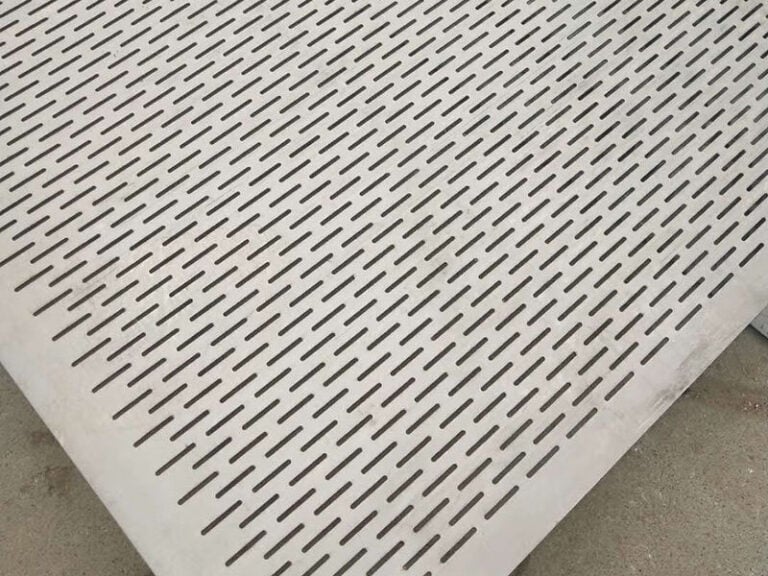
Choose a Hole Pattern and Layout
Specify round, square or slotted openings according to the component drawing. Give opening dimensions and centre spacing, then identify the row arrangement and direction relative to the blank edges.
For slotted holes, state slot width, length and end shape. For round holes, include diameter and straight or staggered centres. A pattern photograph can support an enquiry but does not replace those dimensions.
If an open-area value is required, define whether it refers to the perforated region or the entire sheet including margins. Keep the hole geometry on the drawing even when an open-area target is provided.
Thickness, Material and the Next Operation
State sheet thickness in a defined unit and include the stainless steel grade. Provide the environment, temperature and cleaning conditions that guide material review, together with any required material records.
Hole size, spacing and thickness must be considered together during fabrication review. Identify whether the sheet will be rolled, bent, welded or installed flat, and supply the finished-part drawing when its geometry affects the blank.
Do not treat perforated sheet as a pressure-rated filter element by itself. The finished structure, joints and supports need their own agreed design and acceptance requirements.
Hole Edges and Contact with Fine Mesh
If the plate supports a finer woven mesh, identify the contact face and any edge-finishing requirement. Specify the supported mesh and how the layers will be fixed so that the proposed sheet can be reviewed within the assembly.
State acceptable burrs, surface condition and cleanliness. Explain any downstream operation that requires a particular face orientation or surface treatment.
Request a representative sample when inspection of the hole edge or mesh contact is necessary before confirming the production specification.
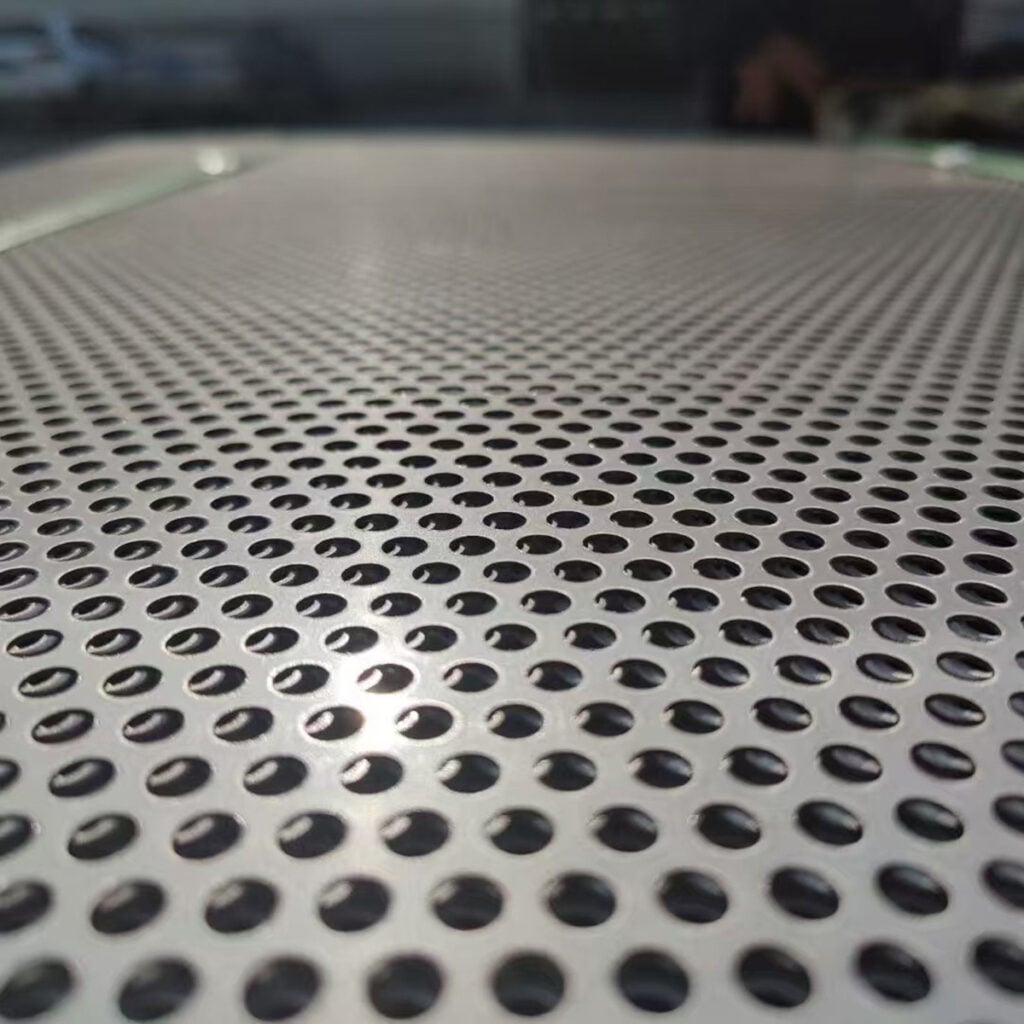
Perforating Process — Reference Video
This clip shows a sheet being punched in a repeating pattern. It illustrates the process; the finished hole size, sheet material and production acceptance are defined separately for your order.
8-second silent process reference. No order-specific dimensions or production capacity are established by the clip.
Blank Outline and Unperforated Zones
Show sheet width and length or attach a cut-profile drawing. Dimension each unperforated margin and any internal solid zones relative to a clear datum.
Where the blank will become a tube or basket, identify the intended seam and forming direction. Distinguish flat blank dimensions from the required finished dimensions, and state which stages belong in the quotation.
Include flatness and dimensional acceptance where these affect the next operation. Do not assume that a cropped photograph defines the original sheet boundaries or margin width.
Perforated Sheet Specification for Quotation
| Item | Information to provide |
|---|---|
| Material | Stainless steel grade and required records. |
| Thickness | Specified thickness, unit and tolerance. |
| Pattern | Hole shape, size, pitch, arrangement and direction. |
| Perforated region | Boundaries, solid margins and internal solid zones. |
| Blank size | Overall dimensions or controlled cut-profile drawing. |
| Finish | Contact face, burr condition, surface and cleanliness requirements. |
| Next operation | Flat installation, rolling, bending, joining or additional fabrication. |
| Order | Quantity, drawing revision, inspection and packing. |
Please quote stainless steel perforated sheets or blanks, grade [ ], thickness [ ], hole pattern [ ]. Overall dimensions and margins [ ], quantity [ ], drawing/revision [ ].
Next operation, surface condition and inspection requirements [ ]. Please confirm the proposed scope and any exceptions.
Perforated Sheet FAQ
Flat perforated material or drawing-defined blanks. Rolled bodies, welded seams, rims and end fittings are included only when listed in the quotation.
It can form a supporting component when designed for the assembly. Specify the supported medium, contact surface and loading; hole pattern alone does not establish support performance.
Give hole shape, opening dimensions, centre spacing and arrangement. For slots, include width, length, end shape and orientation.
No. Open area describes geometry. Thickness, fluid conditions, supported media and the assembled flow path also affect restriction.
Show any unperforated zones needed for the intended seam, bend or attachment. Their width and position should be dimensioned on the blank drawing.
Send the material grade, sheet thickness, hole pattern, overall dimensions, margins, quantity and any cutting, forming, surface or inspection requirements.
Discuss Your Filter Fabrication Material
Send the sheet specification, blank drawing and quantity to Maidong for review.
Purchasing Specification Review
Request stainless steel perforated sheets or blanks for filter fabrication with the downstream component in mind. Define the hole pattern and flat-material dimensions, then identify the unperforated regions needed for cutting, forming, joining or attachment. Flat-sheet supply and finished-filter supply are separate quotation scopes.
Lay out the blank around the finished component
Mark the perforated and solid regions
Show the required perforated zone and name the solid margins or internal blank zones on a dimensioned drawing. Keep mounting holes and other secondary features separate from the repeating perforation pattern. If a cut passes through openings, identify whether that edge condition is acceptable.
Carry the orientation into forming
Where slot direction or pattern alignment matters, mark it relative to the blank datums and the proposed roll or bend direction. Identify any face requirement for the next operation. Do not assume that a rotated pattern or a mirrored blank is interchangeable in the finished assembly.
Use geometry and duty as separate purchasing inputs
Pattern area versus whole-part area
If an open-area target is specified, state its reference area. Solid margins, seams and supports can reduce the exposed flow area relative to the repeating pattern. Keep the hole size, pitch and arrangement on the drawing even when a percentage is also given.
Inspection and documentation
State material grade and thickness, then specify the dimensions and edge condition that need inspection before fabrication. Send the operating and cleaning conditions where they affect material selection. Any numeric production range or tolerance must be confirmed for the actual quotation, rather than inferred from a general product table.
Additional Buyer Questions
Does a perforated sheet quotation include rolling and welding?
Only when those operations are explicitly included. Define flat-sheet, cut-blank and finished-component supply separately.
Is pattern open area the same as the effective area in a tube?
No. Solid margins, the seam, supports and installed geometry can change the exposed area.
Should slot direction appear on the blank drawing?
Yes when it affects forming, installation or the intended screening function.
For the wider product range, see Perforated Metal Mesh.
Related specification resources: Custom Perforated Filter Tube; Perforated Filter Panels with Solid Margins; Perforated Metal Hole Size, Pitch and Ligament Guide.
Specification Handoff and Enquiry Example
| Quotation review | Information to provide |
|---|---|
| Blank definition | Cut outline, datum and perforated/solid regions |
| Pattern | Hole or slot dimensions, pitch and orientation |
| Next operation | Forming direction, media contact face and joining zones |
Example RFQ Line to Complete
Replace the bracketed fields with your order requirements:
Perforated blank; grade/thickness [values]; pattern [hole or slot schedule]; blank drawing [revision]; solid zones [detail]; forming direction [datum]; mesh contact face [reference]; edge finish [requirement].
Related selection resources: Perforated Metal Mesh; Custom Perforated Filter Tube; Perforated Metal Hole Size, Pitch and Ligament Guide.
Send the current drawing or complete specification, quantity, application and delivery destination through our contact page. Identify any required inspection or material records before quotation; availability and acceptance requirements are confirmed for the actual order.