A woven wire mesh filter tube is specified as a complete tubular screen: weave and aperture, alloy, finished diameter and length, longitudinal seam, support direction, open-edge treatment and operating duty. Send a drawing when the tube must fit another filter assembly or equipment interface.
A request containing only diameter and micron value is not complete. Add the weave, wire diameter or construction, seam, support and service conditions.
RFQ field
What to provide
Why it matters
Woven medium
Weave, mesh count + wire diameter or clear aperture; full Dutch weave designation
Defines the actual screen construction
Alloy
Required grade and material specification
Connects the mesh to process compatibility
Finished geometry
OD or ID, length, wall build, roundness and tolerances
Controls equipment fit and active area
Longitudinal seam
Position, overlap/butt form, width, joining and bypass requirement
Defines tube integrity
Support
Internal/external backing, perforation/open area, layer order and flow direction
Controls deformation under differential pressure
Open edges
Plain, folded, bound, ringed or prepared for later assembly
Defines handling and integration
Service data
Medium, temperature, differential pressure, cleaning and quantity
Supports construction review
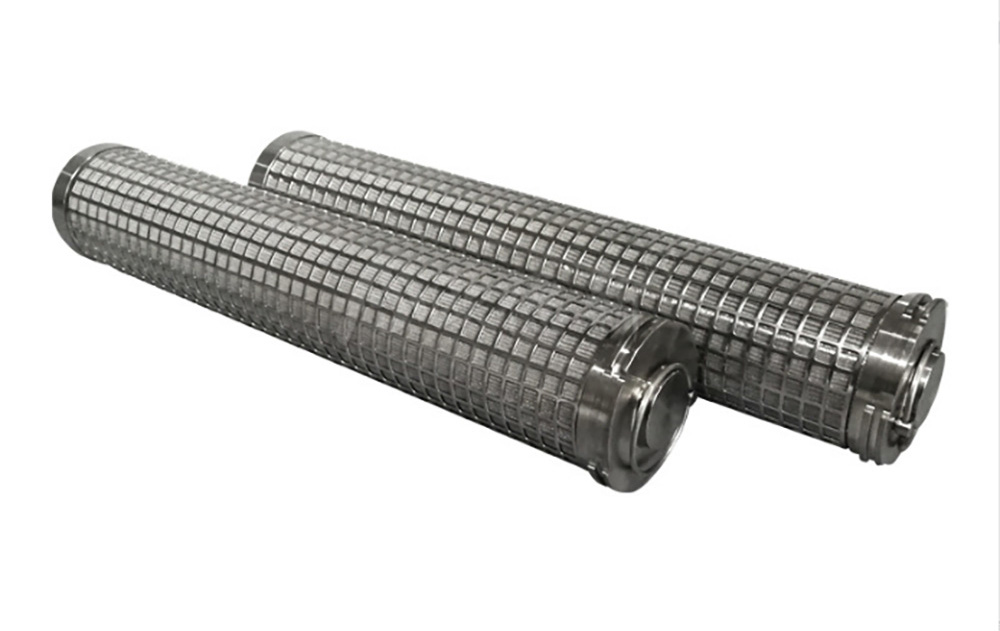
Maidong mesh and supported tube examples for drawing-based fabrication.
Choose the Woven Filtration Medium
Square weave provides a measurable geometric aperture when mesh count and wire diameter are both known. Dutch weave uses a dense warp-and-weft construction and requires construction-specific retention data.
Mesh edges overlap along the tube axis; define overlap width and joining points.
Butt seam
Edges meet with a controlled joint; suitability depends on wire geometry and joining.
Folded or bound edge
Edge is contained where handling or later assembly requires a controlled perimeter.
Ring-ready tube
Open end is prepared to receive a ring, collar, cap or another approved component.
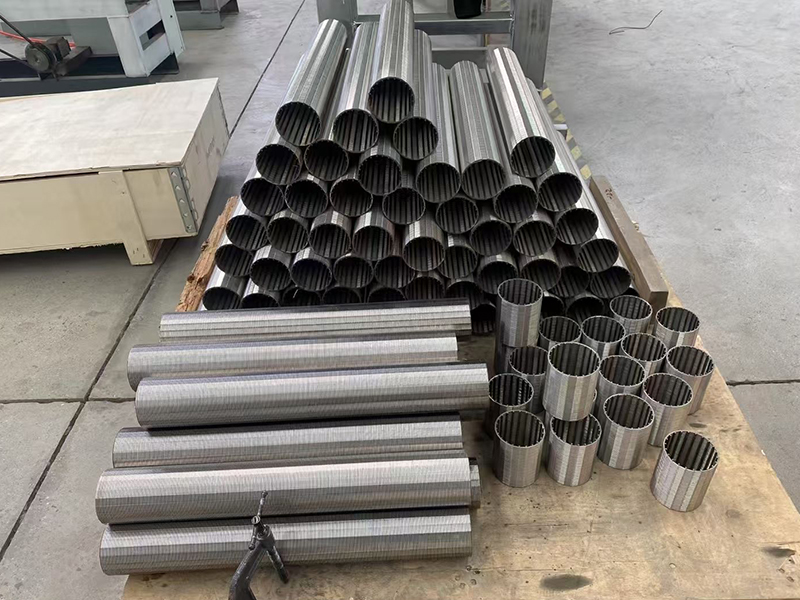
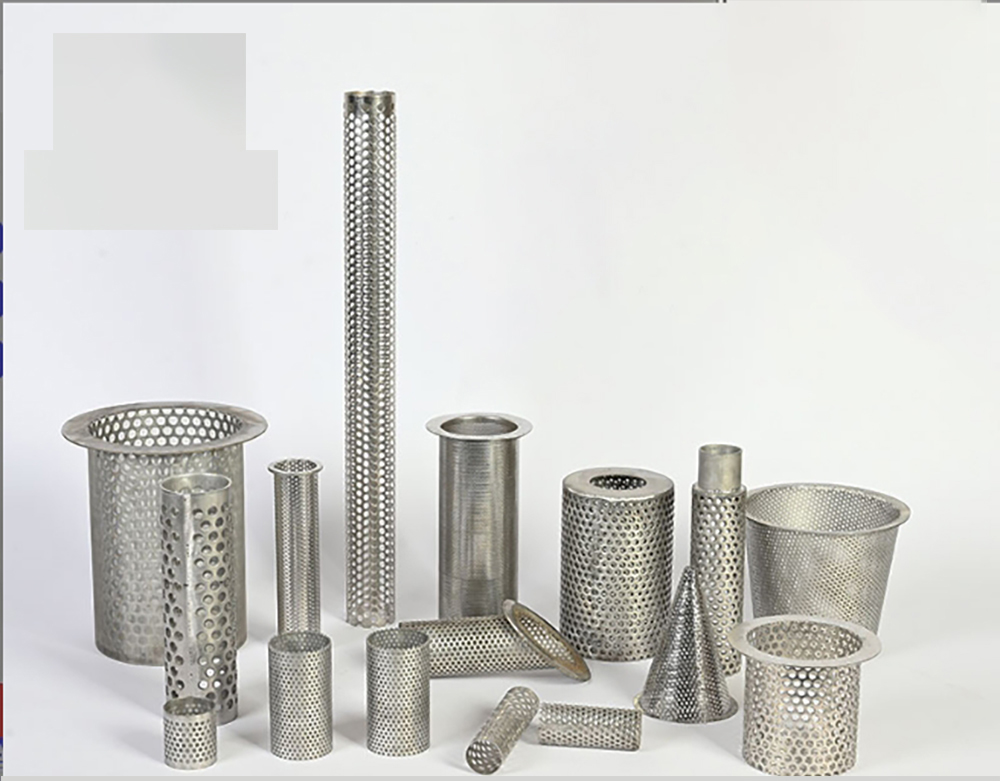
Real Maidong woven mesh tube forms in drawing-specific sizes.
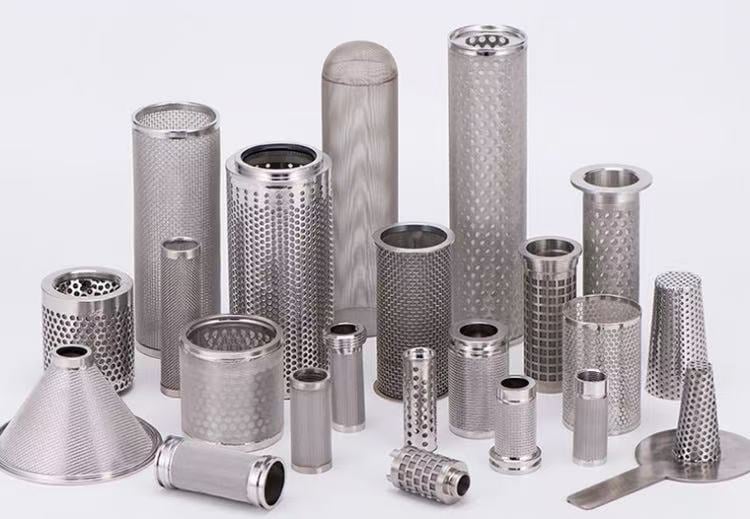
Examples showing how tube bodies may be integrated with different end interfaces.
Support Must Follow the Pressure Direction
A fine woven tube may need coarse mesh or perforated backing. Place support on the side toward which the mesh is loaded by differential pressure, and state whether service flow is inside-to-outside or outside-to-inside.
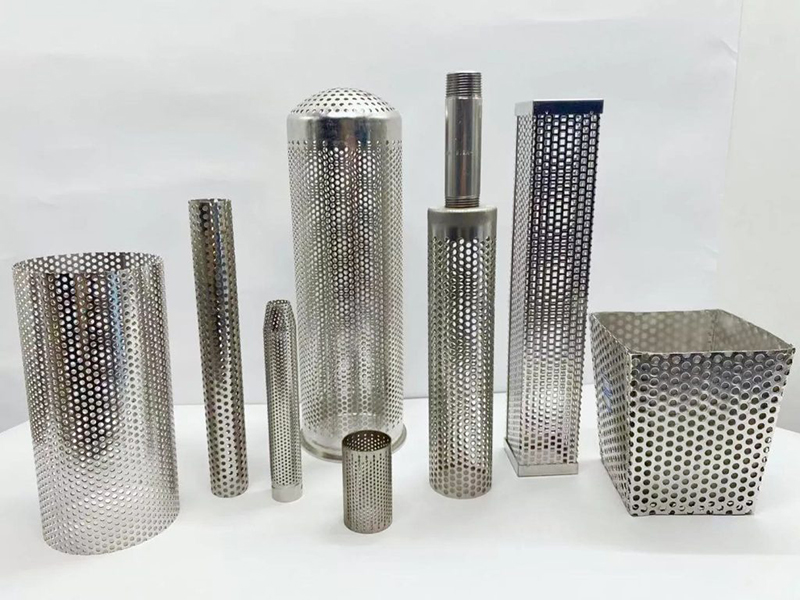
Supported cylindrical components combining a fine screen with perforated backing.
Select the Correct Tubular Construction
Structure
Primary construction
Use this intent when
Woven tube body
Woven mesh
Primary focus of this page: open tubular screen, seam and optional support
Welded filter tube
Construction defined around welded joints and formed sheet/mesh
Use when weld layout and joint structure drive the procurement intent
Multilayer filter tube
Fine, drainage and support layers
Use when layer sequence is a defining feature
Perforated tube
Punched metal
Use when the hole pattern itself screens or forms the support core
See welded filter tubes for joint-led construction and the related pages above for composite or perforated structures.
Real Maidong Tube and Cylinder Examples
Real Maidong woven mesh tube forms in drawing-specific sizes.
Formed woven tubes
Supported cylindrical components combining a fine screen with perforated backing.
Supported tube structures
Real fabricated filter forms illustrating drawing-based component geometry.
Drawing-based filter forms
These are real Maidong product examples. They illustrate fabrication approaches only; each supplied tube must follow the reviewed weave, dimensions, seam, support and edge specification.
Typical Procurement Uses
Tubular screen sleeve
Open mesh tube integrated into a buyer-designed housing or assembly.
Fine-media layer
Woven cylinder supported by perforated metal or coarse mesh where required.
Equipment inlet screen
Drawing-based tubular screen selected from debris, flow and fit requirements.
OEM filter subcomponent
Mesh tube prepared for later addition of rings, caps, flanges or fittings.
How to Prepare a Wire Mesh Tube RFQ
1. Define the weave
Give mesh + wire diameter, aperture or full Dutch weave construction.
2. Define geometry
State OD/ID, length, roundness and tolerances.
3. Detail the seam
Show position, joint form, width and joining requirement.
4. Define support and edges
Mark flow direction, backing layer and open-end treatment.
5. Add service data
Provide medium, temperature, differential pressure, cleaning and quantity.
It is an open tubular screen formed from woven metal mesh, with a longitudinal seam and optional support. It may be supplied as a tube body for integration into a larger assembly or completed with drawing-specific edges and interfaces.
The words overlap in search use. On this page, filter tube means the woven tubular screen body or sleeve. A finished filter cylinder may add caps, flanges, threads, handles or other equipment interfaces.
For square weave, state mesh count together with wire diameter or specify the clear aperture. For Dutch weave, provide the full weave designation and required retention or test basis. Mesh count alone is incomplete.
Support should be reviewed when the woven medium could deform during pressure loading, cleaning, installation or handling. State the flow direction, differential pressure and which side requires reinforcement.
Show the seam position, overlap or butt arrangement, required joining method, acceptable width, smoothness or cleanliness requirements and whether bypass through the joint is critical.