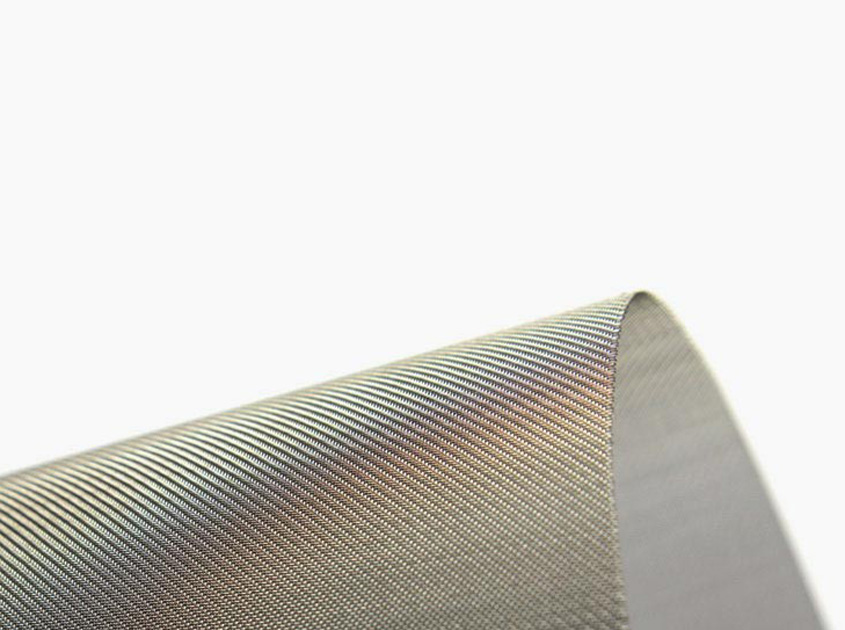
400×2800 is an exact-count Dutch weave enquiry, not a self-contained performance specification. Compare it using both wire diameters, weave subtype, alloy, filtration-rating method, pressure duty and agreed inspection data.
Dense Dutch weave media requires a complete construction and acceptance specification.
Quick Answer: Is 400×2800 Automatically Finer?
No. A larger count designation alone does not prove a smaller effective pore, higher retention efficiency or lower flow. Wire diameters, interlacing, compaction and the rating method all influence the result. Compare complete constructions, not only 400×2800 versus 325×2300 Dutch weave mesh.
Count
Identifies the directional wire-count notation.
Wire diameters
Complete the warp and weft geometry.
Weave subtype
Defines how the wires interlace and pack.
Rating method
Explains what a pore or retention value means.
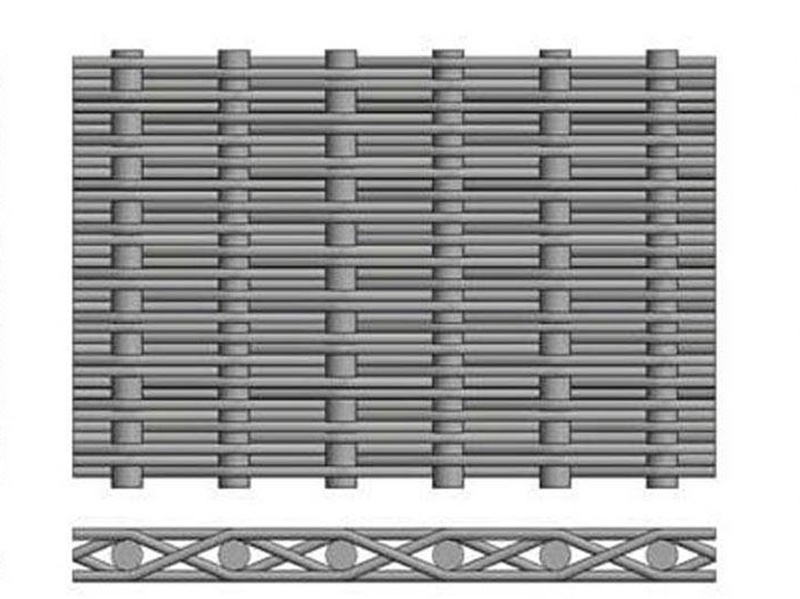
Interlacing type must be stated; count numbers alone do not establish the weave subtype.
Verify the Construction Before Comparing Prices
The purchase description should explicitly state the direction convention, warp and weft wire diameters, plain/twill/reverse Dutch designation, alloy and tolerances. Count numbers alone cannot confirm equivalence between suppliers.
Use the same evidence set for every quotation so price, geometry and filtration claims can be compared on a consistent basis.
Comparison point
Evidence to request
Risk if omitted
Media identity
400 × 2800 direction, both wire diameters and weave subtype
Non-equivalent constructions compared as identical
Filtration claim
Pore/retention value, efficiency definition and method
A micron number is accepted without meaning
Mechanical duty
Flow direction, differential pressure, support and cleaning load
Fine media is used without adequate support review
Material
Alloy and compatibility with process and cleaning
Material selected from a generic label
Acceptance
Sample/data sheet, dimensions, tolerances and inspection plan
No objective basis for receiving inspection
Sample Approval and Receiving Inspection
1. Freeze the notation
Record warp/weft direction and units.
2. Record geometry
Confirm both wire diameters and weave.
3. Define performance
Agree the rating basis and test evidence.
4. Approve format
Confirm roll, layers, support, seam and edge.
5. Define acceptance
State tolerances, sampling and inspection records.
Filtration Rating and Process Duty
Dutch weave does not have a simple square aperture. A reported value may describe pore geometry or a retention test. Read the Dutch weave micron-rating guide and request the method behind the number.
Provide the medium, temperature, viscosity, target contaminant, throughput, normal/maximum differential pressure, flow direction and cleaning or replacement method.
Dense Dutch weave media requires a complete construction and acceptance specification.
Material, Support and Finished Formats
304 stainless steel
Consider only when compatible with the process and cleaning.
316 / 316L
Review for the requested chemistry and fabrication conditions.
Support layers
Define coarse mesh or perforated backing and flow direction.
Finished parts
Provide drawing, layers, seam, edge, dimensions and tolerances.
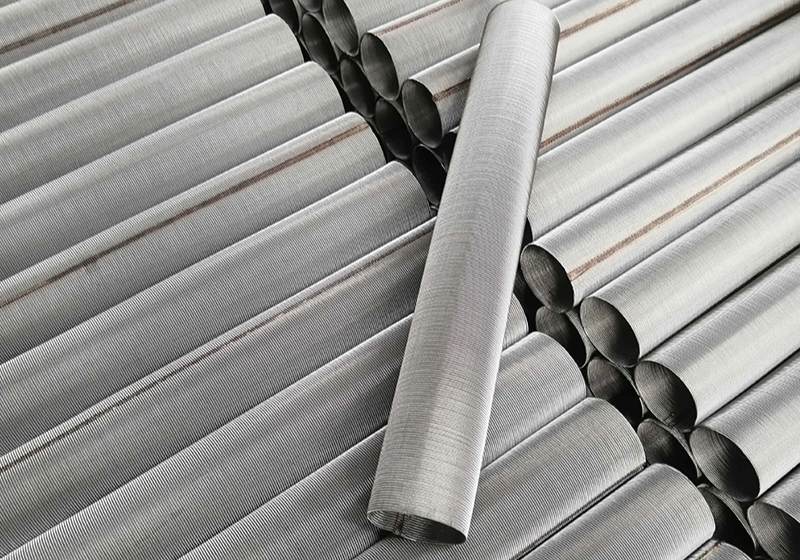
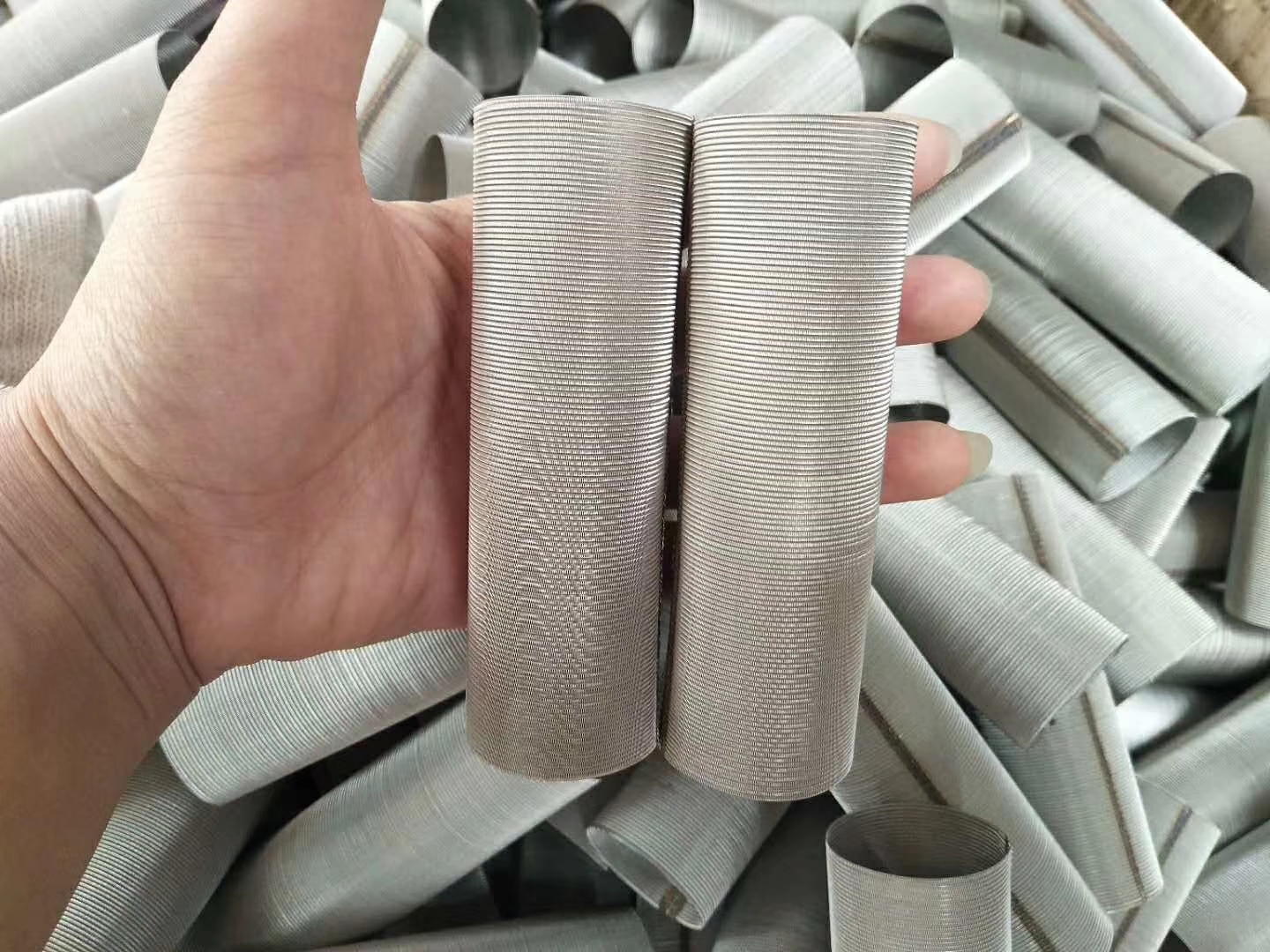
Formed mesh tubes illustrate one downstream format; the exact media and seam follow the drawing.
Formed mesh tubes
Finished geometry needs separate dimensional, seam and support requirements.
Cylinder inspection
Real Maidong fabricated-mesh examples; final 400×2800 use depends on the drawing and process duty.
Custom filter shapes
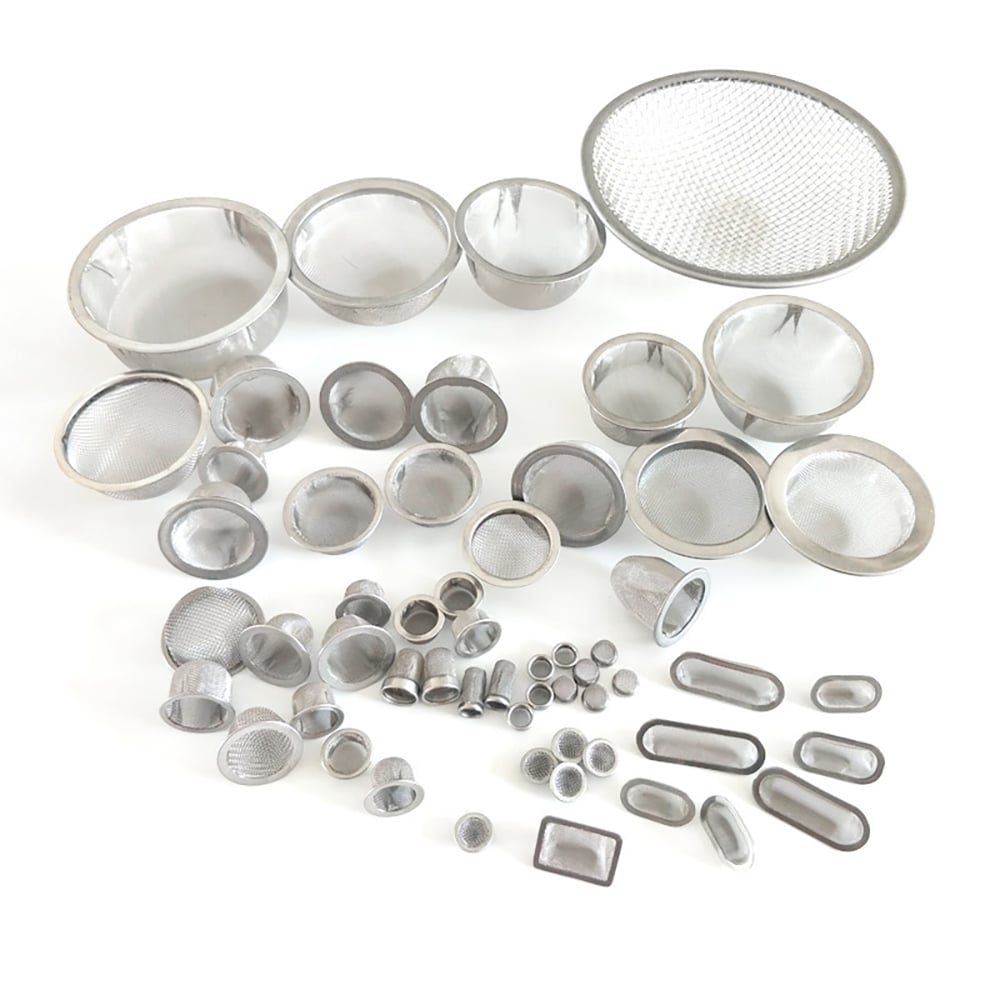
These are Maidong fabricated-mesh examples showing possible downstream formats. They do not claim that every pictured part uses the exact 400×2800 construction; final media and assembly details must be stated in the drawing.
Typical Evaluation Contexts
Polymer melt filtration
Match retention, melt conditions, pressure and screen-change format.
Hydraulic and oil filtration
Define fluid, contaminant, pressure cycle and cleaning.
Chemical process filtration
Confirm alloy compatibility and filtration method.
Precision filter assemblies
Control layers, support, flow direction and joining details.
What to Send With Your RFQ
400×2800 direction convention and weave subtype
Warp and weft wire diameters with units
Alloy and compatibility requirements
Filtration target, rating definition and test method
Medium, temperature, flow, differential pressure and cleaning
Roll dimensions or finished-part drawing
Support layers, seam, edge, tolerances, inspection and quantity
It is a directional warp-and-weft count designation under an agreed convention. It must be completed by both wire diameters, the weave subtype, alloy, rating basis and tolerances.
Not necessarily. A higher count does not by itself prove a smaller effective pore or better retention because wire diameters, weave geometry and rating method also differ. Compare complete constructions and test data.
Do not assign a universal micron value from the count. Request construction-specific pore or retention data together with the method, efficiency definition and sample or inspection requirement.
For a critical filtration duty, sample review or an agreed technical data sheet can reduce ambiguity. Record count convention, both wire diameters, weave, material, rating basis and acceptance criteria before production.
A fine layer may be combined with coarse mesh or perforated support and fabricated into discs, tubes or assemblies. State layer order, flow direction, support, seam, edge, dimensions and tolerances.
Provide the full construction, alloy, filtration target and test basis, process medium, temperature, pressure, cleaning, roll or finished-part dimensions, tolerances, inspection and quantity.
Verify the Construction Before Ordering
Send the complete geometry, rating basis, process duty, finished format and acceptance criteria for review.