325×2300 identifies a very dense Dutch weave count relationship, but it is not a complete purchasing specification. Confirm the warp and weft wire diameters, weave subtype, alloy, filtration-rating basis, roll dimensions and operating conditions before comparing quotations.
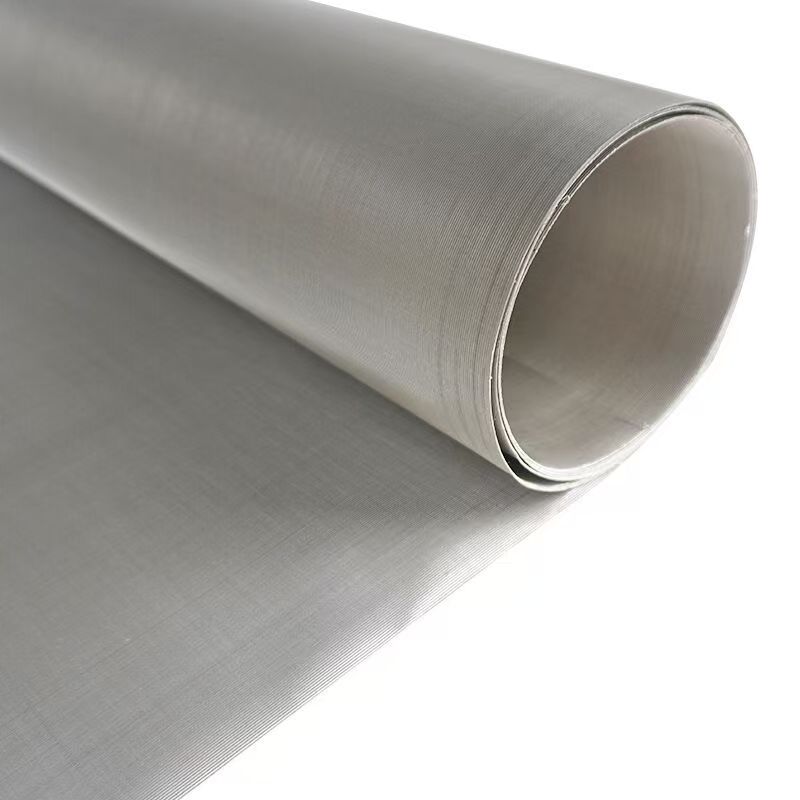
Dense Dutch weave roll media; the complete construction requires both counts and wire diameters.
What 325×2300 Does—and Does Not—Tell You
It states
A directional count designation under an agreed supplier convention.
It does not state
Both wire diameters, alloy, weave subtype, tolerance or test method.
It cannot prove
A universal micron rating, flow rate or pressure capability.
Use this page for the 325×2300 construction enquiry. For the material family and other constructions, see Dutch weave wire mesh.
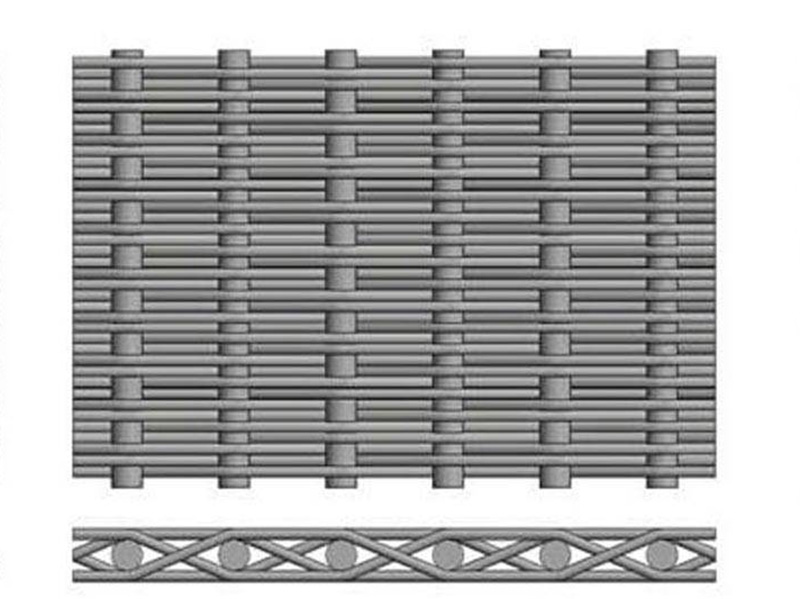
A twill Dutch structure uses paired interlacing; the exact designation must be confirmed.
Confirm the Weave Subtype
A dense count designation may be offered with a specified Dutch weave arrangement, but the numbers alone do not safely prove whether it is plain Dutch, twill Dutch or another agreed variant. Put the weave name on the drawing, quotation and order.
Review the dedicated twill Dutch weave page when paired interlacing is required.
325×2300 Dutch Weave RFQ Checklist
Do not approve an order using only the two count numbers. Put every construction and acceptance field into the quotation or drawing.
RFQ field
Information to state
Why it is required
Count designation
325 × 2300 and which direction is warp/weft
Avoids directional ambiguity
Wire geometry
Warp diameter, weft diameter and units
Completes the woven construction
Weave and alloy
Explicit subtype plus 304/316/316L or drawing grade
Controls structure and compatibility
Filtration basis
Pore/retention value, nominal or absolute definition and test method
Makes the filtration claim comparable
Operating duty
Medium, temperature, viscosity, flow, pressure and cleaning
Supports media and backing review
Supply format
Roll size, cut part or drawing; tolerances and quantity
Defines the deliverable and inspection
Warp and weft geometry should be verified in the purchase specification.
Micron Rating and Filtration Data
Dutch weave has no directly measurable square aperture. A stated micron value may refer to a geometric pore estimate, a retention test or another method. Request the basis and test definition.
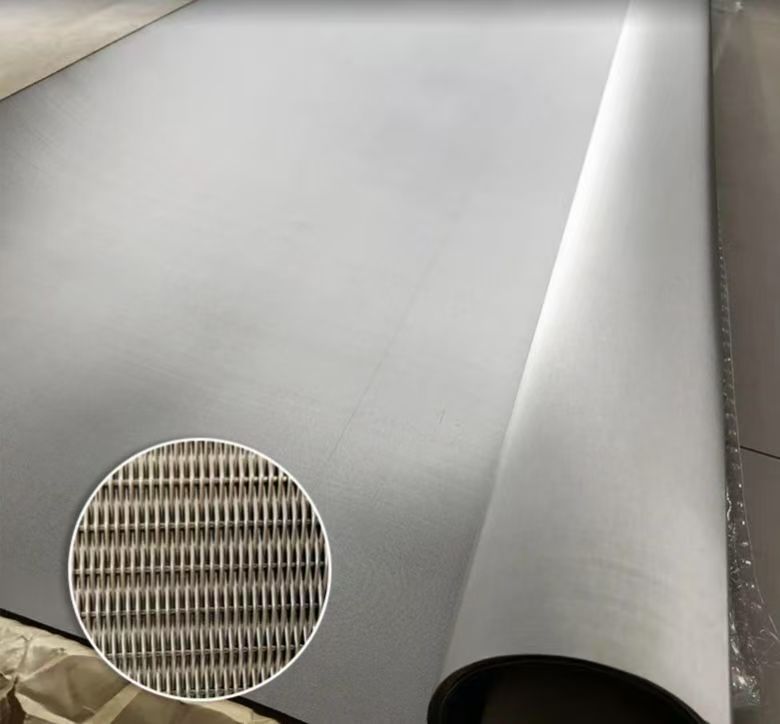
Fine Dutch weave media shown with an enlarged wire-structure detail.
Typical Purchasing Contexts
Oil filtration
Define fluid, particle target, pressure and cleaning method.
Polymer filtration
Provide resin, melt conditions, screen format and change-out duty.
Chemical processing
Confirm alloy compatibility and filtration-rating basis.
Custom filter elements
Send layer sequence, support, dimensions, joining and tolerances.
Maidong Material and Fabrication Examples
Dense Dutch weave roll media; the complete construction requires both counts and wire diameters.
Dense roll media
Warp and weft geometry should be verified in the purchase specification.
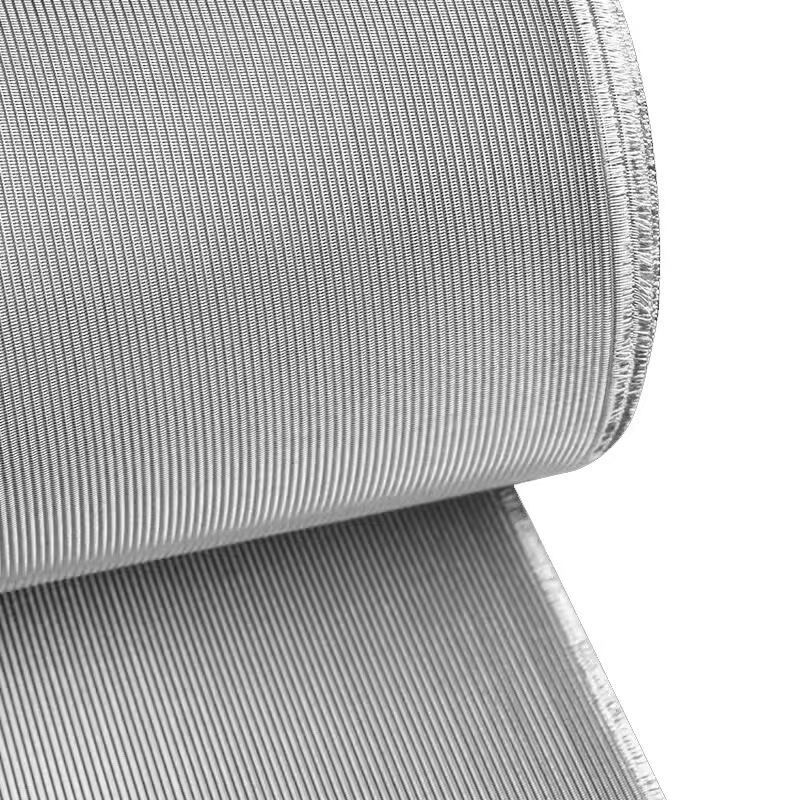
Woven edge detail
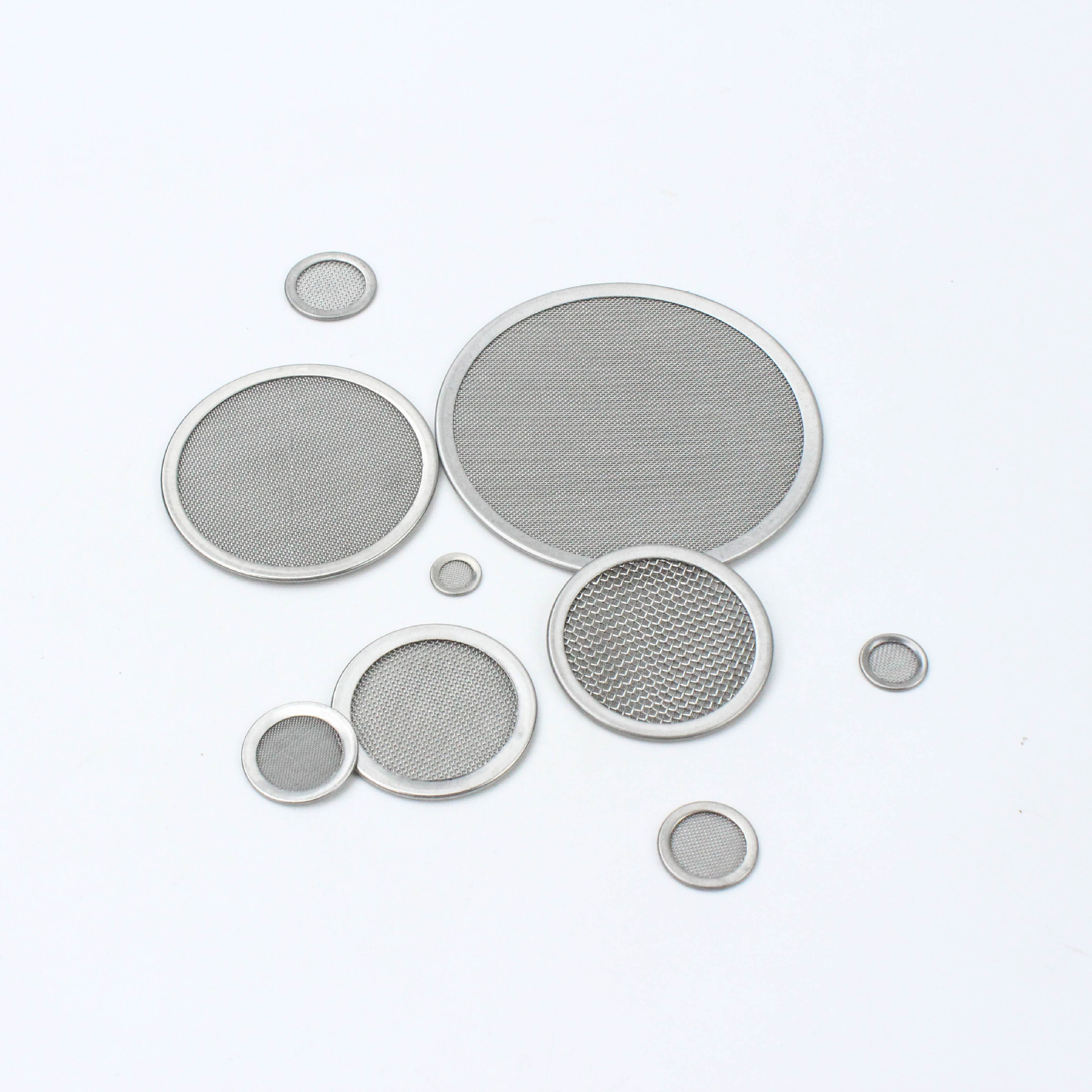
Real Maidong filter-disc examples; final media, layers and edges follow the drawing.
Custom mesh discs
These images show Maidong Dutch weave material and fabricated mesh-disc examples. They illustrate available forms, not a claim that every pictured component uses the exact 325×2300 construction.
How to Compare 325×2300 Quotations
1. Verify notation
Confirm warp/weft direction and count convention.
2. Add wire diameters
State both wire sizes and tolerances.
3. Define filtration
Provide target plus rating and test basis.
4. Add process duty
State medium, temperature, flow, pressure and cleaning.
5. Define deliverable
Send roll dimensions or finished-part drawing and quantity.
It identifies the stated warp and weft counts under an agreed convention. It does not by itself define the two wire diameters, pore structure, filtration rating, alloy or dimensional tolerance.
No. Supplier notation, wire diameters, weave designation and rating method must be checked. Two quotations should not be treated as equivalent until the complete construction and acceptance data match.
A reliable value cannot be assigned from the count alone. Ask for the construction-specific pore or retention value and the method used to determine it. Dutch weave cannot be calculated with the square-mesh aperture formula.
The count alone does not safely establish the weave subtype. The quotation and order should explicitly state plain, twill or another agreed construction, together with the wire diameters.
304, 316 and 316L may be reviewed depending on the requested construction and service conditions. The final grade should be confirmed against medium, temperature, cleaning and fabrication requirements.
A drawing can be reviewed for cut discs, edged discs, tubes, cylinders and multilayer assemblies. State dimensions, layer sequence, support, seam or edge construction, tolerances and quantity.
Request a 325×2300 Construction Review
Send both wire diameters, weave subtype, alloy, rating basis, operating conditions, dimensions, tolerances and quantity.