Stainless Steel Wire Mesh Supplier for Industrial Buyers
Maidong supplies woven stainless steel mesh against an industrial specification: grade, weave, wire diameter, aperture, finished dimensions and end use must be reviewed together. Buyers can request rolls, cut mesh or drawing-based filter components.
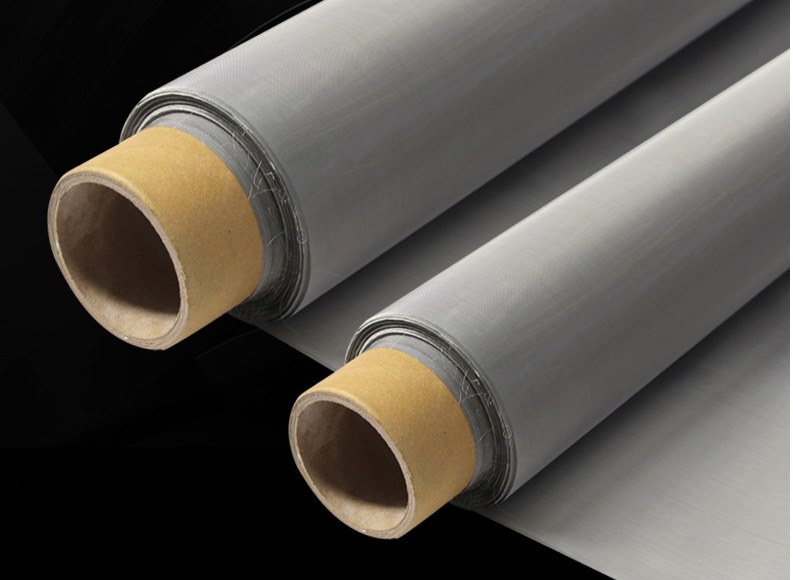
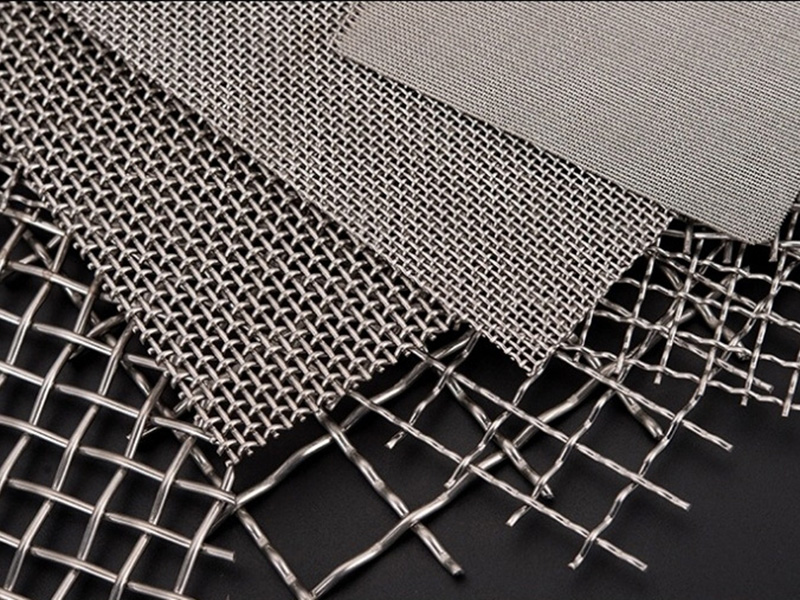
Fine woven stainless steel mesh rolls for specification-based industrial purchasing.
What an Industrial Wire Mesh Supplier Must Understand
A useful quotation is based on measurable requirements, not a generic request for “stainless mesh.” Material grade controls compatibility; weave and wire geometry control the opening structure; dimensions, edges and fabrication control how the mesh fits the final equipment. For the main product family, see stainless steel wire mesh.
Material grade
Specify 304, 304L, 316, 316L or the required material designation.
Mesh geometry
Give mesh count plus wire diameter, or the required aperture and tolerance.
Supply form
Define rolls, slit widths, cut pieces or a finished component drawing.
Operating duty
Describe the medium, temperature, pressure, cleaning and installation.
Stainless Steel Wire Mesh RFQ Checklist
Use the same complete specification when comparing suppliers. A low price is not comparable if the wire, opening, dimensions or fabrication scope is different.
RFQ field
What to specify
Purchasing risk avoided
Grade
Material designation and any documentation requirement
Substitution or unclear alloy basis
Weave
Plain, twill, Dutch or drawing-specific construction
Different pore structures treated as equivalent
Geometry
Mesh count + wire diameter, or aperture and tolerance
A mesh number used as a complete specification
Dimensions
Width, length, cut outline, edge and dimensional tolerances
Material that cannot fit or be processed as intended
Fabrication
Layers, support, seam, rim, forming and joining details
Unpriced secondary processing or bypass paths
Commercial scope
Quantity, units, destination and acceptance requirements
Quotations built on different assumptions
Different opening sizes and woven structures require separate purchase specifications.
Available Woven Mesh Structures
Plain and twill square mesh provide direct openings defined by wire diameter and mesh count. Dutch weave mesh uses different warp and weft geometry to create an indirect filtration path. Structure must be selected from the application rather than from the material grade alone.
For square woven mesh, nominal opening is determined by mesh pitch minus wire diameter. Two meshes with the same count can have different apertures and open areas when the wire diameter changes. A mesh number is therefore not a universal micron rating.
Use the mesh-to-micron calculator for square-mesh geometry, then confirm the actual purchase specification and tolerance.
Square mesh should be defined by mesh count and wire diameter together.
Supply Forms and Custom Processing
Full rolls
Specify width, length, edge condition and handling requirements.
Slit rolls
Define slit width, tolerance, edge quality and coil format.
Cut pieces
Provide length, width, outline, orientation and quantity.
Fabricated filters
Send a drawing for discs, tubes, cylinders, cones or baskets.
Roll width, length, edge condition and packaging requirements belong in the RFQ.
Fine woven stainless steel mesh rolls for specification-based industrial purchasing.
Fine mesh rolls
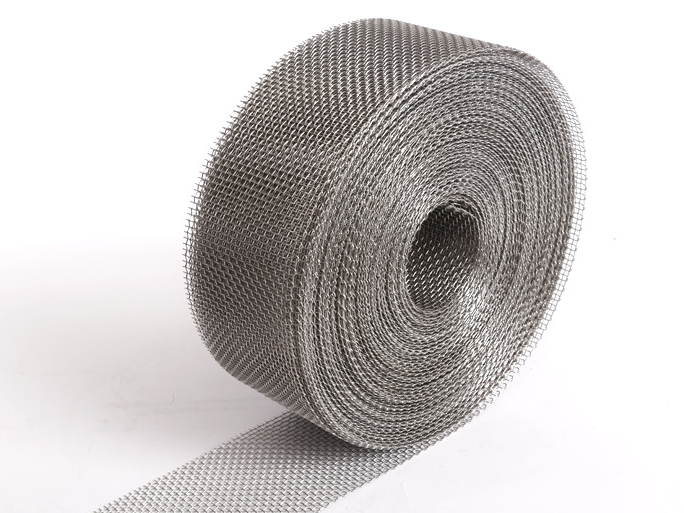
Mesh constructions selected for screening, filtration and fabricated components.
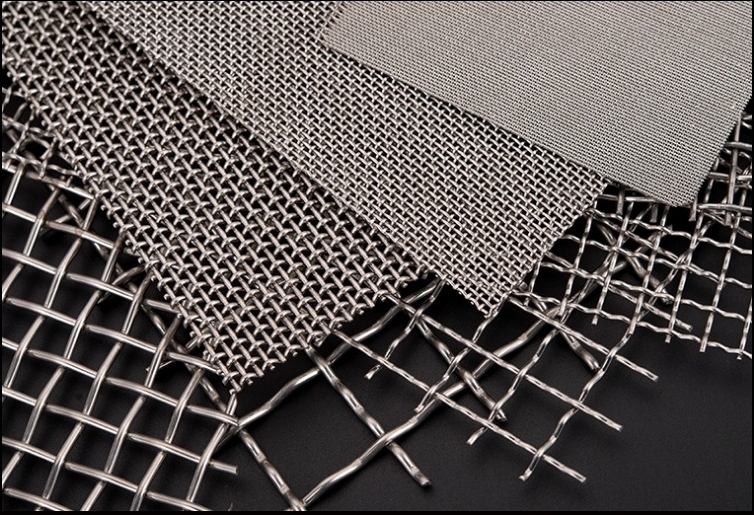
Multiple opening structures
Square mesh should be defined by mesh count and wire diameter together.
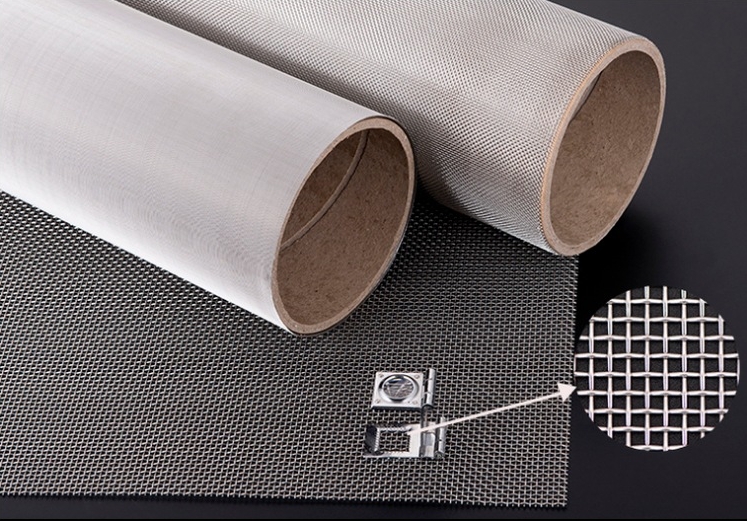
Square woven mesh
These real product references show why the mesh geometry must be stated explicitly. Final supply follows the confirmed specification or drawing rather than the appearance of a reference image.
Typical Industrial Purchasing Requirements
Screening and sieving
Controlled openings for separating or protecting industrial process streams.
Liquid and gas filtration
Woven media selected with the required support and operating duty.
Equipment protection
Mesh screens and fabricated elements positioned before sensitive passages.
OEM filter components
Drawing-based discs, cylinders, baskets and multilayer assemblies.
How to Prepare a Supplier RFQ
1. Define function
Describe what the mesh must retain, pass or protect.
2. Define material
State the grade and real operating environment.
3. Define geometry
Give weave, wire diameter, mesh count or aperture basis.
4. Define supply form
Add roll, cut size or component drawing details.
5. Define acceptance
State tolerances, quantity and required inspection basis.
Mesh constructions selected for screening, filtration and fabricated components.
Send Comparable Technical Requirements
Include grade, weave, wire diameter, mesh count or aperture, dimensions, edge or fabrication scope, quantity, destination and acceptance requirements. If one value is unknown, describe the operating function instead of guessing.
State the grade, weave, mesh count and wire diameter or required aperture, roll or cut dimensions, edge condition, tolerances, quantity and operating conditions. A mesh count alone is not a complete specification.
304, 304L, 316 and 316L are common industrial enquiries. The purchaser should select the grade from process chemistry, temperature, cleaning, fabrication and the governing material requirement.
Requirements can be reviewed for rolls, slit widths, cut pieces, discs, tubes, cylinders, baskets and drawing-based mesh components. Finished parts need dimensions, tolerances, layer and joining details.
No. For square woven mesh, nominal aperture depends on both mesh count and wire diameter. Dutch weave and multilayer media use a different pore structure, so their retention basis must be stated separately.
Compare the same material designation, wire and aperture geometry, weave, dimensions, tolerances, edge or fabrication scope, inspection basis and quantity. Similar product names do not guarantee equivalent mesh.
Include the delivery country, required quantity, units, drawing revision, specification and acceptance requirements alongside the technical mesh details. Avoid assuming a standard roll or tolerance without stating it.
Request an Industrial Wire Mesh Quotation
Send the complete mesh specification or finished-part drawing for a technical and commercial review.