A multi-layer wire mesh filter disc combines a designated fine filtration cloth with coarser support, drainage or protective screens. The complete layer sequence, flow direction, joining method, disc geometry and edge must be specified together for an OEM quotation.
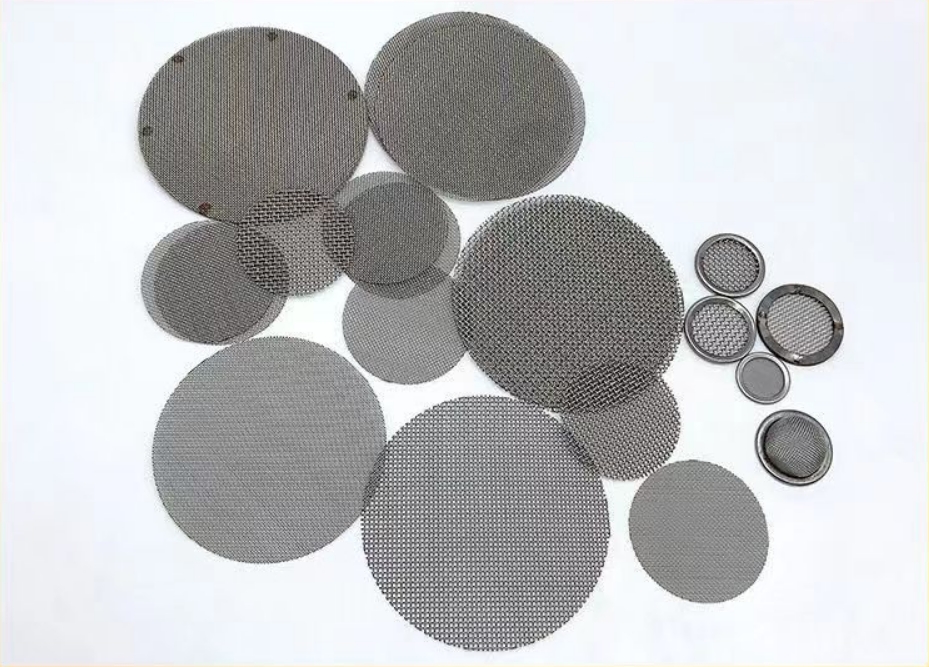
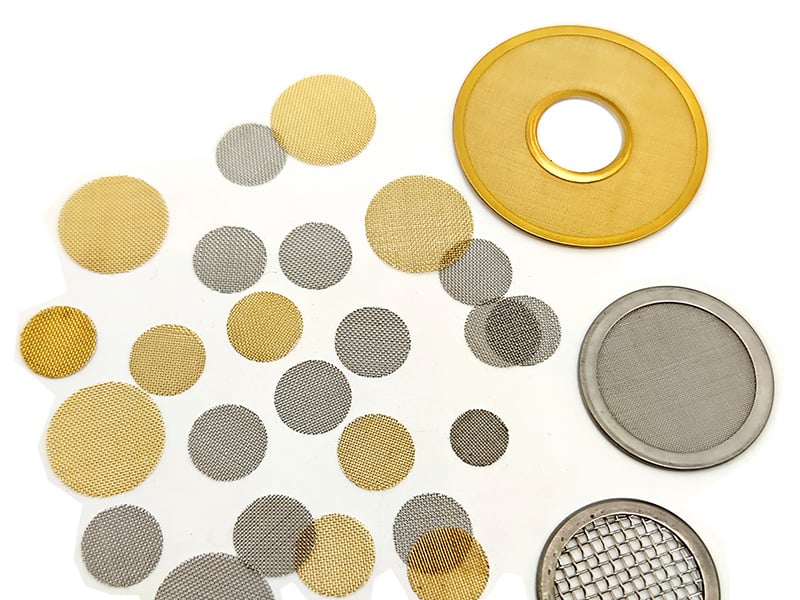
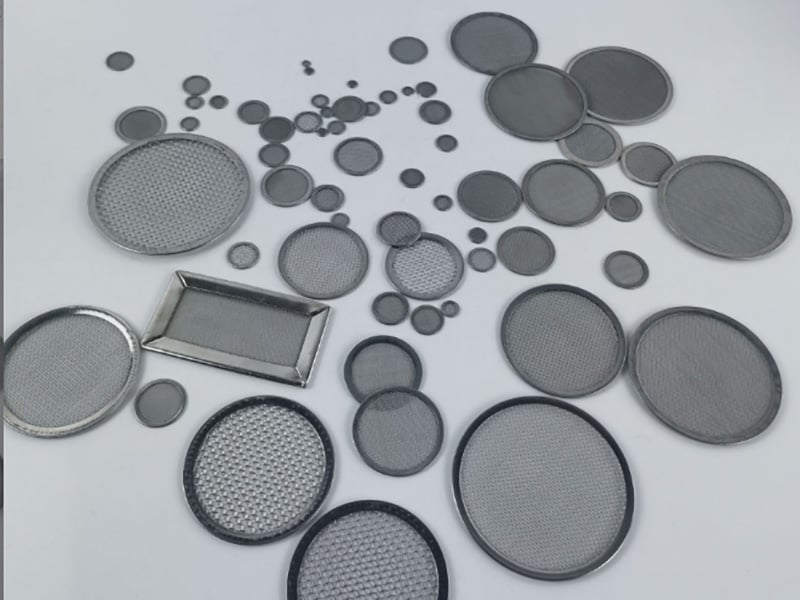
Real Maidong filter discs showing different diameters, media and support configurations.
Why Use More Than One Mesh Layer?
Filtration control
A designated fine layer provides the required retention basis.
Mechanical support
A coarser screen can reduce deformation of fine cloth.
Flow distribution
An intermediate layer can separate media and distribute flow.
Surface protection
A protective screen can reduce handling or reverse-flow damage.
Not every disc needs every function. Layer count and sequence should follow the operating duty instead of a generic “three-layer” or “five-layer” label.
Fine filtration cloth and coarser support mesh perform different functions in a layered disc.
Typical Layer Arrangement
A drawing should identify the normal flow direction and list each layer from upstream to downstream. One possible functional arrangement is protective mesh → filtration cloth → drainage/support mesh. This is an example, not a universal construction.
Fine layer: weave, mesh/aperture or validated rating basis.
Support layer: opening, wire and position relative to pressure.
Joining: stacked, edge-fixed, spot-joined or another agreed method.
Multi-Layer Filter Disc Specification Table
Specification field
What to provide
Procurement risk if omitted
Filtration layer
Weave, mesh/aperture or rating and test basis
Retention target remains unclear
Support layers
Mesh/opening, wire, quantity and position
Stiffness and flow path may differ
Layer sequence
Upstream-to-downstream order and flow arrow
Support may be placed on the wrong side
Joining method
Edge compression, frame, spot joining or specified assembly
Layers may shift or the disc may not fit
Geometry
OD, ID, shape, holes, thickness and tolerances
Seal and equipment interface may fail
Material and duty
Alloy, medium, temperature, pressure and cleaning
Compatibility cannot be reviewed
Support Mesh and Pressure Direction
Fine woven cloth can be vulnerable to deformation when differential pressure acts toward an unsupported side. State normal flow, reverse-flow or backwash conditions so the support position can be reviewed. Pressure capability cannot be inferred from mesh count alone.
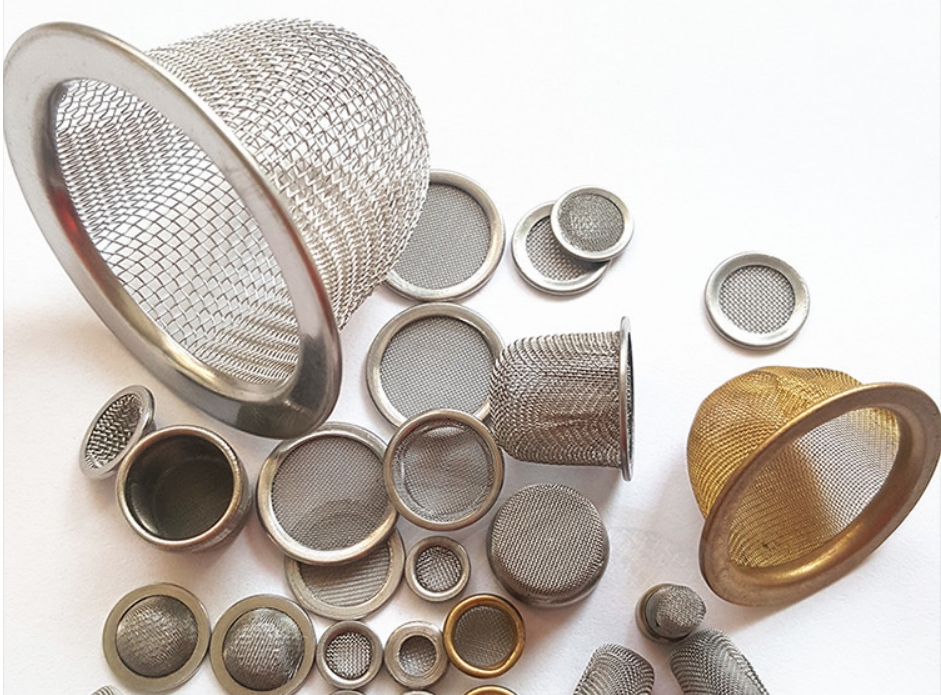
Fine media may be combined with coarse support and a formed or edged interface.
Edge geometry and finished form should follow the equipment drawing.
Edge, Seal and Joining Options
The edge can be left as a cut multilayer stack or retained by a metal rim, frame or another drawing-defined interface. Specify the sealing land, permissible projection, total thickness and any local joining requirement. An edge is not merely cosmetic—it can affect bypass control and fit.
Compare dedicated edged filter discs when a finished rim is the primary purchasing requirement.
Multi-Layer Disc vs Sintered Disc and Screen Pack
Disc construction
Layer relationship
Best used when
Single-layer mesh disc
One woven screen
The cloth can meet filtration and handling requirements alone
Multi-layer mesh disc
Separate fine and support screens assembled together
Different layers need distinct filtration and support functions
Sintered mesh disc
Mesh layers bonded throughout the porous structure
A rigid bonded laminate is required
Extruder screen pack
Multiple screens arranged for polymer processing
The application is an extrusion screen changer or pack
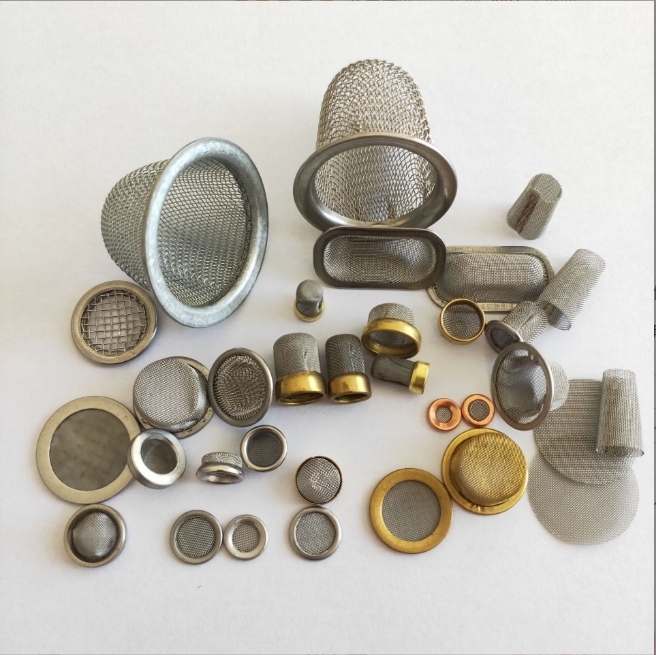
Real Maidong filter components can be produced in round, annular, rectangular or drawing-defined forms. The images illustrate possible geometry and layer/support concepts; they do not establish a universal rating or size range.
Real Maidong filter discs showing different diameters, media and support configurations.
Flat mesh discs
Disc geometry can be round, annular, rectangular or drawing-defined.
Custom shapes
Edge geometry and finished form should follow the equipment drawing.
Edged and formed parts
Applications and Selection Conditions
Liquid process filtration
Define contaminant, retention basis, viscosity, pressure and cleaning.
Gas and equipment protection
Review flow direction, support, sealing and permitted pressure drop.
OEM screen assemblies
Provide the housing interface, drawing revision and assembly method.
Application names alone do not prove suitability. Material compatibility and filtration performance must be confirmed from the actual process information.
RFQ Checklist for a Multi-Layer Mesh Disc
1. Filtration target
State particle retention and rating/test basis.
2. Each mesh layer
List weave, opening/mesh, wire and material.
3. Flow and pressure
Show normal/reverse direction and differential pressure.
4. Finished geometry
Add OD/ID, shape, thickness, edge and tolerances.
5. Commercial data
Provide quantity, drawing revision and inspection needs.
It is a flat screen assembled from two or more wire mesh layers. One layer can control filtration while coarser layers provide support, drainage or protection.
Not necessarily. A multi-layer disc may use stacked or locally joined screens, while sintered mesh uses layers bonded throughout the porous structure. State the required joining method on the drawing.
The designated filtration layer normally controls retention, but the rating must be tied to its weave, wire data and test basis. A support layer should not be treated as the fine filtration rating.
Yes. A drawing may define a compressed rim, metal edge, frame, spot joining or another interface. Edge design affects sealing, bypass control and installation.