
Filter Material Certificates and Inspection Reports Guide
Request documents by the requirement they need to support. A material record, a dimensional inspection and a filter performance test answer different questions.
For each document, identify the part or material covered, its link to the shipment and the characteristics actually reported. This guide is a practical review framework, not a promise of a particular certificate package.
Read the Scope Before the Document Title
| Document | Question to check | Do not infer |
|---|---|---|
| Material record | Which material and reported properties does it identify? | Finished fit, filtration rating or service suitability unless specifically assessed. |
| Dimensional report | Which drawing dimensions were measured and against which revision? | Unmeasured media or performance requirements. |
| Media inspection | Which weave, wire or aperture characteristics were checked? | Complete assembly sealing or performance in a particular process. |
| Functional test | Which specimen, method, conditions and result were recorded? | Other operating conditions or every future production lot. |
| Conformity statement | What order or specification does the statement reference? | Test results that are not included or referenced. |
| Quality-system certificate | Which organization and management-system scope does it cover? | An inspection result for the individual supplied filter. |
Document names can be used differently in commercial correspondence. If your order requires a particular standardized document type, state the applicable designation and requirements explicitly and confirm that the supplier can provide it.
Connect the Document to the Supplied Part
Order identity
Match the purchase order, part number, drawing revision and quantity where those identifiers apply.
Material or lot identity
Check the heat, batch, roll, component lot or other agreed reference and how it connects to the shipment.
Issuer and scope
Identify who issued the record, its date, the tested item and any stated limitations or referenced reports.
The same grade name on a report and a packing label is not the complete traceability link. Ask for the agreed relationship between the source material, fabricated component and shipped lot when those identifiers differ.
Map Records Across a Multicomponent Filter
A finished filter may contain different meshes, a support core, end parts, joining materials and seals. List the constituents relevant to the order and the evidence required for each. Avoid treating one mesh report as a blanket record for all parts.
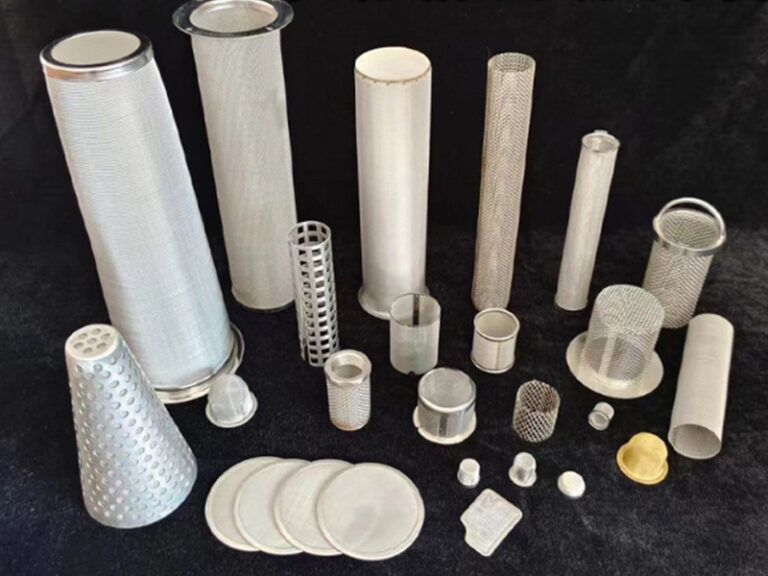
The layer structure guide helps identify the media constituents. The drawing checklist identifies the finished characteristics that require separate inspection.
If the record concerns raw wire or sheet, preserve that scope. It can support the associated material requirement when properly linked, but it does not describe every operation or finished characteristic after fabrication.
Review Test Results with Their Conditions
Check the method, units, acceptance criteria, specimen identification and relevant conditions. A pressure-flow result needs its stated test conditions; a retention result needs its rating or test basis. Keep “not tested” visible where evidence is missing.
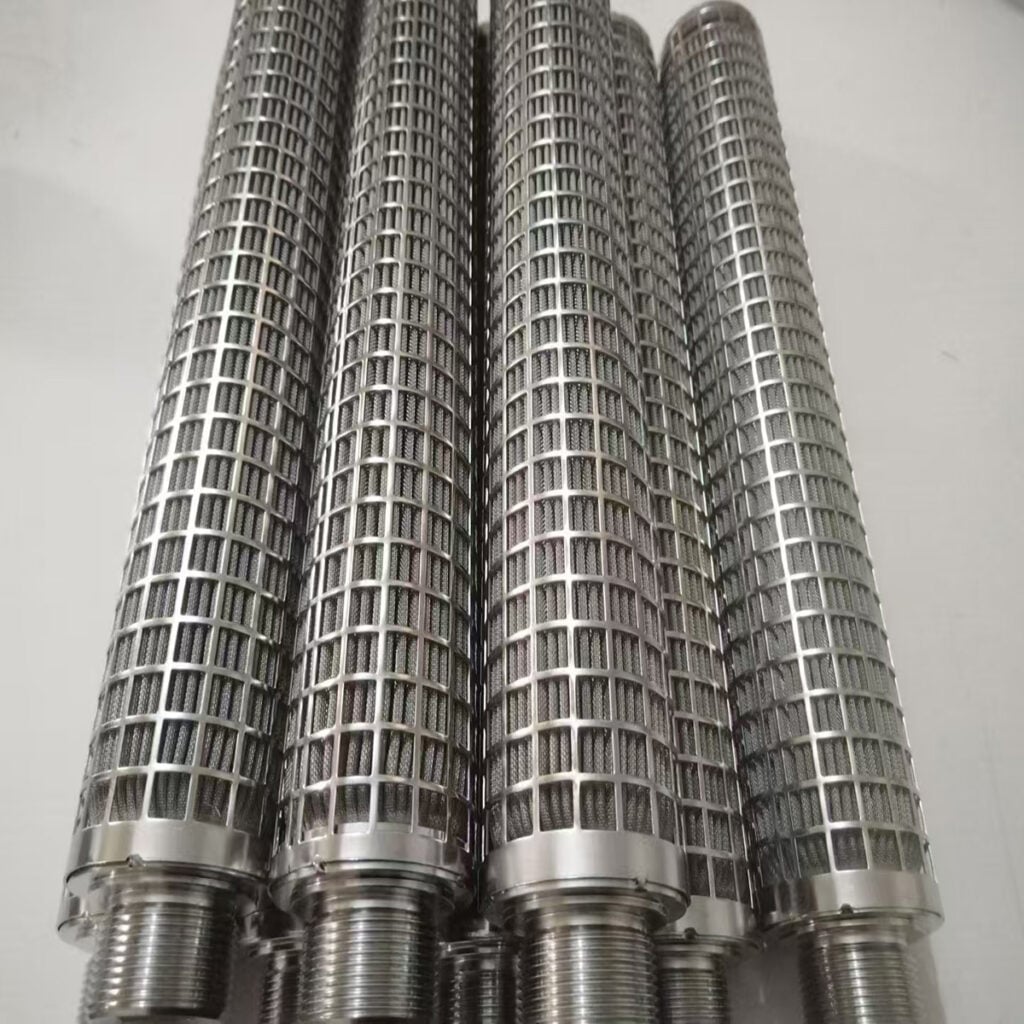
Use the integrity testing guide and rating terminology guide to distinguish the questions those tests address. A material chemistry result cannot substitute for either.
Do not relabel an existing report to imply tests that were not performed. Where information is incomplete, request clarification or additional agreed evidence rather than changing the meaning of the document.
A Short Receiving Review
- List the required records. Start from the order and approved specification.
- Match identifiers. Connect the part, lot and drawing revision to the documents.
- Check coverage. Confirm each required characteristic has the agreed evidence.
- Record gaps. Note missing documents, inconsistent identifiers or unclear test scope.
- Resolve before release. Use the agreed receiving process and keep any pending disposition visible.
This review determines whether the supplied documentation supports the stated requirements. It does not replace physical inspection where that is required by the order.
English Documentation Note for an RFQ
For part [number/revision], please confirm the availability of [document types] covering [materials and characteristics]. Records must identify [required lot/part references] and show the agreed link to the delivered quantity.
For test reports, include [method, conditions, units and acceptance basis]. Please state any limitations or exceptions before order confirmation and provide the agreed documents by [stage/date].
Complete the fields instead of requesting only “all certificates”. For filter discs or filter cylinders, submit the document list together with the product drawing so it can be included in quotation review.
Filter Documentation FAQ
Not by itself. Read the characteristics actually reported. Material identity or chemistry does not establish particle retention, flow resistance or finished-filter integrity.
It may support the material identity of a constituent if traceability is established. It does not by itself report the finished geometry, joints or filtration performance.
Do not assume so. Check the stated scope, specimen or lot reference, test basis and relation to the shipment. Ask for clarification where the link is unclear.
Identify the relevant mesh layers, support, end parts, joining materials and seals. Agree which records are required for each constituent and how they relate to the finished part.
No. It concerns the stated management-system scope. Product requirements still need the order-specific evidence agreed for the component.
Include the required document types, characteristics, traceability and delivery timing in the RFQ. Confirm availability and exceptions before order placement.
Agree the Document Package Before Ordering
Send Maidong your component specification, required record types, traceability details and delivery timing. Availability and scope should be confirmed in the quotation.
Specification Handoff and Enquiry Example
| Quotation review | Information to provide |
|---|---|
| Component scope | Media, supports, fittings and any separately supplied seals |
| Identity link | Order item, drawing revision, material/lot reference |
| Report scope | Characteristic, method, result and acceptance requirement |
Example RFQ Line to Complete
Replace the bracketed fields with your order requirements:
Document schedule; item [part/revision]; component [name]; material/lot link [requirement]; document type [required]; inspection characteristic [feature]; method and acceptance [basis]; issuer/scope [requirement].
Related selection resources: Custom Wire Mesh Fabrication Supplier for Drawing-Based Parts; Filter Element Drawing and Tolerance Checklist; Mesh Cylinders.
Send the current drawing or complete specification, quantity, application and delivery destination through our contact page. Identify any required inspection or material records before quotation; availability and acceptance requirements are confirmed for the actual order.