Dutch weave mesh count cannot be converted to one universal micron value. A useful rating must identify the complete warp/weft construction, both wire diameters, weave type and the test or retention definition. Use this guide to prepare a technically comparable filtration-mesh enquiry.
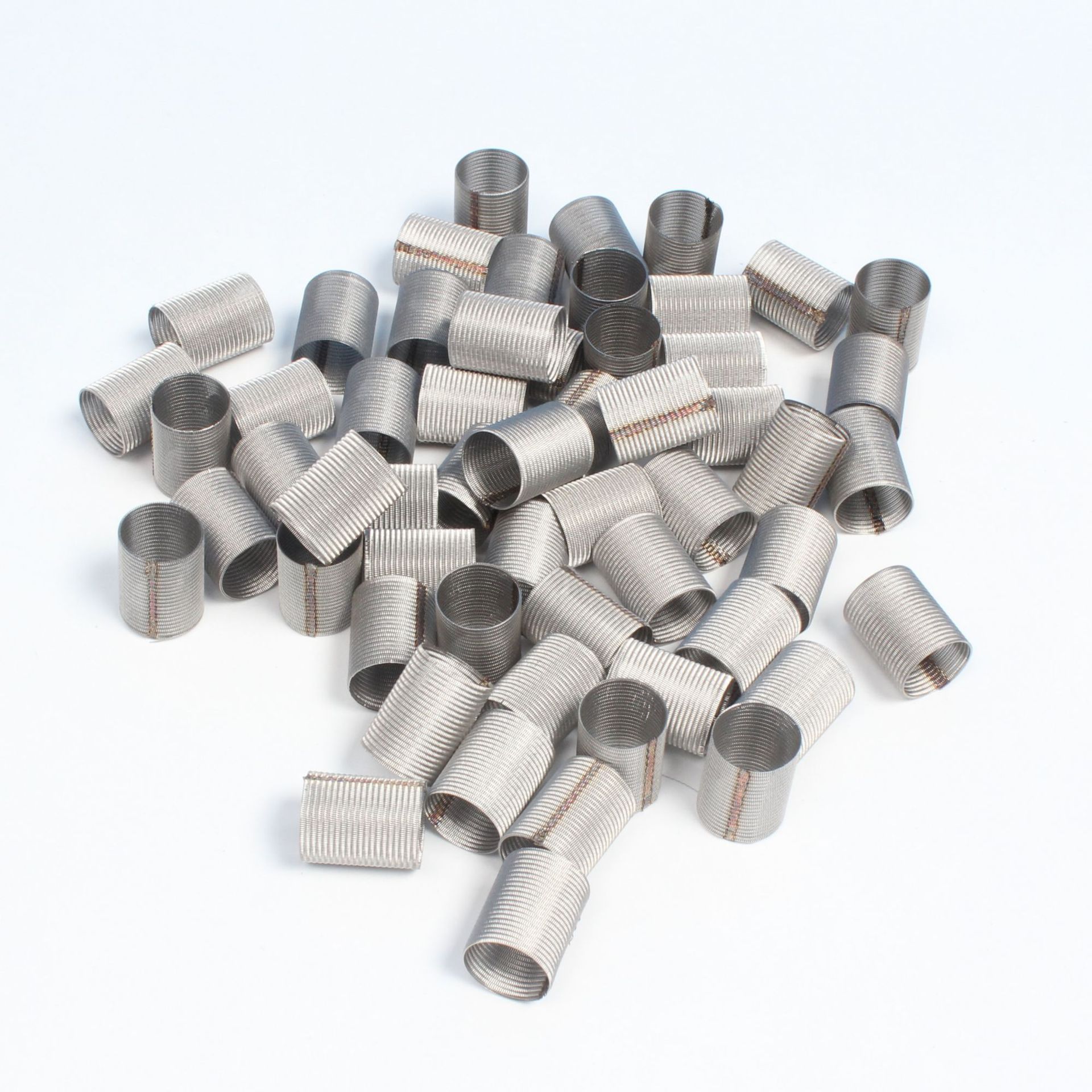
Dense woven stainless steel mesh formed into cylindrical filter components.
Direct Answer: Mesh Count Is Not a Micron Rating
Mesh count
Counts wires or openings per unit length, but does not fully describe the dense Dutch-weave pore path.
Construction
Warp count × weft count plus both wire diameters and weave pattern identify the mesh more completely.
Micron rating
Must be tied to a stated nominal, absolute or test-based performance definition.
Operating result
Also depends on particle shape, fluid properties, pressure differential, loading and the complete filter assembly.
How to Specify a Dutch Weave Micron Requirement
Do not approve a mesh only from a two-number mesh count and an uncited micron figure. Put the rating definition and operating duty on the same RFQ.
Data field
What to state
Why it matters
Mesh construction
Warp × weft count and weave type
Separates plain, twill and reverse Dutch structures
Wire diameters
Warp and weft wire diameter
Changes pore path, permeability and mechanical behavior
Rating definition
Nominal, absolute or named test method
Makes micron values technically comparable
Process conditions
Medium, viscosity, temperature, flow and differential pressure
Connects retention to usable flow and service behavior
Finished format
Roll, disc, screen pack, tube or drawing-based element
Adds seams, supports, layer order and effective area
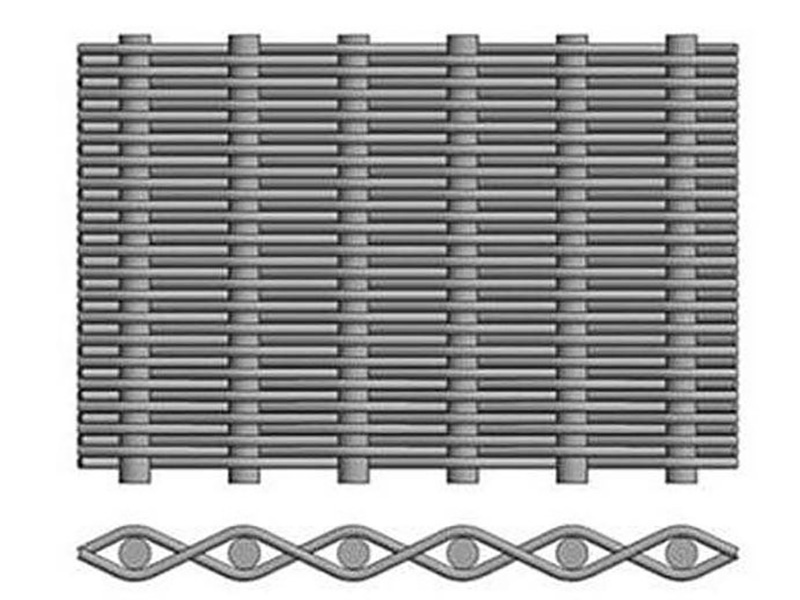
Plain Dutch weave uses different warp and weft wire arrangements to create a dense filtration path.
Plain Dutch Weave
Plain Dutch weave uses different warp and weft wire arrangements to create a dense, tortuous filtration path without the easily measured square opening of ordinary woven mesh.
It can be considered where fine filtration and a defined woven structure are required, but the exact rating must come from the selected construction and agreed test basis.
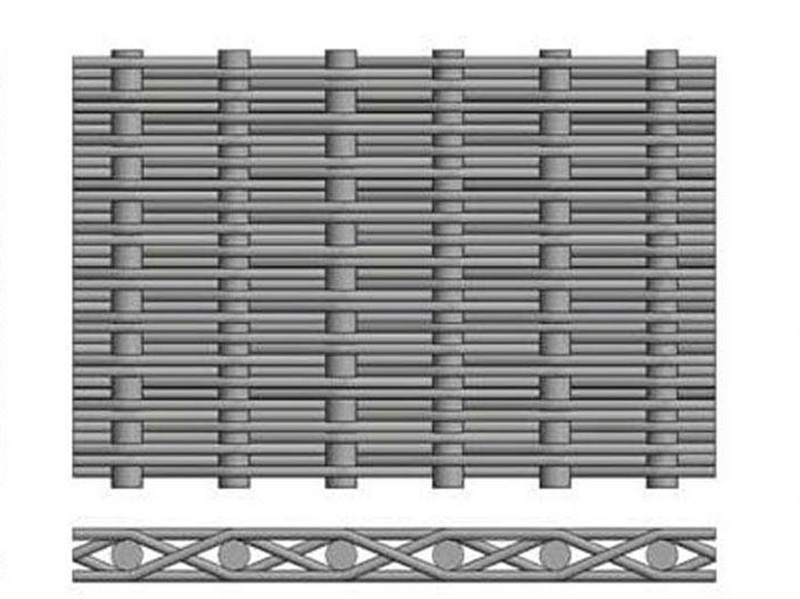
Twill Dutch weave uses a twill interlacing pattern and can create a very dense filtration structure. Reverse Dutch weave reverses the usual count relationship and is often considered where continuous or mechanically demanding filtration structures are needed.
These names do not establish an interchangeable micron rating. Compare construction, permeability, retention definition, material and finished form.
Twill Dutch weave structure with a dense, tortuous filtration path.
What Changes the Effective Filtration Result
Pore geometry
The tortuous pore path is controlled by the full weave and wire combination.
Rating method
Nominal retention, absolute retention and pore-related tests answer different questions.
Process medium
Viscosity, particle shape, loading and temperature can change observed performance.
Filter assembly
Supports, seams, multiple layers, compression and usable area affect the finished element.
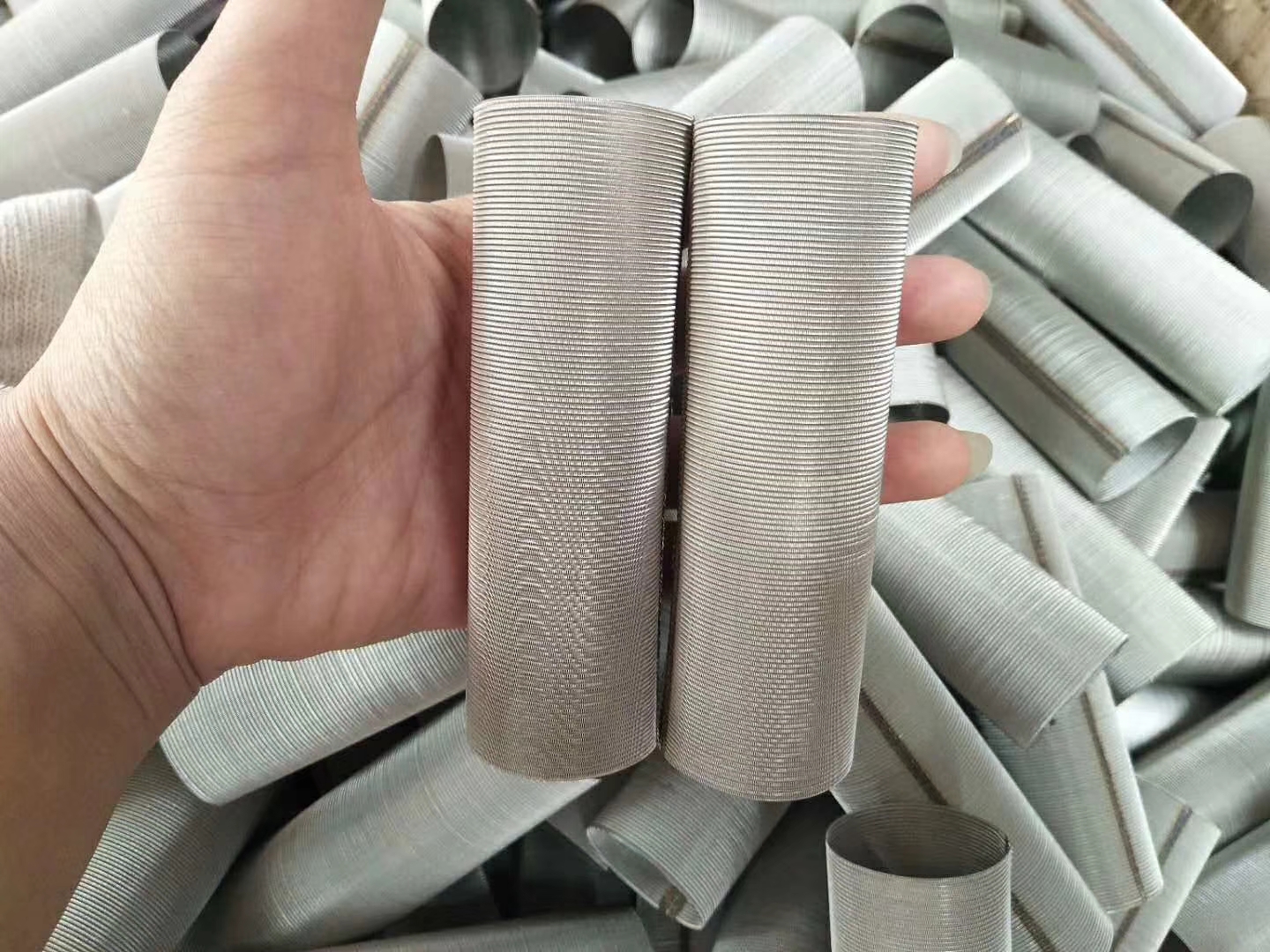
Close view of fine woven filter cylinders; final rating depends on the exact construction and test method.
From Mesh Roll to Finished Filter Component
The selected medium may be supplied or fabricated into cut pieces, filter discs, screen packs or cylindrical elements. The finished part introduces additional decisions: layer sequence, support side, flow direction, seam, edge finish and end connection.
State the particle or contamination target and whether the value is nominal or absolute.
2. Describe the process
Provide medium, viscosity, temperature, flow direction and pressure differential.
3. Select construction
Compare weave type, warp/weft count, wire diameters, material and permeability.
4. Define the component
State roll width or finished-part dimensions, layers, support, seam and ends.
5. Agree verification
Name the required test, certificate or acceptance method instead of assuming equivalence.
Information to Include in Your RFQ
Filtration target
Particle size, retention definition and required validation.
Operating duty
Medium, viscosity, temperature, pressure, flow direction and cleaning.
Mesh or part
Construction, material, dimensions, layers, support, seam, ends and quantity.
If you only know the required filtration result, send the application and equipment details instead of guessing a mesh count. You can also use the mesh-to-micron tool for square woven mesh context, but do not apply that simple conversion directly to Dutch weave.
Not reliably. Dutch weave does not have the simple square opening used for square woven mesh. Warp and weft counts, both wire diameters, weave pattern and the rating method must be considered together.
It describes filtration performance under a stated definition or test method. A nominal value, an absolute retention value and a bubble-point-derived pore indication are not automatically equivalent.
They may use different wire diameters, construction tolerances, rating definitions or test procedures. Compare the complete specification and test basis rather than mesh count alone.
Provide the required particle retention, fluid or material, viscosity, temperature, pressure differential, flow direction, available area, cleaning method, material grade, component form and required validation method.
Plain Dutch, twill Dutch and reverse Dutch constructions serve different combinations of retention, flow, mechanical behavior and forming needs. Selection must be based on the complete duty rather than micron value alone.
Relevant mesh can be reviewed for rolls, cut pieces, discs, screen packs and cylindrical parts. Dimensions, layer order, seam, support and end details should be shown on the drawing.
Request a Comparable Mesh Recommendation
Send the required retention, rating definition, process conditions, preferred material and finished format. Maidong can review a Dutch weave mesh or fabricated filter-component enquiry against the complete specification.