Perforated metal filter discs are cut from punched sheet to provide controlled holes in a rigid flat component. A complete specification combines material, thickness, hole geometry, pitch, pattern, open area, disc dimensions, solid margins and the equipment interface.
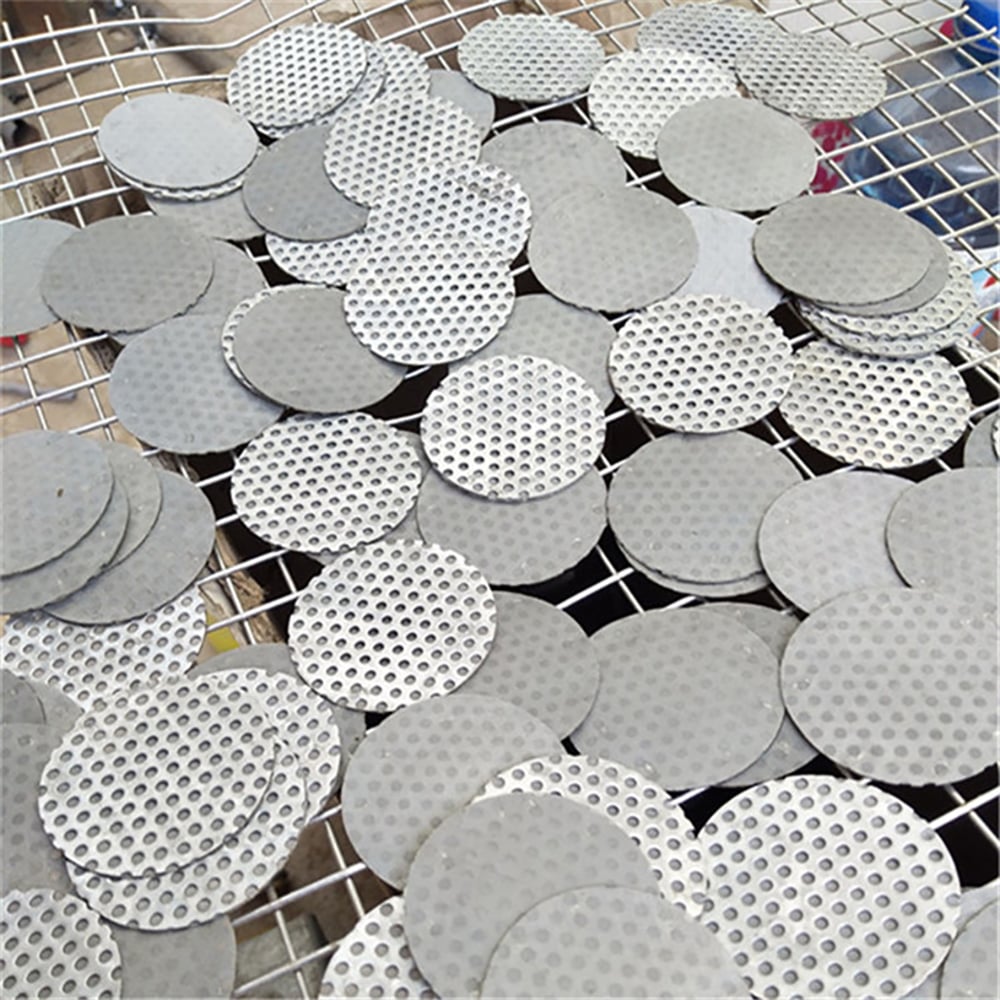
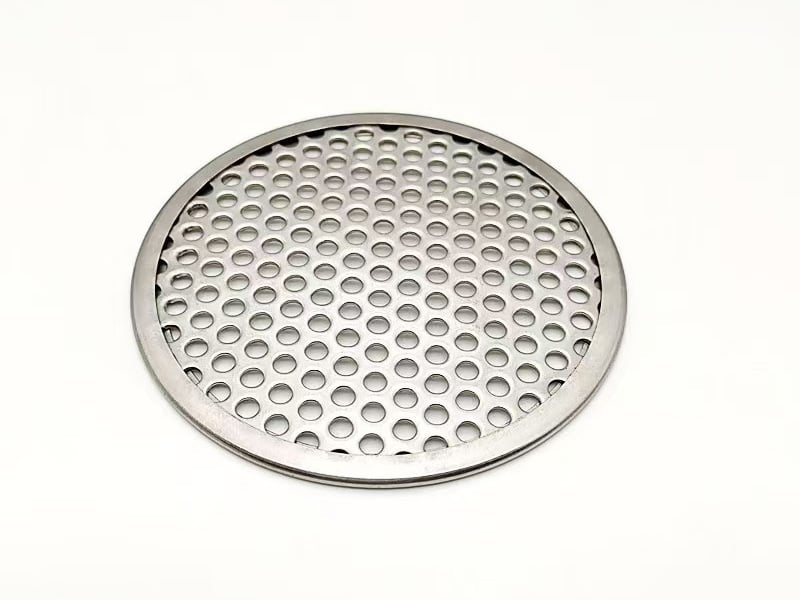
Round punched discs showing different diameters and perforation sizes.
Perforated Filter Disc Functions
Coarse screening
Punched openings retain larger particles or debris while allowing flow through the disc.
Media support
Rigid sheet can support finer woven mesh when the layer sequence is defined.
Flow distribution
A controlled hole pattern can distribute flow across an equipment opening.
Protective plate
Perforated disc can protect downstream media or internal components from contact.
Perforated Metal Disc Specification Checklist
“Stainless disc, 2 mm holes” is incomplete. The pitch, pattern, thickness, diameter, margins and tolerance must be defined together to compare quotations accurately.
RFQ field
What to specify
Why it matters
Material and thickness
Alloy/grade, sheet thickness and finish if required
Controls corrosion, rigidity and punching feasibility
Hole geometry
Shape, clear size, pitch, pattern and orientation
Defines screening, ligament and theoretical open area
Disc dimensions
OD, ID, profile, thickness, tolerances and flatness
Controls fit and sealing within the assembly
Margins and edge
Solid border, rim, burr direction and edge condition
Changes active area, handling and contact surfaces
Combined media
Fine mesh layer, attachment and flow direction
Separates structural support from actual fine retention
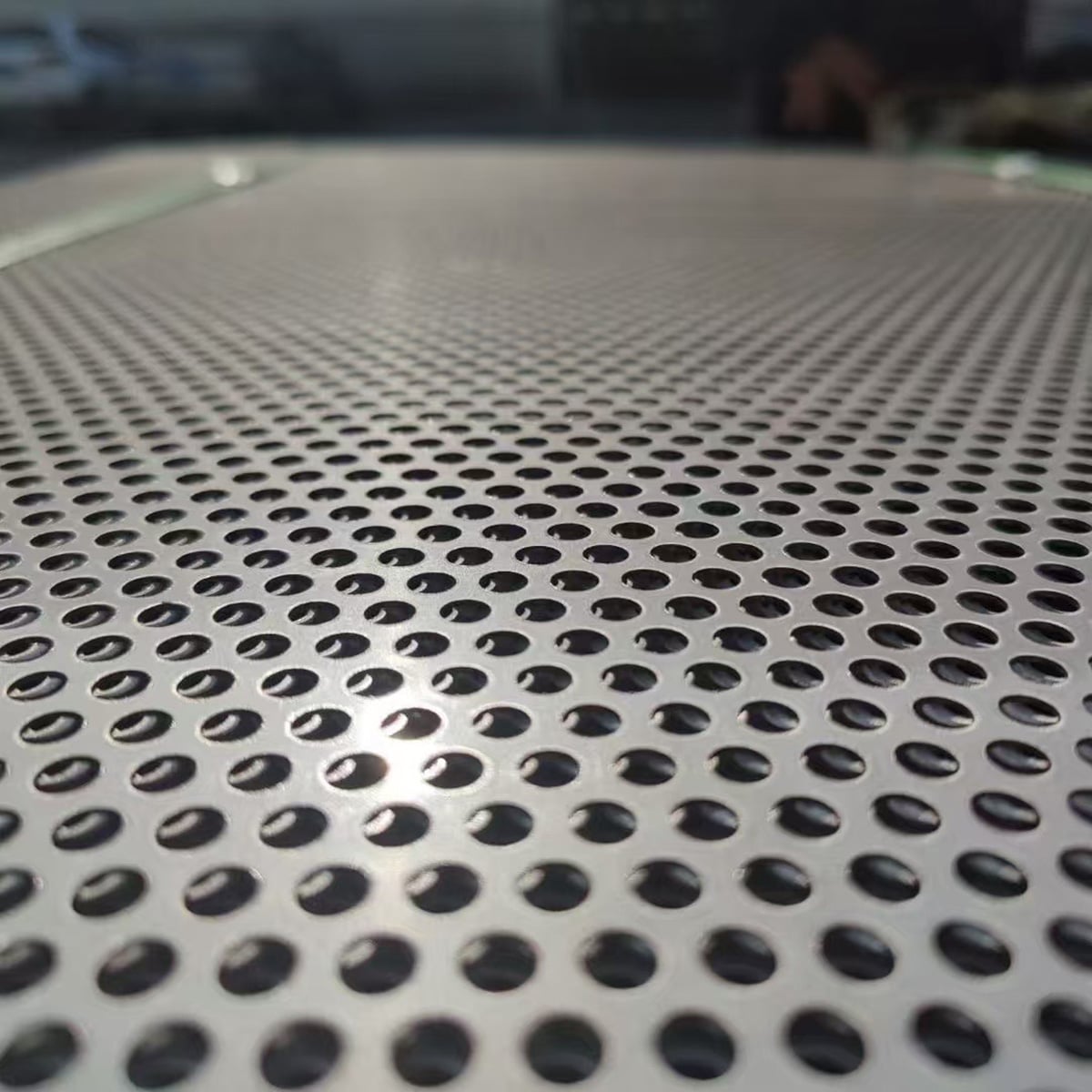
Close view showing hole diameter, pitch and remaining ligament.
Hole Diameter, Pitch and Ligament
Hole diameter is the clear punched opening. Pitch is the center-to-center distance between adjacent holes. Ligament is the metal remaining between holes. These values interact: increasing open area generally reduces the metal available between holes.
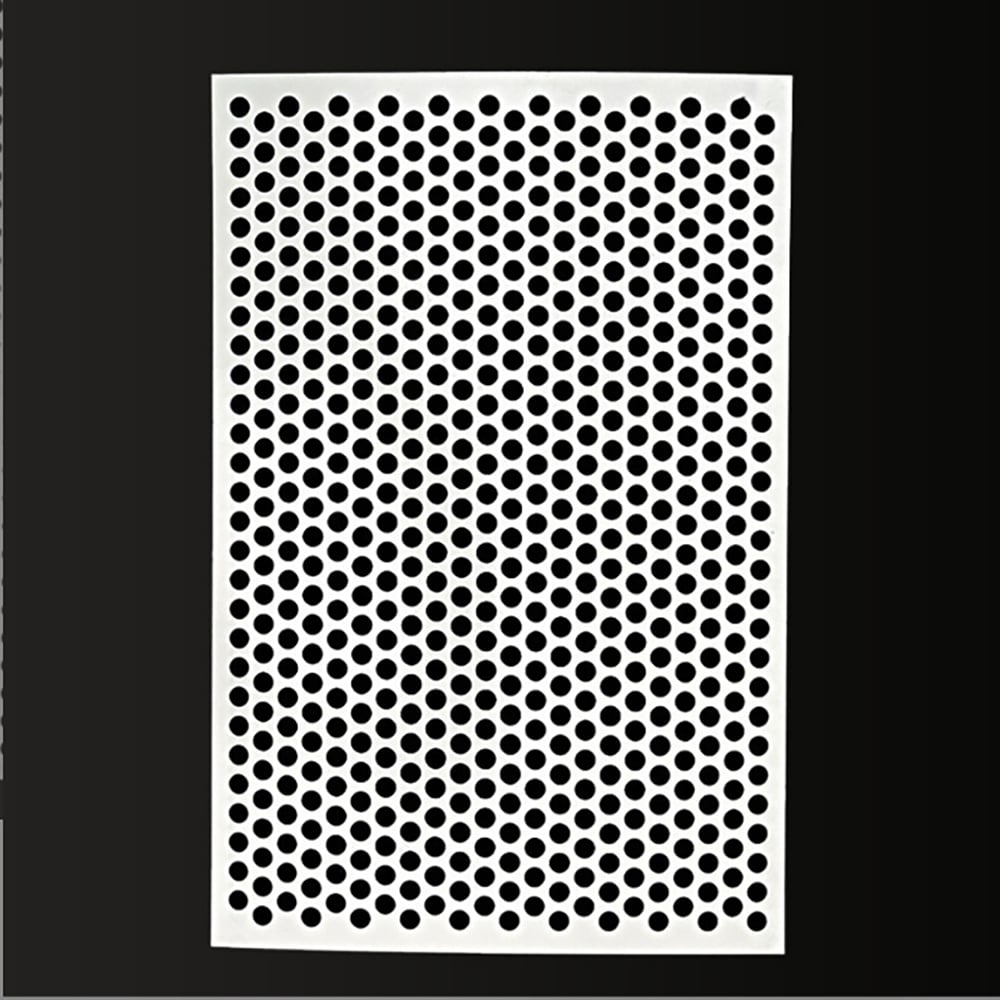
Specify straight or staggered rows and identify orientation when the pattern must align with the assembly. Use the perforated metal open-area calculator to compare common patterns.
Round holes arranged in a staggered perforation pattern.
Round-hole staggered pattern
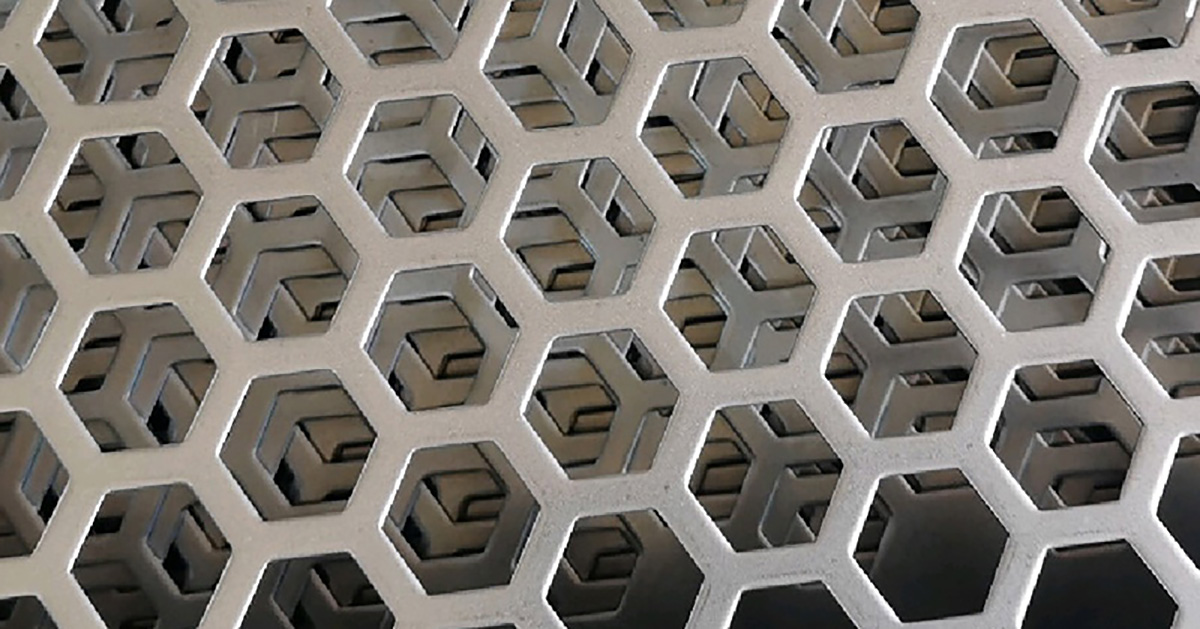
Hexagonal openings illustrate a non-round drawing-defined hole option.
Hexagonal drawing-defined opening
Round holes are widely used, but slots, squares, hexagons and drawing-specific openings may be considered. Feasibility depends on material, thickness, hole-to-thickness relationship, pitch, edge margin and tooling. Compare dedicated round-hole, slotted-hole and hexagonal-hole pattern pages.
A rimmed perforated disc used as a rigid screen or support component.
Choose the finished structure—not only the punched sheet
A plain punched disc is suited to housings that capture the edge. A rimmed disc improves handling and controls the perimeter. A composite disc can combine perforated support with stainless steel wire mesh for finer retention.
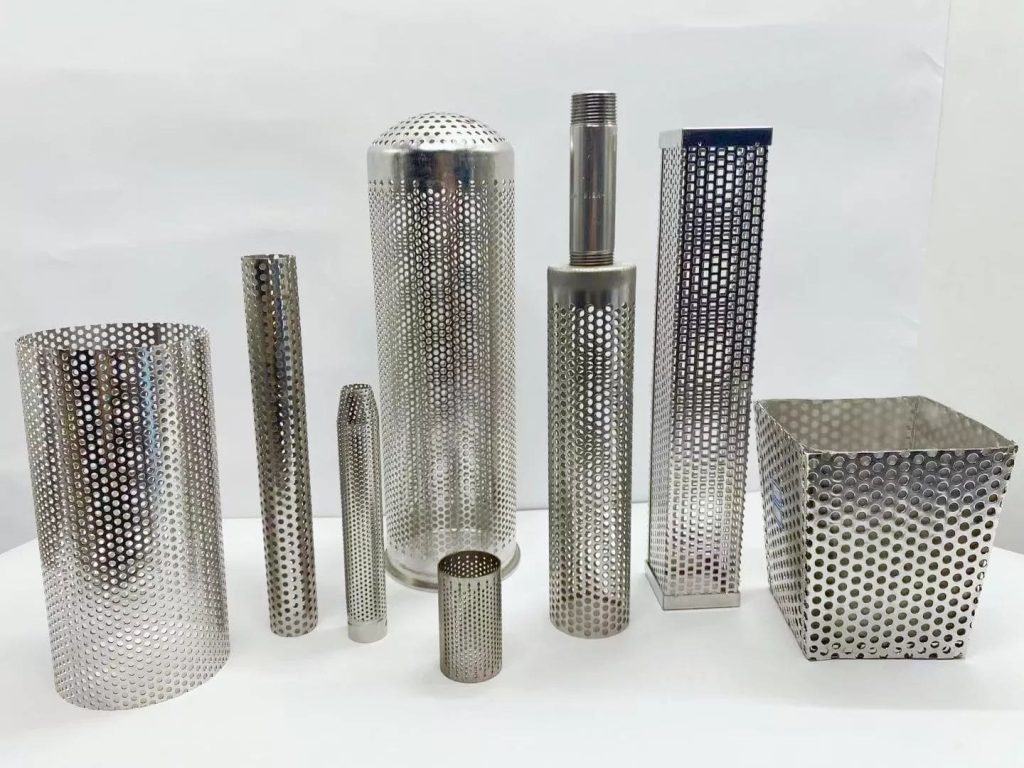
Perforated metal can be cut and fabricated into discs, tubes, cylinders and baskets.
From flat discs to fabricated filter structures
The same perforated sheet principles apply to discs, annular plates, cylinders, tubes and baskets. A flat disc focuses on planar fit and active area; a fabricated form adds seams, bends, flanges and three-dimensional tolerances.
These Maidong material-library images show plain punched discs, rimmed support discs and fine perforation details. They are product-configuration references; the approved drawing controls final hole geometry, margins, tolerances and service suitability.
Round punched discs showing different diameters and perforation sizes.
Custom punched disc sizes
A rimmed perforated disc used as a rigid screen or support component.
Rimmed support disc
Close view showing hole diameter, pitch and remaining ligament.
Fine round-hole pattern
Typical OEM Uses
Fine-media backing
Perforated support beneath woven mesh when layer order and attachment are defined.
Housing support plate
Rigid disc seated against a shoulder, gasket or retaining feature.
Coarse inlet screen
Punched opening used where larger debris retention is sufficient.
Flow distribution plate
Patterned open area distributed over a drawing-defined active zone.
Perforated Disc vs Woven Mesh Disc
Perforated metal disc
Rigid punched sheet with controlled larger holes, used for coarse screening or support.
Woven wire mesh disc
Interlaced wires create smaller openings and different flow behavior.
Composite supported disc
Fine woven media attached to perforated backing when both retention and support are required.
How to Specify a Perforated Filter Disc
1. Define the function
Coarse screen, support plate, distributor or protective disc.
2. Specify the sheet
Material, thickness, finish and permitted burr direction.
3. Define perforation
Hole shape, size, pitch, pattern, orientation and margins.
4. Define the disc
OD, ID, profile, tolerance, flatness, edge and active area.
5. Complete the RFQ
Add operating conditions, quantity, drawing and inspection needs.
It is a flat round, annular or profile-cut metal part with punched openings. It may provide coarse screening, flow distribution, protection or structural support for finer filter media.
Provide material, sheet thickness, hole shape and diameter, pitch, pattern, disc OD and ID, shape, tolerances, margins, edge condition, flatness, quantity and operating duty.
Open area depends on hole geometry, hole size, pitch and pattern. The effective open area of the finished disc may be lower because solid margins, rims, center holes and supports reduce the active perforated area.
They are normally used for coarse screening or as a rigid support. For finer retention, add a separately specified woven wire mesh or another porous layer and define how it is attached.
Yes. Annular discs, slots, notches, mounting holes and non-round profiles can be reviewed from a dimensioned drawing. Critical tolerances and orientation should be identified.
A perforated disc is punched from sheet and usually offers greater rigidity with larger defined holes. A woven wire mesh disc uses interlaced wires and can provide smaller openings. Composite discs may combine both.
Request a Perforated Disc Quotation
Send the material, thickness, hole geometry, pitch, pattern, disc dimensions, margins, edge, tolerances, operating conditions and quantity.