Hooked Edge Woven Screen Sections
Send Maidong your woven screen section and hook-profile drawings for quotation review. Specify the cloth construction, finished dimensions and the edge arrangement that engages your equipment.
The enquiry should distinguish the hooked screen assembly from a bare mesh panel and from separately supplied tensioning hardware.
Start with the Hook and Mating Rail
Show the complete edge cross-section, including its return, opening, depth, angle and material thickness where applicable. Identify the cloth-to-edge connection and the mating rail or clamp dimensions. The sketch above only explains the information needed; it is not a manufacturing profile.
Distinguish an edge formed from the cloth from a separate hook strip attached to it. List the requested construction explicitly and confirm feasibility with the proposed materials and dimensions.
Specify the Screen Cloth Separately
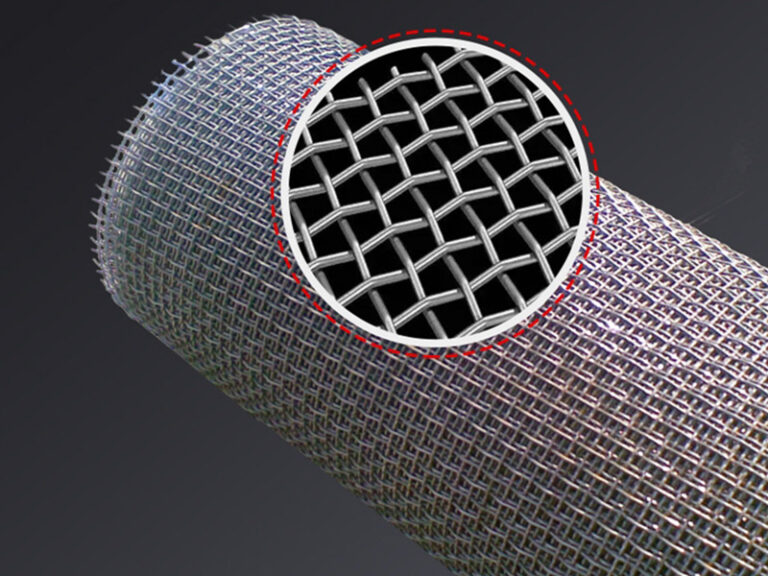
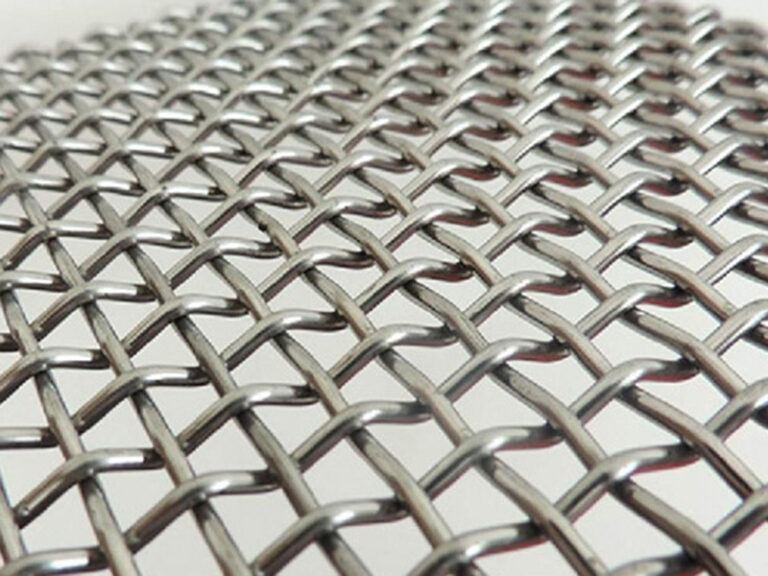
Provide material designation, wire diameters, clear openings and weave or crimp pattern. State the wire direction relative to the tensioning direction when controlled. Mesh construction and hook geometry are separate parts of the order.
For a panel without specified tensioning edges, see crimped woven screen panels. For broader replacement-screen information, see vibratory sieve replacement mesh.
Mark Tension Direction and Dimension References
Identify the hooked sides directly on a plan view and draw the tension direction. Labels such as side-tensioned and end-tensioned need a clear equipment reference. Show whether opposing hooks face the same way or have different profiles.
Specify whether a dimension is measured across the free screen, between defined hook references or in the installed condition. Do not mix a cloth cut width with an overall hooked width. State the inspection support or fixture if the section is flexible.
Include intermediate support positions, any crown or other shaped support, and contact or wear strips where present. Tension settings belong to the approved equipment and assembly requirements; no generic tension force is implied by this enquiry page.
Quotation and Drawing Checklist
| Supply scope | Hooked screen section, bare cloth or an assembly with listed accessories. |
|---|---|
| Cloth | Material, weave/crimp, wire diameters and openings. |
| Finished size | Length/width and exact measurement references; free or installed condition. |
| Hook profile | Section drawing, return, depth, angle, material and attachment requirement. |
| Direction | Hooked sides, tension direction, wire orientation and installation view. |
| Supports | Rail/clamp details, support spacing and any crown or wear surfaces. |
| Clearances | Notches, cut-outs, adjacent panels and access for installation. |
| Accessories | Separately identified seals, strips, fasteners or tensioning components. |
| Acceptance | Drawing revision, dimensional checks, trial fit, quantity and identification. |
Keep Attachment and Accessories Explicit
Show where the cloth is retained by the edge construction. Include notches, clearance cut-outs and any local features needed for the machine. If joining, seals or protective strips are requested, identify their materials and the applicable service conditions for review.
A completed screen section does not automatically include bolts, clamps or a replacement frame. List each separately. Do not infer food-contact suitability, wear life or machine compatibility from a similar-looking screen.
English Enquiry Template
Please review hooked edge woven screen sections to drawing [number/revision], quantity [ ].
Cloth material, opening, wire diameter and crimp [ ]. Finished dimensions and measurement references [ ]. Hook profile and attachment [drawing].
Tension direction, rail interface and support locations [ ]. Accessories included [ ]. Service conditions and acceptance requirements [ ].
Please identify any missing dimensions and proposed exceptions before quotation approval.
Hooked Screen FAQ
It is a woven screen panel with a specified edge profile that engages a tensioning or retaining arrangement. The hook construction and mating interface must be defined for quotation.
No. A bare cloth panel does not include hook strips, formed edges or tensioning hardware unless they are specifically included in the supply scope.
Mark the actual tension direction and the hooked edges on the equipment or panel drawing. Do not rely on side or end terminology without a reference view.
No. Hook profile, measurement references, mating rails, supports and installation orientation also affect fit. Provide the assembly drawing or clearly identified measurements.
Only if listed and confirmed in the quotation. Identify seals, fasteners, wear strips and other accessories separately.
Photos help identify the arrangement but do not establish exact dimensions or material. Provide a drawing or measurements, and mark wear, deformation and uncertain values on the sample record.
Request a Screen Section Review
Send the panel plan, hook cross-section and mating-interface details. Feasibility, scope, price and delivery are confirmed after review.
Assembly Handoff and Enquiry Example
| Quotation review | Information to provide |
|---|---|
| Cloth | Opening, wire diameter, weave and material |
| Hook interface | Mating rail and each hook section |
| Orientation | Tension direction, viewing face and dimension endpoints |
Example RFQ Line to Complete
Replace the bracketed fields with your order requirements:
Hooked section; machine [reference]; cloth [schedule]; view [face]; tension direction [arrow]; hook sections [references]; width/length endpoints [datums]; support rails [drawing]; quantity [value].
Related selection resources: Crimped Wire Mesh; Stainless Steel Crimped Woven Screen Panels; Hooked Screen Drawings and Tension Direction: RFQ Guide.
Send the current drawing or complete specification, quantity, application and delivery destination through our contact page. Identify any required inspection or material records before quotation; availability and acceptance requirements are confirmed for the actual order.