Specify replacement extruder screens around your sheet material, filtration objective and screen changer. Maidong reviews single mesh screens, loose multi-layer sets, spot-welded packs and rimmed packs against the confirmed component requirements.
For PET thermoforming sheet, PP sheet and other sheet extrusion enquiries, send your drawing and current layer specification. We use these details to prepare a quotation for the required construction.
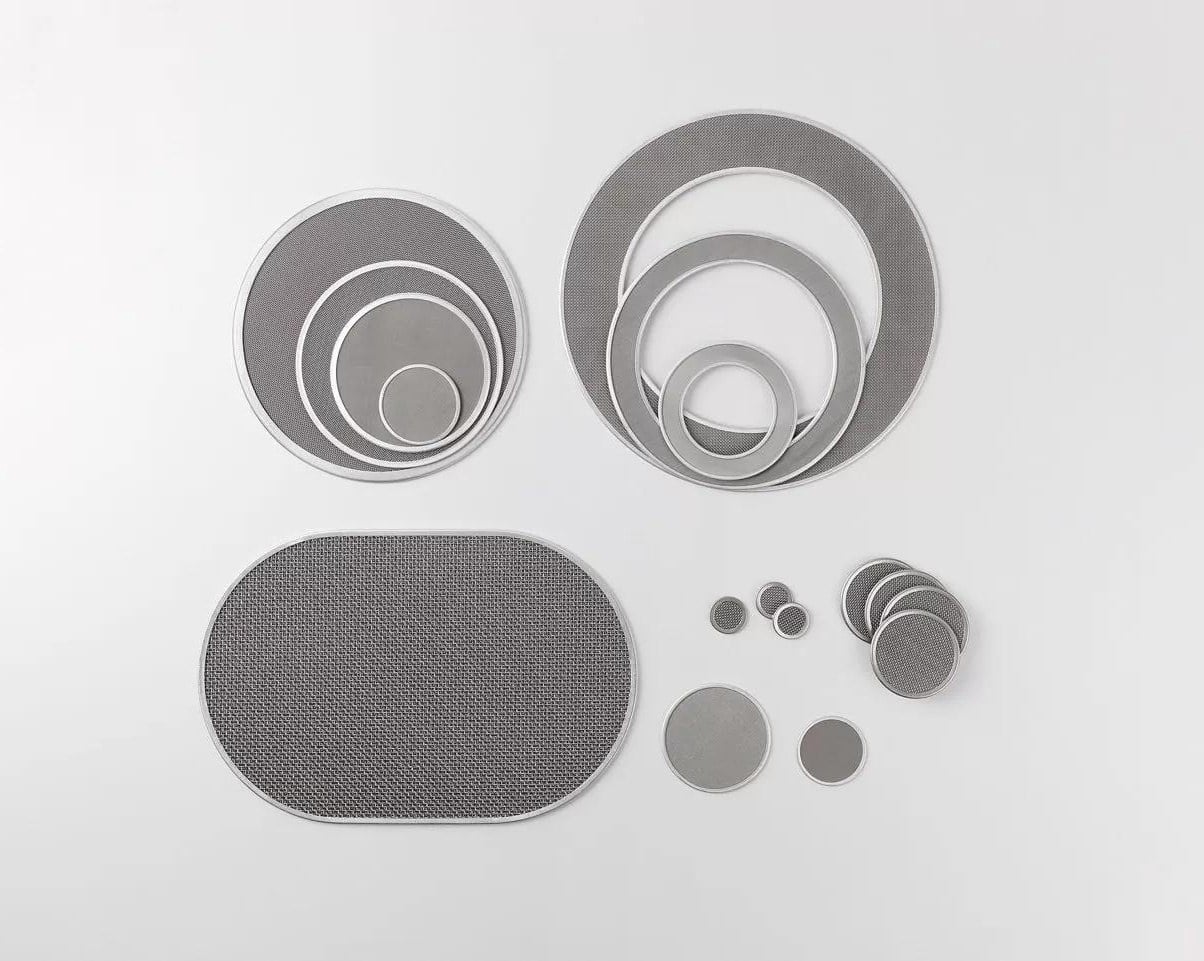
In a compatible sheet extrusion line, molten polymer passes through the filtration assembly before reaching the sheet-forming die. The mesh retains suitable solid contamination, while the equipment-defined support arrangement carries the screen.
Process context: melting → equipment-defined melt filtration → sheet die → downstream sheet forming and cooling. Pump and filter positions depend on the line design; this sequence is not an installation drawing.
See the full extruder screen and screen pack range for construction and shape options.
Identify virgin resin, bottle flake, production trim or their blend. State the required sheet condition and current filtration specification; PET is not a universal mesh recommendation.
Describe the grade, color, fillers and additives. Distinguish ingredients intended to remain in the sheet from unwanted contamination.
Describe visible specks or particles, inspection conditions and acceptance criteria. Do not substitute an undefined request for “optical quality” for a measurable requirement.
Identify each relevant extruder or melt stream and its feed. Separate skin/core stream requirements where applicable, and identify edge trim or skeletal regrind returned to the process.
Supply an approved layer schedule for separate screens. Define the numbering direction and all support layers.
Specify layers secured together at agreed positions. Include weld locations and maximum finished thickness.
Specify the rim alloy, width and thickness separately from the mesh. Confirm the contact area and cavity fit.
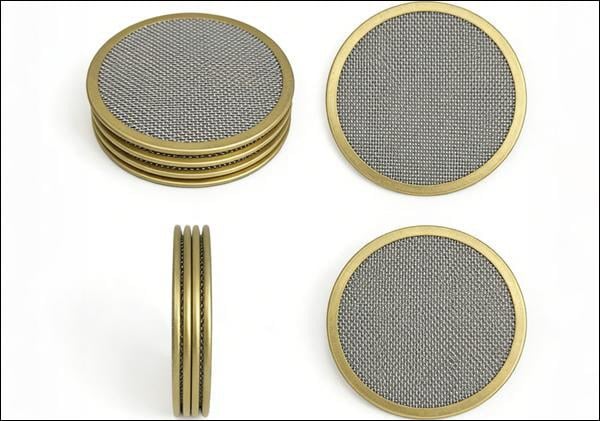
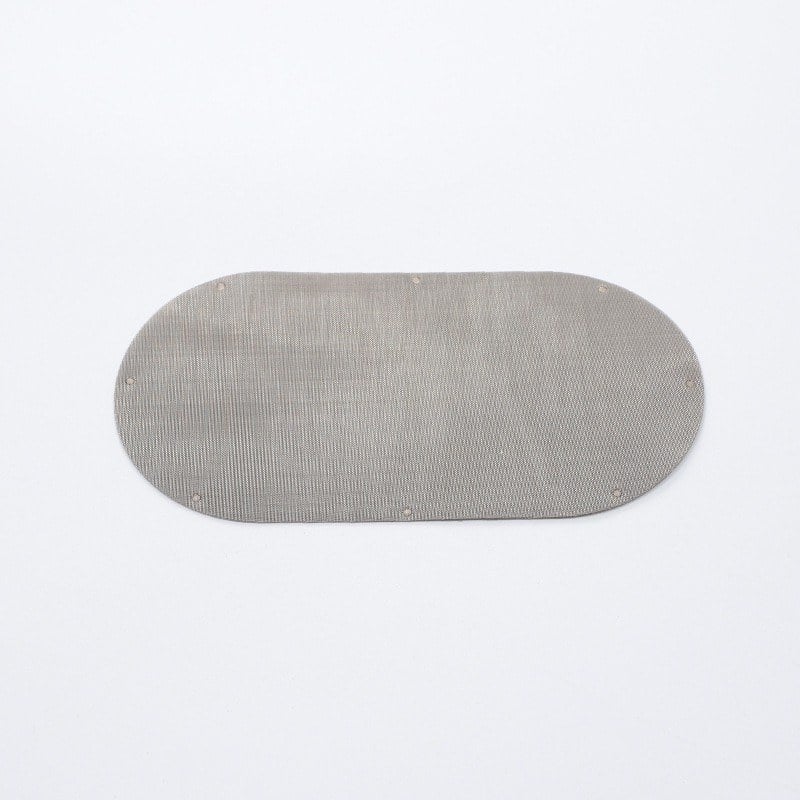
Photographs show Maidong product construction examples. They do not establish the exact alloy, mesh count or suitability for a particular sheet line.
Reference / custom available: SS304, SS316 and SS316L mesh, with plain or other specified woven constructions, can be reviewed for your requirements. Availability and suitability require confirmation for the complete specification.
Specify wire diameter together with mesh count. For Dutch weave, supply the full warp/weft construction and relevant filtration data. A mesh number alone is not a guaranteed micron retention rating.
| Parameter | What to specify | Sheet-line consideration |
|---|---|---|
| Screen geometry | Diameter or complete profile, ID where applicable, tolerances | Derived from the filter cavity, not the finished sheet width |
| Finished thickness | Overall pack and rim thickness; recess depth | Include the complete assembly and contact areas |
| Every mesh layer | Alloy, mesh count, wire diameter and weave | Avoid incomplete mesh-only replacement orders |
| Layer schedule | Sequence with a clearly stated melt-flow direction | Sheet layers and mesh layers are different specifications |
| Attachment / edge | Loose, weld positions or rim drawing | Confirm compatibility with the support and changer |
| Feed material | PET, PP or other resin; additives; regrind details | Identify the actual material in the filtered stream |
| Product requirement | Sheet use, particle/appearance criteria and inspection method | Do not treat all visual defects as screen-removable contamination |
| Operating context | Throughput, melt temperature and pressure information if known | Review proposed changes within equipment limits |
| Changer duty | Manual/continuous system, support, any reverse-flow cleaning | Equipment format may require a different type of filter element |
| Order details | Quantity by configuration, packing, documents, destination | Agree requirements before the quotation is finalized |
Reference / custom available only: 20/40/80/40/20 mesh, 20/60/100 mesh and 40/80/200/80/40 mesh illustrate how buyers may describe multiple layers. They are not approved PET or PP sheet settings, stock specifications or installation instructions.
Final construction follows the extrusion process, material, filtration requirement and equipment support. Confirm the flow direction, wire diameter, weave and alloy for every layer. Read our screen pack combinations and layer-order guide before submitting a layer schedule.
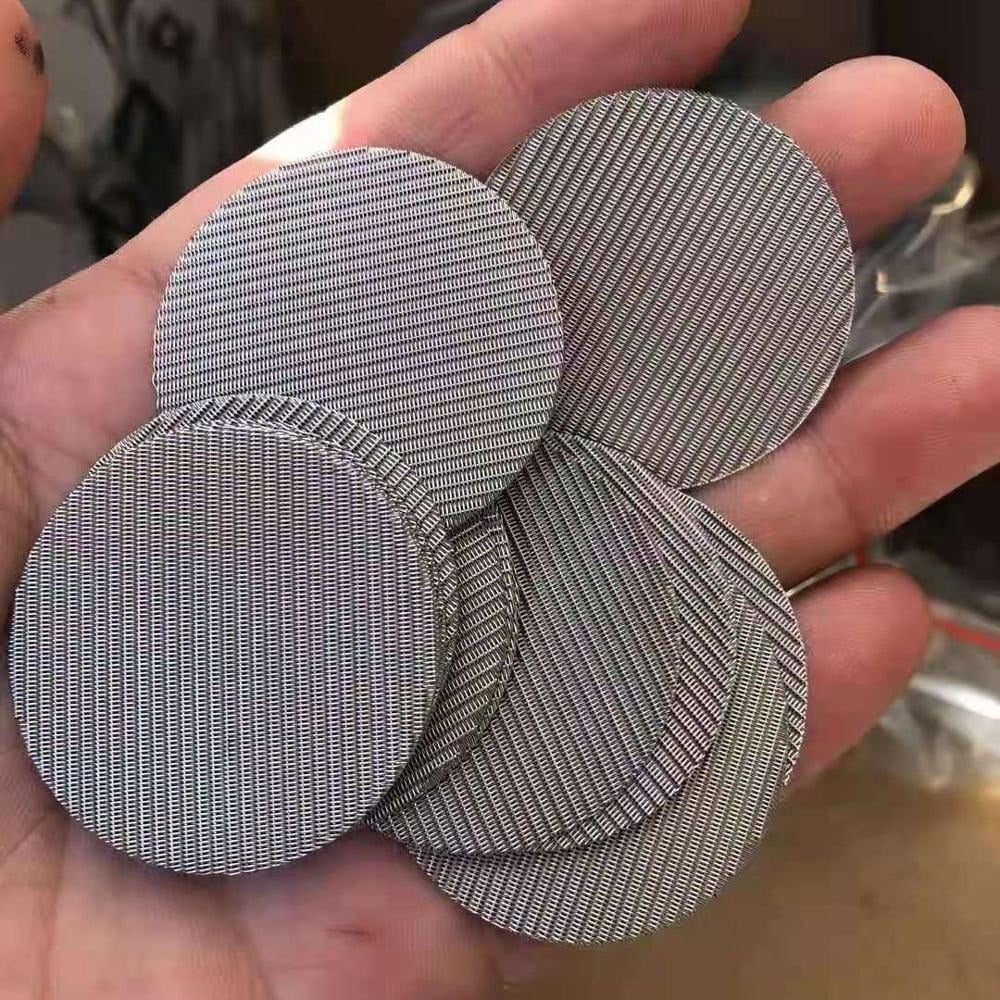
Provide the filter cavity drawing and support arrangement along with the existing pack. Confirm active opening, screen outside dimensions, recess depth, edge contact and maximum pack thickness.
A machine model helps identify the enquiry but does not prove interchangeability. Flat screens cannot be assumed to replace belt, candle or proprietary rotary elements.
For multi-stream coextrusion, label the component by its extruder or melt stream. The number of finished sheet layers does not specify how many mesh layers to order.
For a proposed change, record the current mesh construction, feed composition and observed issue. Compare product condition, pressure trend and output under similar operating conditions, following the equipment limits.
Finer mesh or additional layers can change flow resistance; they should not be selected solely because the sheet is thinner or more transparent. Some appearance issues need investigation beyond melt filtration.
For contamination-led enquiries involving recycled feed, see plastic recycling extruder screen packs. Food-contact documentation or other special requirements must be stated and confirmed; this page makes no certification claim.
Start with a drawing or measured part details, complete layer specification, quantity and delivery country.
Include drawing revision, changer details, dimensions, layer direction, each cloth specification and edge construction. Provide a sample photo to clarify visible features.
Include the resin blend, relevant melt stream, current filtration, observed particles or appearance issue, acceptance criteria and operating context.
Mark unknown details “to confirm.” A photograph can clarify shape and visible assembly, but cannot verify hidden layers, exact alloy or filtration performance.
Use our screen pack drawing and RFQ checklist to prepare dimensions, the complete layer schedule and order quantities.
It is a mesh filtration component installed in compatible melt-filter equipment before the sheet-forming die. The screen changer, support arrangement and process requirements define the replacement specification.
PET alone does not define the mesh. Provide your approved specification or the required filtration objective, feed composition, operating context and equipment drawing. Include bottle flake or production regrind when present.
Send the dimensions, complete layer schedule and formulation for review. Identify fillers and additives intended to remain in the PP sheet, together with the unwanted contamination to be removed.
No direct conversion should be used. Sheet thickness describes the finished product; filtration depends on the melt, contamination, product requirements and equipment. Screen dimensions follow the filter cavity rather than sheet width.
No. Mesh layers belong to a filter assembly. Coextruded sheet layers are separate material layers in the finished sheet. Identify the relevant extruder or melt stream when specifying each screen pack.
No such result is guaranteed. Mesh filtration addresses suitable retained contamination. Appearance issues may also involve the resin, thermal history, die condition or other process factors. Define the observed defect and acceptance requirement before changing filtration.
The feed description alone is insufficient. State the proportion and condition of regrind, the current screen specification and the observed process or product issue. Review any change against the line limits and required sheet condition.
Not on the basis of application alone. Different filtration systems require different component formats. Provide the actual part drawing and equipment requirements before proposing a replacement.
Send the component drawing, dimensions and tolerances, mesh and wire diameter for every layer, weave, material, layer direction, edge construction, quantity and destination. Add the resin blend, relevant melt stream and filtration or appearance requirement.
Send your component drawing and sheet extrusion requirements to Maidong Metal Wire Mesh Products Co., Ltd. We will review the requested construction and quote against the confirmed specification.