
Stainless Steel Woven Mesh Slit Coils
Send Maidong your stainless steel woven mesh slit-coil requirements for quotation. Define the narrow strip width, continuous length and winding arrangement for your cutting, forming or component assembly process.
The order should describe both the wire cloth and the supplied coil. A mesh specification alone does not establish reel fit, uninterrupted feed length or acceptable cut edges.
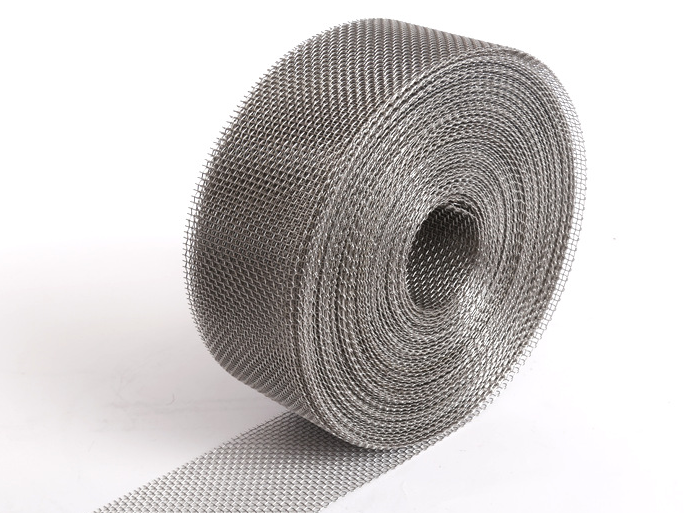
Order a Coil for the Next Operation
Identify whether the strip will be fed continuously, cut into blanks or wound into a component. Give the equipment limits that affect coil width, bore, outside diameter and handling weight.
For flat blanks, see cut-to-size woven mesh sheets. For dense-weave strip specifications, see Dutch weave strips. This page focuses on narrow stainless woven cloth supplied as coils.
Specify Width, Length and Winding Together
| Material and weave | Specify the stainless designation, weave, wire diameters and mesh count or aperture. |
|---|---|
| Strip width | Nominal width, agreed tolerance and whether protruding wire ends are included in measurement. |
| Length per coil | Required length, minimum continuous length and permitted short lengths. |
| Joints | Whether joins are prohibited or subject to approval; location marking and acceptance if allowed. |
| Core and winding | Core bore, length and material; winding direction and strip orientation. |
| Handling limits | Maximum coil outside diameter and mass; loading and unloading constraints. |
| Edges and shape | Cut-edge requirements, loose-wire acceptance and any controlled camber or flatness. |
| Order identification | Quantity, specification revision, coil labels and required inspection records. |
Separate target dimensions from machine limits. For example, a preferred coil diameter and an absolute maximum loading diameter are different requirements. State the units and drawing revision consistently.
Make the Edge Requirement Measurable
Slitting interrupts wires at the strip boundaries. Identify acceptable projections and loose ends, particularly where the edge passes a guide or contacts a finished component. A cut edge is not a woven selvage.
Define how width is checked: support condition, measuring positions and treatment of protruding wires. If strip straightness or camber affects feeding, provide a gauge length and an acceptance method for review.
Do not specify burr-free or perfectly flat without explaining the acceptance criterion. See the cut-edge inspection guide for the information to agree.
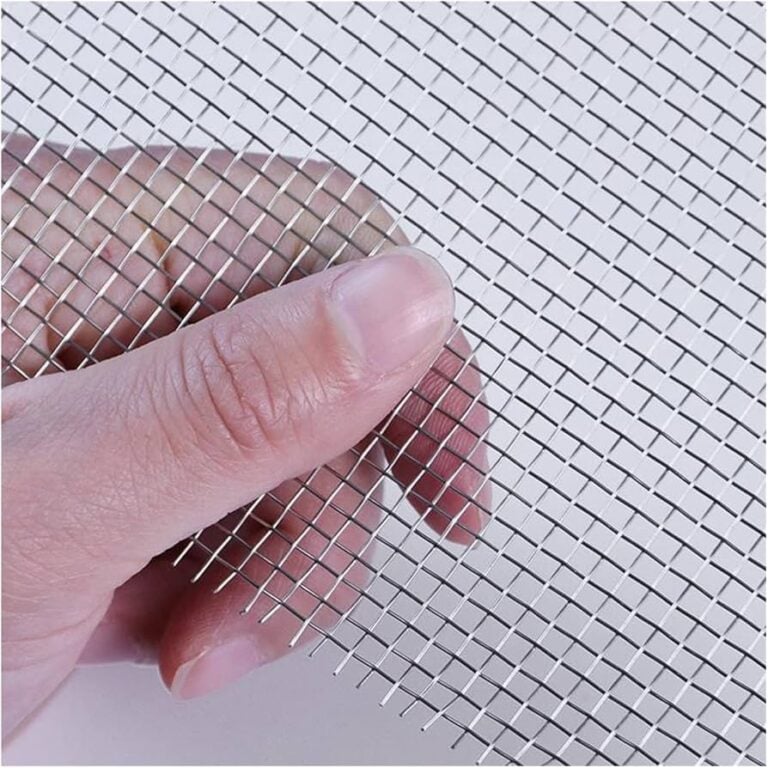
Continuous Length and Splice Rules
Specify the minimum uninterrupted length needed for a production run. If no joints are permitted, state that directly and ask for confirmation against the proposed supply. If joints may be accepted, define the allowable construction, marking and whether the joint can pass through your process.
Keep total purchase length separate from the length of each coil. State whether shorter coils are acceptable and how they should be identified. A total metre quantity does not guarantee that every reel contains the same continuous length.
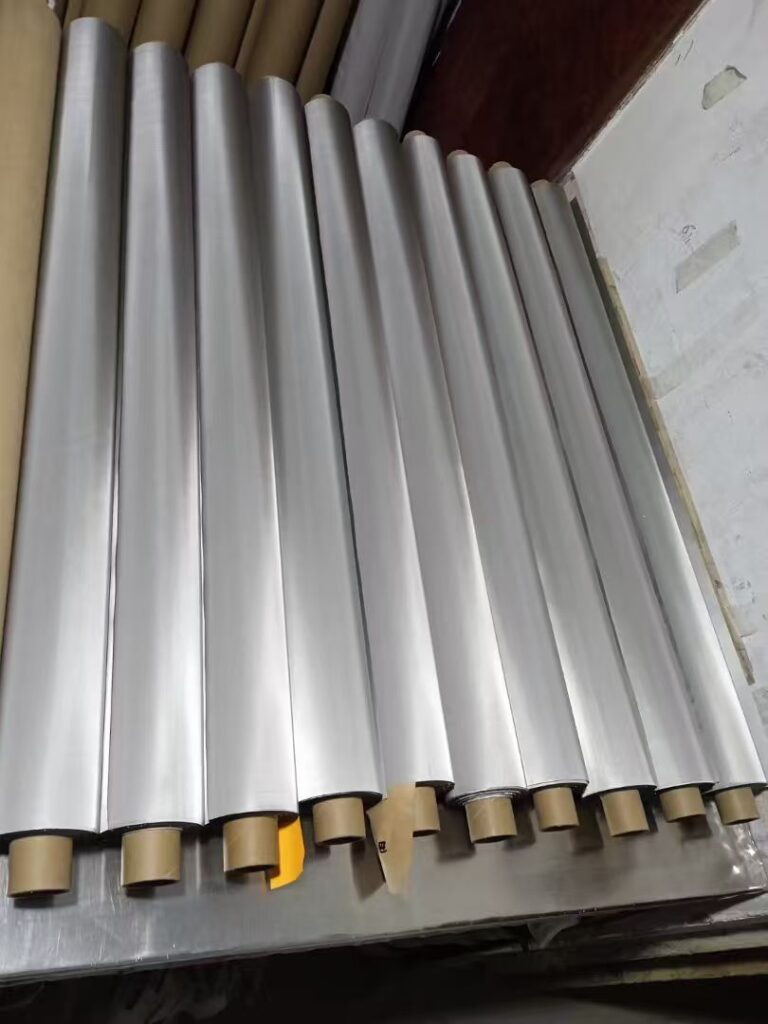
Match the Core and Winding to Handling
Provide the receiving mandrel dimensions and the required core bore. Identify whether the core projects beyond the strip, which side unwinds first and any controlled wire direction relative to the feed path.
State limits for telescoping, edge damage or coil looseness through agreed inspection criteria. Winding requirements should protect the cloth while allowing the intended unwind operation; machine suitability is confirmed through the agreed review or trial.
Request labels showing coil identity, mesh specification, width and length as needed. Packing should protect edges and prevent different widths from being confused.
English Enquiry Template
Please quote stainless steel woven mesh slit coils for [process], quantity [ ].
Material/weave/wire data [ ]. Width and tolerance [ ]. Length per coil [ ]; minimum continuous length [ ]. Joint policy [ ].
Core bore/length/material [ ]. Maximum coil OD and mass [ ]. Winding/feed orientation [ ]. Edge, camber and inspection requirements [ ].
Please confirm supply scope, proposed coil arrangement and any exceptions before quotation approval.
Include a machine interface sketch or an approved coil sample if available. Mark sample measurements as observations until the required limits are agreed.
Slit Coil FAQ
It is woven wire cloth supplied in a narrow wound strip for a defined downstream operation. Specify the cloth construction and coil requirements together.
Not necessarily. State the minimum uninterrupted length and whether any joints are permitted. Total order length alone does not define the length of each continuous piece.
A nominal width starts the enquiry, but the agreed tolerance, edge condition and measurement method are needed to assess acceptance.
No. Slitting creates cut boundaries. If a woven selvage or another retained edge is required, identify it explicitly for feasibility review.
Do not assume a standard core. Provide the core bore, core length and material requirements, together with maximum coil outside diameter or weight where controlled.
Provide the machine interface, feed direction, flatness or tracking requirements, permitted joints and trial acceptance criteria. Machine compatibility must be reviewed against the actual specification.
Request a Slit-Coil Quotation
Share your cloth specification, winding requirements and quantities. Feasibility, price and delivery are confirmed after review.
Purchasing Specification Review
Specify stainless steel woven mesh slit coils around both the cloth and the receiving machine. A comparable quotation needs the narrow strip dimensions, winding arrangement and minimum usable continuous length. Include loading limits and any restrictions on joins or projecting wires.
Define coil usability for the receiving process
Preferred size versus machine limit
Separate your preferred coil outside diameter from the largest diameter the equipment can load. State core bore, core length and any spindle clearance, with units. Include a maximum handling mass if it affects unloading or line safety. Coil diameter alone does not define the length available from different cloth constructions.
Continuous length and permitted joins
State whether one coil must provide an uninterrupted run, whether joins are prohibited, and whether short lengths can be supplied separately. If a join is considered, its construction, marking and permitted passage through the machine require explicit approval. Do not infer a join-free supply from the word coil.
Strip edges, winding and order identification
Control the leading end and orientation
Show which face is wound inward, the unwind direction and the required leading-end orientation. For directional cloth, keep warp/weft identification on the specification. State whether the strip must feed from one edge reference and how protruding wire ends affect the available machine clearance.
Acceptance before a repeat order
Agree how strip width is measured, what edge and shape observations are recorded, and how each coil is labelled. For winding trials, identify the approved cloth revision and machine conditions. A successful trial on one construction does not establish a universal allowable camber or winding tension.
Additional Buyer Questions
Does a stated coil length mean one continuous strip?
Only if the quotation specifies the continuous-length requirement and any permitted joins or short lengths.
Can I calculate coil length from outside diameter alone?
Not reliably without the cloth thickness, core and actual winding arrangement. State the required length directly.
Are slit coils the same as flat mesh strips?
The cloth may be similar, but core fit, winding direction, handling limits and continuous feed are separate purchasing requirements.
For the wider product range, see Stainless Steel Wire Mesh.
Related specification resources: Stainless Steel Woven Mesh Cut-to-Size Sheets; Dutch Weave Mesh Strips Cut to Width; Wire Mesh Coil Length, Splices and Winding: RFQ Guide.
Specification Handoff and Enquiry Example
| Quotation review | Information to provide |
|---|---|
| Width | Finished strip reference and edge-wire rule |
| Continuity | Minimum usable length and permitted joins |
| Handling | Core, envelope limits, leading end and winding |
Example RFQ Line to Complete
Replace the bracketed fields with your order requirements:
Slit coil; cloth [schedule]; width [value/unit and reference]; edge [requirement]; continuous length [minimum]; joins [rule]; core/envelope [limits]; leading end/viewing face [reference]; quantity [value].
Related selection resources: Stainless Steel Wire Mesh; Stainless Steel Wire Mesh Rolls for Industrial Supply; Wire Mesh Cutting Orientation and Datum Guide.
Send the current drawing or complete specification, quantity, application and delivery destination through our contact page. Identify any required inspection or material records before quotation; availability and acceptance requirements are confirmed for the actual order.