Sintered Wire Mesh Filters for Polymer Melt Processing
A sintered wire mesh filter for polymer melt must be selected from the resin and contaminant, melt temperature and viscosity, throughput, rating basis, allowable differential pressure, layer construction, finished geometry, sealing and cleaning plan. It is not interchangeable with a generic screen pack or a catalogue micron number.
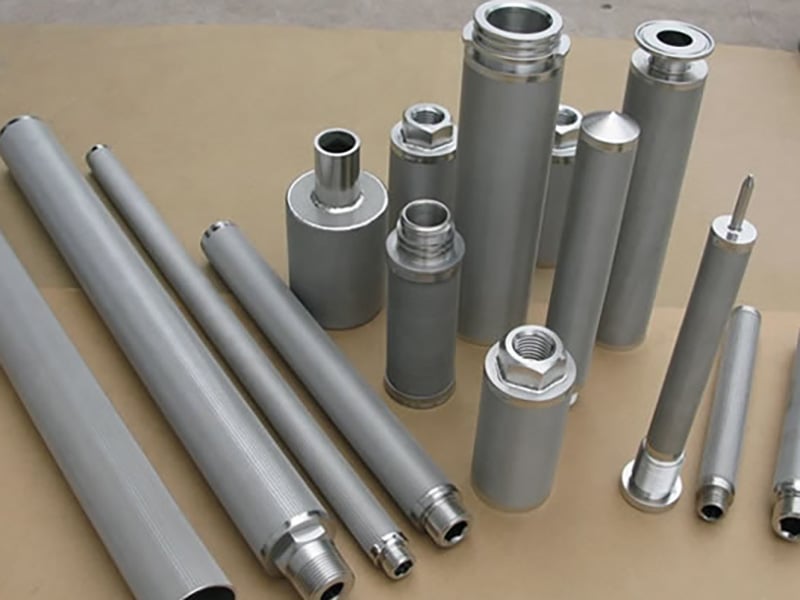
Drawing-specific cylindrical elements showing different lengths, diameters and connection details.
Define the Polymer Melt Duty Before the Filter
Polymer and additives
Identify the resin, additives and process chemistry that contact the porous metal.
Contamination
Describe gels, degraded material, unmelted solids or foreign particles and the required downstream result.
Flow and pressure
Provide throughput, viscosity or rheology data, active area and clean and maximum permitted differential pressure.
Equipment interface
Show installed orientation, flow direction, sealing surface, connection, clearance and removal method.
Polymer Melt Sintered Filter RFQ Matrix
Do not release an enquiry with only an outside diameter and micron value. Define the process, porous laminate and finished interface as one specification.
RFQ field
What to provide
Why it matters
Melt duty
Polymer, additives, temperature, throughput and viscosity/rheology basis
Defines chemical and hydraulic conditions
Contaminant and result
Particle or gel description, loading and downstream requirement
Connects filtration to the real process objective
Rating basis
Micron value plus nominal, absolute, pore or named test definition
Prevents comparison of unlike rating claims
Media construction
Alloy, filtration layer, protection/distribution/support layers and flow direction
Controls retention, permeability and stability
Finished component
Disc, tube or cartridge; dimensions, wall, seam, support, ends and seals
Controls equipment fit and usable area
Operating cycle
Clean and terminal differential pressure, change interval, cleaning and acceptance
Defines load, handling and reuse expectations
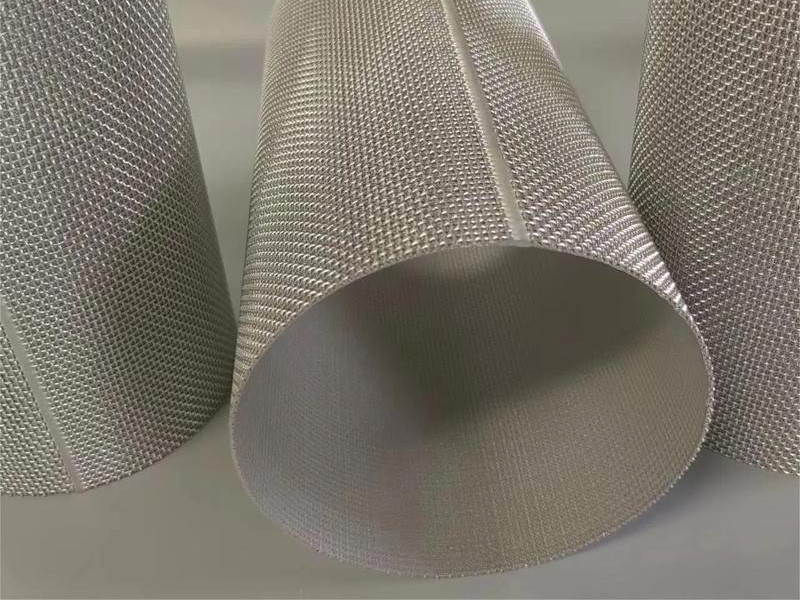
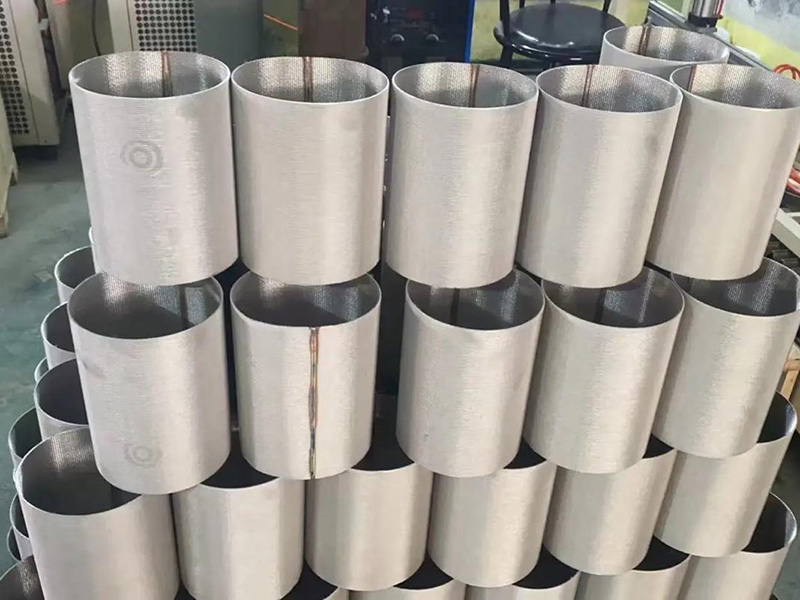
Open-ended mesh tubes illustrate body geometry, seam position and porous wall construction.
How the Bonded Mesh Structure Works
Sintering bonds selected woven mesh layers at their contact points while retaining interconnected flow paths. A filtration-control layer can be combined with protection, distribution and support meshes. The exact sequence is application-specific and must be shown with the installed flow direction.
Flat, annular or framed bonded laminate for a defined seat or screen-changing arrangement.
Sintered mesh tube
Open or capped cylindrical porous wall with seam, diameter and support defined by drawing.
Finished cartridge
Tube or cylindrical medium completed with end connections, seals and mounting features.
If the equipment uses replaceable stacks of flat woven screens, the correct intent may be a stainless steel extruder screen pack rather than a sintered element.
Differential Pressure, Support and Flow Direction
Mark the normal high-pressure side and any reverse-flow cleaning duty. Fine media must be supported relative to the actual load, not a generic inside/outside rule. State the clean pressure drop at a defined condition and the maximum permitted loaded differential pressure for the equipment.
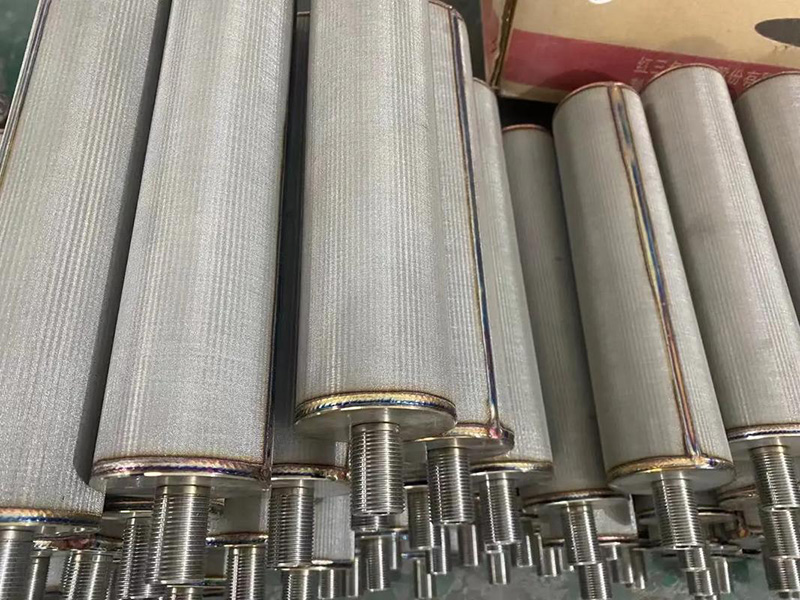
Long finished elements showing welded ends and threaded mounting interfaces.
Real Maidong Sintered Mesh Component Examples
These real product images illustrate possible porous bodies, seams, welded ends and threaded interfaces. They are construction examples only; they do not establish a universal polymer, rating, pressure, temperature or service-life claim.
Drawing-specific cylindrical elements showing different lengths, diameters and connection details.
Mixed element lengths and connections
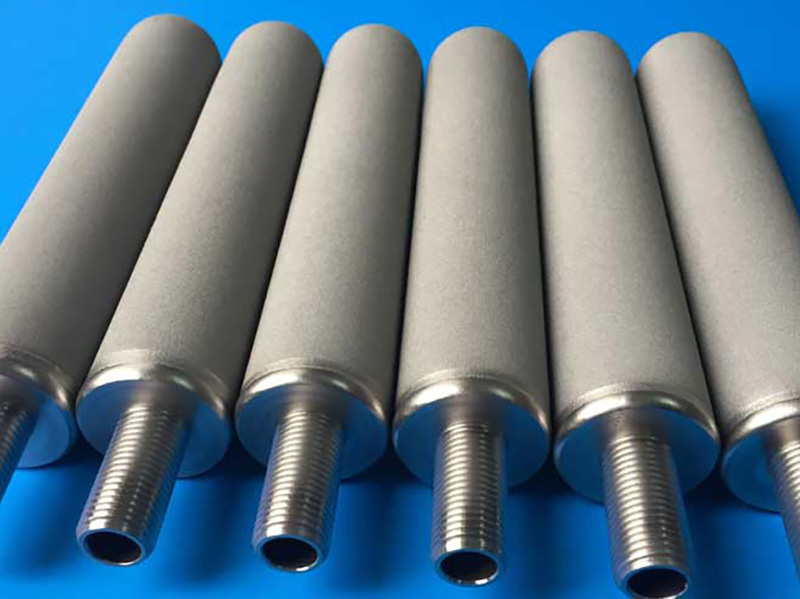
Cylindrical porous elements with a consistent body form and threaded equipment interface.
Threaded cylindrical filter elements
Open cylinders before final end fittings, useful for reviewing diameter, length and seam construction.
Open cylindrical bodies before final interfaces
Long finished elements showing welded ends and threaded mounting interfaces.
Long elements with welded threaded ends
Selection and Acceptance Workflow
1. Define melt duty
Polymer, additives, contaminant, temperature, throughput and viscosity.
2. Define retention
Target result plus a named rating or test basis.
3. Define structure
Alloy, layer sequence, flow direction, wall and support.
4. Define interface
Dimensions, seam, ends, seals, clearance and tolerances.
5. Define acceptance
Drawing revision, inspection, pressure-related checks, cleaning and quantity.
The plastics and chemical fiber industry page remains the broad industry overview. This page is limited to specification and purchasing of sintered wire mesh finished elements for polymer melt duty.
It is a finished filter component made from bonded layers of woven metal mesh. The layer structure provides filtration, drainage and mechanical support, while the finished disc, tube or cartridge must match the polymer process and equipment interface.
An extruder screen pack is normally a loose, bonded or rimmed stack of flat woven screens installed at a breaker plate or screen changer. A sintered wire mesh filter uses a bonded porous laminate and may be supplied as a rigid disc, cylinder, tube or cartridge.
State the target contaminant and the rating definition or test method. A bare micron number is incomplete because nominal, absolute, pore-size and test-based values are not automatically equivalent.
Provide polymer or resin, additives, expected contaminant, melt temperature, viscosity or relevant rheology data, throughput, clean and maximum permitted differential pressure, flow direction, operating cycle and cleaning method.
Potential reuse depends on polymer residue, pore structure, element geometry, cleaning chemistry and temperature, reverse-flow limits and post-cleaning acceptance criteria. Reuse must be validated for the actual process.
Show overall dimensions, porous wall thickness, layer specification, flow direction, seam, support, end fittings, sealing surfaces, tolerances, installed clearance and the inspection points that control interchangeability.
Request a Polymer Melt Filter Review
Send the polymer and contaminant, operating conditions, filtration definition, layer or media requirement, finished drawing, pressure direction, sealing, cleaning and quantity.