Perforated Metal Open Area Calculator & Formula Guide
Calculate theoretical sheet open area from hole size and center-to-center pitch. The tool covers round holes in straight or 60° staggered patterns and straight slots in a rectangular pitch cell.
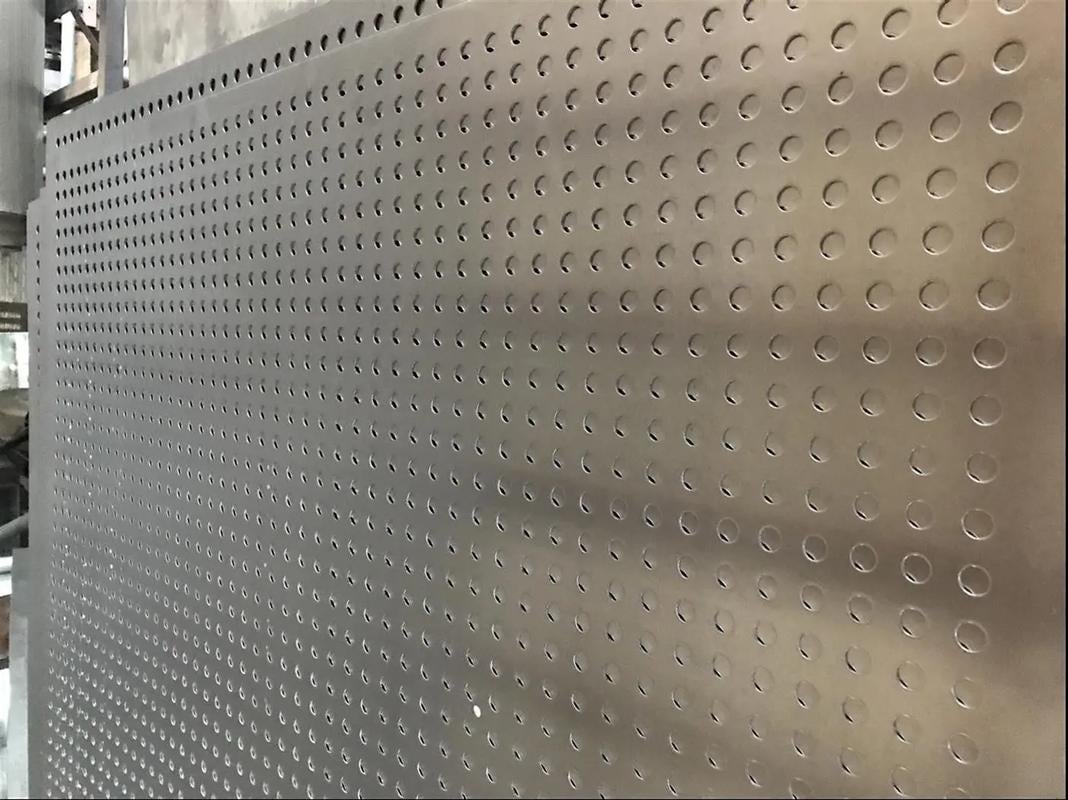
Round-hole perforated sheet before forming or fabrication.
Calculate Perforated Metal Open Area
Select the pattern and enter dimensions in any one consistent unit. The percentage is dimensionless. For custom patterns, use the area of one opening divided by its repeating cell area.
Theoretical open area: 32.65% Use one consistent unit. Result is geometric sheet open area.
Core Open Area Formulas
60° staggered round holes
OA% = 90.69 × (d ÷ p)²
Straight round holes
OA% = 78.54 × (d ÷ p)²
Straight slots
OA% = 100 × [w(L−w)+πw²/4] ÷ (PxPy)
d is round-hole diameter; p is equal center pitch; L is total slot length including semicircular ends; w is slot width; Px and Py are center pitches. The slot formula assumes one straight slot per rectangular repeating cell.
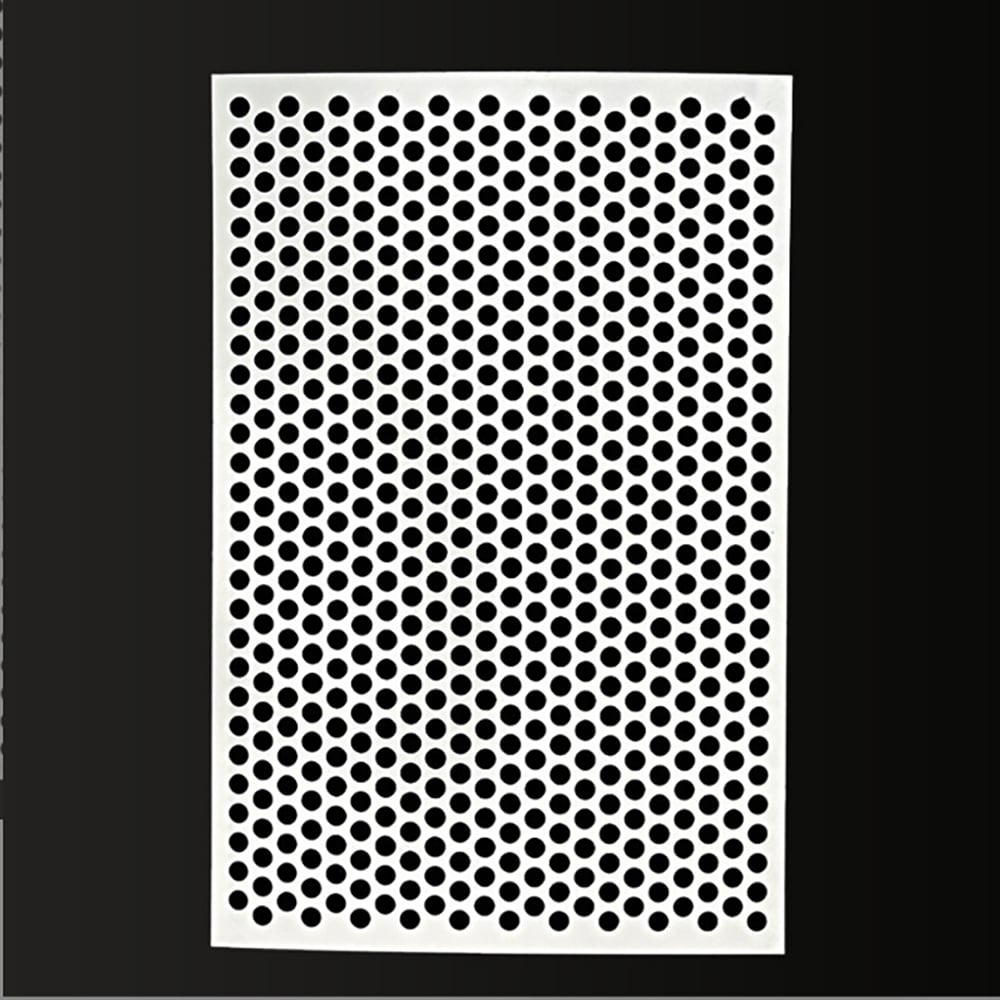
Round holes arranged in a staggered repeating pattern.
Round-Hole Pattern: Straight vs Staggered
A 60° staggered layout packs round holes more efficiently than a straight square layout at the same hole diameter and pitch. Confirm that the drawing uses center-to-center pitch—not ligament width.
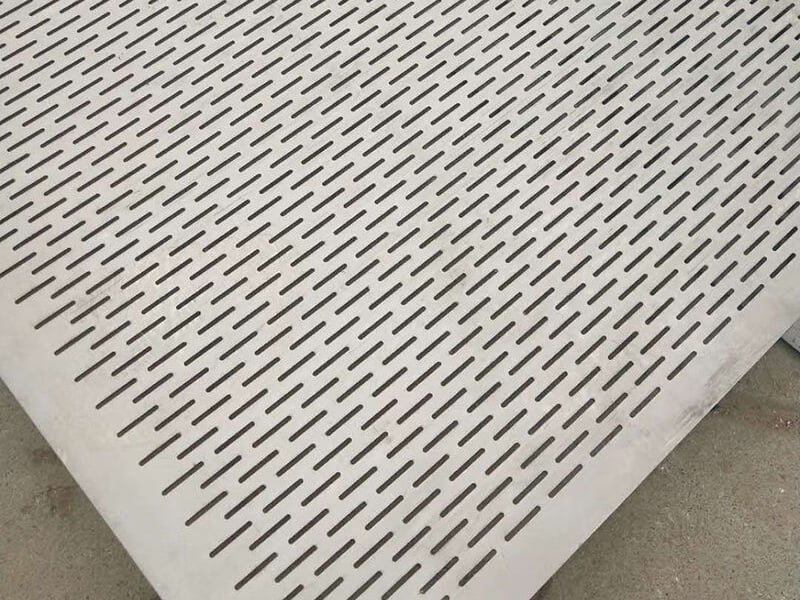
A slot is not defined by length and width alone. The repeating cell also needs center pitch along the slot and across rows. This calculator models a straight slot with semicircular ends and a rectangular pitch cell.
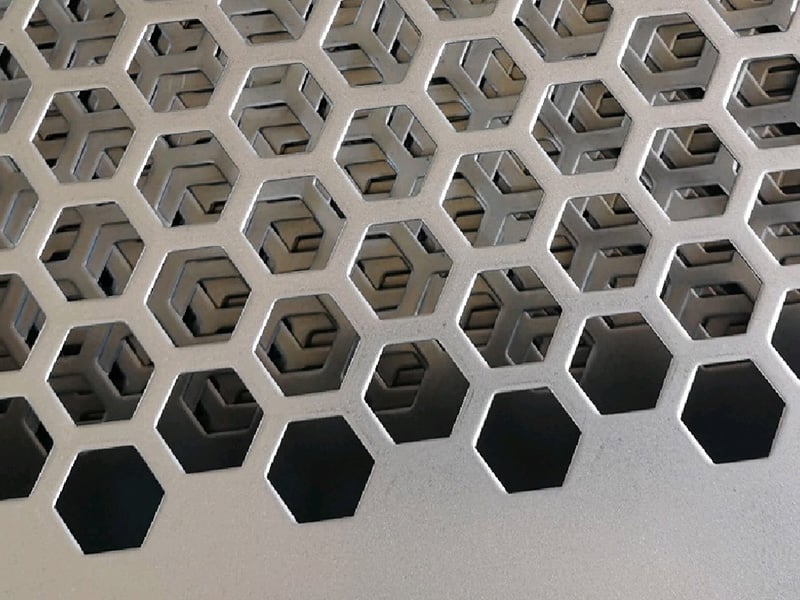
For other slot-end shapes, offset rows or special patterns, calculate from the approved repeating geometry. See slotted-hole perforated metal.
Open area is the percentage of a repeating sheet area occupied by holes. It is a geometric value based on hole size, pitch and pattern; it is not the same as filtration efficiency or the usable open area of a finished component.
For a 60-degree staggered round-hole pattern, theoretical open area is 90.69 multiplied by the square of hole diameter divided by center-to-center pitch. Use the same unit for diameter and pitch.
For a square or straight round-hole pattern with equal pitch in both directions, theoretical open area is 78.54 multiplied by the square of hole diameter divided by pitch.
Yes, when total slot length, slot width, longitudinal center pitch and transverse center pitch are known. The calculator assumes a straight slot with two semicircular ends inside a rectangular repeating pitch cell.
Unperforated margins, longitudinal seams, weld overlap, caps, flanges, frames, supports and additional mesh layers can block part of the theoretical perforated area.
No. Pressure drop also depends on thickness, hole edge and shape, fluid properties, flow rate, fouling, added filter media and the complete component geometry.
Need a Drawing-Based Open Area Review?
Send the hole geometry, pitch, sheet thickness, active margins and finished-component drawing. Maidong can review the perforated metal or fabricated filter enquiry.