Custom wire mesh filter caps are three-dimensional screen components formed or assembled to fit a port, tube, housing or protective interface. The correct specification combines mesh construction with cap diameter, depth, flange, profile, support and joining details.
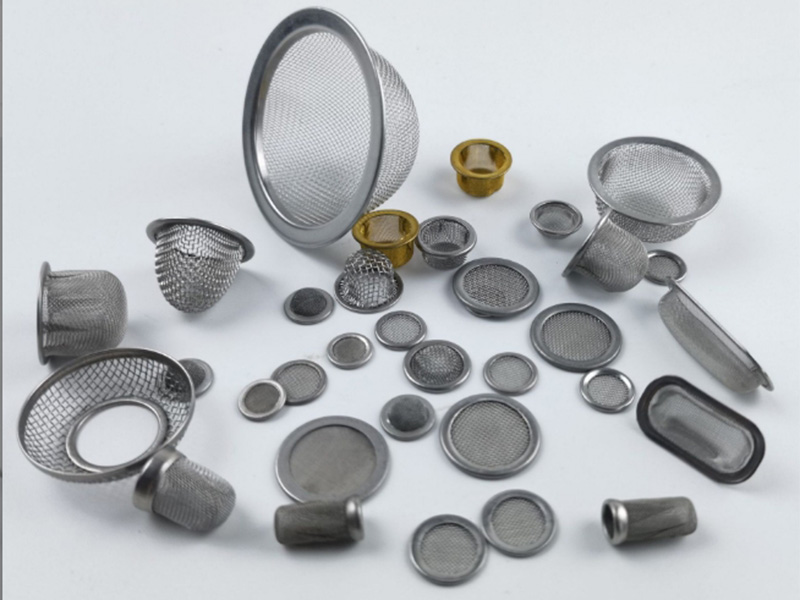
Formed, rimmed and profile-shaped wire mesh filter components in multiple sizes.
Common Filter Cap Functions
Port protection
Covers an inlet, outlet or vent while allowing the process fluid or gas to pass.
Particle retention
Provides a defined woven opening for screening within an equipment interface.
Media protection
Coarse mesh or formed support can protect a finer filtration layer.
Compact integration
A cup or dome shape adds filtration surface inside limited installation space.
Wire Mesh Filter Cap RFQ Checklist
A product photo alone is not enough for repeatable supply. A dimensioned drawing should identify the fitting direction, critical diameters, depth, flange, corner radii, mesh and edge construction.
Specification
What to state
Design effect
Mesh media
Material, weave, mesh count with wire diameter or aperture
Controls opening, formability, flow area and retention
Cap profile
Cup, dome, cylinder, cone, rectangular or custom section
Defines usable area and equipment clearance
Fit dimensions
OD, ID, depth, flange, radii and tolerances
Controls insertion, seating and sealing interface
Edge and support
Raw, folded, rimmed, welded, backed or framed
Affects handling, rigidity and exposed-wire control
Operating context
Medium, temperature, pressure direction, cleaning and quantity
Supports material and construction review
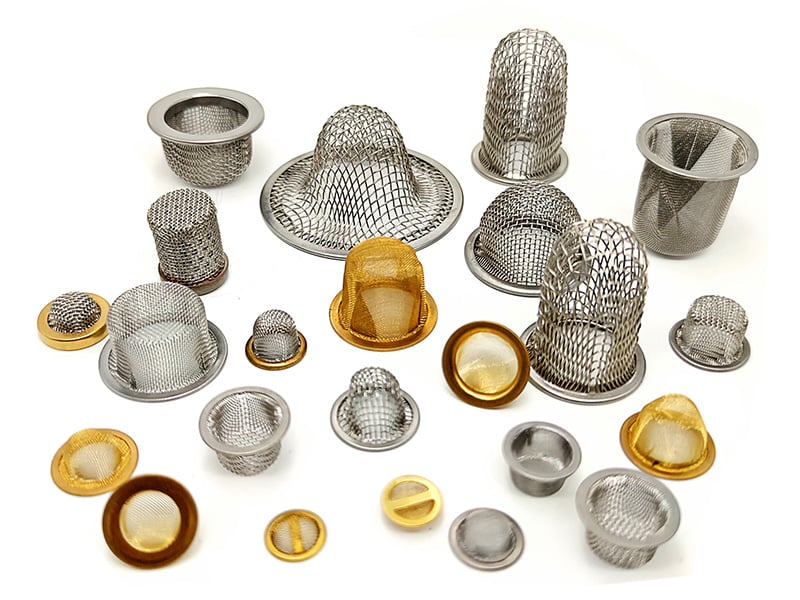
Deep-formed mesh caps with cylindrical, tapered and domed profiles.
Formed Cups, Domes and Cylindrical Caps
Mesh can be shaped into shallow cups, deep cylindrical caps, domes and tapered forms. Forming feasibility changes with wire size, weave, alloy, opening, draw depth and corner radius.
For demanding profiles, avoid specifying only the finished diameter. Include the full cross-section, allowable mesh deformation and interface tolerances.
Process reference: a press forms a cup-shaped mesh part from a flat blank. The 8-second silent clip illustrates forming before final trimming. Final cap shape, mesh specification and rim dimensions are defined by the drawing.
Mesh and Support Structure Selection
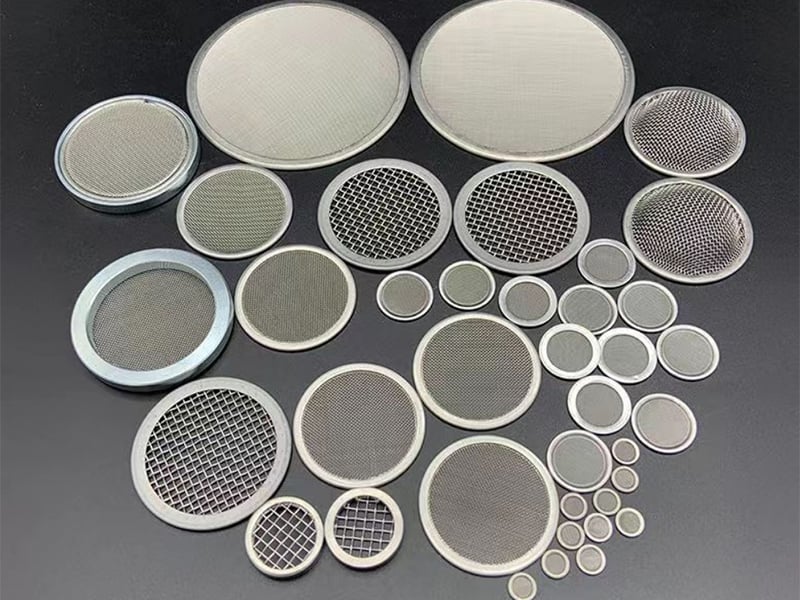
Rimmed mesh screens illustrating fine media and support-mesh combinations.
Fine media, support mesh or combined construction
Stainless steel wire mesh can be selected by weave, mesh count, wire diameter and aperture. Fine mesh may require a coarser support or perforated backing when the cap sees differential pressure or handling loads.
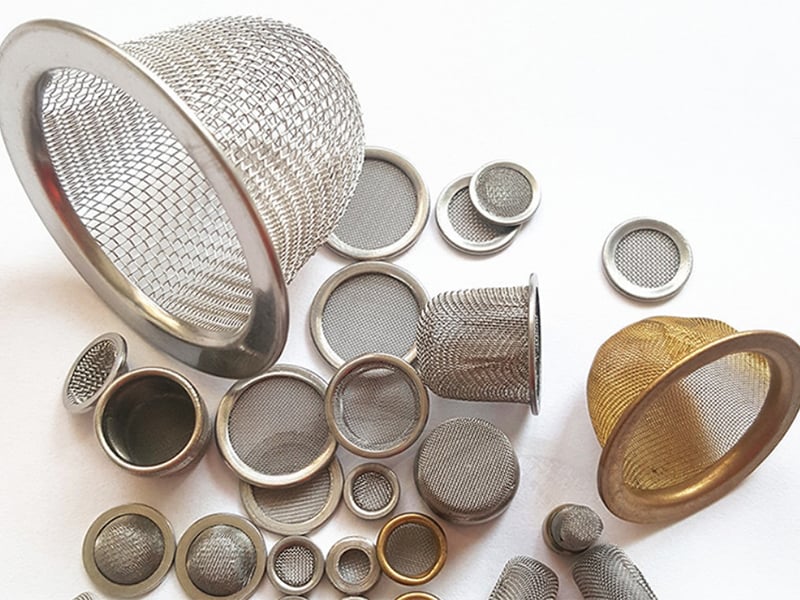
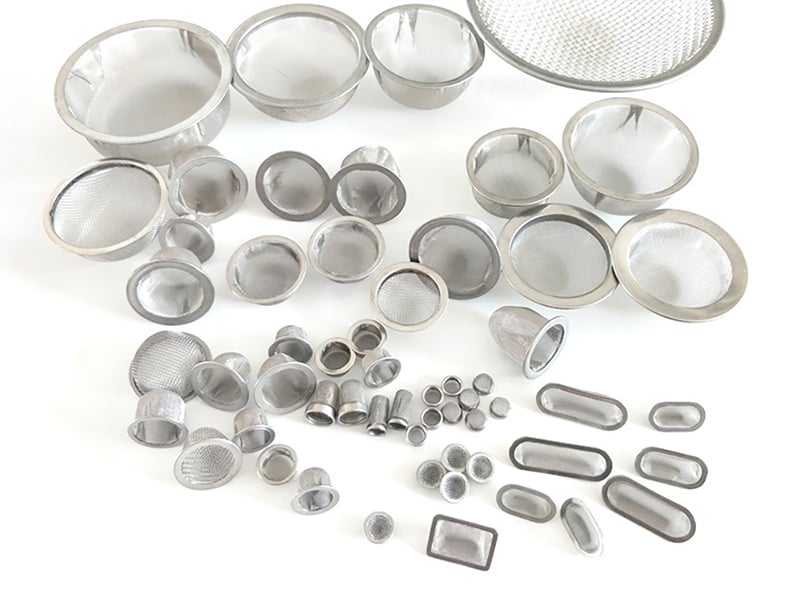
These Maidong product images show real formed mesh parts with different depths, diameters, flange styles and profiles. Final construction is controlled by the approved drawing and confirmed mesh specification.
Examples of round, rectangular, shallow and deep formed mesh parts.
Round, rectangular and profile-shaped parts
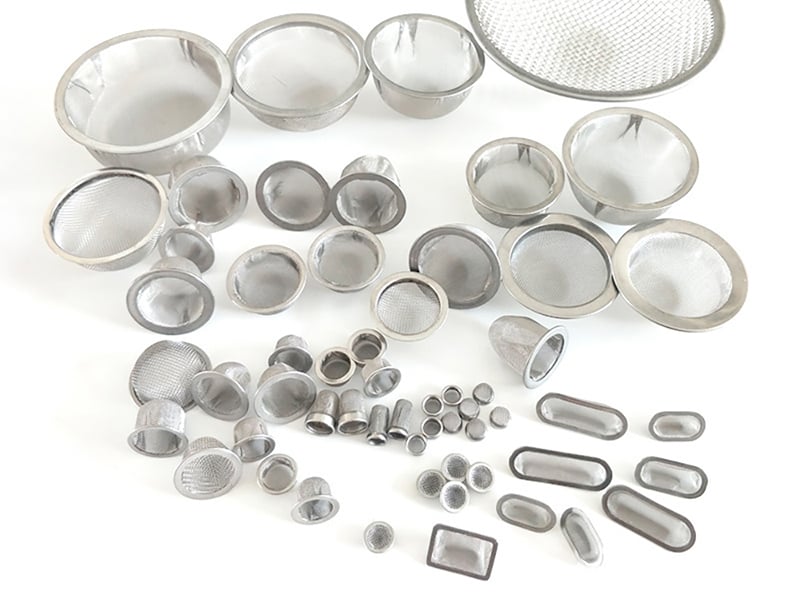
Small flanged screen caps in different mesh, depth and rim configurations.
Small flanged caps and screen inserts
Drawing-based formed mesh caps, cups and shallow screen inserts.
Available Drawing-Based Options
Shallow cup, deep cup, dome or cylindrical cap
Round, oval, rectangular and custom profiles
Plain, folded, formed or separately rimmed edges
Single mesh or supported multilayer construction
Open flange, closed mesh end or center opening
Dimensions and tolerances matched to the mating part
A wire mesh filter cap is a formed or assembled screen component with a closed mesh end and an open, flanged or rimmed interface. It can protect a port, retain particles or fit over or into an equipment connection.
Provide overall diameter or width, inside and outside fit dimensions, depth, flange or rim size, corner radii, profile, tolerances and any holes, seams or locating features.
State material, weave, mesh count plus wire diameter or clear aperture. If several layers are used, list every layer and the flow direction. Mesh count alone does not fully define the opening.
Some meshes can be deep drawn or formed, but feasibility depends on alloy, wire diameter, weave, opening, depth-to-diameter ratio and corner radius. A drawing and sample review may be required for demanding shapes.
Yes. A cap may use a formed flange, separate rim, support mesh, perforated backing or drawing-specific frame. The joining and exposed-edge requirements should be stated.
A filter disc is primarily flat. A filter cap has a three-dimensional cup, dome, cylinder or profile that interfaces with a port, tube or housing. Search intent and dimensional requirements are therefore different.
Request a Custom Filter Cap Quotation
Send the mesh specification, cap profile, fit dimensions, flange or rim, support structure, tolerances, operating conditions and quantity. Maidong can review a drawing-based wire mesh filter cap enquiry.