Copper vs Brass vs Phosphor Bronze Wire Mesh
Start with the required alloy and function, then compare the wire-cloth construction. Copper, brass and phosphor bronze should not be treated as colour variations of the same mesh.
This guide helps prepare a material enquiry without assuming that one family is best for every application.
Separate Material Identity from Appearance
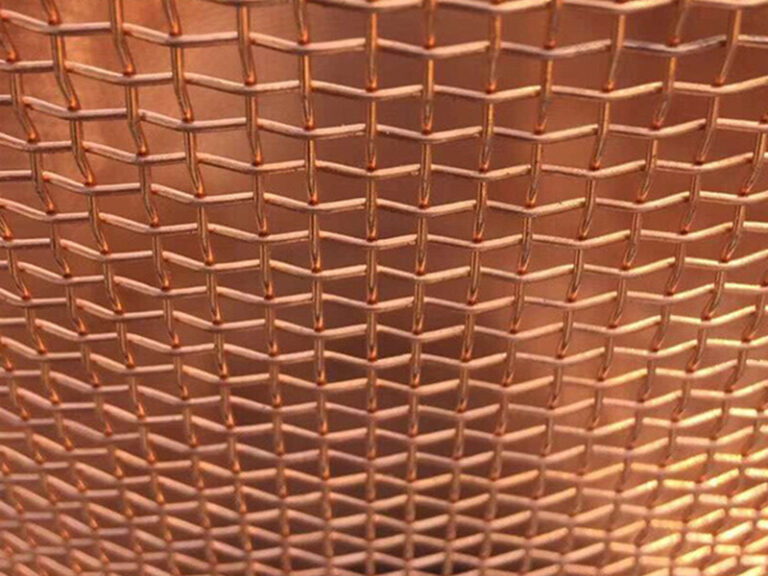
Copper mesh
Specify the actual copper designation and required wire condition. Do not turn a request for copper into an unstated purity guarantee.
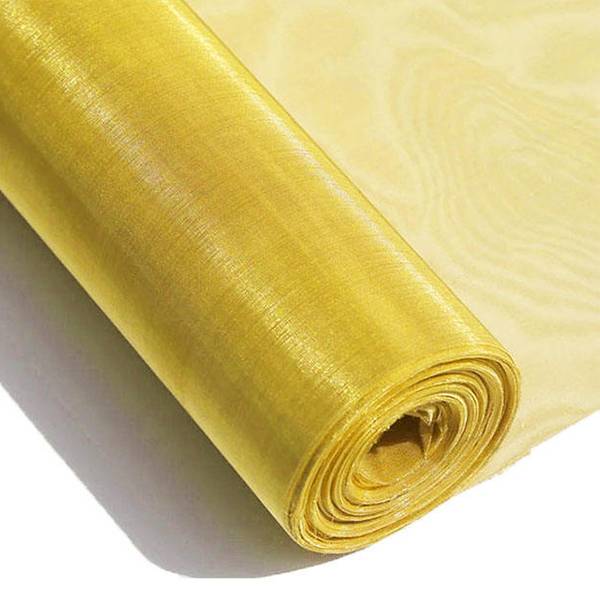
Brass mesh
Brasses are copper-zinc alloys. Name the required designation instead of assuming every brass has the same composition or properties.
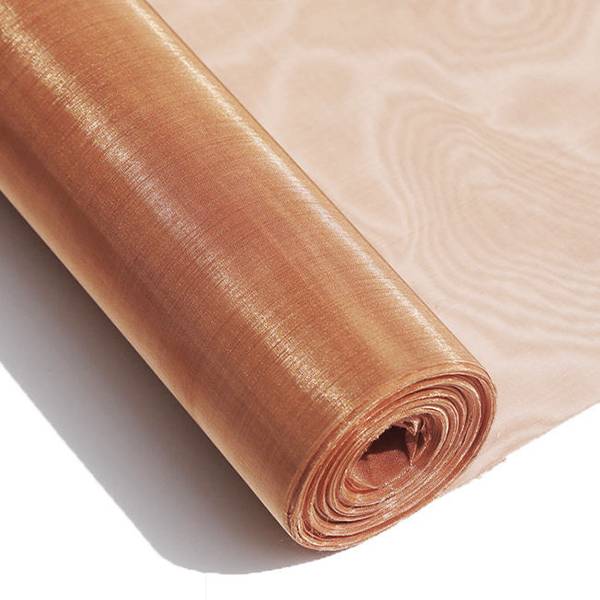
Phosphor bronze mesh
Phosphor bronze refers to a copper-tin-phosphorus alloy family. Specify the grade; the word bronze alone is broader and can be ambiguous.
For composition references, see the Copper Development Association’s brass designations and bronze designations. These references describe alloy families, not Maidong stock or certification.
Compare Requirements, Not a Universal Ranking
| Decision | Copper | Brass | Phosphor bronze |
|---|---|---|---|
| Material identity | Copper designation and condition | Brass designation and composition | Phosphor bronze designation and composition |
| Electrical requirement | Required conductivity/contact result | Check the selected grade rather than assuming copper equivalence | Check the selected grade and mechanical requirement together |
| Mechanical requirement | Wire condition, handling and support | Wire condition and finished geometry | Wire condition, resilience requirement and finished geometry |
| Mesh geometry | Count, wire diameter, weave and opening | Use the same complete construction for a fair comparison | Use the same complete construction for a fair comparison |
| Exposure and finish | Actual medium, temperature and surface condition | Actual medium, temperature and surface condition | Actual medium, temperature and surface condition |
Electrical and mechanical priorities can lead to different selections. The Copper Development Association discusses phosphor bronze as an option for higher contact-force requirements where conductivity is not the prime concern in its connector-material guide. That is general alloy context, not proof of the performance of a woven screen.
For any actual mesh, the wire size, condition, weave, support and joints also affect behaviour. Use grade-specific data and the required assembly evaluation rather than carrying a bulk-material property directly into a mesh performance claim.
Keep Geometry Constant When Comparing Quotes
Construction
Give count and units, both wire diameters where different, weave and the specified opening or rating basis.
Part form
State roll, cut sheet, disc or fabricated shape, with dimensions, edges and any support.
Acceptance
Name the material evidence and dimensional or functional checks required. Identify open requirements.
Changing the material while also changing wire diameter makes the comparison harder to interpret. Do not accept a substitution solely because the mesh count matches. For the material family, see copper wire mesh.
Review the Actual Exposure and Assembly
Supply the process medium, temperature range, cleaning exposure and any electrical contact or joining requirement. If appearance matters, define the acceptable surface condition and the point at which it is assessed. A catalogue photograph is not a colour acceptance standard.
For shielding or conductive assemblies, specify the required result and test conditions. Do not infer attenuation or contact resistance from an alloy family or a picture. For filtration, distinguish a geometric opening from a validated particle-retention requirement.
If the intended application instead points to stainless steel, compare the service requirements with 304 and 316 mesh selection. This guide does not declare any of the materials universally suitable for a fluid or environment.
A Clear Material Enquiry
We require woven wire mesh for [application]. Our material requirement is [designation and condition], or we request a comparison against [alternative designation].
Please hold the mesh construction constant: [weave, count/unit, wire diameter and opening]. Supply form, dimensions and quantity: [details].
Critical requirements: [electrical/mechanical/filtration/surface condition]. Exposure and joining conditions: [details]. Required material records and evaluation: [details]. Please identify proposed substitutions and differences before quotation approval.
Availability, fabrication scope and documentation are confirmed for the specific enquiry. No fixed purity, grade inventory or certification is implied by the library illustrations.
Copper Alloy Mesh FAQ
No. They are different material families. Confirm the exact alloy, wire condition, mesh construction and service requirements before approving a substitution.
No. Lighting, surface condition and image processing affect appearance. Use a material designation and agreed verification records rather than colour alone.
Compare the specified grades and conditions using reliable material data. High-copper materials are often considered when conductivity is important, but a generic material name is not a guaranteed assembled resistance.
No. Phosphor bronze is a particular copper alloy family. A quotation stating only bronze can leave the composition ambiguous; specify the designation.
No. Wire diameter and weave also matter. Match the complete mesh specification when comparing materials.
No universal shielding result is given here. The complete assembly, frequency, contacts and openings must be evaluated under agreed test conditions.
Send the Material and Mesh Requirements
Share the intended duty, alloy designation, mesh construction and supply form for quotation review.