When buying an extruder screen, ask for the wire diameter and weave as well as the mesh count. Two square woven screens with the same mesh count can have different openings because their wires are different sizes.
For a screen pack, document every layer. A calculated cloth opening helps compare geometry, but it does not establish the complete pack’s filtration rating in a polymer melt.
A count per linear inch in the specified mesh direction. It is not a count per square inch and is not a micron value.
The clear distance between adjacent wires for an open mesh. Micrometres describe this length when used as an aperture unit.
A retention description that needs a definition and supporting evidence. Ask what was measured and under which conditions.
For broader terminology, see nominal versus absolute micron rating. This guide focuses on comparing extrusion screen cloth and pack specifications.
For an ideal regular square mesh with count N per inch and wire diameter d in millimetres:
Pitch (mm) = 25.4 / N
Opening (mm) = 25.4 / N − d
Opening (µm) = (25.4 / N − d) × 1000
The calculation assumes the stated square-mesh geometry. Actual cloth dimensions and tolerances require confirmation. A zero or negative result indicates an invalid open-square-mesh input combination.
Do not apply this as a direct retention formula for Dutch weave or an assembled multi-layer pack.
Illustrative calculations only — not stock specifications or process recommendations. Wire diameters below are chosen to show the arithmetic. Manufacturing availability is subject to review.
| Mesh per inch | Assumed wire diameter | Calculated opening | Meaning |
|---|---|---|---|
| 80 | 0.100 mm | 217.5 µm | Compare with the next row at the same count |
| 80 | 0.120 mm | 197.5 µm | Larger wire leaves a smaller clear opening |
| 100 | 0.100 mm | 154 µm | Not a universal 100 mesh conversion |
| 100 | 0.120 mm | 134 µm | Same count, different geometry |
| 200 | 0.050 mm | 77 µm | A geometry example, not a retention rating |
For example, 25.4 / 100 − 0.100 = 0.154 mm = 154 µm. This result describes the assumed single-layer opening; it does not certify what a complete screen pack retains in service.
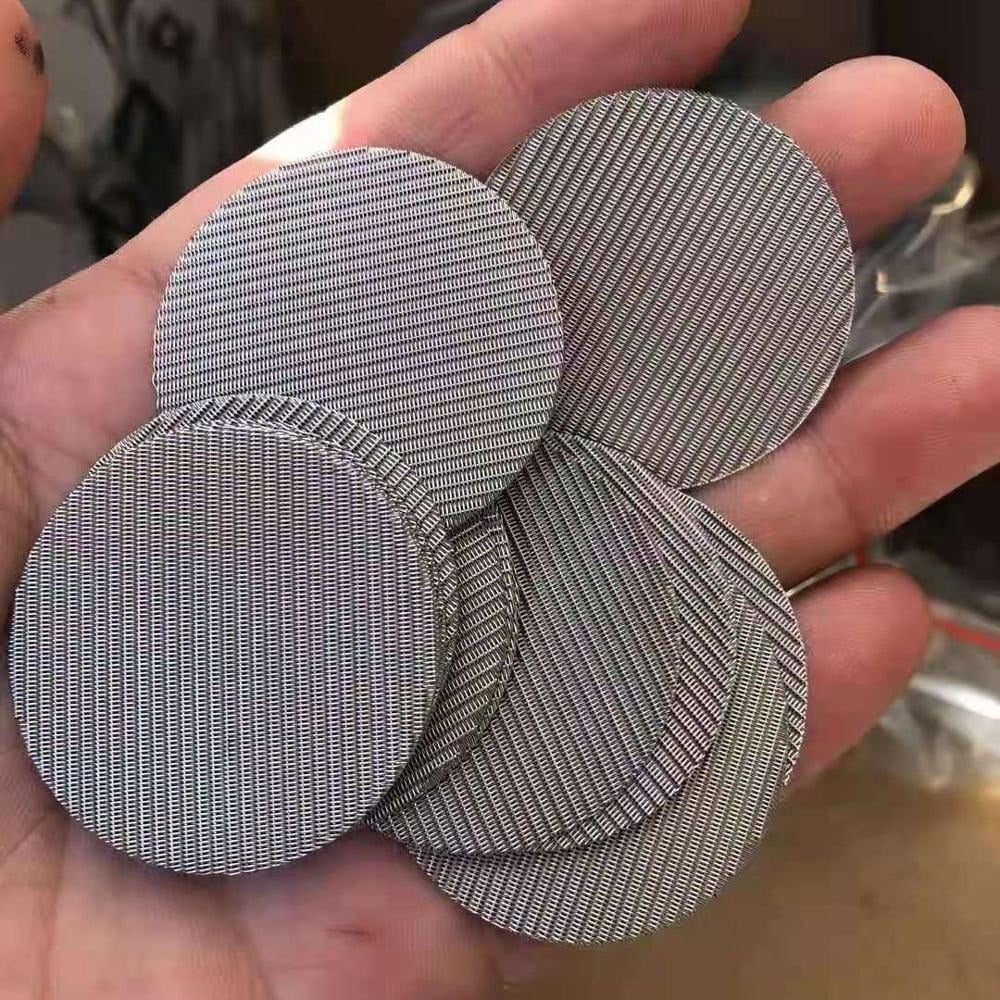
Reference / custom available: 20/40/80/40/20 mesh is a five-layer schedule. Adding the numbers does not produce a 200 mesh cloth, and the smallest calculated opening alone does not document the finished assembly.
Record alloy, wire diameter and weave for each layer, together with orientation, dimensions and attachment. Support geometry and the actual process remain relevant to assembly review.
Use the screen pack combinations and layer-order guide to prepare a complete schedule.
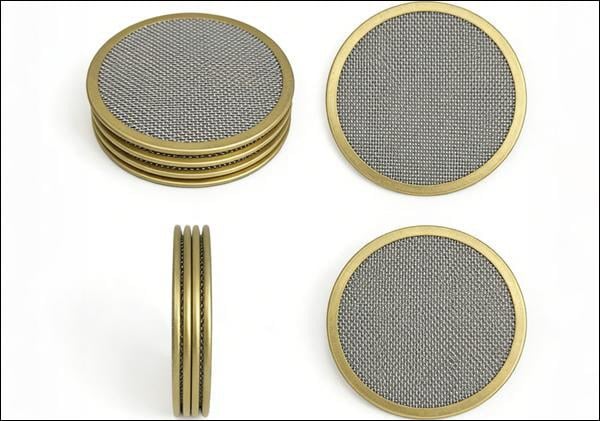
Specify the cloth separately from the rim material, width and finished thickness. An opening calculation says nothing about cavity fit.
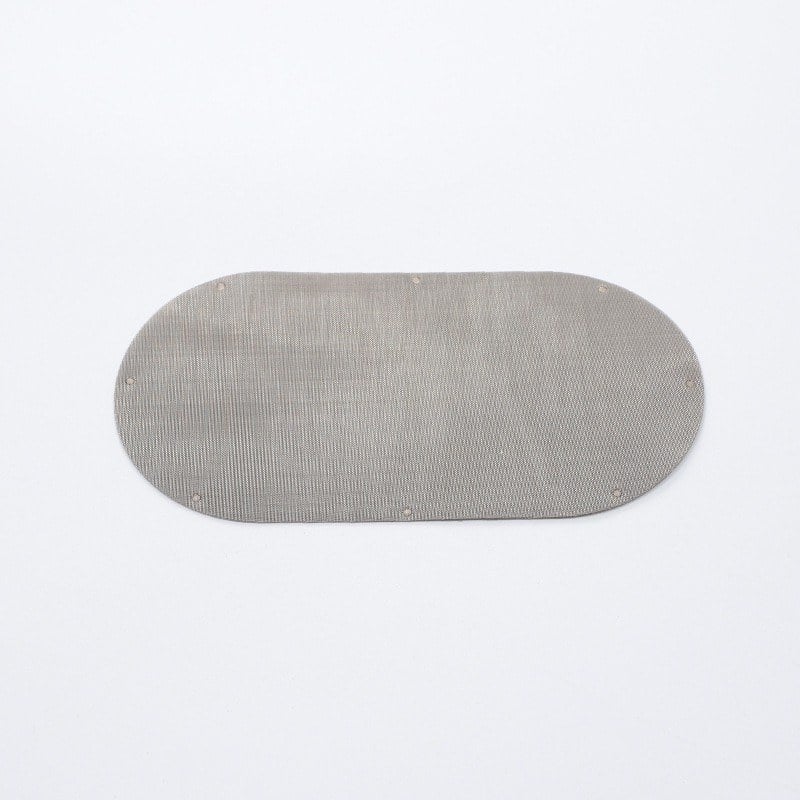
Specify each layer and weld arrangement. Visible weld points do not verify hidden cloth specifications or filtration performance.
Existing Maidong product photos illustrate construction only; no mesh counts or retention ratings are inferred from them.
Ask whether the requirement means geometric opening, a nominal rating or a defined absolute rating. Request the cloth specification or supporting test information rather than choosing a mesh count from a generic chart.
For an existing replacement, compare with the approved part. For a new requirement, also describe the resin, intended fillers, unwanted contamination, operating context and acceptance method. Do not treat finer mesh as an automatic solution to every product issue.
For Dutch weave, use the supplier’s complete construction and relevant filtration data. Its warp/weft designation is not a direct square-opening conversion.
Include: drawing and revision; shape and dimensions; each layer’s alloy, count, wire diameter and weave; flow direction; total thickness; rim or weld details; quantity; destination.
If quoting a micron requirement, state its definition and attach the basis for it. Mark unknown details “to confirm.” Maidong will review the requested construction before preparing a quotation.
See our extruder screens and screen packs for product construction enquiries.
There is no unique answer without wire diameter and weave. In an ideal square mesh calculation, 100 mesh with 0.100 mm wire gives a 154 micrometre opening; 0.120 mm wire gives 134 micrometres. These are illustrative geometry calculations, not product ratings.
Not reliably for an unspecified cloth. For square mesh you also need wire diameter. A chart may assume a particular wire size or a sieve designation; identify those assumptions before using it for a replacement order.
No. Aperture describes geometry. A retention claim requires its rating definition and supporting test conditions. A calculated opening is not evidence of an absolute rating for a polymer melt screen pack.
Do not use it as a direct Dutch-weave retention conversion. Supply the complete warp/weft specification, wire diameters and the relevant filtration data for the selected cloth.
No. A 20/40/80/40/20 schedule describes separate layers, not a 200 mesh screen. Specify each cloth and the assembly direction independently.
No. Include every layer, wire diameter, weave, alloy, attachment, dimensions and support arrangement. The finest layer label alone does not define the assembly or prove its retention performance.
No universal improvement is promised. Review the filtration objective, compound, flow resistance and equipment requirements. Compare any change under comparable operating conditions.
Ask for the original cloth specification or inspect the sample through an agreed method. Mark wire diameter, weave and any unknown layers as to confirm rather than selecting them silently.
Provide the same drawing revision, every layer specification, flow direction, edge construction, quantity and rating definition if applicable. Compare calculated aperture separately from any tested filtration claim.
Send your current layer schedule and filtration requirement to Maidong Metal Wire Mesh Products Co., Ltd. We will identify the construction details needed for your quotation.