
Maidong reviews extruder screens and screen packs for compatible masterbatch and compounding filtration equipment. Send your component drawing, layer schedule and formulation-related filtration requirements for a quotation.
Single screens, loose multi-layer sets, spot-welded packs and rimmed assemblies are specified around the confirmed part. The target is a clearly defined replacement for your process, with each mesh and assembly detail documented.
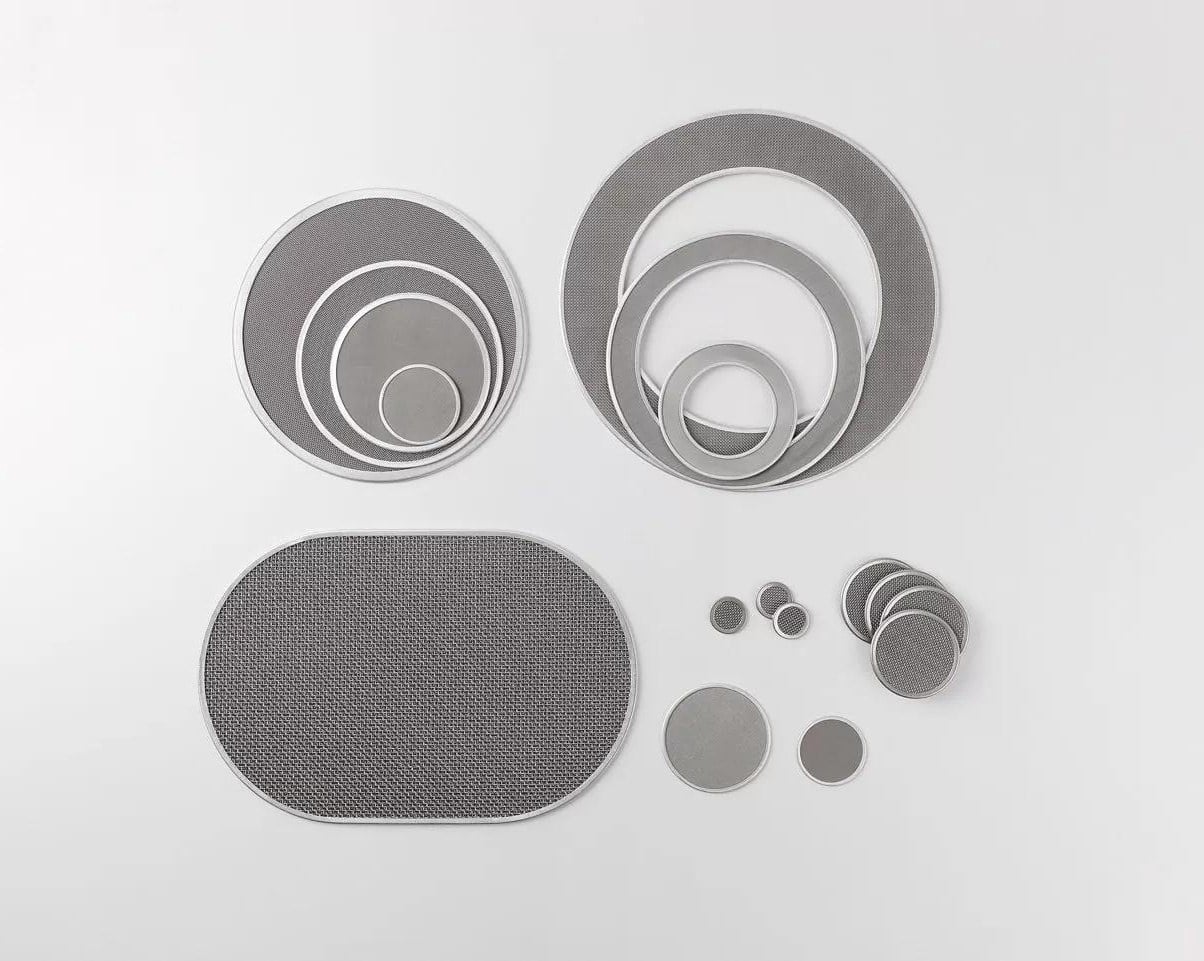
Masterbatch and filled compounds contain intentional ingredients as well as possible unwanted contamination. Identify the carrier resin, pigments, additives and fillers that must remain in the product before selecting filtration.
Describe the unwanted particles or agglomerates and the acceptance requirement separately. A request for the finest mesh does not define a suitable screen pack, and filtration should not be treated as a replacement for mixing and dispersion.
For the full construction range, see our extruder screens and screen packs.
Identify the carrier and pigment system, existing filtration and the defect or particle requirement. Include the method used to assess the finished color compound.
State the actual ingredients and loading information needed for review. Titanium dioxide or carbon black alone is not a mesh specification.
For calcium carbonate or other fillers, define the intended material and relevant particle information. Review filtration against the composition that must be retained.
Describe stabilizers, lubricants or other ingredients relevant to the filter. Identify reinforcement where present and avoid assuming one pack fits all formulations.
Specify every mesh separately and provide an approved layer schedule with a stated flow direction.
Specify weld positions, attachment requirements and finished thickness for an assembled pack.
Provide rim alloy, width, profile and thickness in addition to the mesh specification.
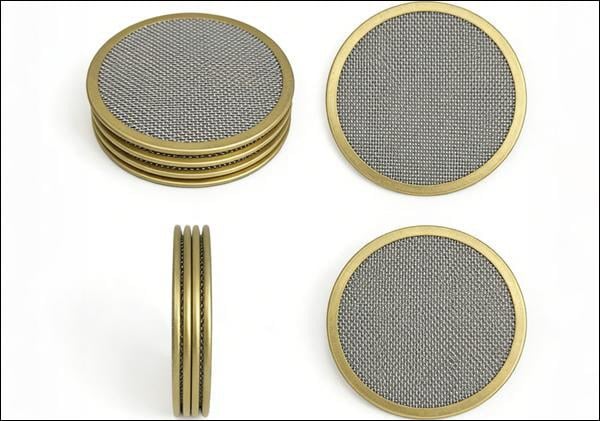
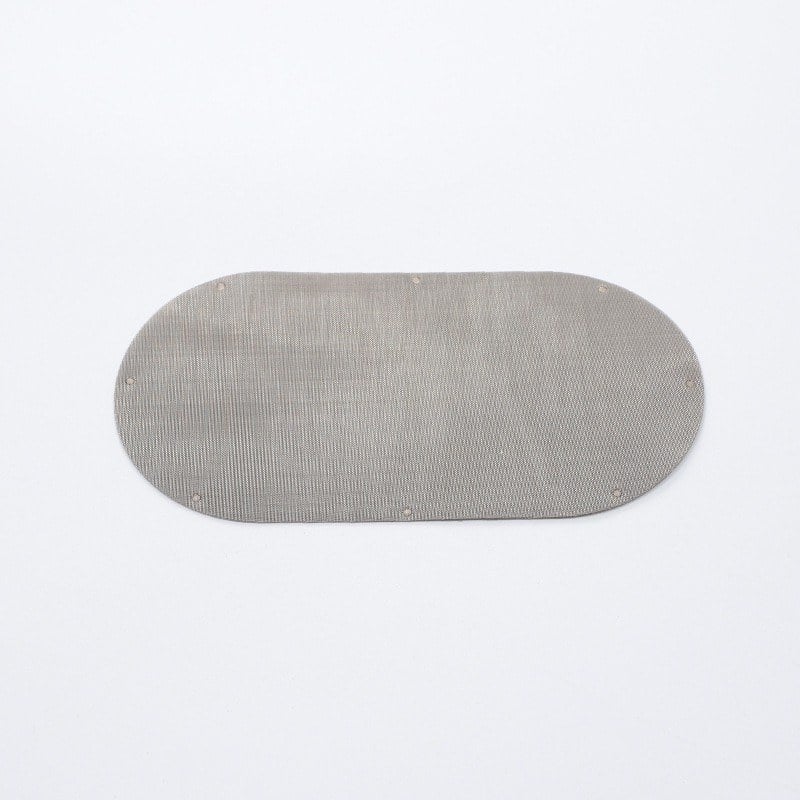
Images show existing Maidong product construction examples. They do not establish exact alloy, hidden layers or use on a specific masterbatch line.
Reference / custom available: SS304, SS316 and SS316L woven mesh can be reviewed against the complete specification. Confirm material, weave and availability before ordering; a material name alone does not establish operating suitability.
| Parameter | Provide with your enquiry | Why it matters |
|---|---|---|
| Formulation | Carrier resin; intended pigments, additives and fillers | Separates required ingredients from unwanted material |
| Filtration objective | Current problem, particle requirement and acceptance method | Defines the purpose of any proposed change |
| Each mesh layer | Alloy, mesh count, wire diameter and weave | Mesh count alone does not define the cloth opening |
| Layer order | Full sequence with inlet/outlet direction and supports | Avoids ambiguous pack assembly |
| Geometry | OD, ID if applicable, profile and tolerances | Matches the actual screen cavity |
| Thickness and edge | Total thickness, rim details or weld locations | Checks recess and contact requirements |
| Equipment | Changer drawing, support and cleaning/backflush duty | Machine application alone does not establish compatibility |
| Operating context | Throughput, melt temperature and pressure information if known | Supports review within the equipment requirements |
| Changeover supply | Identification, cleanliness and individual packing needs | Helps distinguish configurations and handling requirements |
| Commercial details | Quantity by specification, documents and destination | Defines the quotation scope |
For Dutch weave, specify the warp/weft construction and relevant filtration data. Do not convert a mesh number into a guaranteed retention rating without the cloth details and rating definition.
Reference / custom available only: 20/40/80/40/20 mesh, 20/60/100 mesh and 40/80/200/80/40 mesh illustrate layer schedules. They are not standard settings for pigment, calcium carbonate or other masterbatch formulations.
Final selection follows the extrusion process, material, filtration requirement and equipment support. Confirm wire diameter, weave, alloy and direction for each layer. Use the mesh combinations and layer-order guide to prepare an unambiguous enquiry.
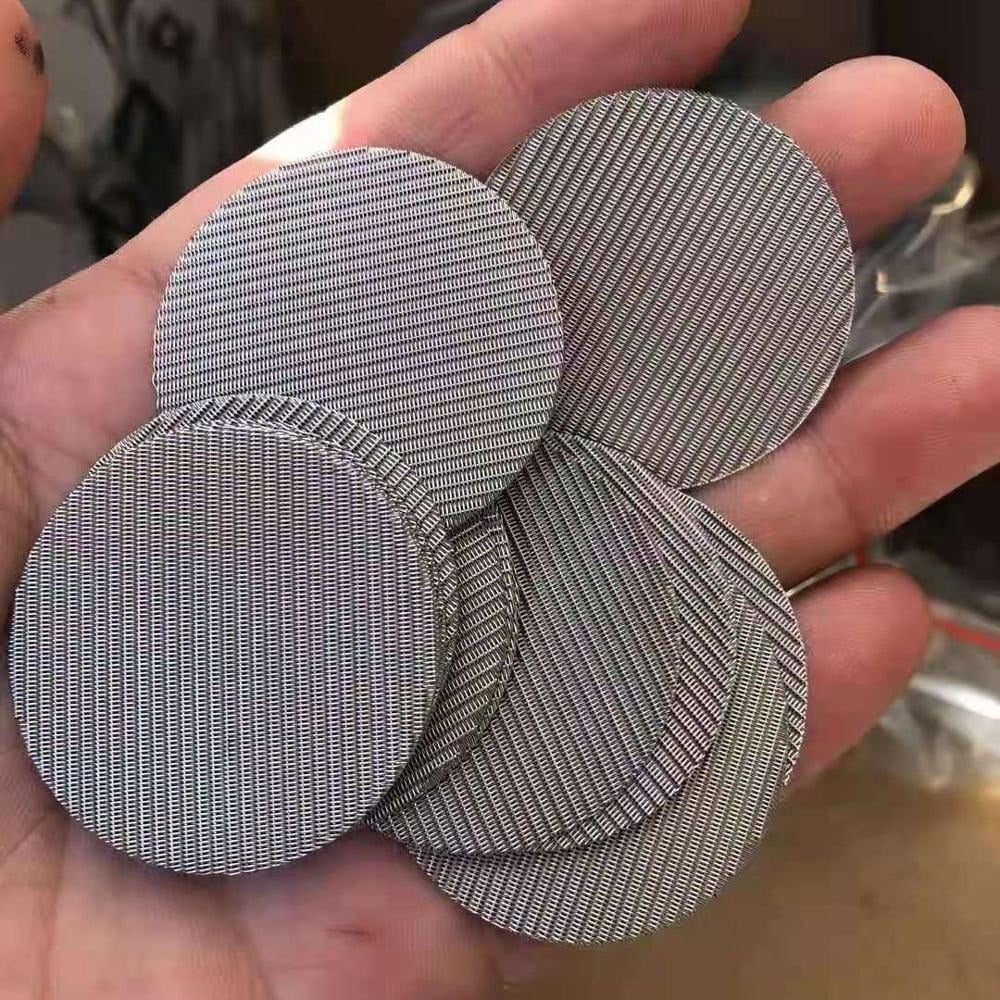
Supply the screen changer cavity drawing, active opening, recess depth and support arrangement. Identify the maximum finished pack thickness and any orientation features.
Single-screw or twin-screw describes the extruder, not a universally interchangeable screen. Belt, candle, curved and rotary filtration systems may require different components from a flat mesh pack.
If the line uses reverse-flow cleaning, submit that duty before choosing a loose, welded or rimmed construction.
Use a drawing revision and pack identifier. Order quantities by configuration, rather than combining different mesh schedules under one description.
State handling and packaging needs for color-sensitive production. Do not infer a cleanliness grade or whole-line changeover result from a new screen alone.
For a proposed filtration change, compare compound condition, pressure trend and output under comparable conditions, following equipment limits. Define acceptance before testing; no fixed change interval, pressure threshold or guaranteed pigment retention is offered here.
Start with the part drawing, full mesh schedule, quantity and delivery country. Add the carrier resin, relevant additives or fillers, current filtration and the issue you want to address.
Mark unknown details “to confirm.” Photos help explain visible shape and assembly but cannot verify the exact alloy or hidden layers. Requested inspection documents should be agreed before ordering.
Use our screen pack drawing and RFQ checklist to prepare dimensions, the complete layer schedule and order quantities.
It is a mesh assembly used for melt filtration in compatible masterbatch extrusion equipment. Its construction must match the compound requirements and the screen changer, rather than being selected by the masterbatch name alone.
There is no universal mesh count. Provide the carrier resin, pigment information, approved cloth specification and filtration objective. State the product acceptance criteria and operating context before proposing a change.
Selection must account for the ingredients intended to remain in the compound. Provide relevant particle or agglomerate information and the required composition. Finer filtration is not automatically suitable for every filled formulation.
Yes, submit the complete formulation-related requirements and screen drawing for review. Naming an ingredient does not establish a suitable mesh, operating limit or guaranteed additive retention.
No. A screen pack is a filtration component and should not be treated as a substitute for proper mixing and dispersion. Define the unwanted particles or agglomerates and agree how the finished compound will be evaluated.
No universal compatibility is claimed. The filter housing, cavity, support and operating duty determine the part. Provide the actual screen changer drawing and part details; screw configuration alone is insufficient.
State pack identification, cleanliness, individual packing and handling requirements. Follow the equipment procedure for changeover. Replacing a screen alone does not guarantee the removal of previous color from the whole line.
Only use a cleaning or reverse-flow procedure approved for the equipment and component. Provide those requirements before ordering; spot welding alone does not establish backflush suitability or a reuse life.
Send the drawing, dimensions, each mesh layer including wire diameter and weave, material, layer direction, edge construction, quantity and destination. Add the resin, intended additives or fillers, filtration objective and equipment duty.
Send your drawing and compounding requirements to Maidong Metal Wire Mesh Products Co., Ltd. We will review the requested construction and prepare a quotation against the confirmed specification.