
Wire Mesh Coil Length, Splices and Winding: RFQ Guide
A wire mesh order can meet the total metre quantity and still fail a continuous-feed process. Make roll length, uninterrupted length, splice rules and winding geometry separate requirements in your enquiry and purchase order.
This guide helps buyers describe the required supply and compare supplier proposals before ordering.
Three Lengths to Keep Separate
Total order length is the combined quantity purchased. Length per roll defines the requested distribution. Minimum uninterrupted length defines the usable continuous piece for your operation.
120 m total, supplied as three 40 m rolls, each without joins, is a different requirement from 120 m total supplied in mixed lengths with no piece shorter than 20 m.
Both total 120 m, but only the first explicitly requests three uninterrupted 40 m lengths.
State any tolerance on roll length and whether short lengths or excess supply are permitted. If a supplier proposes a different distribution, record the agreed change rather than relying on the same total quantity.
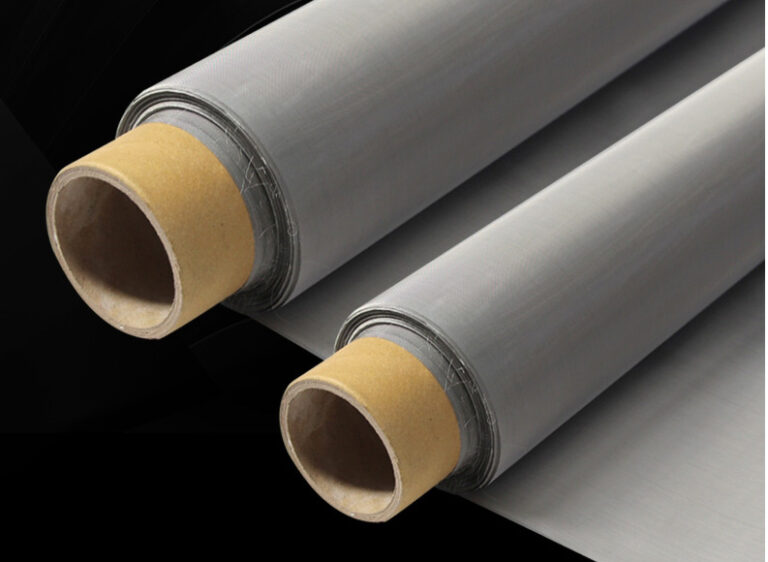
Write a Clear Splice Policy
Choose an explicit policy: no joins in the required continuous length, or joins subject to defined approval. Do not leave this as an assumption hidden in the term roll.
If joins are allowed, identify the acceptable construction, number per roll, distance from the ends if relevant, marking and any restrictions on local thickness or projections. The receiving equipment may require a separate trial or removal of the joined portion.
A photo of an outer wrap does not demonstrate that a roll is splice-free. Agree what identification or inspection evidence is needed with the quotation.
Cloth Take-Up Process Reference
Process reference: cloth moving through weaving equipment and over a take-up roller. This silent clip illustrates a roll-handling context; it does not verify alloy, delivered coil length, absence of splices or factory ownership.
Specify Winding from a Fixed Viewpoint
Provide a sketch with the roll axis, the end from which it is viewed, the free end and the feed path. Identify the mesh face or wire direction when orientation matters. A clockwise instruction without a viewing side can be interpreted in two ways.
Distinguish core bore from wound-coil outside diameter. Also state core length, permitted projection beyond the cloth, material and any mandrel fit requirement. Give a maximum coil diameter or mass where equipment or handling imposes a limit.
For full-width supply, see stainless steel wire mesh rolls.
Compare Quotes on the Same Supply Basis
| Total quantity | Total length and units; permitted over/under supply if agreed. |
|---|---|
| Roll distribution | Required roll lengths, number of rolls and minimum uninterrupted length. |
| Splice policy | Prohibited or approved construction, count, marking and inspection. |
| Core interface | Bore, length, material, projection and mandrel requirements. |
| Winding geometry | Defined viewing side, free end/feed path, face and wire orientation. |
| Receiving limits | Maximum OD/mass and agreed edge alignment or winding condition. |
| Measurement | Length verification method, width checks and acceptance conditions. |
| Identification | Coil ID, material/mesh specification, drawing revision and length record. |
Ask each supplier to list exceptions explicitly. A lower price for mixed short lengths, a different core or an approved splice option is not the same proposal as uninterrupted coils on a specified core. Keep the agreed coil schedule with the order revision.
Check the Received Roll Against Its Record
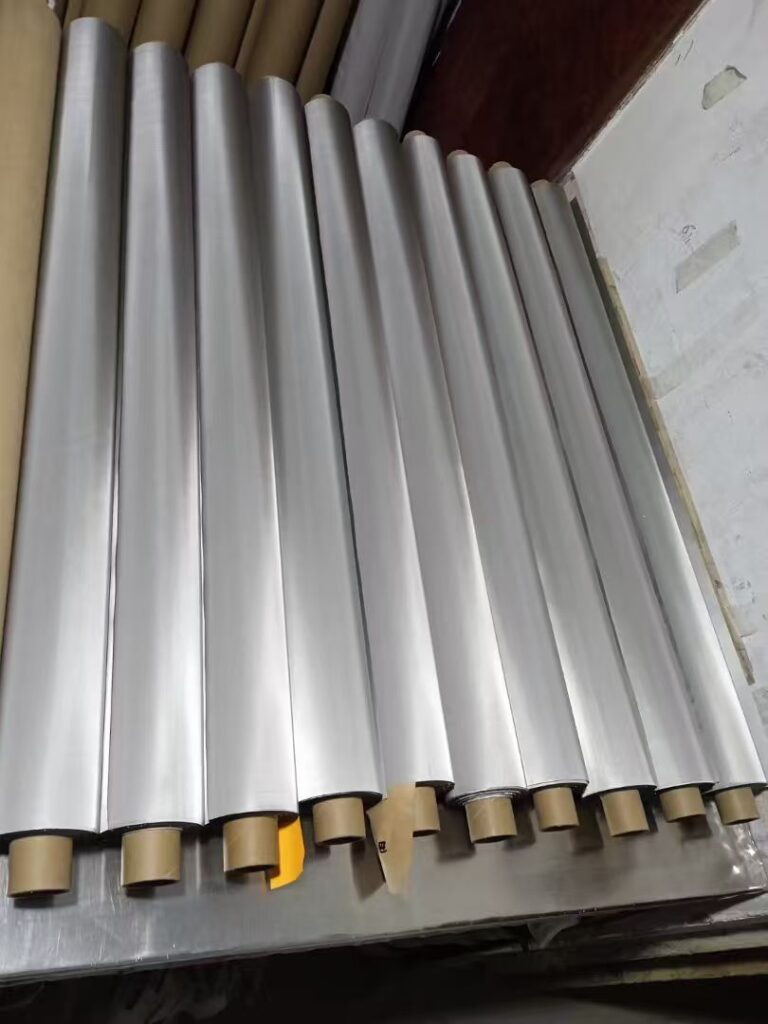
Match each coil label to the agreed specification and coil schedule. Record visible edge damage, displaced wraps, core damage and identification issues before handling changes the condition.
Use the agreed method to verify length. Do not treat outside diameter as a direct length measurement: different core diameters, cloth thicknesses and winding conditions can produce different roll sizes.
Where feeding or further processing will make verification difficult, agree the receiving checks beforehand. Record a discrepancy against the specific order requirement and obtain a disposition before consuming the disputed material.
English RFQ Wording
Please quote [material and mesh specification], width [ ], total length [ ].
Supply schedule: [number of rolls and length per roll]. Minimum uninterrupted length: [ ]. Splice policy: [no joins / proposed joins subject to written approval and attached criteria].
Core bore, length and material: [ ]. Maximum coil OD/mass: [ ]. Winding direction and feed path: see sketch [revision].
Please confirm the length verification method, coil identification and any exceptions to the requested schedule.
Attach the winding sketch and coil schedule to the final order. For broader protection and storage arrangements, use the packaging and storage guide where applicable to the supplied product.
Coil Ordering FAQ
No. State total order length, length per roll and minimum uninterrupted length separately. Otherwise the intended distribution is not defined.
Write that each required continuous length must contain no joins and ask the supplier to confirm feasibility. Also specify whether separate shorter pieces are allowed.
Define permitted construction, number and location, marking, dimensional limits and whether the joint must pass through the receiving process. Approval should precede supply.
Use a labelled sketch showing the viewing side, roll axis, free end and feed path. Clockwise or counterclockwise alone can be ambiguous when viewed from opposite ends.
Outside diameter alone is insufficient. Core size, cloth thickness and winding arrangement affect the relationship. Agree a length measurement or verification method.
Record its identity and observed condition, separate it from accepted material and request a documented disposition before using it in a process that depends on the disputed requirement.
Send a Complete Coil Enquiry
Share the cloth specification, coil schedule and winding sketch with Maidong for quotation review.