Copper Wire Mesh Sheets Cut to Size
Prepare a clear enquiry for copper woven mesh sheets, rectangular blanks and drawing-defined cut pieces. Maidong can review your mesh construction, finished dimensions, quantities and delivery requirements.
Send a cut list or drawing so the quotation can identify the material, cutting scope and any exceptions.
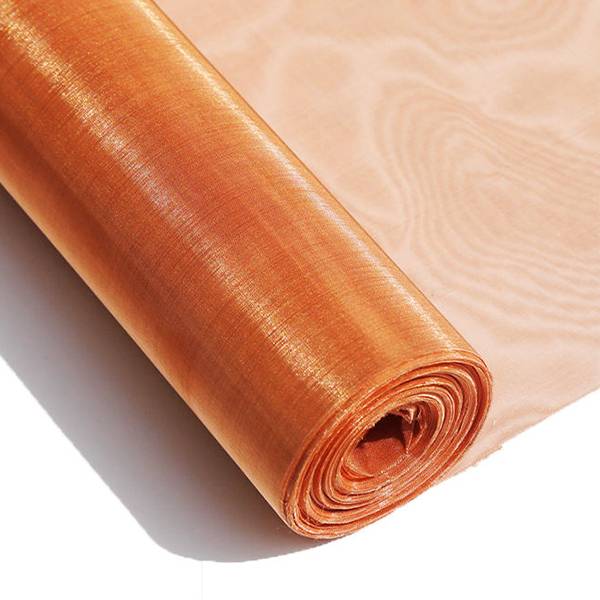
Choose the Supply Format Around Your Work
Rectangular sheets
Specify finished length and width, quantity per size, dimensional tolerance and whether orientation matters.
Narrow strips
State width, length, edge condition and handling requirements. Confirm whether the requirement is individual strips or continuous material.
Drawing-defined pieces
Provide the outline, holes or notches, reference dimensions and quantity. Fabrication feasibility is reviewed against the actual mesh.
Use cut pieces when you need a defined blank for assembly or evaluation. For material-family information, see copper wire mesh. A sheet request should identify what must arrive finished and what processing will be done after delivery.
Specify the Opening and Wire Together
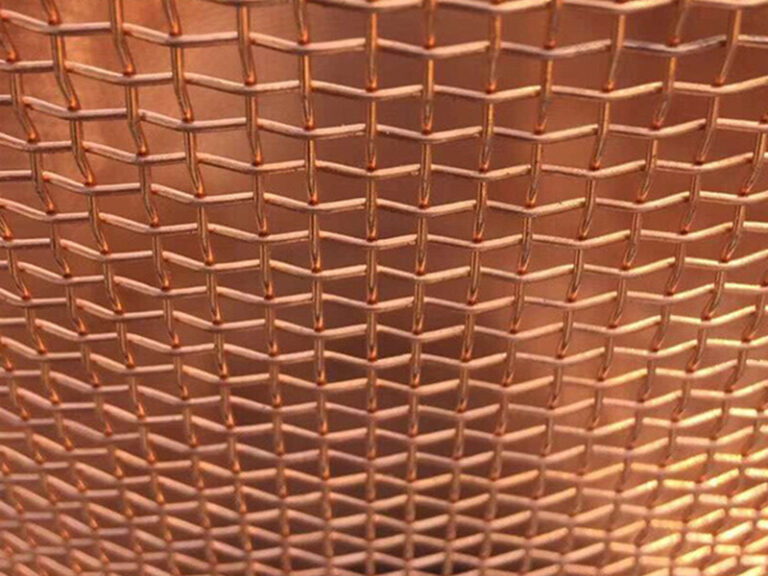
For square woven mesh, a mesh count describes the number of openings per stated unit length, but the clear opening also depends on wire diameter. Give the weave and count unit alongside the wire data. For other constructions, supply the complete directional specification.
A fine-looking surface in a photograph cannot establish the exact opening or filtration rating. If retention performance matters, include its definition and agreed test basis.
The mesh-to-micron calculator can help with square-weave geometry. It does not establish tested retention or suitability for a particular process.
Copper Mesh Sheet RFQ Checklist
| Material | Required copper designation; any purity or material-record requirement must be stated and confirmed. |
|---|---|
| Mesh construction | Weave, mesh count and unit, wire diameter, opening or full supplier specification. |
| Finished size | Length × width with units; profile drawing for non-rectangular pieces. |
| Quantity | Pieces per size, sample quantity if requested, and total order quantity. |
| Cut and edge condition | Dimensional tolerance, permissible edge wires, edge treatment and any critical no-projection zones. |
| Direction and interfaces | Wire orientation relative to the part, holes, contact margins or installation references where relevant. |
| Service context | Screening, conductive assembly or other intended duty; medium, temperature and required evaluation. |
| Delivery condition | Flat or rolled packing request, identification, separation and surface-condition expectations. |
Do not substitute brass, bronze or a different copper designation without confirmation. Likewise, nominal mesh count alone is not enough to compare quotations. If the initial information is incomplete, mark it as open rather than turning an estimate into a requirement.
From Material Selection to a Usable Blank
The same sheet size can contain very different wire constructions. Match the required opening, handling condition and assembly interface before choosing a cutting layout. For thin or flexible cloth, describe how flatness is assessed and whether the blank will be supported in service.
For conductive or shielding assemblies, explain the intended contact and joining arrangement and the required test. Material selection by itself does not establish the performance of an enclosure or assembled product.
For a broader purchasing comparison, see 304 and 316 stainless mesh. A different material should be selected against the actual duty, not simply exchanged because the mesh count matches.
Agree Packing Before Comparing Prices
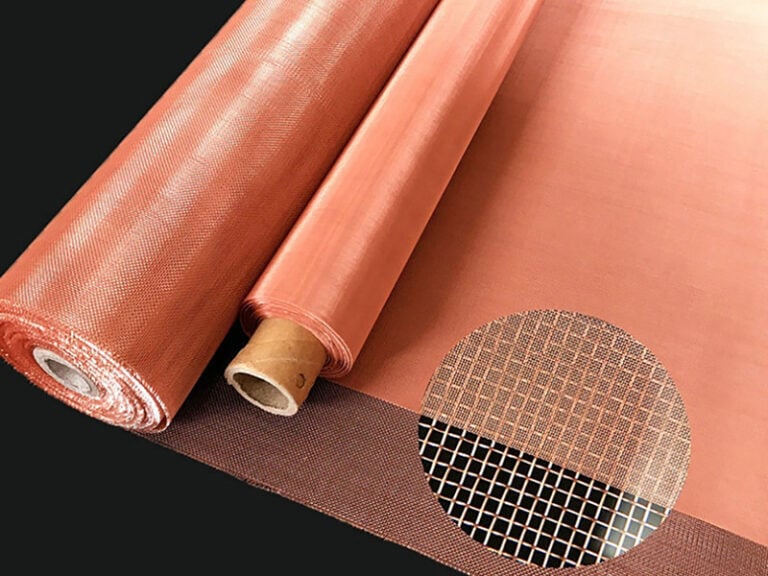
State whether pieces may be rolled or must be protected as flat blanks. Specify separation, identification by size or lot, and any surface or cleanliness expectation. Packing should protect the mesh against creasing and edge damage during normal handling; special acceptance requirements need agreement.
Include required documentation and inspection scope in the enquiry. Price, minimum quantity, production route and delivery time are confirmed against the actual specification. No standard stock quantity or lead time is implied by the photographs.
Copy This Enquiry Format
Please quote copper woven mesh cut pieces to the attached list.
Material: [designation]. Weave: [type]. Mesh count and unit: [value]. Wire diameter/opening: [value and unit]. Finished sizes and quantity per size: [list].
Required tolerance and edge condition: [details]. Direction or drawing reference: [details]. Packing and documentation: [requirements]. Intended use and any required evaluation: [details]. Please identify open specifications or exceptions in your quotation.
Copper Mesh Sheets FAQ
It is a piece of woven copper wire cloth supplied to specified dimensions. The term sheet does not mean solid copper plate, expanded metal or perforated sheet.
Provide the copper grade, weave, mesh count and unit, wire diameter or opening, dimensions, quantity per size, edge requirements and packing instructions. Include a drawing for profiles or critical orientation.
No. The wire diameter and weave also affect the opening and construction. Confirm the complete specification instead of assuming every mesh with the same count is equivalent.
No. State the required material designation and documentation. Colour alone cannot identify copper grade or distinguish copper from other copper-alloy meshes.
No. Any shielding requirement depends on the complete assembly and specified test conditions, including frequency, electrical contact and openings. Request an agreed evaluation rather than a universal attenuation claim.
State the required delivery condition, dimensions and handling requirements in the enquiry. Packing method and feasibility should be confirmed with the quotation; a cut sheet should not automatically be assumed to arrive perfectly flat.
Request a Copper Mesh Sheet Quotation
Send the mesh specification, cut dimensions, quantity and packing preference. Attach a drawing for shaped parts or controlled orientation.