Expanded Metal Mesh Sizes, SWD/LWD & Open Area Guide
Specify expanded metal with more than a diamond size. A complete drawing distinguishes pitch dimensions (SWD/LWD), clear openings (SWO/LWO), strand width, base-metal thickness, raised or flattened condition, orientation and finished sheet or roll size.
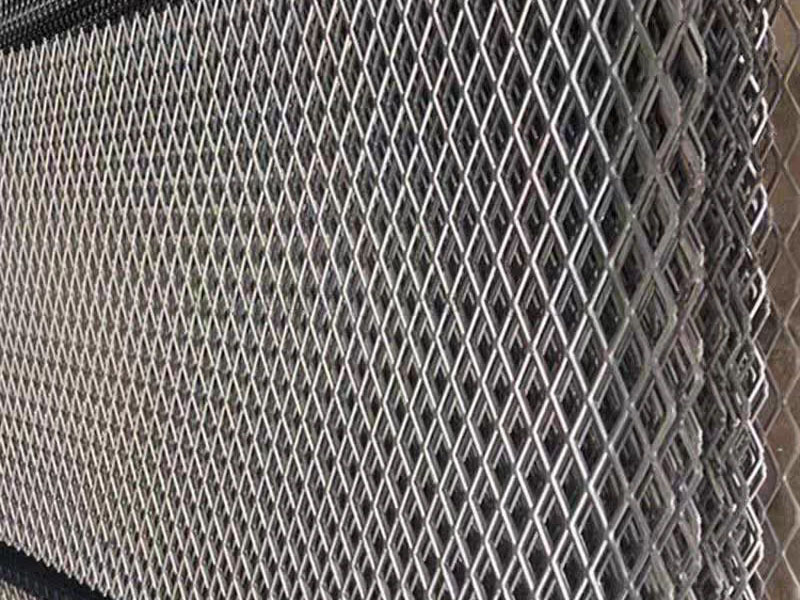
Expanded metal sheets with different diamond opening sizes.
Expanded Metal Dimensions at a Glance
SWD / LWD
Center-to-center pitch dimensions in the short and long directions of the diamond.
SWO / LWO
Clear opening dimensions measured inside the strands in the short and long directions.
Strand width
The width of metal remaining between adjacent openings after slitting and stretching.
Thickness
State base-metal thickness and whether the finished mesh is raised or flattened.
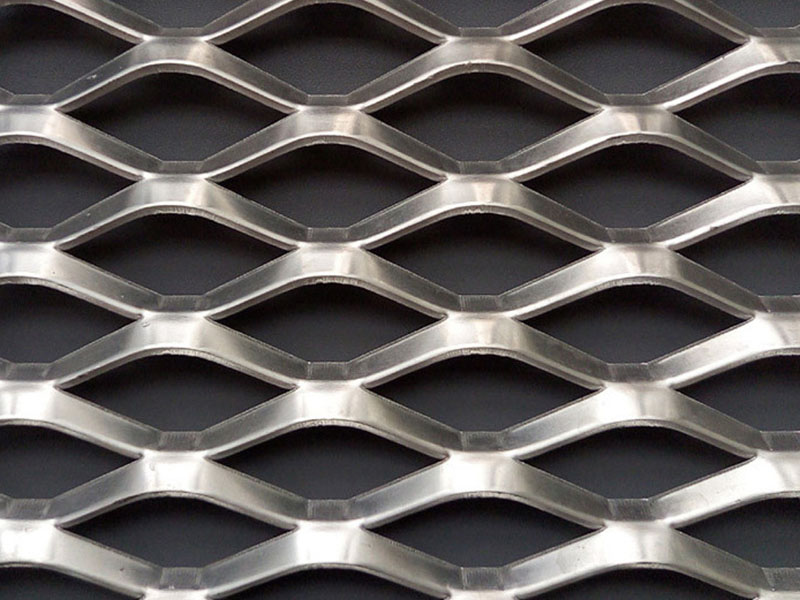
Raised expanded metal showing strands, bonds and diamond-shaped openings.
How to Read an Expanded Metal Drawing
Expanded metal is made by slitting and stretching sheet or coil, so it does not have wire diameter or woven mesh count. The bonds are the intersections where strands meet. Diamond orientation is important because stiffness and forming behavior differ between the long and short directions.
Pitch dimensions: SWD and LWD are measured from equivalent points on adjacent bonds.
Clear openings: SWO and LWO exclude the metal strands.
Overall thickness: raised mesh can be thicker than the original sheet profile.
Flattening: rolling changes surface profile and may alter finished dimensions.
The following Maidong reference combinations show common aperture, strand-width and thickness relationships. They are not a guaranteed stock list or universal standard.
Mobile: swipe sideways to view every column.
Reference aperture (mm)
Strand width (mm)
Thickness (mm)
Supply form
Reference common size
2 × 4
0.5–0.8
0.3–0.5
Roll
1.0 × 20 m / 1.2 × 20 m
3 × 6
0.8–1.0
0.5–1.0
Roll
1.0 × 20 m / 1.2 × 20 m
4 × 8
1.0–1.2
0.8–1.2
Roll
1.0 × 20 m / 1.2 × 20 m
5 × 10
1.0–1.5
1.0–1.5
Roll / panel
1.2 × 20 m / 1.5 × 20 m
6 × 12
1.2–1.5
1.0–2.0
Roll / panel
1.2 × 20 m / 1.5 × 20 m
8 × 16
1.5–2.0
1.5–2.0
Roll / panel
1.5 × 20 m / 2.0 × 20 m
10 × 20
2.0–2.5
1.5–2.5
Roll / panel
1.5 × 20 m / 2.0 × 20 m
15 × 30
2.5–3.0
2.0–3.0
Roll / panel
1.5 × 20 m / 2.0 × 20 m
Before ordering: confirm whether the aperture values are clear openings or pitch dimensions, whether the product is raised or flattened, the material, orientation and final tolerances. Availability must be checked against the requested specification.
Enter clear opening and center-to-center pitch dimensions using the same measurement convention. This calculator estimates geometric open area; it does not account for rounded strands, flattening deformation or production tolerance.
Estimated geometric open area44.4%
Formula: (SWO × LWO) ÷ (SWD × LWD) × 100. Use dimensions measured under the same convention.
Raised vs Flattened Expanded Metal
Raised expanded metal
Retains the three-dimensional profile created during expansion. It can provide grip, stiffness and stand-off space, but overall thickness differs from the base metal.
Flattened expanded metal
Is passed through leveling rolls for a flatter surface. Flattening changes the section profile, so thickness and opening dimensions must be confirmed after processing.
Materials, Supply Forms and Orientation
Expanded metal may be specified in carbon steel, galvanized steel, stainless steel or aluminium, subject to the required size and availability. Supply can be roll or panel depending on thickness, opening and handling requirements.
Always mark the long-way direction on a fabrication drawing. Orientation affects bending, rolling, stiffness, appearance and how a support layer carries load.
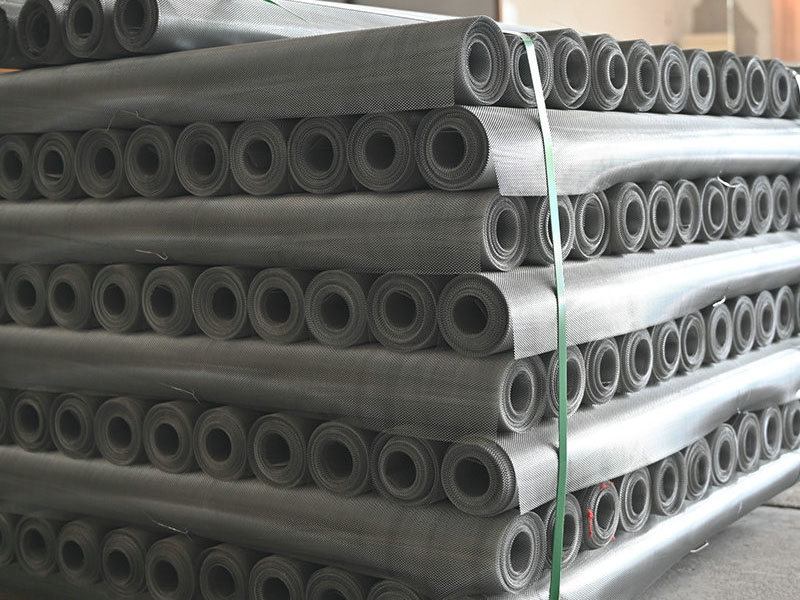
Expanded metal mesh supplied in rolled form where the specification permits.
How to Select an Expanded Metal Specification
1. Define the function
State whether the mesh is a guard, support, screen, walkway, decorative panel or filter core.
2. Define the diamond
Give SWD/LWD and SWO/LWO with a sketch showing the measurement convention.
3. Define the strand
Specify material, base thickness, strand width and raised or flattened condition.
4. Define the finished part
Provide sheet or roll size, orientation, edge, tolerances, forming and quantity.
Expanded Metal RFQ Checklist
Pattern and material
Material and required standard
Raised or flattened condition
SWD and LWD
SWO and LWO when critical
Strand width and base thickness
Finished supply
Sheet, panel or roll size
Long-way orientation
Edge and surface requirements
Cutting, rolling or forming drawing
Tolerances and quantity
If expanded metal will support a filter medium, also state flow direction, pressure differential, open-area target and how the support interfaces with the woven wire mesh or filter assembly.
SWD is the short-way dimension of the diamond pattern, normally measured from the center of one bond to the center of the next bond in the short direction. LWD is the corresponding long-way center-to-center dimension. Confirm the supplier’s drawing convention before ordering.
SWD is the short-way pitch or center-to-center dimension. SWO is the clear short-way opening. The strand occupies part of the pitch, so SWO is smaller than SWD. LWD and LWO follow the same distinction in the long direction.
A common geometric estimate is open area percentage equals SWO multiplied by LWO, divided by SWD multiplied by LWD, then multiplied by 100. It is an estimate; strand shape, flattening, tolerances and measurement conventions can change the actual result.
No. Expanded metal is slit and stretched from sheet or coil. Its key dimensions include base-metal thickness, strand width, SWD, LWD, SWO, LWO and overall raised or flattened thickness.
Raised expanded metal retains the three-dimensional profile produced by slitting and stretching. Flattened expanded metal is passed through rolls to create a flatter surface, which changes thickness, strand geometry and sometimes opening dimensions.
State material, raised or flattened condition, SWD and LWD or clear opening dimensions, strand width, base-metal thickness, sheet or roll size, orientation, tolerances, edge requirements, quantity and the intended fabrication or support duty.
Send Your Expanded Metal Specification
Provide the material, diamond dimensions, strand width, thickness, raised or flattened condition, orientation and finished size. Maidong can review the drawing for a mesh or fabricated support enquiry.