Multilayer Porous Metal Filter Media

Sintered Wire Mesh Filter Disc for Industrial Filtration

A sintered wire mesh filter disc is cut from multiple woven mesh layers bonded into one stable porous structure. It combines a defined filtration layer with protective, distribution and support layers for industrial liquid, gas and polymer filtration.

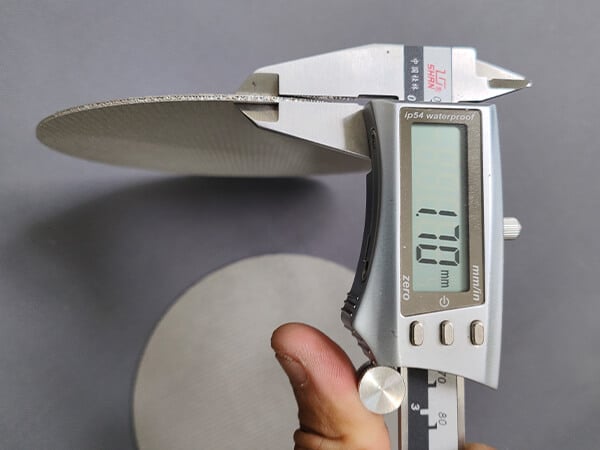
Thickness inspection of a round multilayer sintered wire mesh filter disc
Round sintered wire mesh disc shown during thickness inspection.

What Is a Sintered Wire Mesh Filter Disc?

The disc is produced from a sintered wire mesh laminate rather than loose stacked screens. During sintering, contact points between selected wire mesh layers are bonded without eliminating the interconnected pores. The resulting sheet can be cut into round discs, rings or drawing-defined shapes.

The filtration layer controls the required retention behavior, while other layers protect the fine mesh, distribute flow and add mechanical support. Layer sequence and flow direction must therefore be part of the purchase specification.

Stable layer relationship

Bonded layers do not shift independently during handling or normal service.

Supported fine media

A fine filtration layer can be combined with coarser support and distribution meshes.

Reusable metal structure

Cleaning suitability depends on the retained material, process conditions and agreed method.

How the Layer Structure Works

A common multilayer arrangement can include protection mesh, a filtration-control layer, distribution mesh and one or more support layers. This is a functional description, not a universal five-layer formula.

  • Protection layer: shields the finer cloth from handling or reverse-flow damage.
  • Filtration layer: provides the main retention function.
  • Distribution layer: spreads flow and supports the filtration cloth.
  • Support layer: increases stiffness and pressure resistance.

Layer count, weave and orientation should be selected from the duty rather than copied from a generic specification.

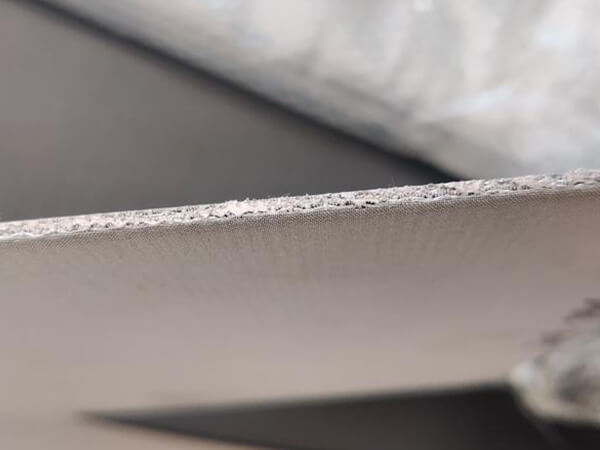
Edge detail showing the bonded layers of sintered stainless steel wire mesh
Cross-sectional edge detail of bonded wire mesh layers.

Sintered Mesh Disc vs Other Metal Filter Discs

These products may look similar from a distance but use different media and should not share one incomplete specification.

Mobile: swipe sideways to view every column.

Filter disc typeMedia structurePrimary selection factorsTypical reason to choose
Sintered wire mesh discBonded woven wire mesh layersRating method, layer sequence, thickness, pressure and cleaningRigid supported mesh with controlled multilayer construction
Single-layer wire mesh discOne woven screen, optionally edgedMesh count, wire diameter, weave, edge and supportSimpler screening or filtration where laminate rigidity is unnecessary
Powder sintered discCompacted and sintered metal powderPore grade, alloy, thickness, permeability and strengthA powder-derived porous structure rather than woven media

See stainless steel filter discs for the broader disc category and powder sintered filters for powder-based porous media.

Technical Data to Put on the Drawing

Mobile: swipe sideways to view every column.

Specification fieldWhat to defineWhy it matters
Filtration requirementTarget retention and rating/test methodA micron number without a method may not be comparable
Material304, 316, 316L or required standardControls corrosion compatibility and fabrication requirements
Layer constructionLayer count, mesh types, sequence and flow directionAffects retention, permeability, stiffness and cleanability
Disc geometryOD, ID, thickness, holes, slots and tolerancesDetermines fit, sealing area and effective filtration area
Edge and interfaceCut edge, welded rim, frame, gasket or assembly detailPrevents bypass and supports installation

Do not treat generic catalogue values as guaranteed supply data. Final filtration rating, dimensions and layer construction must be confirmed against the agreed drawing or purchase specification.

From Sintered Sheet to Finished Disc

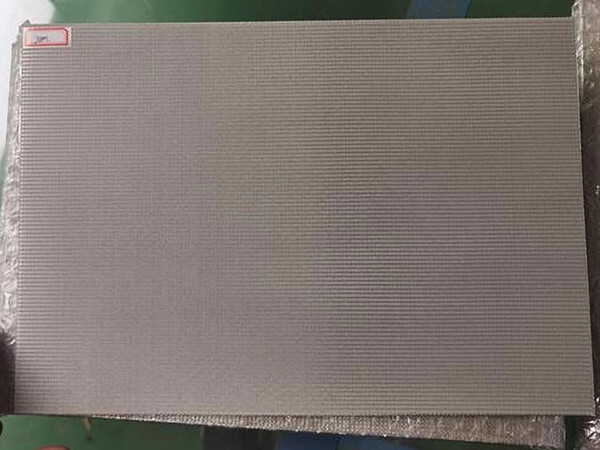
Sintered wire mesh is first produced as a bonded porous sheet. Finished discs are then cut or fabricated to the required geometry. Depending on the drawing, the finished component may be round, annular or custom-shaped and may include an edge, frame or additional support.

The sheet image shows why the purchase order should state both media construction and finished-part dimensions. A request for “one sintered disc” is not enough to identify the product.

Related products include disc filter elements and cylindrical sintered filter cartridges.

Rectangular five-layer sintered stainless steel wire mesh sheet
Sintered wire mesh sheet before cutting or forming into finished filter components.

How to Select a Sintered Mesh Disc

1. Define retention

State particle size, nominal or absolute basis, and the validation method.

2. Describe the process

Provide medium, viscosity, temperature, pressure differential and contamination load.

3. Select construction

Confirm alloy, layer sequence, flow direction, thickness and cleaning method.

4. Define the interface

Send OD, ID, tolerances, edge, sealing area, holes and assembly drawing.

Common Industrial Uses

Sintered wire mesh discs are evaluated where a flat, supported and cleanable metal filtration surface is required. Suitability depends on the complete process specification.

Polymer and viscous media

Screen packs and supported discs for polymer processing and melt-filtration assemblies.

Hydraulic and process liquids

Protection or clarification duties where pressure differential and cleaning must be considered.

Gas and equipment protection

Flat porous components used to protect downstream equipment or distribute flow.

Real Sintered Metal Disc and Element Configurations

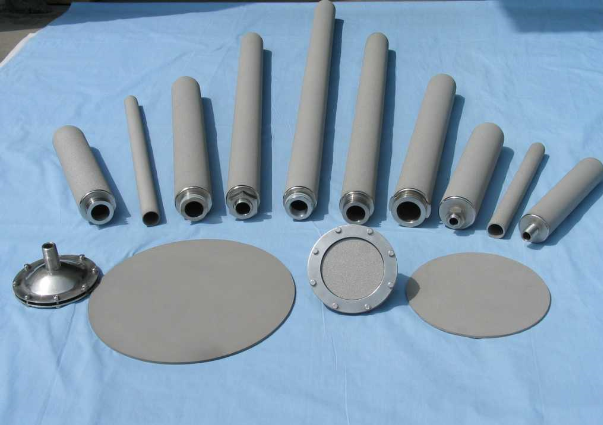
Sintered metal filter elements in cylindrical and disc configurations
Real porous metal components showing bare discs, a flanged disc and cylindrical element forms.

The same porous-metal family can be fabricated into different finished geometries. The photograph shows bare circular discs, a disc retained in a metal flange, and cylindrical elements. It is a configuration reference—not evidence that every medium, rating or connection is interchangeable.

For media selection, compare sintered powder and sintered wire mesh. For dimensional control, use the filter element drawing and tolerance checklist.

Bare circular disc

Define OD, ID if required, total thickness, flatness, layer orientation and edge condition.

Framed or flanged disc

Define the retaining metal, joint, sealing face, bolt or mounting pattern and bypass-control details.

Disc within an assembly

State where the disc sits, normal flow direction, support, differential-pressure duty and replacement method.

Custom Disc RFQ Checklist

Media and process

  • Target rating and test basis
  • Material grade
  • Layer count and sequence
  • Flow direction
  • Medium, temperature and pressure
  • Cleaning method

Dimensions and assembly

  • Outside and inside diameter
  • Total thickness and flatness
  • Cut edge, rim or frame
  • Holes, slots and sealing area
  • Tolerances and quantity
  • Drawing or sample reference

For the raw woven layer, review stainless steel wire mesh. For square-weave aperture terminology, the mesh-to-micron calculator is a useful reference, but it does not replace a validated multilayer filtration rating.

Sintered Wire Mesh Filter Disc FAQ

It is a flat filter component cut from two or more wire mesh layers that have been bonded by heat and pressure. The layers can separate filtration, flow-distribution, protection and support functions while remaining a single porous metal structure.

A single-layer disc depends on one woven cloth for both filtration and mechanical stability. A sintered mesh disc combines bonded layers, so a fine filtration layer can be supported by coarser meshes. The correct choice depends on pressure, cleaning, rigidity, flow and cost.

No. Sintered wire mesh is made from woven wire cloth layers. Powder sintered media is formed from metal powder. Their pore structures, flow behavior, mechanical properties and purchasing specifications are different.

No. The enquiry should also define the rating method, material, layer construction, diameter or shape, total thickness, tolerances, edge condition, flow direction, pressure differential and cleaning method.

304, 316 and 316L are commonly specified stainless steel options, subject to the required construction and availability. Select the grade from the process medium, temperature, corrosion risk, cleaning chemicals and fabrication requirements.

Include outside diameter, inside diameter when applicable, thickness, filtration direction, flatness, edge treatment, holes or slots, support details, dimensional tolerances and any assembly interface. State quantity and operating conditions as well.
Request a Sintered Mesh Disc Review

Send the filtration target, material, layer construction, operating conditions and dimensioned drawing. Maidong can review the information for a custom sintered wire mesh disc enquiry.