
Engineering reference for industrial filtration

Mesh to Micron Conversion Chart & Calculator

Convert square woven wire mesh count to clear opening in microns—or estimate mesh count from a target aperture. The calculator includes wire diameter because mesh count alone does not define filtration opening.
Mesh ↔ MicronWire diameter includedOpen-area resultProcurement guidance
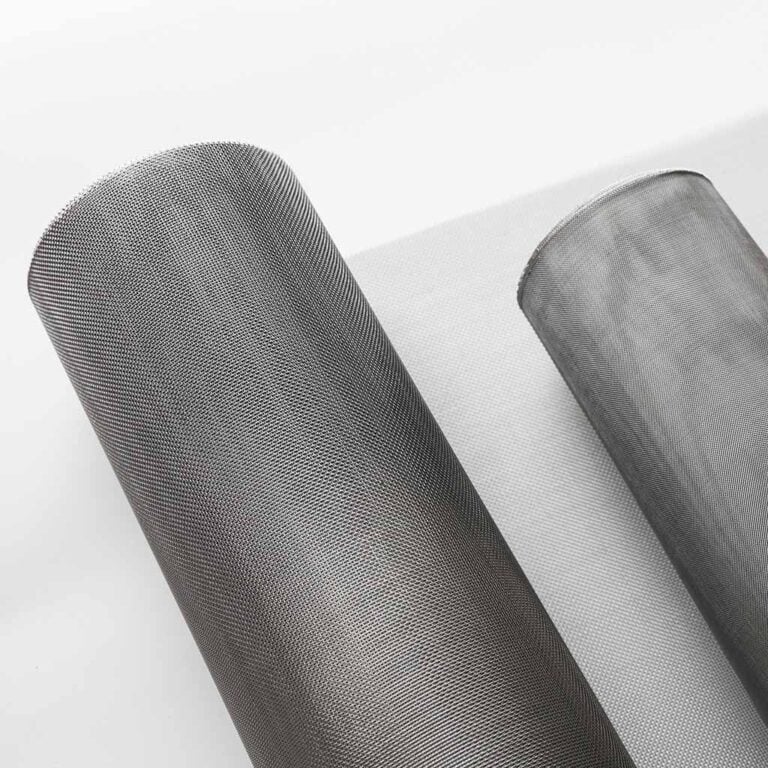
Fine stainless steel woven wire mesh rolls showing uniform square openings
Square woven mesh
Mesh count + wire diameter determine clear aperture.
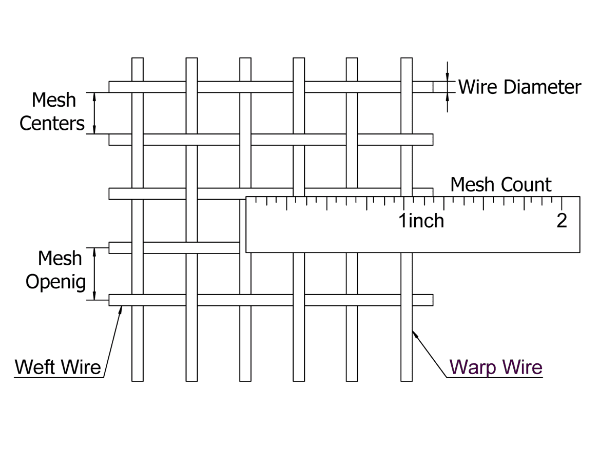
Diagram showing mesh count, wire diameter, mesh opening, warp and weft wires
Key dimensions used to describe square woven wire mesh.

What Mesh and Micron Mean

Mesh count

Mesh count is the number of openings or wire pitches measured across one linear inch (25.4 mm). A higher number normally means a finer screen, but it does not state the clear opening by itself.

Micron

One micron (μm) is one-thousandth of a millimetre. Microns may describe geometric aperture or a filtration rating—terms that should not be used interchangeably.

Square-weave relationship: Aperture (mm) = 25.4 ÷ mesh count − wire diameter (mm).

Mesh ↔ Micron Calculator

For square woven wire mesh, a reliable conversion needs both mesh count and wire diameter. Choose a direction, enter the known values, and calculate the clear aperture and open area.

Calculated mesh200
Clear opening75 μm
Open area34.9%

Formula for square weave: aperture (mm) = 25.4 ÷ mesh count − wire diameter. Results are engineering references, not a guaranteed filtration rating.

Common Mesh-to-Micron Reference Chart

These values illustrate common square-weave combinations. The same mesh count can produce a different aperture when a different wire diameter is used. Use the calculator or an agreed specification for purchasing.

Mesh countExample wire Ø (mm)Approx. opening (μm)Opening (mm)
100.5402,0002.000
200.4208500.850
400.2104250.425
600.1732500.250
800.1381800.180
1000.1041500.150
1200.0871250.125
1500.0631060.106
2000.052750.075
2500.040610.061
3000.037480.048
3250.033450.045
4000.026380.038
5000.026250.025

Important: This is not a universal equivalence table. Wire diameter, weave and manufacturing tolerance must be stated in a purchase specification. Test-sieve designations and production wire cloth may also use different standard combinations.

How to Use the Calculator for Selection

1

Define the target

Start with the particle size or clear opening the process needs to retain.

2

Add wire diameter

Use the actual or proposed wire diameter; mesh count alone is incomplete.

3

Check open area

Review the calculated open area against flow and pressure-drop requirements.

4

Confirm the structure

Verify material, weave, tolerances, layers and finished filter form before ordering.

Why Actual Filtration Can Differ

A calculated aperture is a geometric reference. Real separation performance depends on the complete mesh and operating system.

Mesh construction

  • Wire diameter: thicker wire reduces the clear opening and open area.
  • Weave: plain, twill and Dutch weaves create different flow paths.
  • Tolerances: wire and aperture variation must be agreed for critical filtration.
  • Layers and supports: sintered laminates, backing mesh and perforated cores change flow and strength.

Operating conditions

  • Particle shape and size distribution
  • Fluid viscosity and contamination load
  • Pressure differential and allowable pressure drop
  • Temperature, corrosion environment and cleaning method
  • Required nominal or absolute retention

From Wire Mesh Specification to Finished Filter

The same aperture calculation can support several finished forms, but the complete assembly still needs application-specific engineering information.

Cut mesh and screens

Rolls, sheets and cut pieces for screening, sieving and process protection.

Filter discs

Single-layer or supported discs with optional edging and custom shapes.

Filter tubes and cylinders

Formed mesh with seams, end structures or support cores defined by drawing.

Layered filter media

Multiple mesh layers or supported constructions where strength and flow both matter.
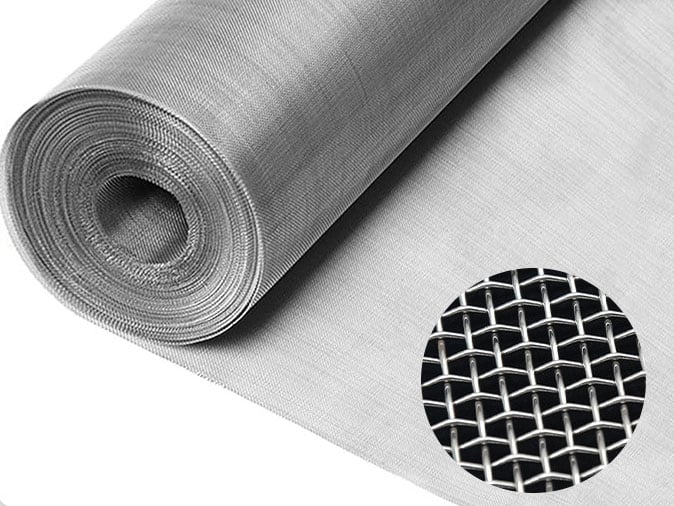
Stainless steel woven wire mesh roll with close-up view of square openings

Using the Result in a Wire Mesh Enquiry

A useful specification lets the supplier check both filtration performance and mechanical suitability. Include as many of the following details as possible:

  • Target aperture or particle size
  • Mesh count and wire diameter, when known
  • Material such as 304, 316 or 316L stainless steel
  • Plain, twill or Dutch weave requirement
  • Roll, cut piece, disc, tube, cylinder or basket form
  • Dimensions and tolerances
  • Edge, seam, weld and support requirements
  • Operating fluid and temperature
  • Pressure or differential-pressure conditions
  • Drawing, sample or equipment interface

Explore stainless steel wire mesh, Dutch weave mesh, filter discs, and filter tubes for product-specific structures.

Mesh and Micron FAQ

Is mesh count the same as micron rating?

No. Mesh count describes how many openings or wires occur per linear inch. Microns describe the clear opening or a filtration rating. Wire diameter and weave structure are needed to relate the two.

What is the formula for converting mesh to microns?

For square woven mesh, aperture in millimetres equals 25.4 divided by mesh count, minus wire diameter in millimetres. Multiply the aperture by 1,000 to express it in microns.

Why can two 100-mesh screens have different openings?

They can use different wire diameters. A thicker wire occupies more of each pitch, producing a smaller clear opening and lower open area.

Does the calculator work for Dutch weave wire mesh?

Not as a direct aperture calculation. Dutch weave uses different warp and weft counts and wire diameters, and its filtration rating is normally based on the weave specification and validated retention data.

Should I order filtration mesh only by micron value?

No. A useful enquiry should also state material, weave, wire diameter or mesh count, dimensions, edge or support structure, operating fluid, temperature, pressure conditions and whether the target is nominal or absolute retention.

What affects flow rate through wire mesh?

Open area, aperture, wire diameter, weave, number of layers, fluid viscosity, pressure differential, contamination load and the total effective filtration area all affect flow and pressure drop.

Need a Mesh Specification Checked?

Send the target particle size, material, operating conditions, dimensions and required finished form. Maidong can review the information for a woven mesh or fabricated filter enquiry without treating a calculator result as the final purchase specification.

Send Your Filtration Requirements