
Woven Mesh or Perforated Metal? Match the Material to the Function
Choose woven wire mesh when controlled aperture and finer debris exclusion are central. Choose perforated metal when the part must act as a stiffer panel, guard or formed equipment interface. For many industrial air inlets, a supported two-layer assembly uses both.
Quick Decision: Which Structure Fits the Job?
Controlled fine aperture
Woven mesh provides defined openings from wire spacing and weave construction.
Self-supporting panel
Perforated sheet offers more inherent stiffness than an unsupported mesh layer.
Guard plus fine screen
A perforated outer panel can support a finer woven inner layer.
Drawing-defined interface
Edges, bends, cut-outs, frames and mounting points must be specified.
Woven Wire Mesh vs Perforated Metal Comparison
| Selection factor | Woven wire mesh | Perforated metal | Purchasing implication |
|---|---|---|---|
| Opening control | Aperture from mesh count and wire diameter | Hole/slot size from tooling and drawing | State opening geometry, not a generic grade |
| Rigidity | Usually needs tension, frame or support | More self-supporting as a sheet | Define span, edge and mounting conditions |
| Open area | Depends on aperture and wire diameter | Depends on hole size, pitch and pattern | Calculate geometry; validate system airflow separately |
| Cleaning | Fine openings may retain smaller debris | Larger openings and flat sheet faces may be easier to access | State cleaning method and access direction |
| Forming | Can be cut, framed, rolled or supported | Can include bends, flanges and cut-outs | Supply the finished-part drawing |
Start With the Required Function
Do not select a ventilation screen from appearance alone. First decide whether the part is mainly an airflow opening, a debris screen, a physical guard, a support layer or a combination of these functions.
For product formats, compare stainless steel woven wire mesh and perforated metal mesh.
How to Specify Woven Wire Mesh
For plain square weave, define material, mesh count, wire diameter and nominal aperture. Also state roll or cut-panel dimensions, edge treatment, required frame or backing support and any flatness requirement. Mesh count alone cannot determine aperture because wire diameter changes the opening.
The mesh-to-micron calculator helps check nominal square-weave aperture.
How to Specify Perforated Metal
Define material, sheet thickness, hole or slot dimensions, pitch, pattern, perforated zone, blank margins, finished dimensions, bends, cut-outs and mounting holes. The same hole diameter can produce different open areas when pitch or layout changes.
Use the perforated metal open-area calculator for a geometry check.
Open Area Is Not a Complete Airflow Specification
Geometric open area
The percentage of visible area not occupied by wire or sheet.
Opening geometry
Aperture shape, thickness and edge condition influence local flow.
Assembly resistance
Frames, guards, filters and spacing add restrictions.
System validation
Fan curve and pressure-drop testing belong to the complete equipment system.
A supplier can calculate material geometry from confirmed dimensions, but should not promise equipment airflow from open area alone.
When a Two-Layer Assembly Makes Sense
A common engineering approach is to separate support from screening. A perforated outer panel can provide shape and guarding, while a woven inner layer controls the smaller opening. The drawing should define layer order, spacing, attachment, edge sealing and cleaning access.
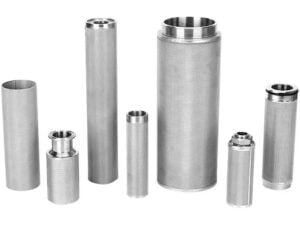
For cylindrical assemblies, see the separate guide to wire mesh vs perforated metal filter tubes; that page addresses filter-tube construction rather than flat ventilation panels.
Typical Industrial Ventilation Uses
Equipment air inlets
Screens or panels sized for the housing opening and mounting interface.
Fan guards and covers
Drawing-defined parts combining airflow openings and physical separation.
Enclosure ventilation
Flat or formed panels with controlled margins, holes and fastener locations.
These use categories do not establish safety, strength, airflow or environmental performance. Those requirements must be defined and validated for the actual equipment.
Material and Structure Examples
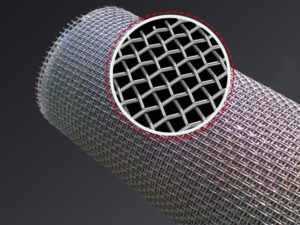
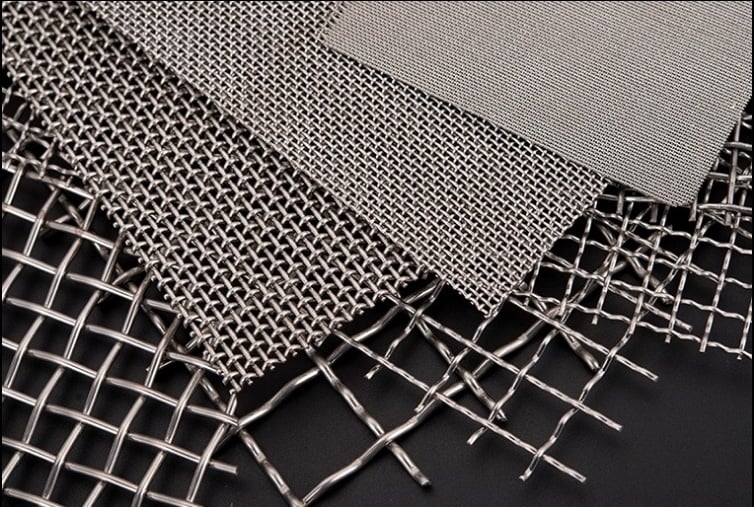
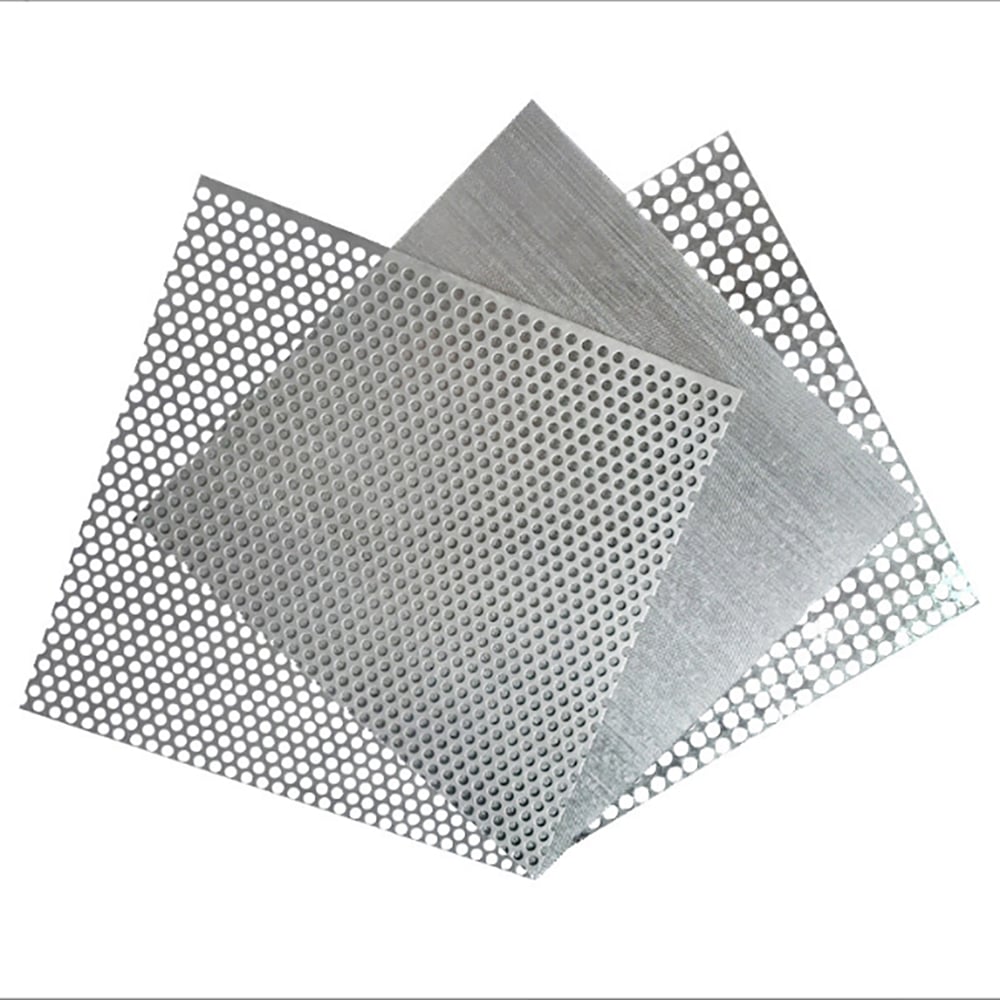
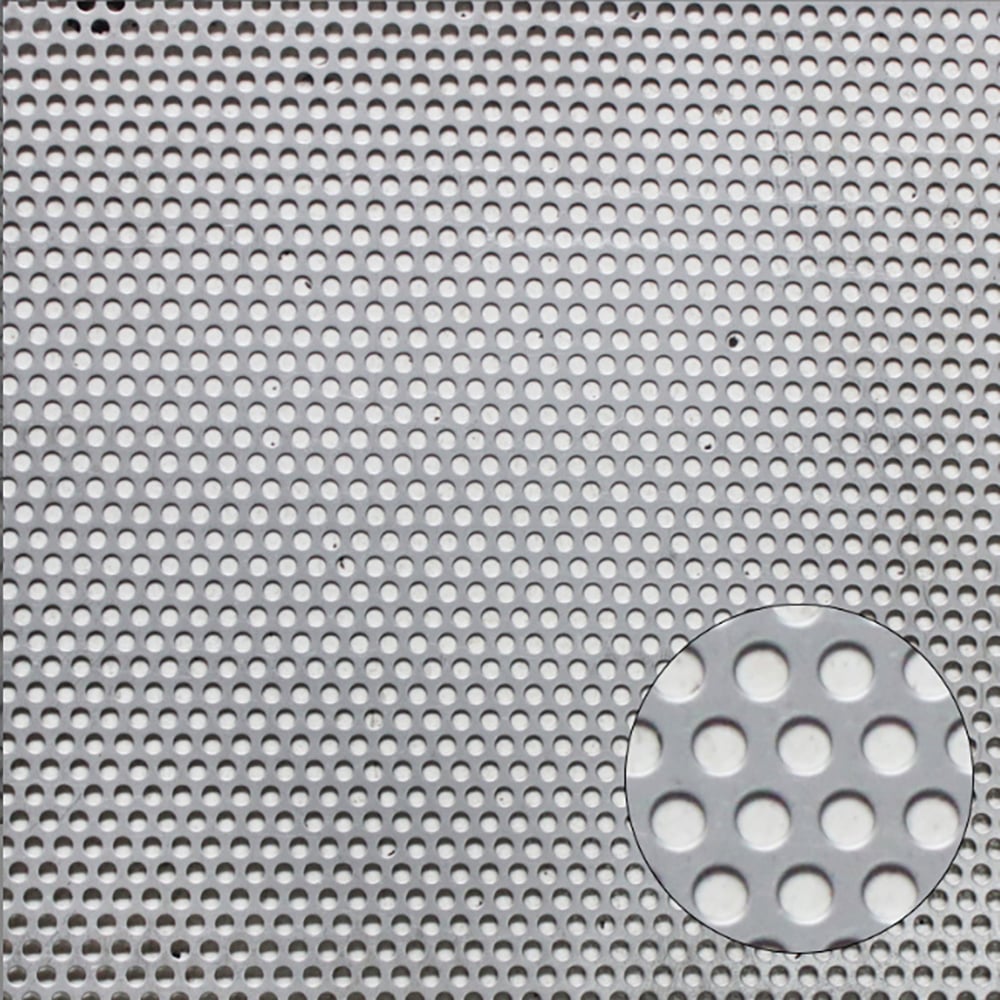
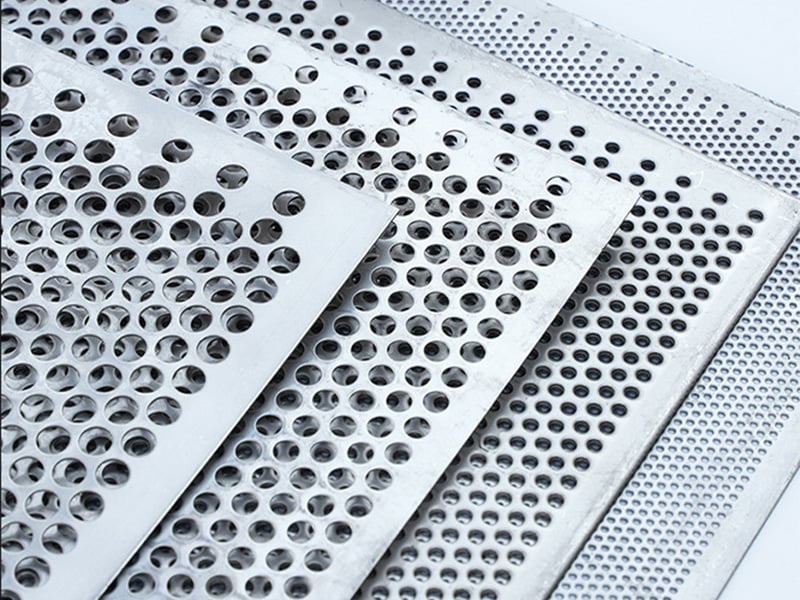
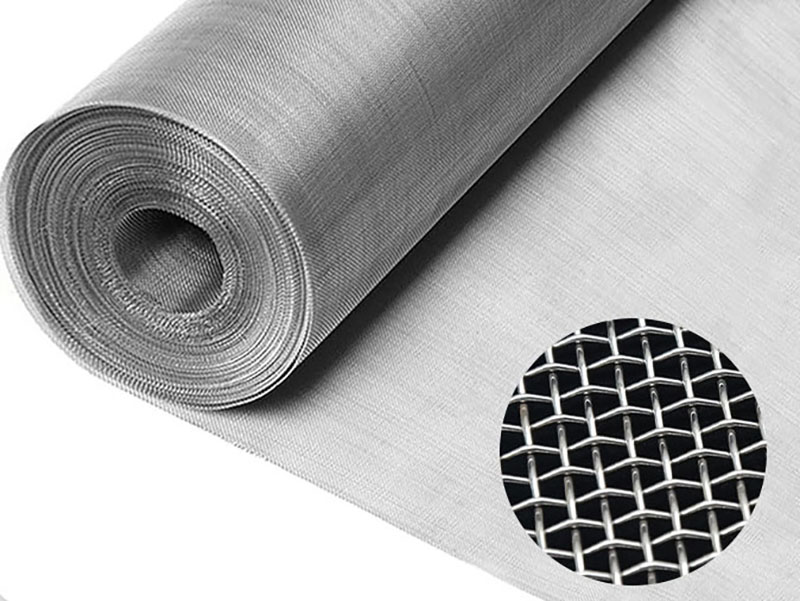
These Maidong material-library images show the visual difference between woven openings and punched openings. Final parts are made from the approved specification and drawing.
Woven opening range
Mesh and sheet formats
Perforated panel range
Ventilation Screen Selection Steps
1. Define the function
Separate airflow, debris exclusion, guarding and support requirements.
2. Define the opening
State aperture or hole/slot geometry and allowable object size.
3. Define the structure
Choose mesh, sheet or a supported two-layer assembly.
4. Complete the interface
Add size, edges, frame, bends, mounting, tolerances and cleaning access.
5. Validate the system
Check pressure drop, airflow and mechanical requirements in the equipment.
Woven Mesh and Perforated Metal FAQ
Neither is universally better. Woven mesh is useful when controlled apertures and fine debris exclusion matter; perforated metal is useful when a self-supporting panel, repeatable hole pattern and formed equipment interface matter.
No. Open area is only one geometric input. Airflow and pressure loss also depend on opening shape, wire or sheet thickness, velocity, framing, upstream conditions, downstream restrictions and any additional filter layer.
Yes, a two-layer arrangement can separate functions: the perforated panel provides support or guarding, while woven mesh provides a smaller controlled opening. The spacing, attachment and cleanability must be defined.
For plain square weave, state mesh count and wire diameter or the required nominal aperture. Other weaves require their own construction data. A mesh number alone is not a complete specification.
State hole or slot dimensions, pitch, pattern, sheet thickness and the perforated zone. Use a geometric open-area calculation, then validate the complete ventilation system separately.
Provide material, finished dimensions, aperture or hole geometry, wire diameter or sheet thickness, open-area target, edge or frame details, mounting points, operating environment, cleaning method, quantity and drawing revision.
Send the Ventilation Part Drawing
Include the required function, material, aperture or hole geometry, wire diameter or sheet thickness, finished dimensions, edges, frame, bends, mounting details, cleaning method, quantity and any system acceptance criteria.