Welded wire mesh is a rigid grid in which crossing wires are joined at every intersection. For a quotation-ready specification, define the material, clear opening or wire spacing, wire diameter, roll or panel dimensions, edge condition and any downstream fabrication.
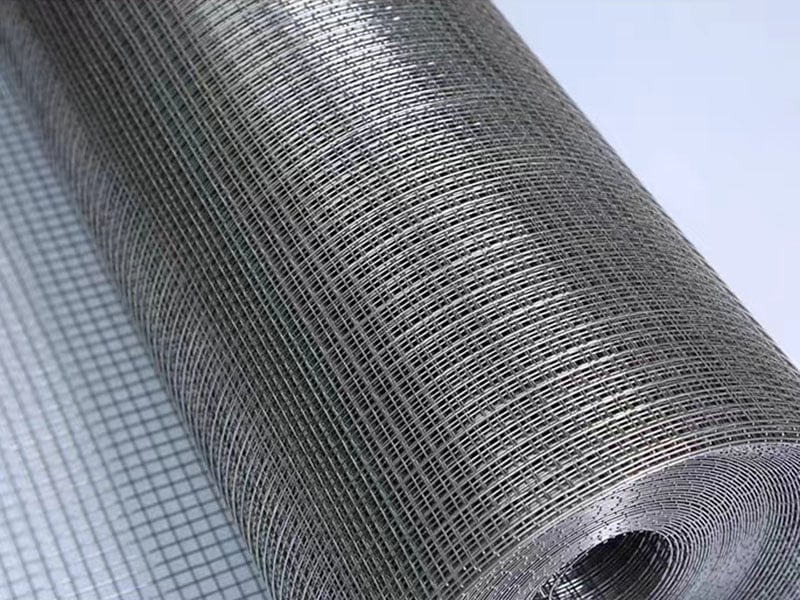
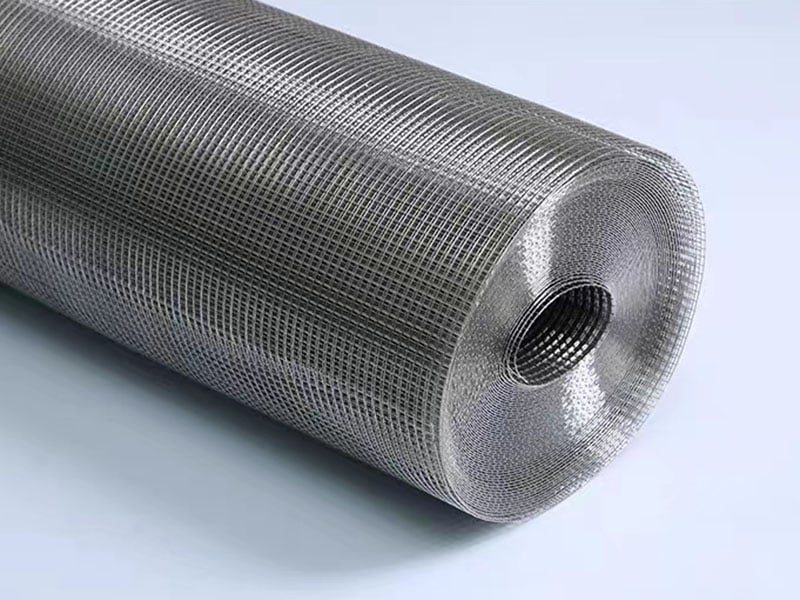
Welded wire mesh roll showing uniform square openings.
Welded Wire Mesh at a Glance
Stable intersections
Each crossing is welded, helping the grid retain consistent spacing during handling and fabrication.
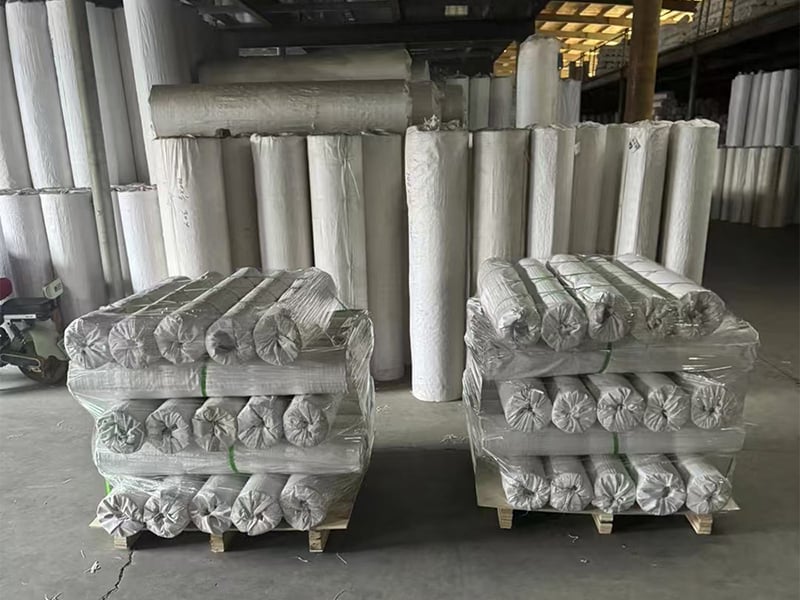
Rolls or panels
Format depends on material, wire diameter, opening and the dimensional requirements of the final part.
Multiple materials
Stainless steel, galvanized steel and low-carbon steel can be evaluated against the service environment.
Fabrication-ready
Mesh can be specified for cutting, forming, framing and integration into drawing-based components.
How to Specify Welded Wire Mesh
A complete specification should identify dimensions and terminology unambiguously. If you have a fabricated part, send the drawing with critical tolerances and interface details.
RFQ field
What to state
Why it matters
Material / grade
Stainless grade, galvanized or low-carbon steel
Controls corrosion behavior, fabrication and cost
Opening or spacing
Clear opening or center-to-center spacing, in both directions
Avoids a common dimensional misunderstanding
Wire diameter
Nominal wire diameter and any applicable tolerance
Affects rigidity, mass and clear opening
Supply format
Roll width and length, panel size or finished-part drawing
Defines handling and downstream processing
Edges and fabrication
Cut edges, selvage, frame, bends, holes or welded features
Allows review of the complete component
Service conditions
Medium, temperature, moisture, chemicals and mechanical loads
Supports material and structure selection
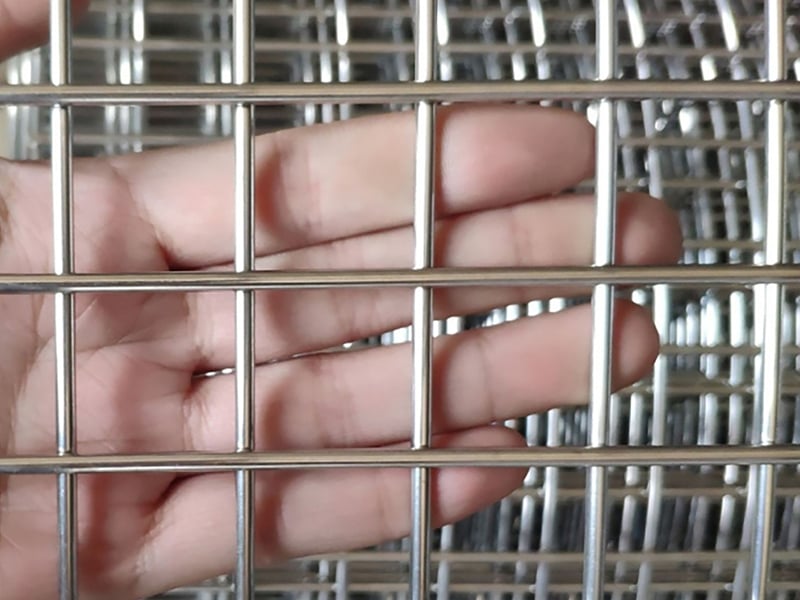
Close-up for evaluating opening size, wire diameter and welded intersections.
Opening, Spacing and Wire Diameter
Clear opening is the unobstructed distance between adjacent wires. Center-to-center spacing is measured from the centerline of one wire to the next.
Welded wire mesh is a grid made from longitudinal and transverse wires joined at each intersection. The welded joints hold the opening geometry more rigidly than a comparable woven mesh, making the product useful for guards, supports, cages, partitions and fabricated components.
State the material, clear opening or center-to-center spacing, wire diameter, roll or panel dimensions, edge condition, surface finish, quantity and any cutting, bending, framing or welding required. A drawing is preferred for fabricated parts.
No. Clear opening is the free space between adjacent wires. Center-to-center spacing includes one wire diameter. The relationship is: clear opening = center spacing minus wire diameter.
Welded mesh is joined at every intersection and is generally more rigid and dimensionally stable. Woven mesh is interlaced and is usually preferred when finer apertures, greater flexibility or filtration-specific weave structures are required.
The appropriate format depends on wire diameter, opening, material and final geometry. An RFQ can request rolls, flat panels or drawing-based parts such as guards, frames, baskets and support components, subject to specification review.
Choose the grade from the actual service medium, moisture, chlorides, cleaning chemicals, temperature, fabrication and service-life requirement. Grade 316 or 316L may provide an advantage in some chloride-bearing or welded applications, but suitability must be reviewed case by case.
Request a Welded Wire Mesh Review
Send your opening or spacing, wire diameter, material, dimensions, quantity and fabrication drawing. Maidong can review the specification for mesh supply or a drawing-based component enquiry.