
Loose mesh screens, spot-welded packs and rimmed packs are different ways to supply a replaceable extrusion filtration consumable. The choice affects layer handling, edge construction and the finished part specification.
Start with the equipment-approved screen arrangement. Maidong reviews your drawing and cloth schedule before quoting a replacement or a proposed construction change.
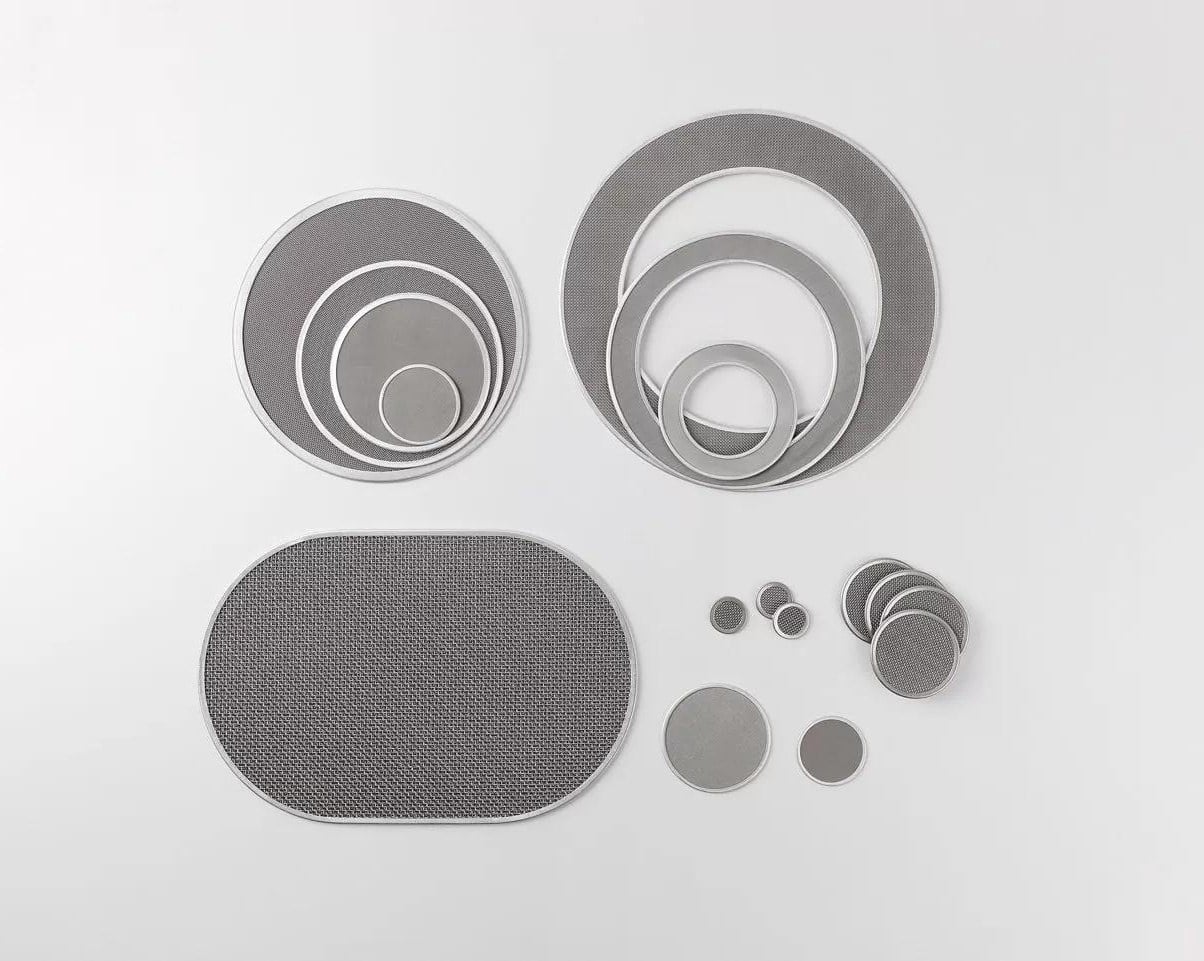
Loose describes separate mesh layers. Spot-welded describes attachment at defined points. Rimmed or framed describes an edge-retaining feature. A pack can be both spot-welded and rimmed.
Record attachment and edge treatment separately on the drawing. For the complete product range, see extruder screens and screen packs.
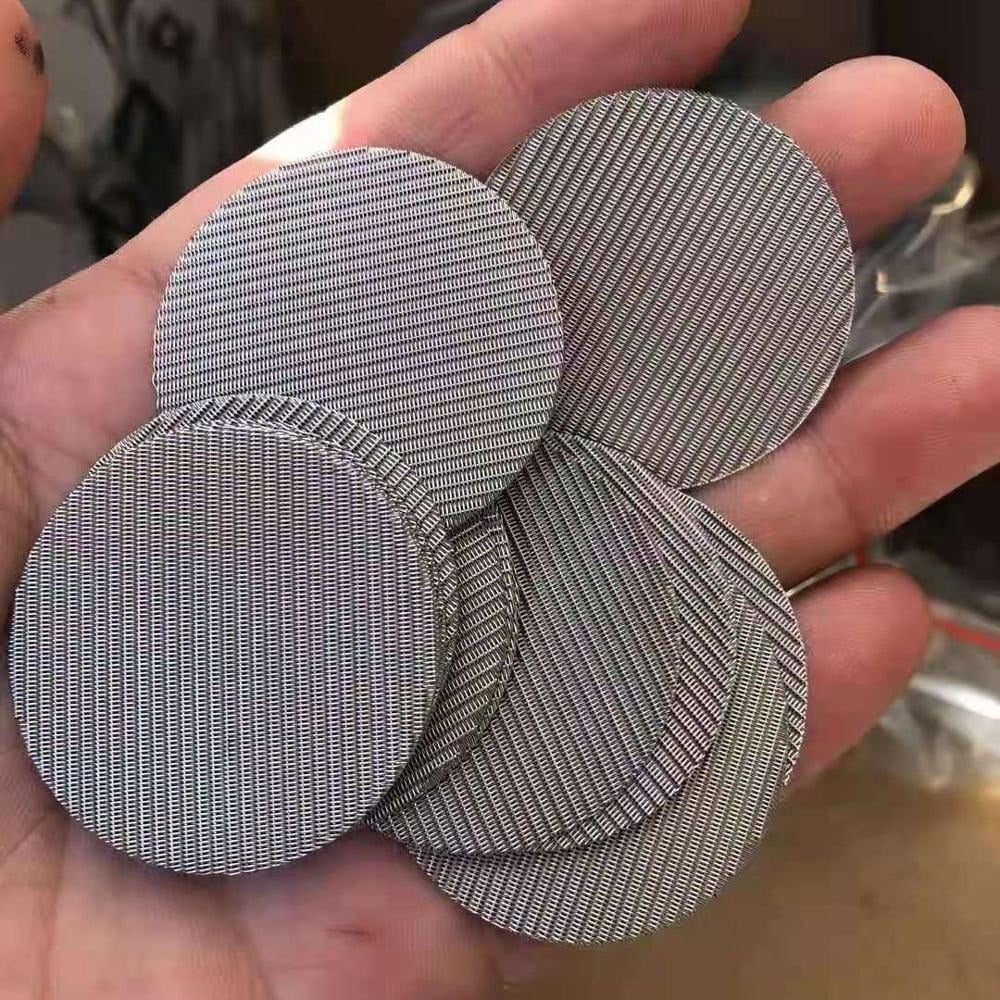
Loose supply keeps the screens separate. This can suit an existing procedure in which the buyer assembles an approved layer schedule, provided the equipment and handling instructions allow it.
Identify each cloth and the quantities needed per set. Keep similar-looking mesh grades distinguishable in packaging, and confirm the direction before installation.
RFQ detail: specify individual pieces or complete sets. For an illustrative five-layer configuration, 100 complete sets contain 500 individual screens; this is a quantity example, not a recommended pack.
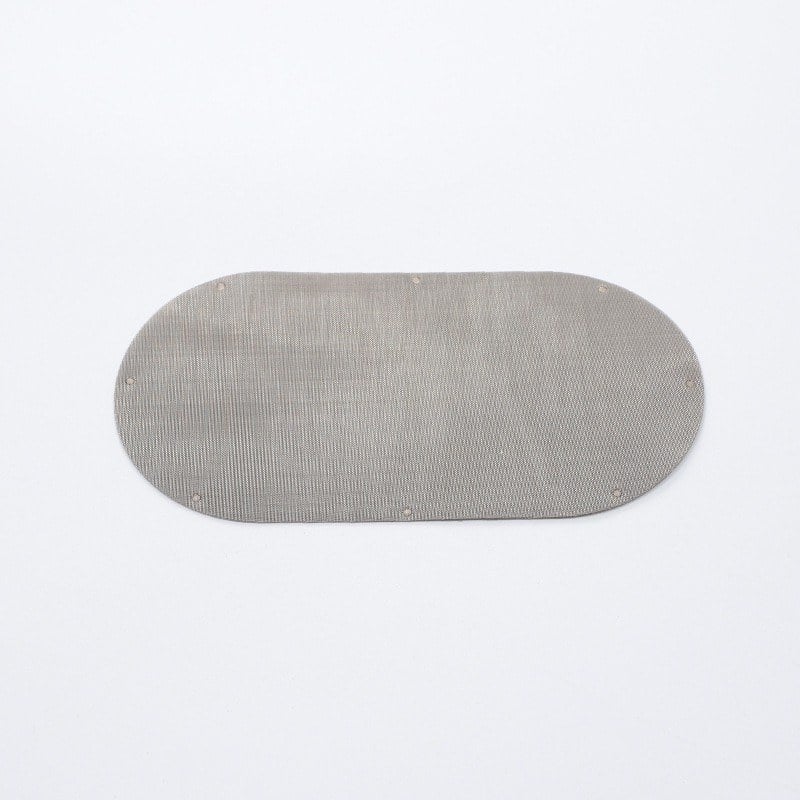
Defined weld points hold the layers together for handling. Specify weld quantity and positions, any areas to remain clear, and the finished thickness.
Attachment does not verify layer orientation or create an automatic filtration rating. Include every mesh layer in the approved specification.
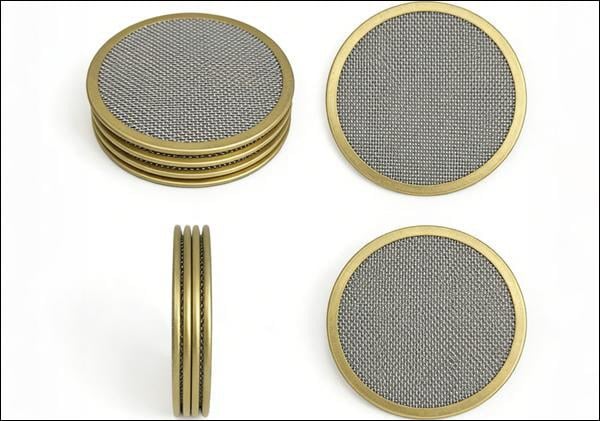
A formed rim retains the mesh edge. Specify rim alloy, width, cross-section and overall dimensions, plus whether internal spot welds are required.
Review rim contact and recess depth with the housing drawing. A rim does not by itself guarantee sealing, operating pressure capability or compatibility.
Existing Maidong photos illustrate visible constructions only. Alloy and hidden layers cannot be confirmed from these images.
| Check | Loose screens / sets | Spot-welded pack | Rimmed pack |
|---|---|---|---|
| Layer handling | Separate pieces; confirm identification | Layers attached at specified points | Edge retained; may also include welds |
| Drawing detail | Each layer and assembly direction | Add weld locations and attachment details | Add rim section, alloy and contact dimensions |
| Finished thickness | Specify the complete installed stack | Confirm complete assembled thickness | Confirm both overall and rim thickness |
| Order unit | Pieces or complete sets | Assembled packs | Assembled packs; state internal construction |
| Filtration specification | Every cloth must be defined | Welding is not a retention rating | Rim material is not mesh specification |
| Replacement review | Check approved sequence and supports | Check support, thickness and weld clearances | Check recess, edge contact and fit |
| Cost comparison | Include sorting and packing requirements | Quote against defined assembly work | Quote against rim and assembly requirements |
No construction is universally best. Compare the requested replacement against the actual filter housing, support, handling procedure and commercial requirements.
To compare assembly options fairly, use the same dimensions, alloy, mesh count, wire diameter and weave for every layer. Otherwise a price difference may reflect different cloth rather than the attachment method.
Reference / custom available: a schedule such as 20/40/80/40/20 mesh still needs wire diameters, weave, material and flow direction. Read the screen pack layer-order guide for schedule preparation.
SS304, SS316 and SS316L mesh may be reviewed against your requirements. Rim materials and availability require separate confirmation; no standard alloy is inferred from a photograph.
Do not treat an attachment change as automatic approval for reuse, backflushing or a different operating limit. Review any proposed substitution before placing the repeat order.
Send: drawing/revision, dimensions and tolerances, every mesh layer, flow direction, attachment method, rim details where applicable, overall thickness, quantity and destination.
If comparing alternatives, ask for the same cloth schedule in each option and identify the proposed assembly differences. Mark unknown requirements “to confirm.”
Loose screens are supplied as separate pieces or a defined set. Spot-welded packs have layers attached at specified points. Both require a complete cloth schedule and a confirmed installation direction.
Yes, a rimmed construction may also include spot welds. Specify both features rather than assuming welded and rimmed are mutually exclusive categories.
No general sealing guarantee follows from the rim alone. The rim geometry, housing contact, assembly fit and equipment requirements must be reviewed together.
Spot welding attaches layers. It does not by itself establish a finer opening or retention rating. Compare each cloth specification and the complete assembly separately.
Only after confirming dimensions, total thickness, rim contact and the equipment-approved arrangement. Matching mesh counts alone does not establish interchangeability.
Use the approved drawing or submit the attachment requirement for review. There is no universal weld count; locations and areas to remain clear must be defined for the part.
No. Specify the rim material independently from each mesh layer. Appearance or color is not reliable proof of the alloy.
Compare quotes for the same cloth, dimensions, quantities and packing requirements. Assembly work and handling needs differ; no universal price ranking is provided.
State whether the quantity means individual screens, complete loose layer sets or assembled packs. For a five-layer set, 100 sets and 100 individual screens are different orders.
Send your screen specification to Maidong Metal Wire Mesh Products Co., Ltd. We will review the construction and prepare a quotation against the confirmed requirements.