
Maidong reviews custom mesh discs and assembled screen packs for compatible extrusion blow molding melt-filtration equipment. These are replaceable filtration consumables, supplied against confirmed dimensions and cloth specifications.
Send the current pack drawing and resin details for bottle, container or other hollow-product applications. Single screens, loose layer sets, spot-welded packs and rimmed constructions can be reviewed for your quotation.
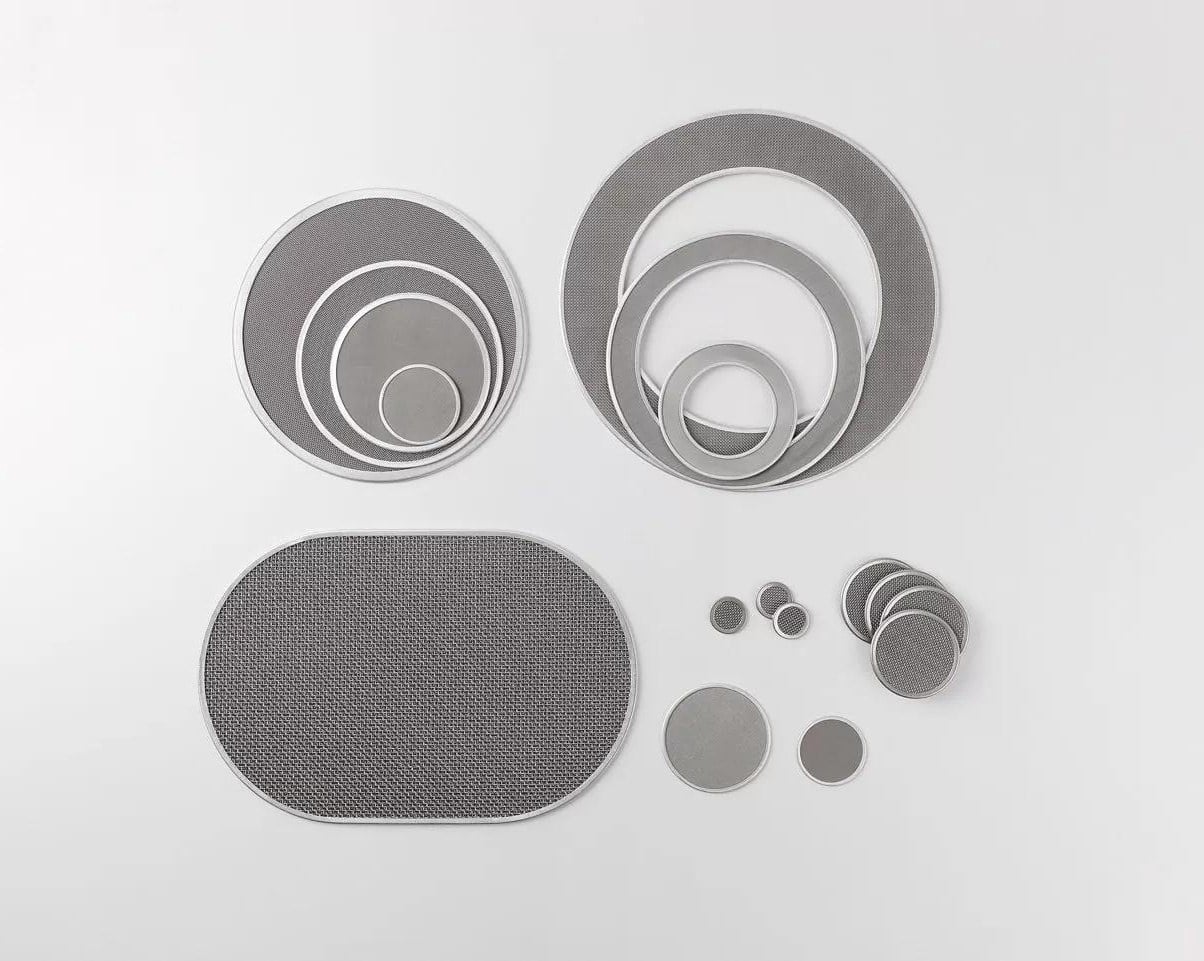
In extrusion blow molding, molten polymer is formed into a parison that is shaped in a mold. Where the line includes melt filtration, the screen must match that filter’s position, housing and support arrangement before parison formation.
Identify the component on the equipment drawing. It is separate from compressed-air filtration, mold vents, granulator screens and complete screen changers. View our extruder screen and screen pack range for construction enquiries.
State the actual resin and filtration requirement. Finished container capacity, neck size or wall thickness does not determine the screen dimensions.
Name the line arrangement and provide the installed filter drawing. Neither label establishes a universally interchangeable pack.
Describe relevant production regrind and the current filtration. Identify unwanted material separately from intended pigments or fillers.
Label each filter by its extruder or melt stream. Product layers and mesh layers are separate specifications.
Separate mesh screens with a complete customer-approved layer schedule.
Layers attached at defined locations, with thickness and clear areas specified.
A retained mesh edge with rim alloy, width and cross-section specified separately.
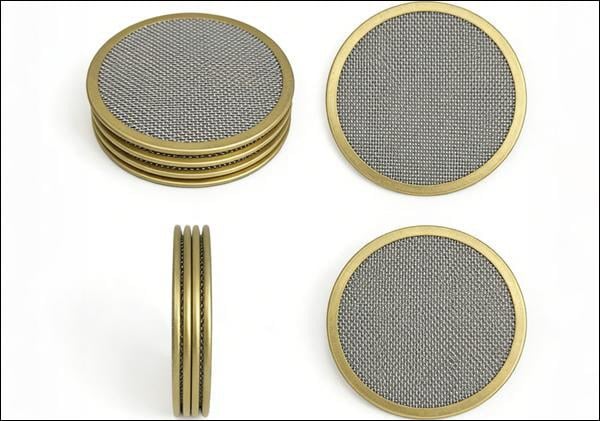
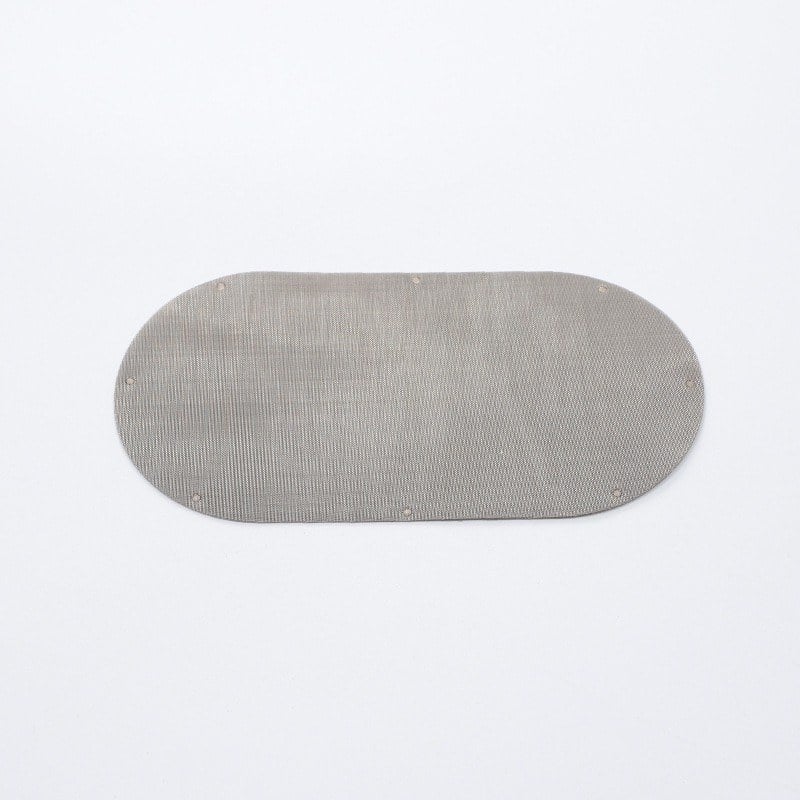
Photos show existing Maidong mesh constructions, not verified installations on a particular blow molding line. Some equipment requires cylindrical, belt or other filter formats rather than flat discs.
Reference / custom available: SS304, SS316 and SS316L mesh, and round, oval, annular or drawing-defined profiles, are subject to complete specification review. No material name alone establishes an operating rating.
| RFQ field | What to provide | Why it matters |
|---|---|---|
| Part geometry | Drawing, dimensions, units and tolerances | Matches the filter cavity, not the container size |
| Every layer | Alloy, mesh count, wire diameter and weave | Defines the complete cloth specification |
| Layer direction | Melt-entry face, full sequence and supports | Avoids installation ambiguity |
| Assembly | Overall thickness, weld locations or rim drawing | Defines the finished consumable |
| Filter interface | Housing, active opening and support arrangement | Checks the requested replacement format |
| Material | Resin, additives and relevant regrind details | Identifies the melt and intended ingredients |
| Filtration objective | Contamination description and acceptance criteria | Separates filtration needs from unrelated defects |
| Operating duty | Known throughput, melt conditions and cleaning method | Supports review within equipment requirements |
| Order | Quantity per configuration, packing, documents, destination | Defines an accurate quotation |
Mesh count needs wire diameter and weave to describe the cloth. Dutch weave requires its full warp/weft construction and relevant filtration data; a nominal mesh number is not an absolute micron rating.
Reference / custom available only: 20/40/80/40/20 mesh, 20/60/100 mesh and 40/80/200/80/40 mesh illustrate layer schedules. They are not fixed settings for HDPE bottles or other blow molded products.
Final selection follows the extrusion process, resin, filtration objective and equipment support. Use the mesh combinations and layer-order guide to document every layer.
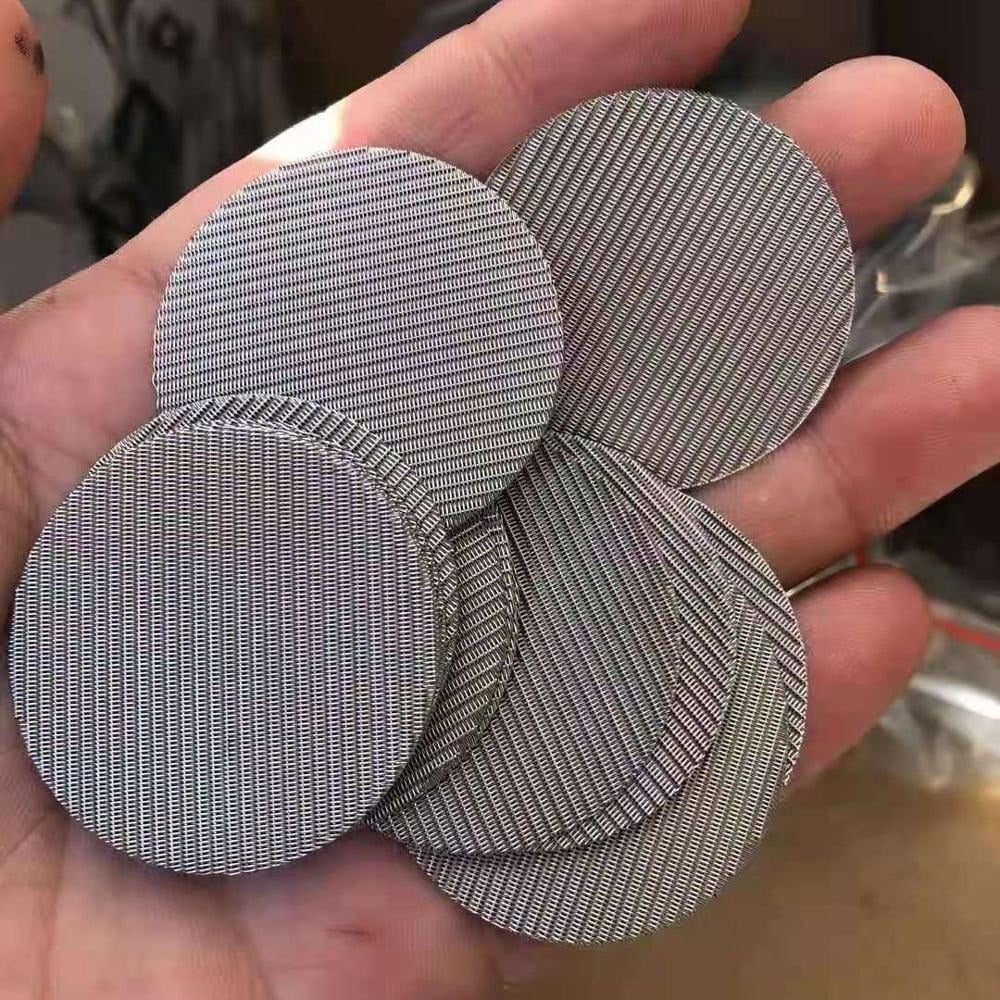
Provide cavity dimensions, recess depth, screen contact areas and maximum finished thickness. A machine model helps identify the enquiry but does not replace the filter drawing.
Confirm any reverse-flow cleaning requirements before choosing a welded or rimmed pack. Attachment method alone does not prove suitability for backflushing or reuse.
For a new specification, compare product condition, pressure trend and output under comparable conditions. Follow the equipment limits; finer mesh is not automatically better.
Start with a drawing or measured part details, complete layer schedule, quantity and delivery country. Add the resin, filter position and observed filtration issue.
Mark missing details “to confirm.” A photograph can clarify visible shape and assembly, but cannot verify the exact alloy or hidden layers. Keep each pack configuration tied to a part number and drawing revision.
It is a replaceable mesh filtration consumable used in compatible melt-filter equipment on an extrusion blow molding line. It is not a screen changer, machine assembly or compressed-air filter.
No. Extrusion blow molding forms hollow products from a parison in a mold. Blown film produces film using a different forming process. Specify the actual process and filter component rather than relying on the word blown.
Yes. Submit the actual resin, approved screen drawing and filtration requirements. HDPE or container size alone does not establish a mesh count or screen diameter.
Do not assume interchangeability. Confirm the installed filter format, dimensions, support and operating duty for the actual line. The process label does not identify a replacement part.
No. Melt filtration addresses suitable retained contamination. Resin condition, thermal history, die condition and other process factors may require investigation. No universal defect-removal result is promised.
This page covers mesh consumables in compatible extrusion melt-filtration equipment. Do not assume the same part is used in a stretch blow molding station that reheats preforms; identify the exact component and process position.
State the feed composition and relevant regrind condition, current mesh schedule, observed contamination and acceptance requirement. Do not choose a finer pack solely because regrind is present.
Follow the equipment limits and monitor relevant pressure trend, output and product condition. No fixed service interval applies to all resins, contamination levels or screen constructions.
Send the shape, dimensions and tolerances, each layer’s alloy, mesh count, wire diameter and weave, flow direction, edge construction, finished thickness, quantity and destination. Include the resin and filter interface.
Send your component requirements to Maidong Metal Wire Mesh Products Co., Ltd. We will review the requested construction and quote against the confirmed specification.