Brass Woven Wire Mesh Rolls and Cut Pieces
Send Maidong your brass woven wire mesh specification for a roll-material or cut-piece quotation review. Start with the alloy designation, mesh construction and delivery format so the offer can address your actual assembly or screening requirement.
Roll width and length describe source material; finished part dimensions describe the blank you need to receive. Keep these requirements separate in your enquiry.
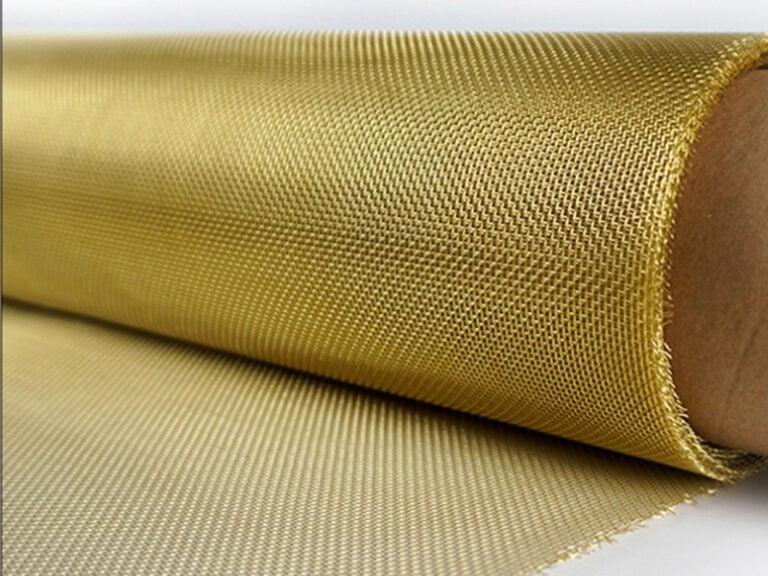
Specify Rolls or Finished Cut Pieces
Roll material
Give usable width, length per roll, total quantity and any continuous-length requirement. State whether joins are acceptable and how they must be identified.
Rectangular cut pieces
Provide length × width, quantity for each size, tolerances and whether the dimension includes projecting edge wires.
Drawing-defined blanks
Show profiles, cutouts, wire direction and critical fitting edges. Review cutting feasibility against the selected cloth before fixing the specification.
This enquiry covers interlaced wire cloth. Expanded brass, perforated brass sheet, framed screens and formed assemblies require their own construction details.
Name the Alloy Before Comparing Prices
Brass describes a family of copper-zinc alloys, not one universal wire specification. State the required designation and the applicable material specification or approved drawing reference. If the grade is still open, describe the service and request an explicit proposed designation for your approval.
Appearance cannot confirm composition. Do not accept a colour description as a substitute for the agreed grade, and do not assume a particular alloy is available because it appears in a general material reference. Any material records and traceability requirements belong in the enquiry.
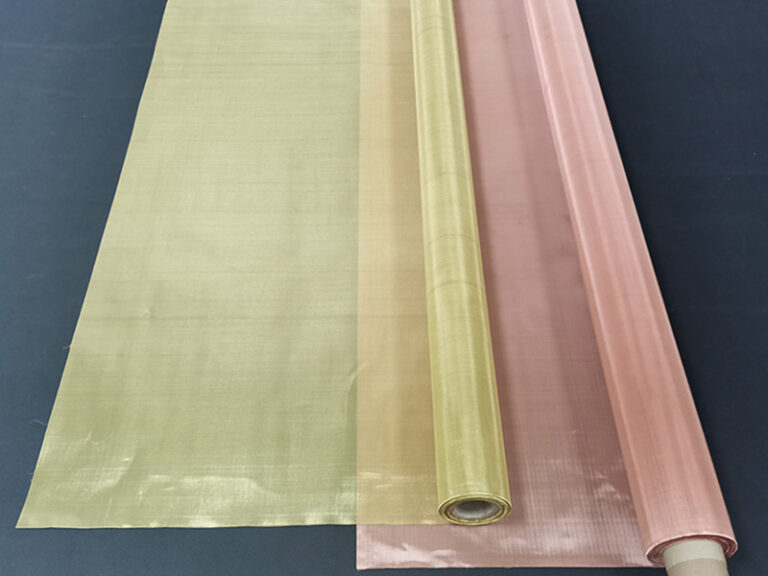
For other copper-family mesh enquiries, see copper wire mesh. A change between copper, brass and phosphor bronze needs a material review even when the opening looks similar.
Build a Complete Brass Mesh Specification
| Alloy and documentation | Material designation, specification reference and requested records. |
|---|---|
| Woven construction | Weave, mesh count with unit, wire diameter and agreed aperture specification. |
| Roll requirements | Usable width, length per roll, roll count, continuous length and permitted joins. |
| Cut-piece requirements | Item number, dimensions, drawing revision and quantity per size. |
| Edges and orientation | Allowed wire projections, retained edges and wire direction relative to the part. |
| Appearance and handling | Reference sample if appearance is critical; acceptable surface condition and handling marks. |
| Service and acceptance | Intended duty, medium and operating conditions; agreed inspection or test requirements. |
| Packing and identification | Core or flat-packing preference, separation, item labels and lot identification where required. |
A request such as “fine brass mesh” leaves both the alloy and geometry open. For square woven cloth, use the mesh-to-micron calculator to understand the relationship between count, wire diameter and opening. Confirm the actual specification; calculated geometry does not establish retention performance.
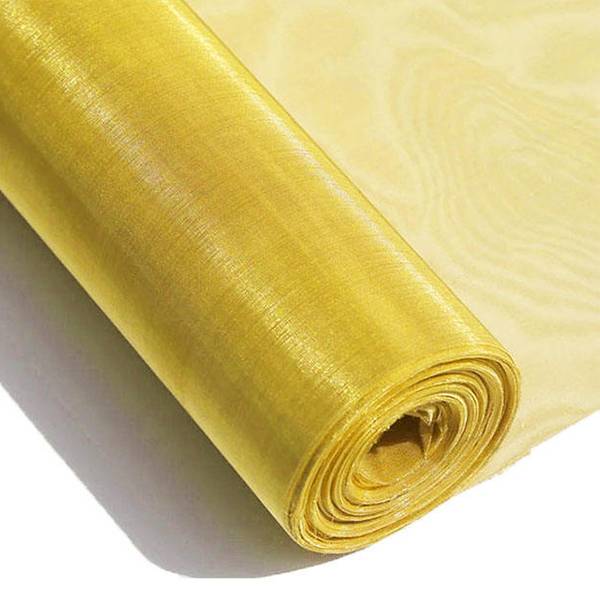
Agree Usable Width, Edges and Delivery Condition
For rolls, identify whether the required width includes edge wires or refers to an agreed usable section. If your equipment needs uninterrupted material, specify the acceptable continuous length and treatment of any joins. Avoid leaving these conditions implicit in a total-length requirement.
For cut pieces, state the edge reference used for measurement and any zones where projecting wires are restricted. Fine cloth and large blanks may need support during handling; describe the condition in which dimensions and flatness will be assessed.
Confirm core, roll orientation, flat packing or separation as needed for your next operation. Packing and any extra edge treatment are quotation items to agree, rather than assumed features.
Match the Mesh to Its Intended Service
Tell us whether the cloth is for screening, an assembly interface, a visual panel or another duty. Include contact materials, environment and any cleaning exposure relevant to selection. A general brass description cannot establish compatibility with every process.
For conductive or shielding assemblies, specify the full assembly and required evaluation. Wire cloth alone does not guarantee attenuation: openings, joints, contact and test conditions must be considered. For appearance-sensitive work, agree a reference and acceptance conditions rather than relying on a screen photograph.
Copy This Brass Mesh Enquiry
Please review the following brass woven wire mesh requirement.
Alloy/specification: [designation]. Weave: [type]. Mesh count and unit: [value]. Wire diameter and opening: [values and units].
Supply format: [rolls / cut pieces]. Rolls: [usable width, length per roll, quantity, continuous-length requirement]. Cut pieces: [item sizes, quantities, drawing and tolerances].
Edges and orientation: [requirements]. Intended service: [details]. Packing, appearance reference and documentation: [requirements]. Please identify the proposed material, included processing and any exceptions in the quotation.
Brass Woven Mesh FAQ
It is wire cloth made by interlacing brass wires. Brass is a copper-zinc alloy family; the material designation must be specified separately from the mesh construction.
No. Similar colour or mesh count does not establish material equivalence. Obtain approval for the specified alloy and intended service before substituting brass for copper or another copper alloy.
Provide alloy, weave, mesh count and unit, wire diameter or complete aperture specification, usable width, length per roll, quantity and packing requirements. Identify any requirements for continuous lengths and joins.
Add a numbered list of finished dimensions and quantities, tolerances, orientation, edge condition and flat or rolled delivery requirements. Attach a drawing for non-rectangular profiles.
Mesh count alone is insufficient. Wire diameter and weave also matter. For square woven cloth, confirm the count unit and wire diameter together; geometry is not a tested filtration rating.
No. Photographs illustrate mesh form and appearance. The grade, available construction, quantity, finish, documentation and delivery terms are confirmed for the specific enquiry.
Send Your Roll Specification or Cut List
Include alloy, mesh construction, dimensions and quantities. Price, availability, minimum order and delivery terms are confirmed after reviewing the requirement.